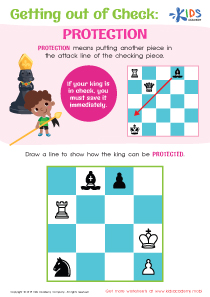
Strategic thinking development Extra Challenge Chess Worksheets for Ages 4-6
3 filtered results
-
From - To
Unlock your child's potential with our "Strategic Thinking Development Extra Challenge Chess Worksheets" designed specifically for ages 4-6. These engaging worksheets provide a fun way to introduce young learners to the fundamentals of chess while enhancing their problem-solving and critical thinking skills. Each activity encourages kids to think ahead, foresee outcomes, and develop strategic approaches in a playful context. Ideal for home or classroom use, these worksheets promote cognitive development and foster a love for chess. Equip your little ones with essential skills for success in and out of the game with our thoughtfully crafted challenges! Start their journey today!
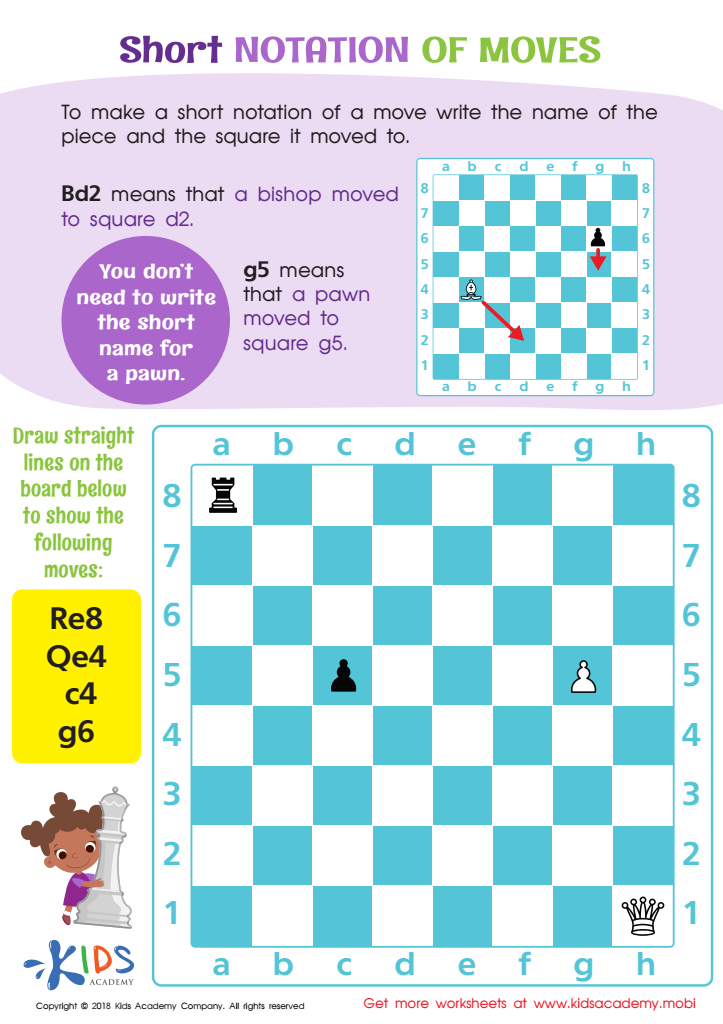
Short Notation of Moves Worksheet
 Assign to My Students
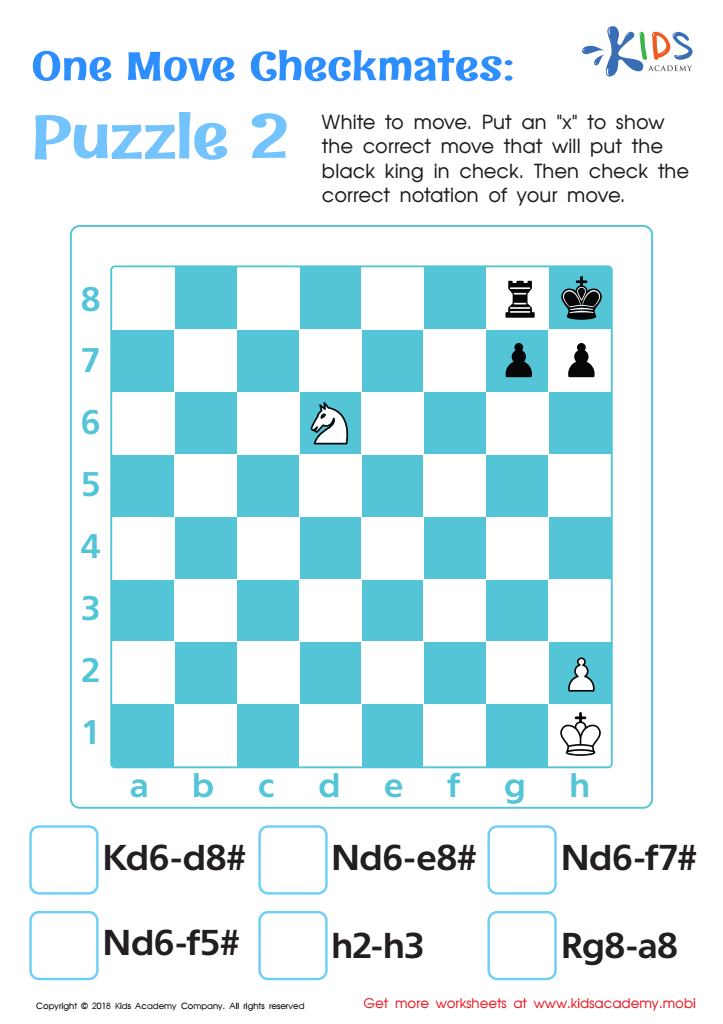
One Move Checkmates: Puzzle 2 Worksheet
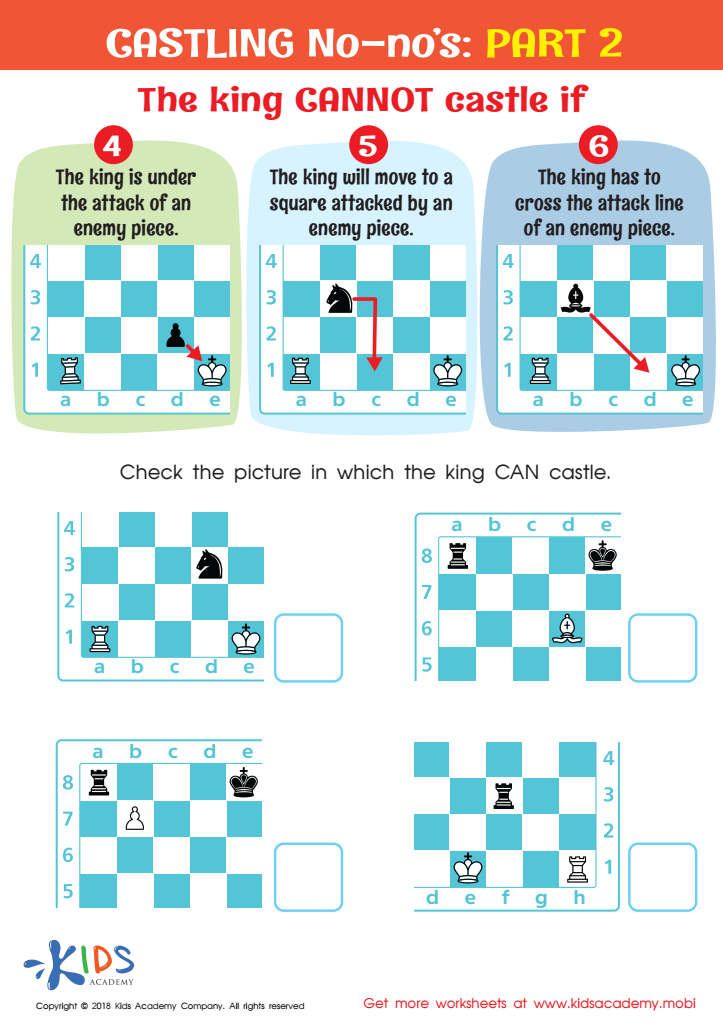
Castling No - no's: Part 2 Worksheet


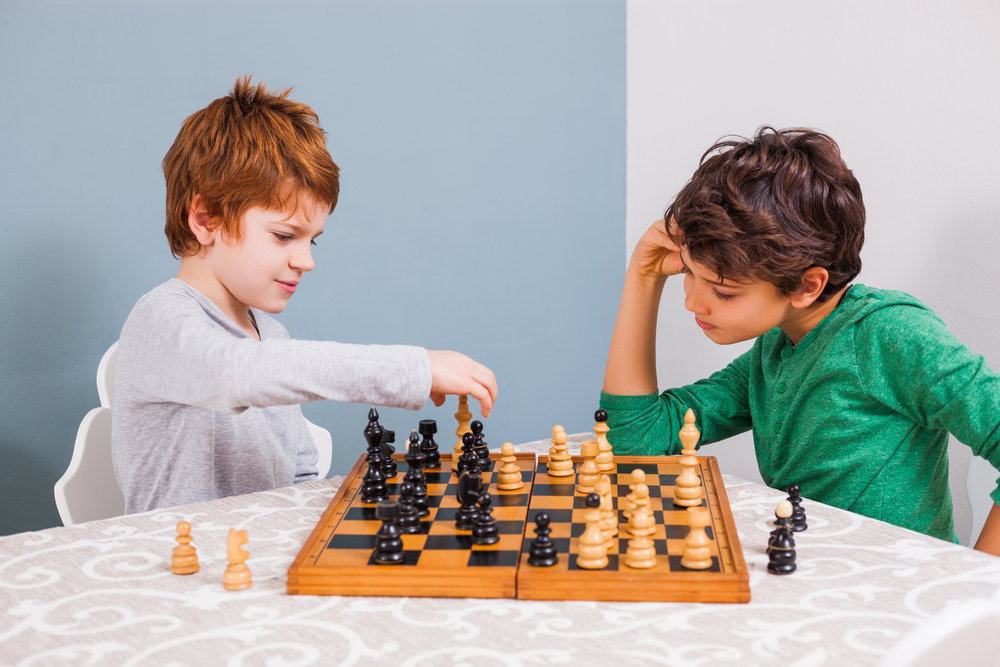




Strategic thinking is an essential skill that lays the groundwork for problem-solving, decision-making, and critical thinking in children. Introducing programs like Extra Challenge Chess for ages 4-6 fosters these skills in a fun and engaging environment. By learning chess, young children not only develop cognitive abilities but also learn to analyze situations, anticipate consequences, and devise plans—all of which are vital both in academic settings and daily life.
Parents and teachers should care about strategic thinking development because these skills contribute to overall educational success and personal growth. Children who engage in chess learn patience, discipline, and resilience as they navigate challenges and learn from mistakes. This early exposure to strategic gameplay enhances focus and concentration, paving the way for better performance in other subjects, especially math and science, which often rely on logical reasoning.
Moreover, the social aspect of chess promotes interpersonal skills, teaching children about fair play and sportsmanship. By supporting programs like Extra Challenge Chess, parents and teachers invest in developing well-rounded individuals equipped to think critically and strategically, which ultimately prepares them for future academic and life challenges.