Comparing objects Extra Challenge Worksheets for Ages 4-6
3 filtered results
-
From - To
Discover the engaging "Comparing Objects Extra Challenge Worksheets for Ages 4-6," designed to enhance early childhood learning through hands-on activities. These worksheets provide a fun way for young learners to develop their critical thinking and analytical skills by comparing various objects based on size, color, shape, and more. Each worksheet encourages children to observe differences and similarities, building a strong foundation in cognitive development. Perfect for classroom use or at-home learning, these activities foster interactive learning experiences while keeping kids motivated and excited. Elevate play-based learning with our engaging materials that spark curiosity and strengthen comparison skills in your budding learners!
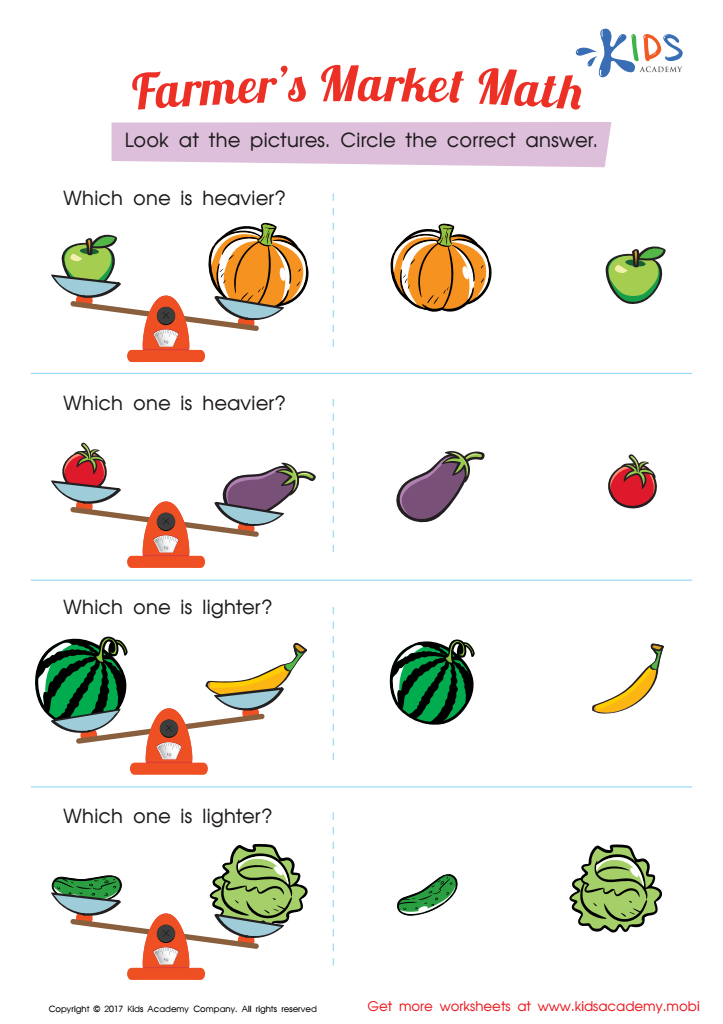
Which One Is Heavier Worksheet
 Assign to My Students
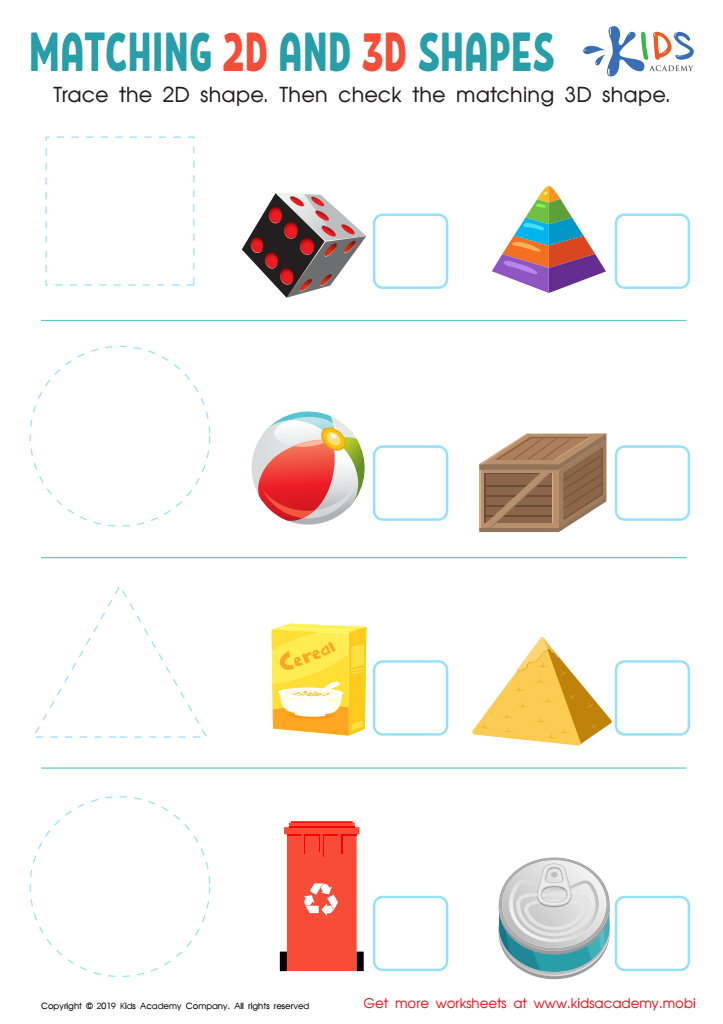
Matching 2D and 3D Shapes Worksheet
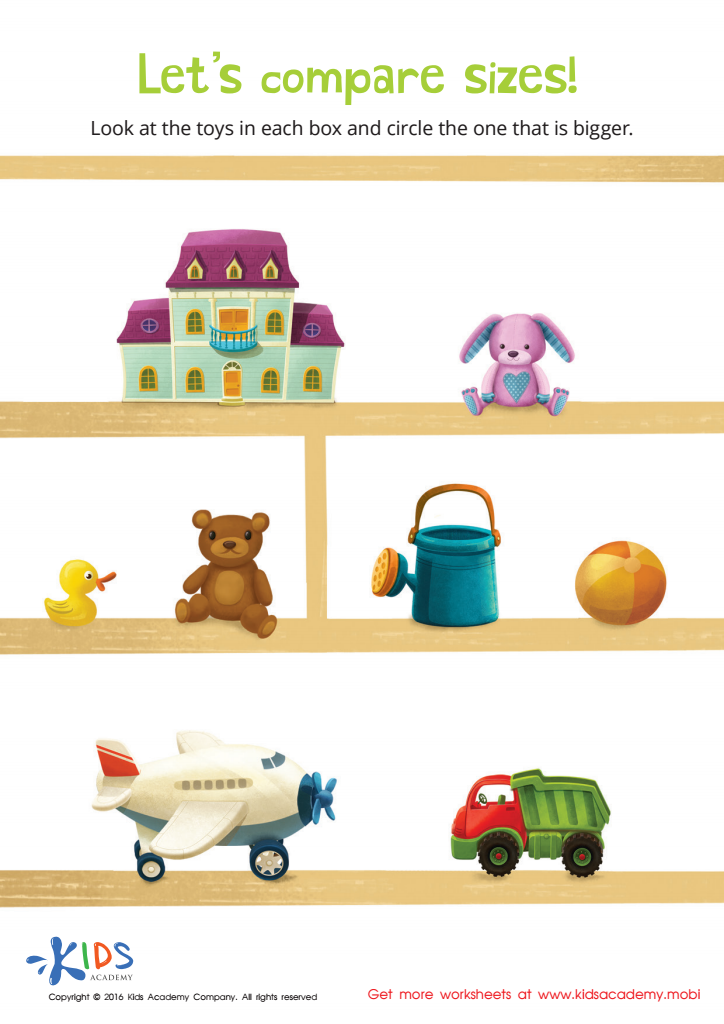
Classifying by Size Sorting Worksheet







Comparing objects is an essential skill that young children, ages 4-6, should develop early in their learning journey. It lays the foundation for critical thinking, mathematics, and observational skills, fostering a greater understanding of their world. When parents or teachers engage children in comparing items—by size, color, shape, or quantity—they enhance their cognitive development and encourage language use as children describe their observations.
This skill enriches problem-solving abilities, as children learn to identify differences and similarities that help them categorize objects and build logical reasoning. Furthermore, comparing objects can lead to early math skills, such as understanding more, less, or equal quantities, which are fundamental concepts for later arithmetic. Engaging in this activity cultivates curiosity and encourages interactive play, making learning enjoyable.
For parents and teachers, incorporating comparison exercises into daily routines or lessons can be a joyful experience. It encourages conversations, fosters social interactions, and builds vocabulary, all while making learning tangible and relatable. By prioritizing these activities, caregivers also help nurture a positive attitude toward learning, setting the stage for lifelong educational engagement. Investing time in comparing objects is a crucial step in enabling children to explore and understand the intricate details of the world around them.








