Story sequencing Extra Challenge Worksheets for Ages 4-6
5 filtered results
-
From - To
Introducing our Story Sequencing Extra Challenge Worksheets for Ages 4-6! Designed to enhance young learners' comprehension and critical thinking, these printable worksheets guide children through the sequence of events in engaging stories. By arranging pictures and sentences in the correct order, kids develop essential reading and storytelling skills while having fun. Ideal for advanced learners seeking a stimulating challenge, these activities foster a deep understanding of narrative structure and improve vocabulary. Perfect for classroom or home use, our worksheets provide a valuable resource to support your child's early literacy journey. Prepare to watch them learn, grow, and excel!
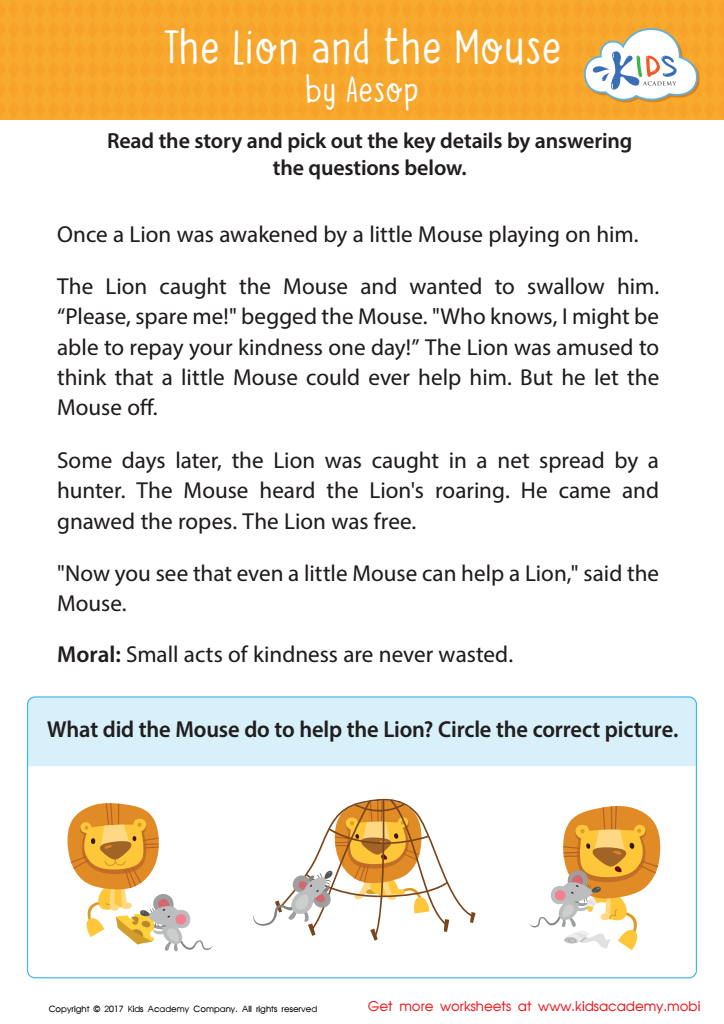
The Lion and The Mouse Sequencing Worksheet
 Assign to My Students
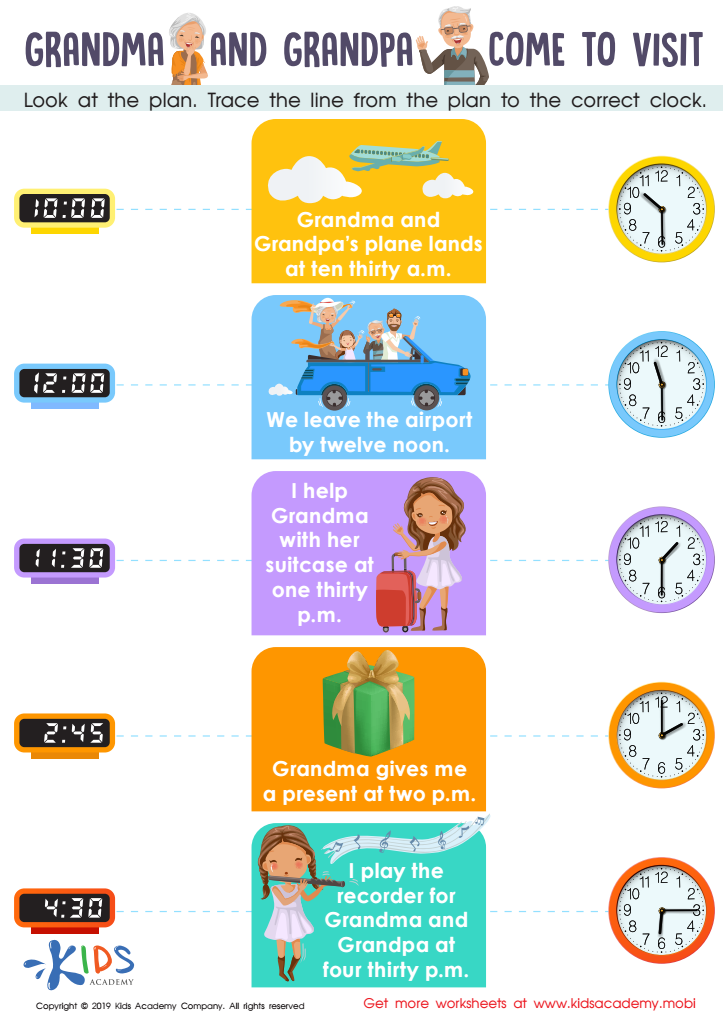
Grandpa and Grandma Come to Visit Worksheet
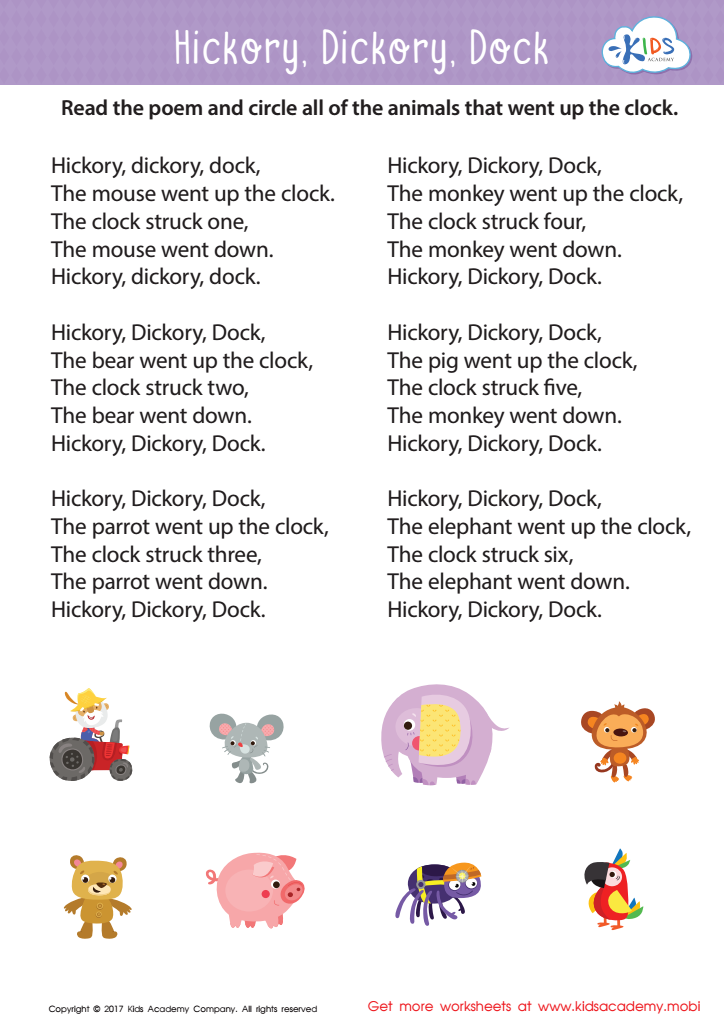
Hickory Dickory Dock Sequencing Worksheet
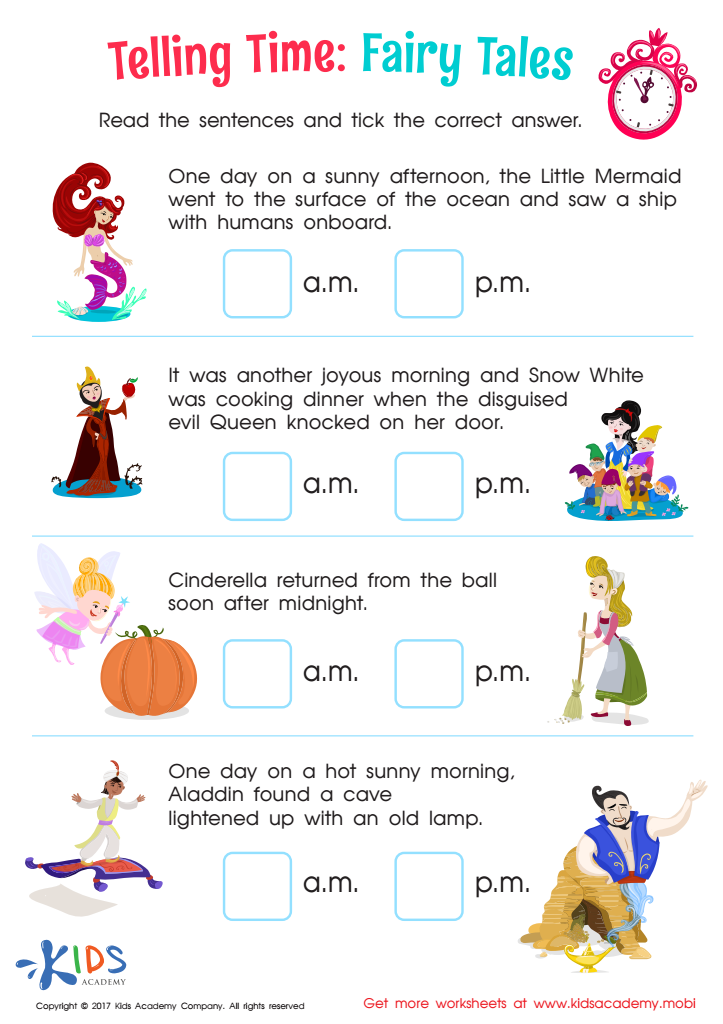
Telling Time: Fairy Tales Worksheet
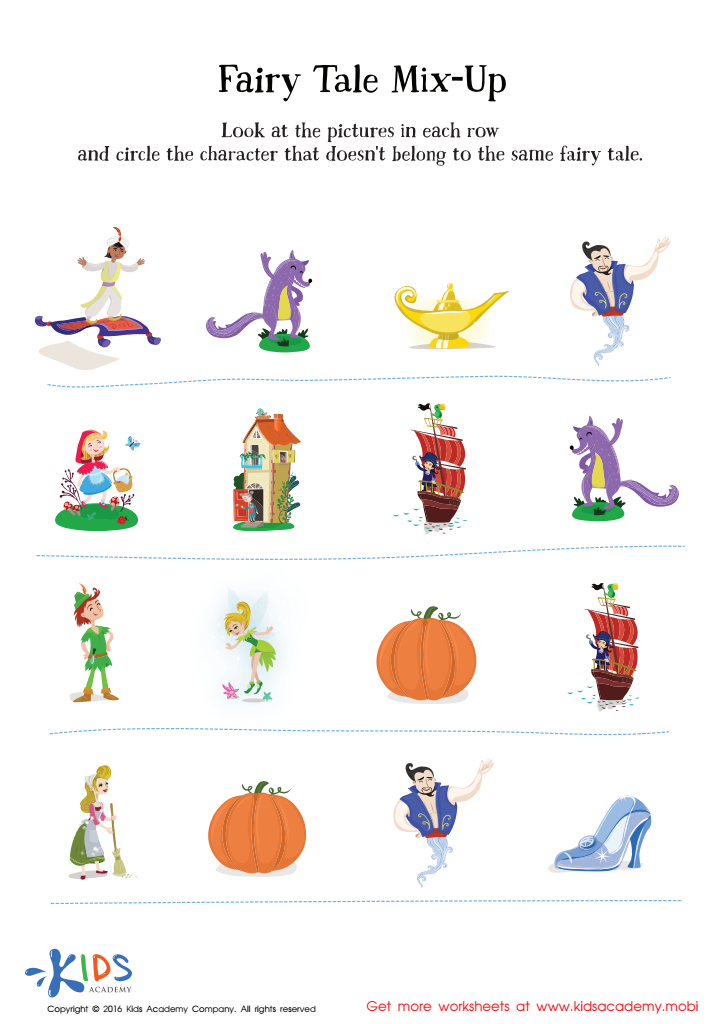
Fairy Tale Worksheet: Story Mix Up







Story sequencing activities are more than just fun—they are fundamental for the cognitive and language development of young children. Ages 4-6 are crucial years for brain growth, and engaging in extra challenges like story sequencing enhances several developmental domains.
First, it bolsters comprehension skills. When kids sequence stories, they need to understand the beginning, middle, and end of a narrative. This lays the groundwork for effective reading and listening skills, as they learn to track and predict storylines.
Secondly, these activities develop critical thinking and reasoning abilities. By putting story elements in order, children practice logical thinking and problem-solving. They assess cause-and-effect relationships, an important skill across all areas of learning.
Furthermore, sequencing fosters communication. Retelling a story in sequence requires the child to use grammar, vocabulary, and descriptive language which enriches their linguistic abilities.
Additionally, sequencing aids in memory enhancement and can also boost attention span. Remembering story details and their order trains their brain to focus and retain information.
In today’s digital age, these benefits extend beyond traditional literacy. Story sequencing is an excellent precursor to understanding more complex narratives in multimedia settings.
For parents and teachers, prioritizing story sequencing ensures children develop crucial skills that benefit their overall learning experience. Providing extra challenges creates an enriched environment, promoting confidence and a love for learning that will last a lifetime.








