
Vocabulary development Extra Challenge Worksheets for Ages 4-6
5 filtered results
Difficulty Level
Grade
Age
-
From - To
Subject
Activity
Standards
Introducing our "Vocabulary Development Extra Challenge Worksheets for Ages 4-6," designed to boost your child's language skills in a fun and engaging way! These worksheets provide an exciting variety of activities that challenge young learners to expand their vocabulary while enhancing reading and comprehension skills. With colorful illustrations and interactive exercises, your child will explore new words through matching, filling in blanks, and word games. Ideal for both home and classroom use, these worksheets promote critical thinking and encourage language retention in an enjoyable format. Equip your child with essential vocabulary skills and watch their confidence soar! Perfect for early grade teachers and parents alike!
Favorites
With answer key
Interactive
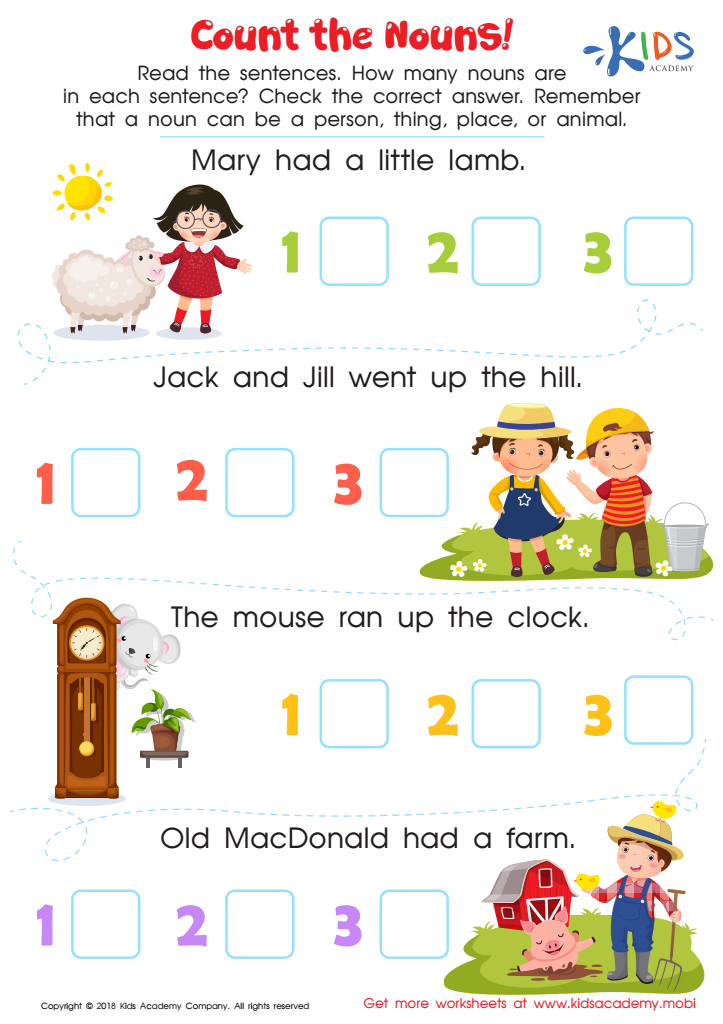
Count the Nouns Worksheet
Read the sentences with your children and ask them to find the nouns. Explain that nouns are names of people, animals, places or things. Point out the boxes with the answers to check.
 Assign to My Students
Count the Nouns Worksheet
Worksheet
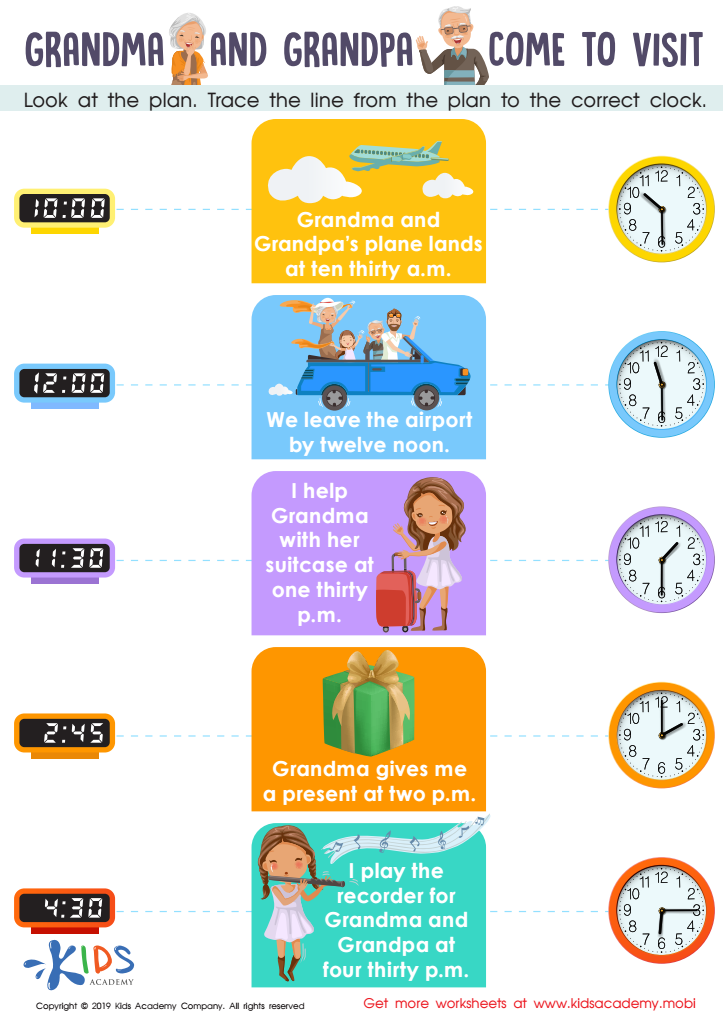
Grandpa and Grandma Come to Visit Worksheet
Have your kids learn about time using this worksheet. It contains pictures, accompanying texts and a clock, which you can use to help them trace the plan. Grandparents' visits and trips to their house are the perfect opportunity to practice this skill. Talk to your kids about the plan and watch them trace it to the correct clock.
Grandpa and Grandma Come to Visit Worksheet
Worksheet
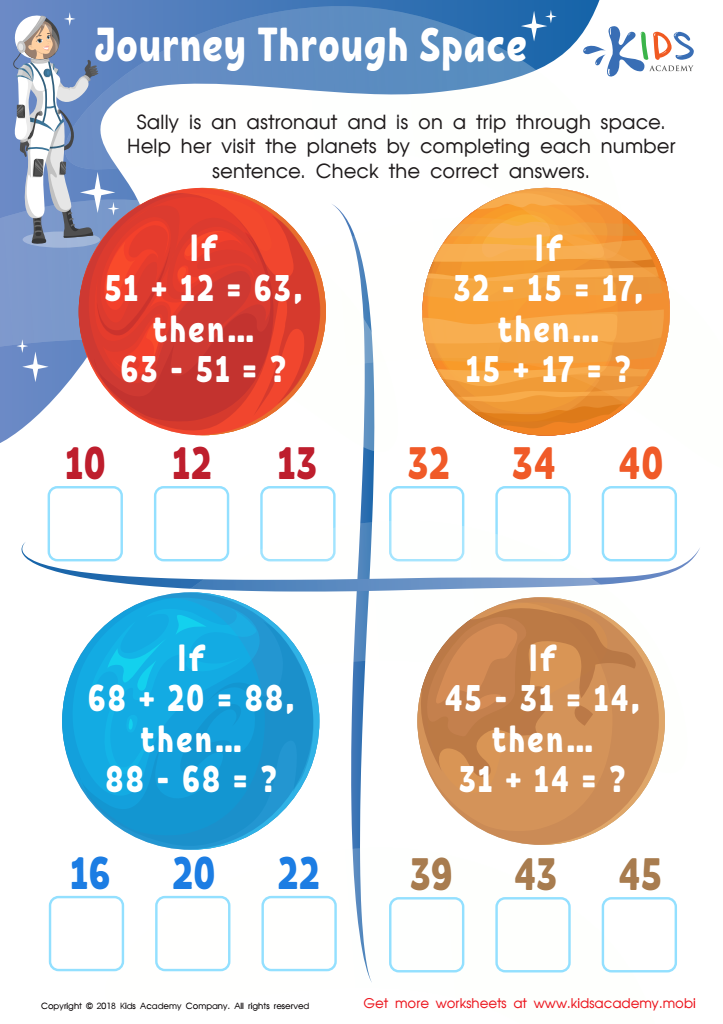
Journey Through Space Worksheet
Astronauts are essential explorers. They travel between Earth and other planets to gain knowledge of life in space. Being an astronaut requires strong math skills, so help your child develop them through this worksheet. Ask them to assist Sally on her journey to the planets by solving the number sentences in the picture. Verify the answers are correct.
Journey Through Space Worksheet
Worksheet
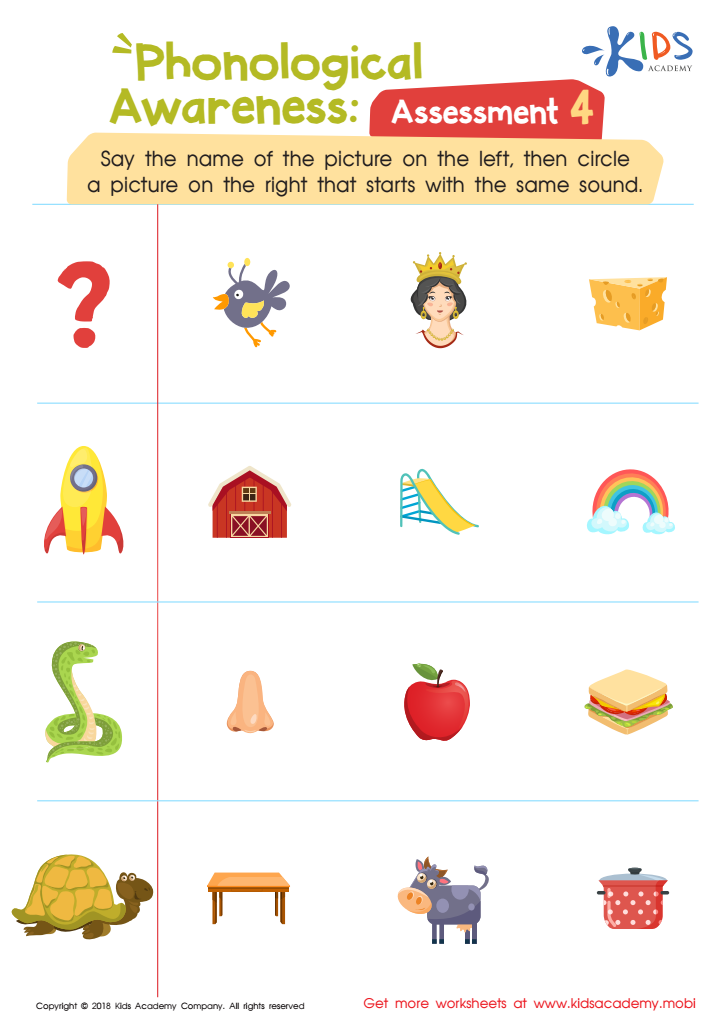
Phonological Awareness: Assessment 4 Worksheet
It can be tricky for young readers to differentiate between sounds in words. Make it fun with this downloadable worksheet! Ask your child to name each picture on the left and match the starting sound with an image on the right. This helps assess their phonics skills and make learning enjoyable.
Phonological Awareness: Assessment 4 Worksheet
Worksheet
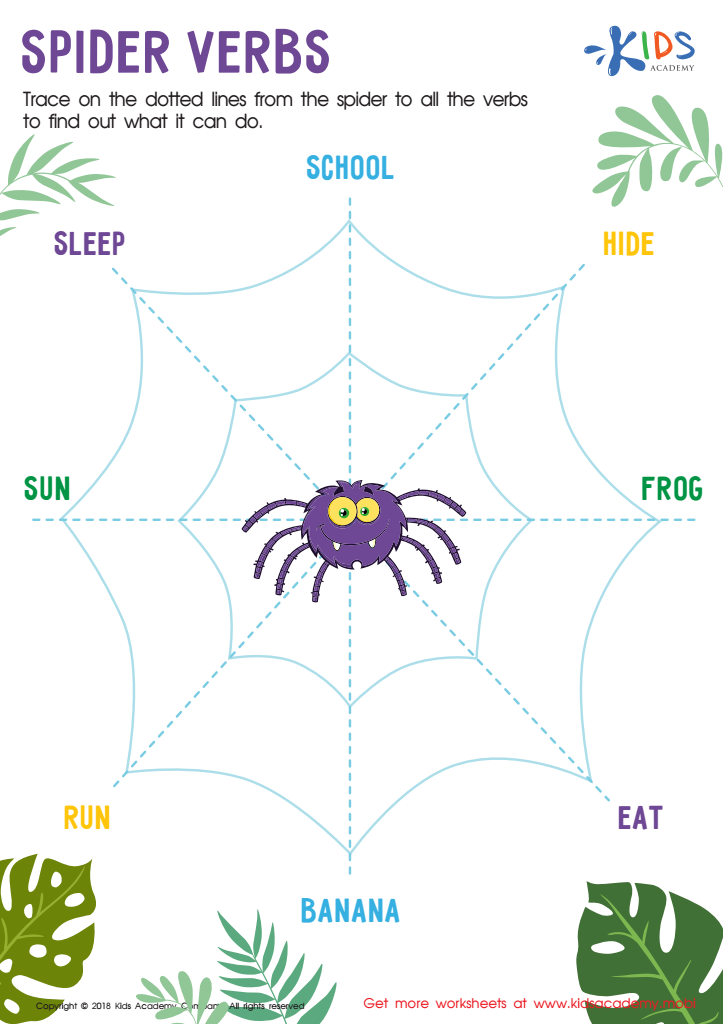
Spider Verbs Worksheet
Verbs are action words. Examples: run, play, talk. Show your child this tracing sheet for them to learn about verbs. Ask them to trace the dotted lines from the spider to the words that are verbs. These words are what the spider can do.
Spider Verbs Worksheet
Worksheet
Join Kids Academy for Free
Who is primarily going to use this learning content?






Vocabulary development is crucial for children aged 4-6, as it lays the foundation for reading, writing, and overall communication skills. During these formative years, children's brains are highly receptive to new words, and a rich vocabulary enhances their ability to express thoughts, feelings, and ideas effectively.
Parents and teachers play pivotal roles in fostering this development. Engaging with children through books, storytelling, and conversations introduces them to diverse vocabulary in context. When adults model language by explaining unfamiliar words, asking open-ended questions, and encouraging discussions, children not only expand their word banks but also improve critical thinking skills and comprehension.
Furthermore, a strong vocabulary is directly linked to academic success. Children with robust language skills are more likely to excel in reading comprehension and other subjects, setting the stage for lifelong learning. Vocabulary also contributes to social skills, helping children articulate their needs and negotiate conflicts.
Encouraging vocabulary development can involve playful activities such as word games, songs, and creative storytelling, making learning enjoyable and interactive. By prioritizing vocabulary, parents and teachers equip children with essential tools for effective communication, enhanced learning capabilities, and increased self-confidence as they grow. This investment in early language skills pays dividends throughout a child’s educational journey.








