Cognitive Development Extra Challenge Geometry Worksheets for Ages 4-6
7 filtered results
-
From - To
Our "Cognitive Development Extra Challenge Geometry Worksheets for Ages 4-6" are expertly designed to enhance critical thinking and problem-solving skills in young learners. Ideal for children ready to advance beyond basic shapes, these engaging worksheets introduce complex patterns, spatial understanding, and early geometry concepts in a fun, interactive manner. Each activity fosters cognitive growth, encouraging kids to identify, compare, and construct shapes, enhancing their visual-spatial abilities and mental math foundations. Perfect for teachers and parents aiming to provide an enriching learning experience, these worksheets make geometry exciting and accessible, ensuring foundational skills are built with confidence.
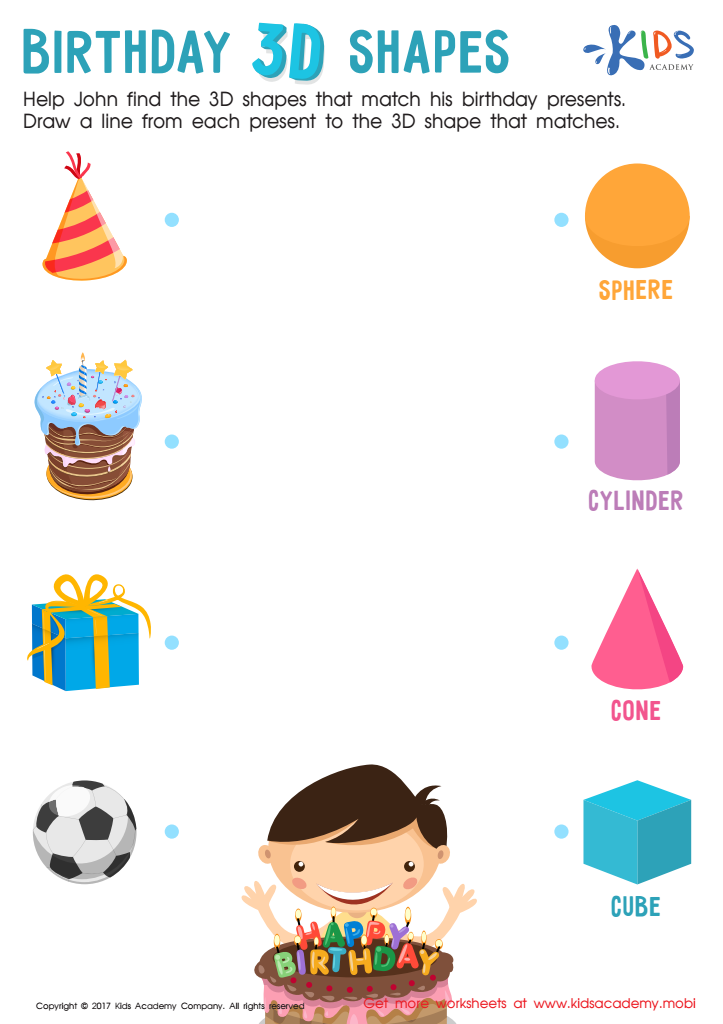
Birthday 3D Shapes Worksheet
 Assign to My Students











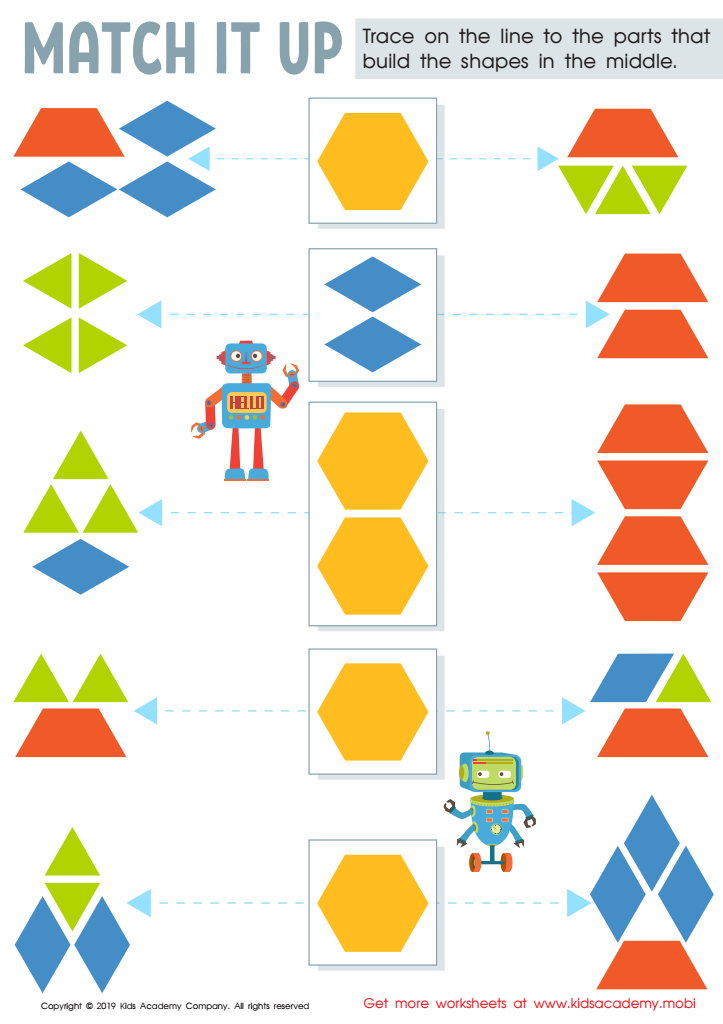
Match It up Worksheet
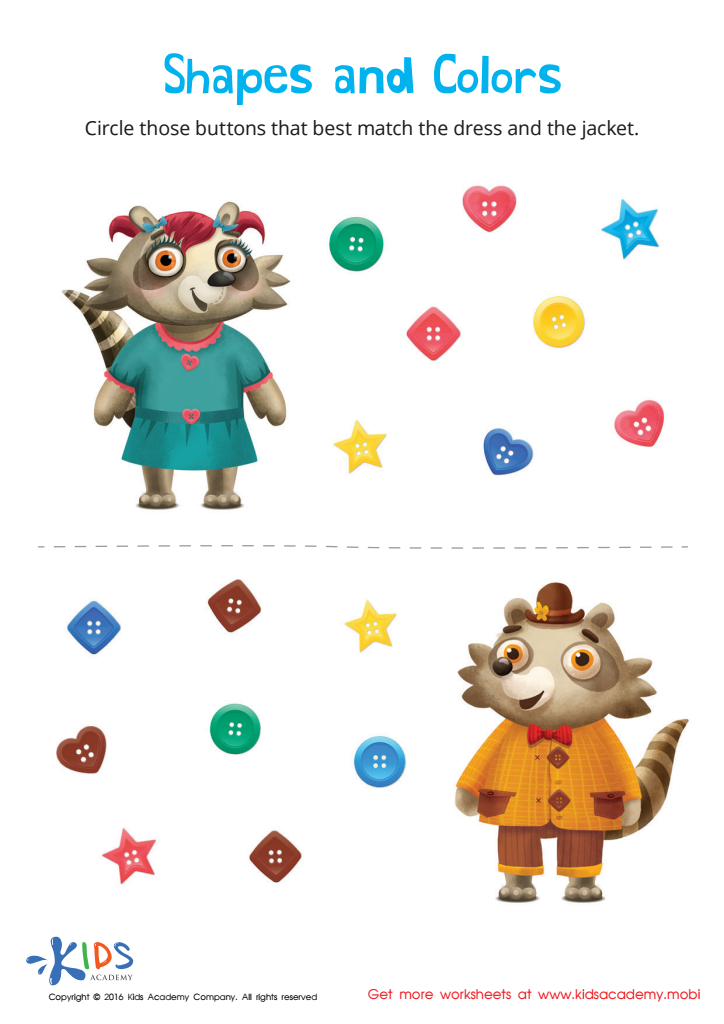
Matching: Shapes and Colors Worksheet
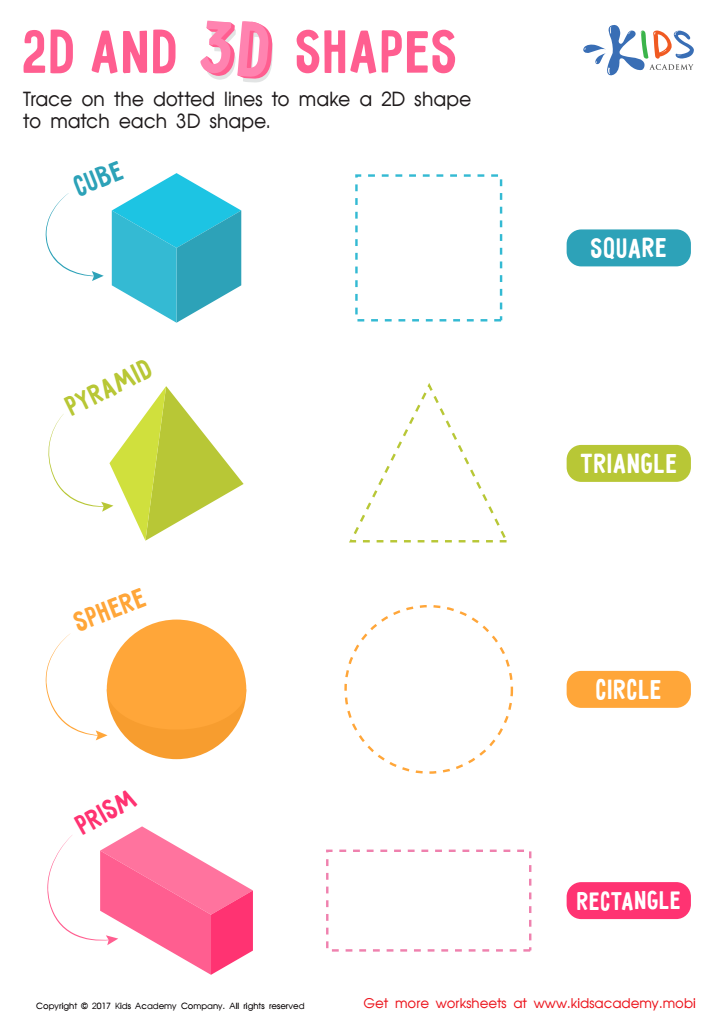
2D and 3D Shapes Worksheet
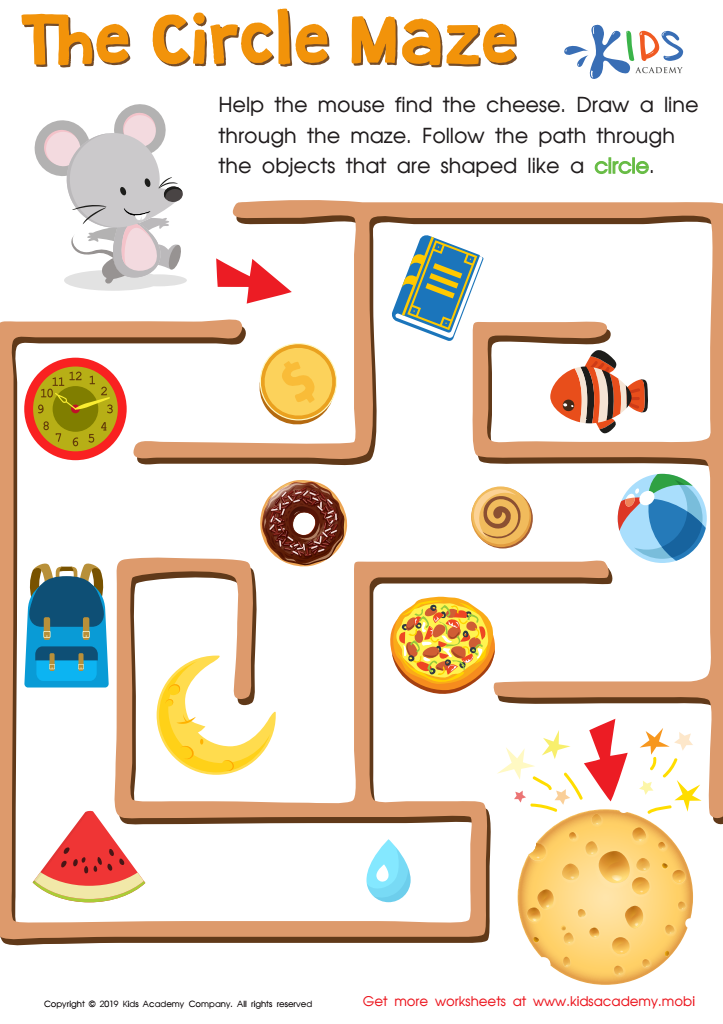
The Circle Maze Worksheet
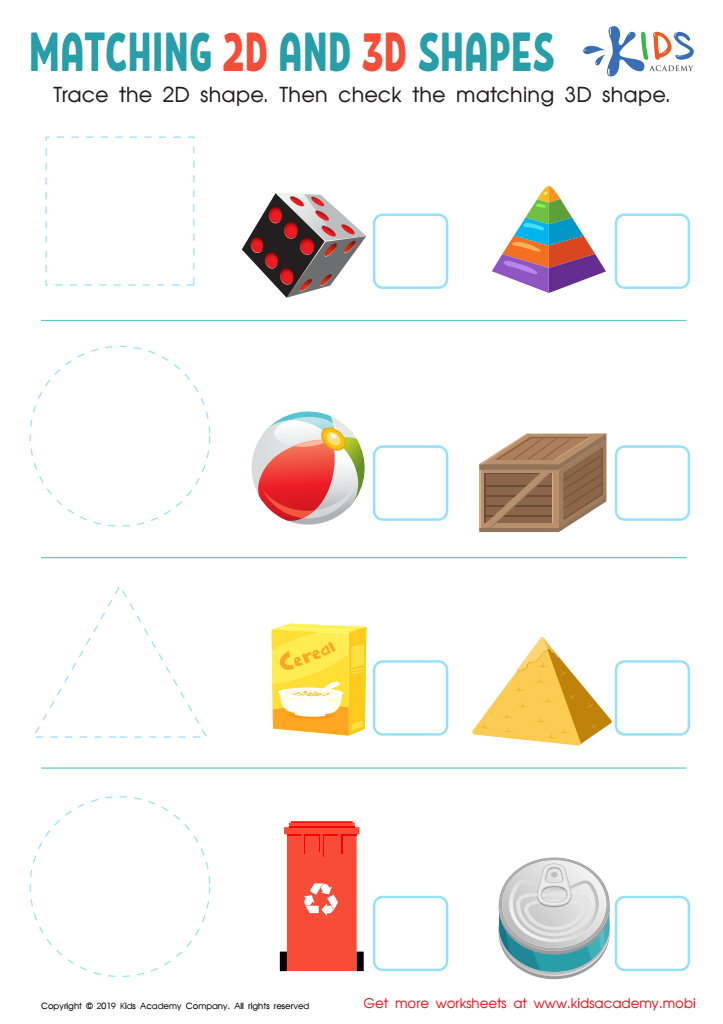
Matching 2D and 3D Shapes Worksheet

Shapes Worksheet








Parents and teachers should care about cognitive development extra challenges, such as geometry, for children ages 4-6 because early exposure to these concepts can significantly enhance a child's cognitive abilities, spatial reasoning, and problem-solving skills. At this developmental stage, children are remarkably receptive and their brains are primed for learning. By introducing geometric challenges, we cater to their natural curiosity and innate ability to recognize shapes, patterns, and spatial relationships.
Engaging in geometry allows children to develop important foundational math skills, which are critical for later academic success. It helps them understand and interpret the world around them, as spatial awareness plays a vital role in navigating physical space, recognizing patterns, and eventually appreciating more complex math and science subjects.
Moreover, cognitive development exercises like geometry stimulate neural connections, promoting critical thinking and enhancing memory. These activities also boost children's confidence as they accomplish small, incremental challenges and discover new ways of visualizing and solving problems.
For these reasons, integrating cognitive development extra challenges that incorporate geometry is essential for fostering well-rounded intellectual growth. It equips children with the tools they need to excel academically and navigate real-world scenarios effectively, laying a strong foundation for future educational success.








