Logical Reasoning Extra Challenge Matching Worksheets for Ages 4-6
3 filtered results
Difficulty Level
Grade
Age
-
From - To
Subject
Activity
Standards
Explore our "Logical Reasoning Extra Challenge Matching Worksheets for Ages 4-6" designed to enhance critical thinking skills through engaging activities. These worksheets offer a variety of matching exercises that stimulate young minds, encouraging them to identify patterns, classify objects, and make connections. Tailored for early learners, each worksheet promotes cognitive development while making learning fun. Our thoughtfully crafted challenges will help children boost their reasoning abilities and prepare them for future academic success. Perfect for both classroom use and home learning, these worksheets are an excellent resource for parents and teachers looking to provide additional learning opportunities. Get started today!
Favorites
With answer key
Interactive
 Assign to My Students
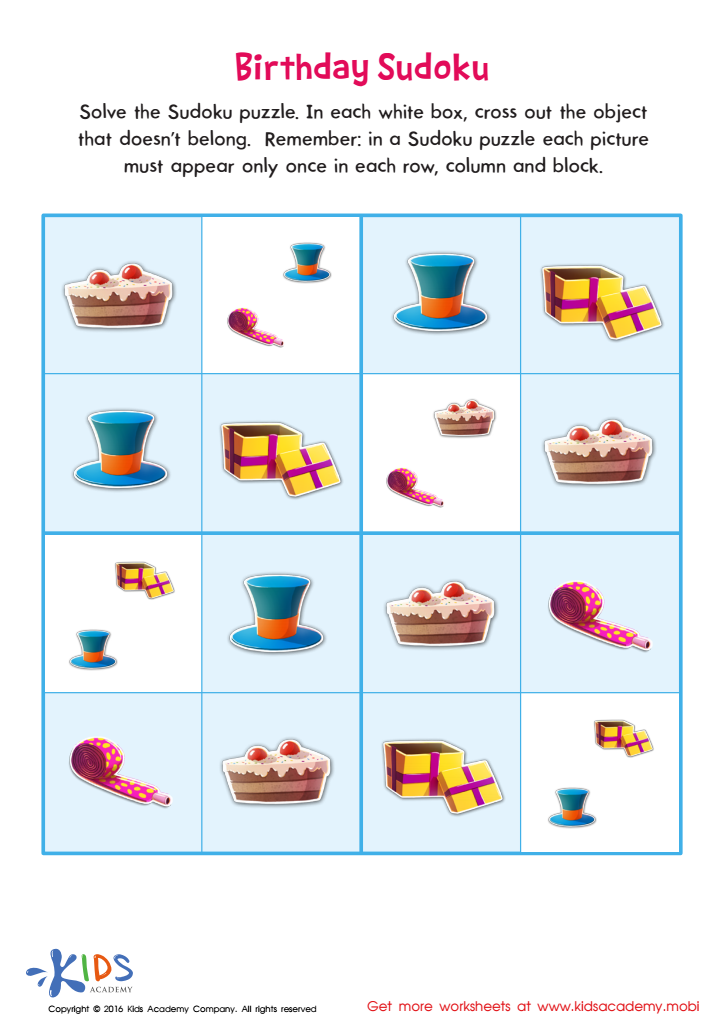
Birthday Sudoku Sorting Worksheet
With this Sudoku printable, your child will have fun and strengthen their problem-solving skills.
Birthday Sudoku Sorting Worksheet
Worksheet
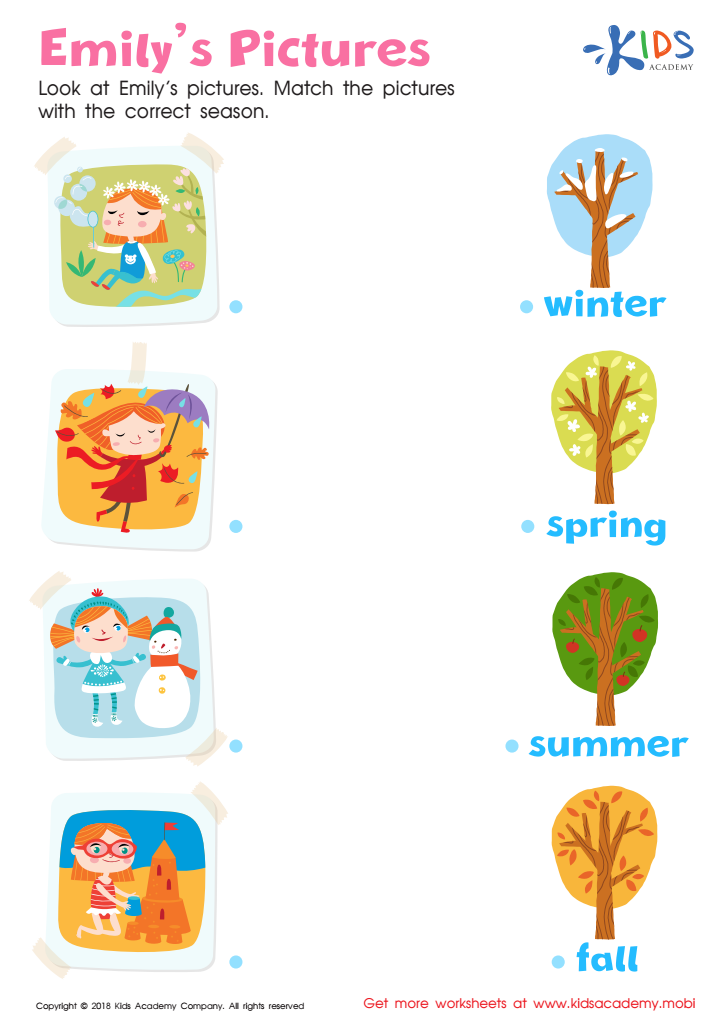
Emily's Pictures Worksheet
Look at the pictures of Emily on the left. Ask your child what she's doing in each one. Then, match the activities to the seasons on the right. Help your kids identify the correct season for each activity. Shorten to 80 words: Look at the pictures of Emily on the left. Ask your child what she's doing in each one, then match the activities to the seasons on the right. Help your kids find the correct season for each activity.
Emily's Pictures Worksheet
Worksheet
Join Kids Academy for Free
Who is primarily going to use this learning content?








Parents and teachers should care about implementing extracurricular tools like Logical Reasoning Extra Challenge Matching for ages 4-6 because early childhood is a crucial phase for cognitive development. This age group is characterized by a significant increase in the capacity for logical thinking and problem-solving skills. Logical reasoning activities, such as matching games, stimulate children's brains to analyze relationships, recognize patterns, and make informed connections—skills that are foundational for later academic success.
Moreover, such activities are designed to be engaging and playful, promoting not just intellectual growth but also social interaction. Children learn to work collaboratively, take turns, and develop patience and resilience as they tackle challenges. This fosters a love for learning that can carry through their educational journey.
Additionally, early exposure to logic and reasoning helps lay the groundwork for key subjects like mathematics and science. By integrating these activities into their routine, parents and teachers can nurture critical thinking skills, encouraging children to think independently and creatively. In a world increasingly driven by technology and complex decision-making, equipping young learners with logical reasoning skills will serve them well in the future, enhancing not only academic performance but also everyday problem-solving abilities.