Enhance your child’s reading abilities with our "Reading Skills Extra Challenge Worksheets" designed specifically for ages 4-7. Our carefully crafted activities are perfect for young learners ready to surpass their peers. They will engage with fun, interactive tasks that strengthen comprehension, vocabulary, and fluency. These worksheets provide the extra push needed to master critical reading skills, combining education with enjoyment. Give your child the academic edge with playful challenges that stimulate their growing minds, creating confident, proficient readers. Ideal for both classroom settings and at-home practice, these worksheets make great stepping-stones toward advanced reading success.

Check out this FREE "Reading Skills" Trial Lesson for age 4-7!

Illustrations in Informational Texts

Favorites
With answer key
Interactive
  • 4-7
  • Reading Skills
  • Extra Challenge
Baby Animals Matching Worksheet

Baby Animals Match-Up Worksheet

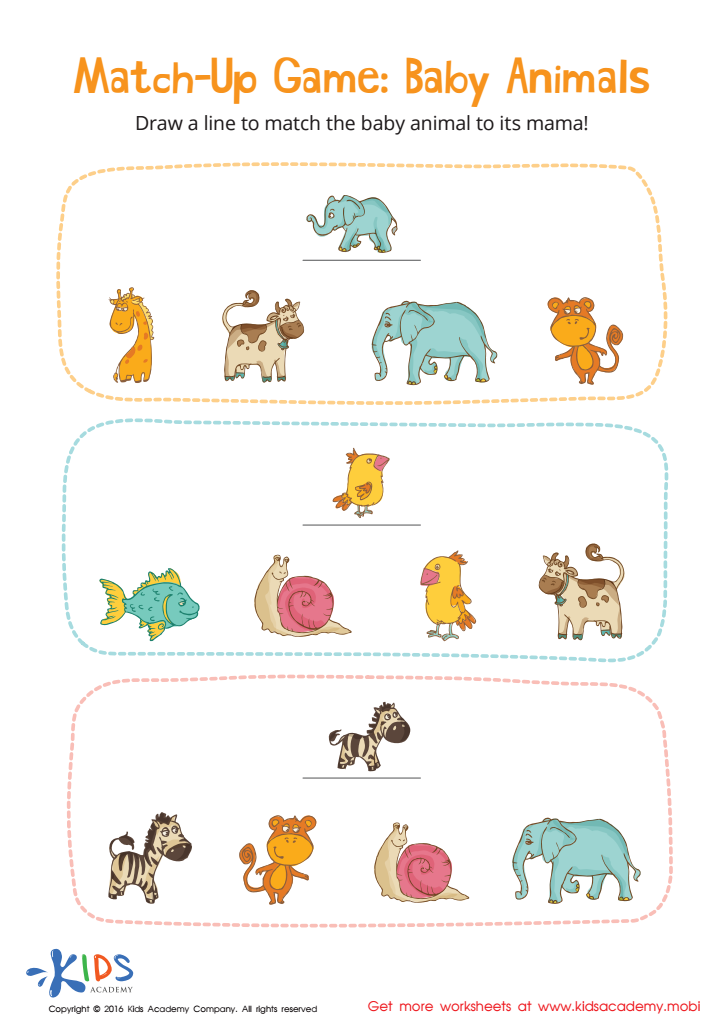
Help baby animals find their mummies by using this fun matching worksheet. Kids can practice logical reasoning skills while recognizing similar pictures and learning about animals. Extend their knowledge by having them identify each cute animal!
Baby Animals Match-Up Worksheet
Worksheet
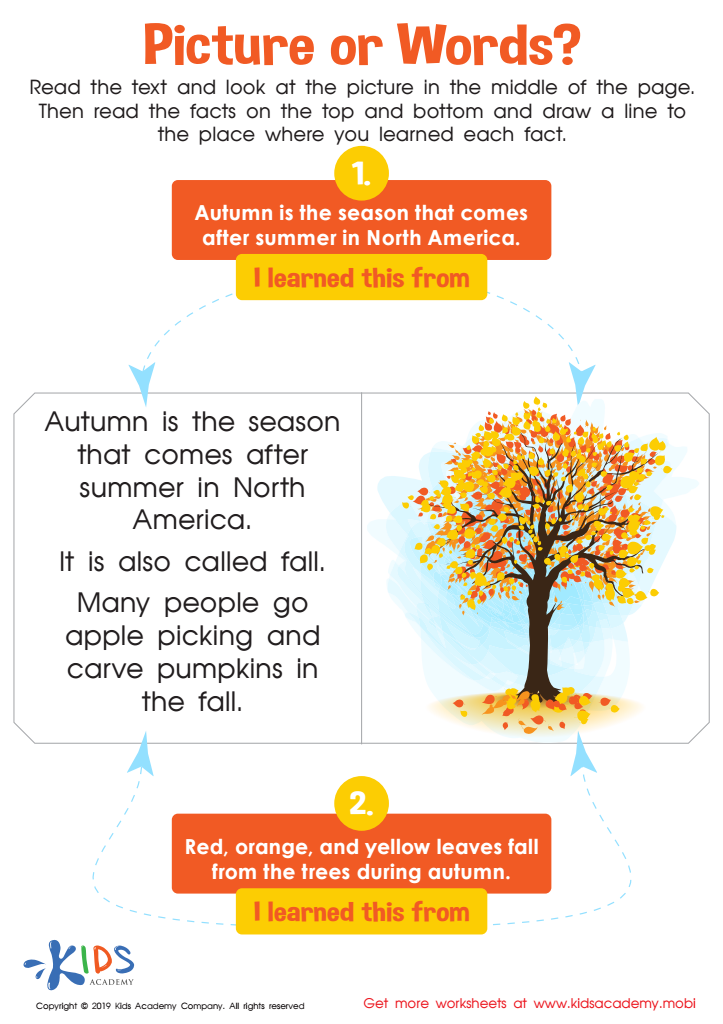
Picture Words Worksheet

Picture Words Worksheet

Pictures are key for early reading skills. Remind children to use all resources when reading passages to understand meaning. With the free PDF, kids can learn through pictures & words, then answer questions based on what they learned. This hits home that all info in text is valuable, pics included!
Picture Words Worksheet
Worksheet
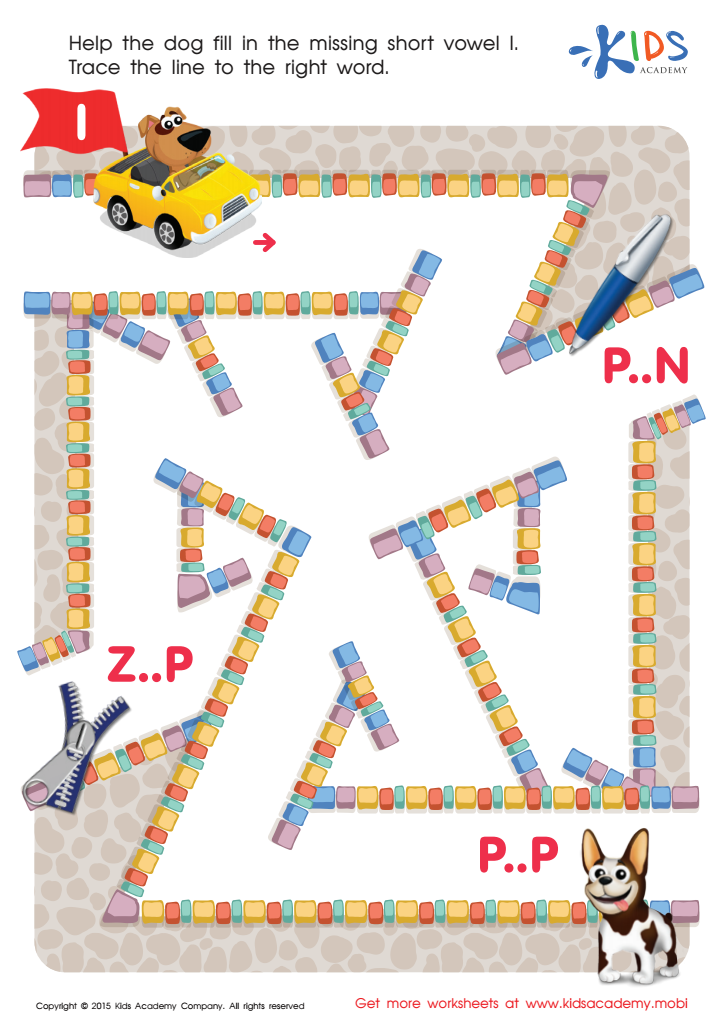
Phonics for Kids | Short Vowel Sound I | PDF Worksheet 1

Short Vowel Sound I Worksheet

This free printable phonics worksheet will get your kid prepped for reading! It's a maze to help the dog complete the word “zip” with the missing letter I. Have your kid say the word aloud to learn the I sound. It's a great way to practice reading, writing and spelling skills. Check out here for more phonics worksheets!
Short Vowel Sound I Worksheet
Worksheet
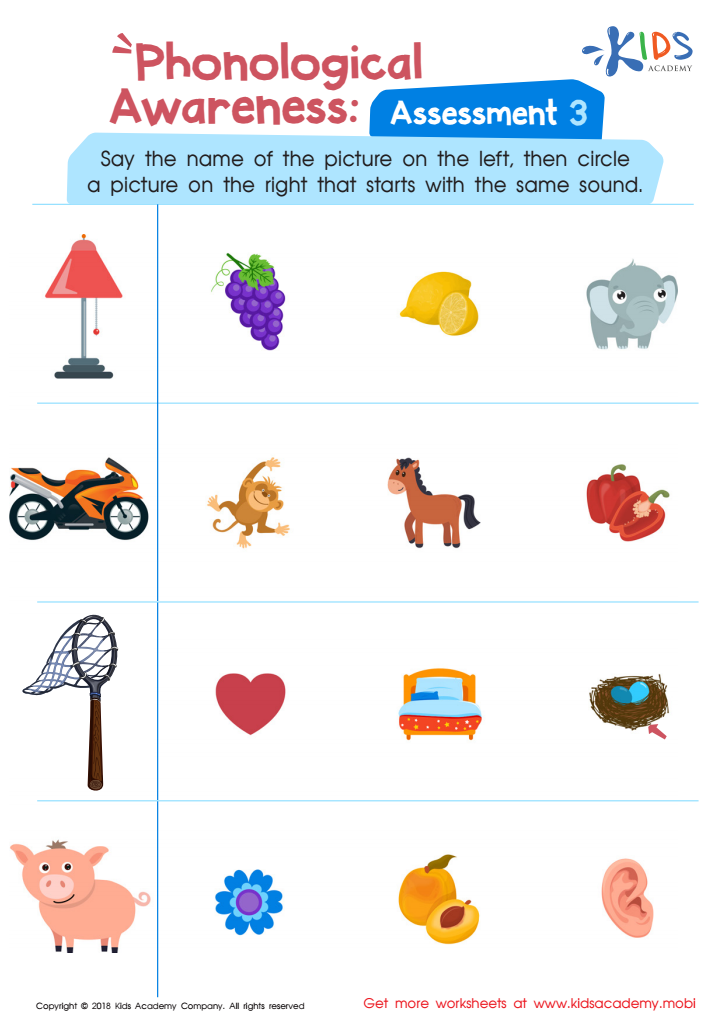
Phonological Awareness: Assessment 3 Worksheet

Phonological Awareness: Assessment 3 Worksheet

Test kids' reading readiness with a phonological awareness worksheet! With this PDF exercise, encourage children to name each picture aloud and match left to right. Help them learn to recognize word sounds at the start, middle and end of words. They'll be sure to remember that lamp doesn't sound like elephant!
Phonological Awareness: Assessment 3 Worksheet
Worksheet
“B” Words Printable Worksheet

First Words Worksheet

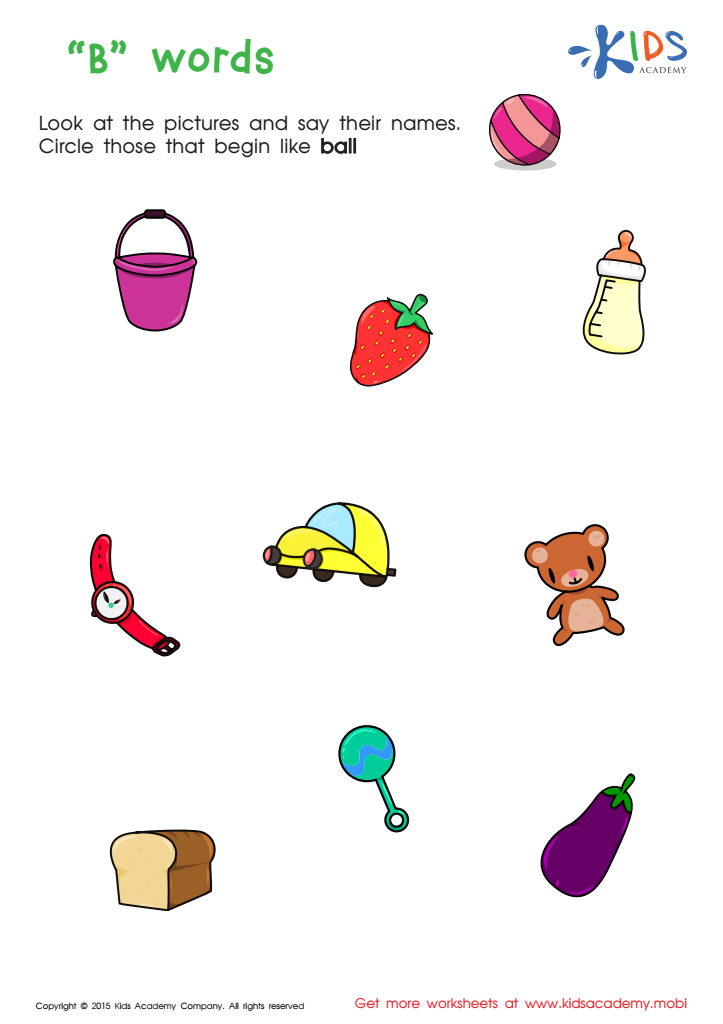
Want to help your preschooler learn to read and write? Start with this 'B' words printable worksheet. It will help your child match pictures to the letters they know, sound out words, and build literacy. Once they understand the concept, they can start sounding out words and building reading skills.
First Words Worksheet
Worksheet
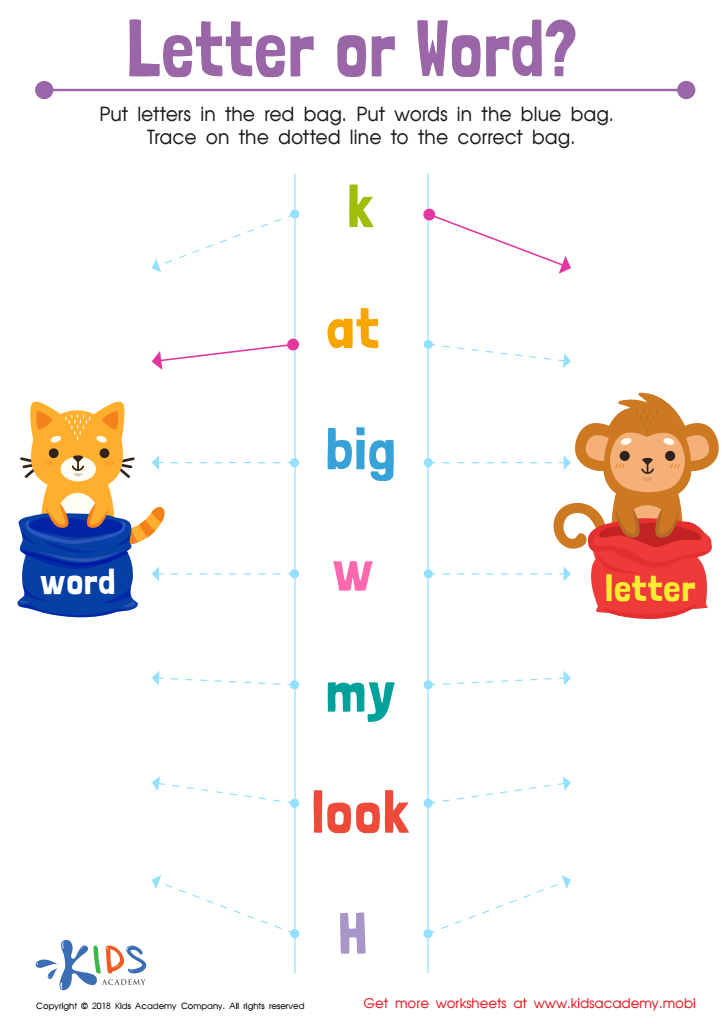
Letter or Word? Worksheet

Letter or Word? Worksheet

Help your kids differentiate between words and letters. If they can recite their alphabets and identify common words, this tracing sheet will be a breeze. Have them trace on the dotted lines to place the letters in the red bag with the kitten, and the words in the blue bag with the monkey.
Letter or Word? Worksheet
Worksheet
Pre reading worksheet guess my name

Pre Reading Worksheet Guess My Name

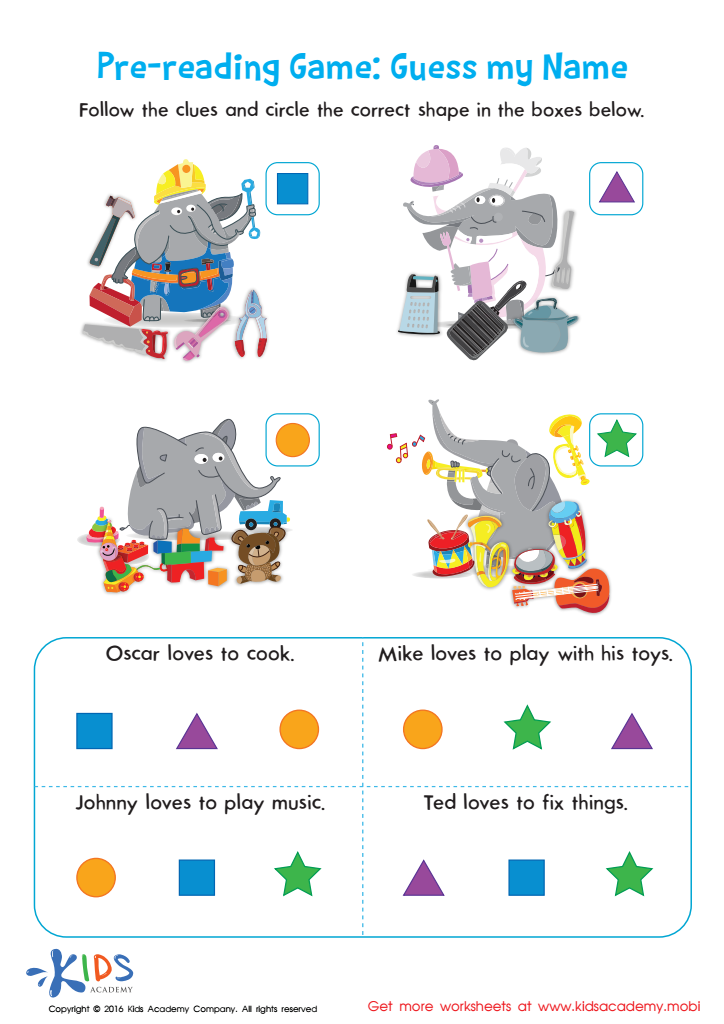
Guess My Name is a fun way to practice inference skills. Guess My Name is a fun pre-reading game to help your child practice drawing inferences from clues. With colorful illustrations, they'll use clues to match each elephant with its sentence and sharpen their inference skills.
Pre Reading Worksheet Guess My Name

Worksheet


Reading Skills Extra Challenge for children aged 4-7 is immensely valuable, influencing their cognitive, emotional, and social development. Parents and teachers should recognize its significance for several reasons.

Firstly, early reading skills are fundamental to academic success. Children who engage in extra reading challenges typically develop a broader vocabulary, better comprehension, and stronger critical thinking skills. These competencies are not just limited to reading but extend to other subjects, such as math, science, and social studies, fostering a well-rounded education.

Secondly, embracing reading challenges nurtures a love for literature and lifelong learning. Youngsters who find joy and confidence in reading are more likely to pursue knowledge independently, cultivating self-discipline and persistence.

Moreover, engaging with diverse texts exposes children to various perspectives, enhancing empathy and cultural awareness. This early social-emotional development is crucial for forming healthy relationships and understanding their place in the broader world.

Parents and teachers play a pivotal role by providing consistent encouragement and resources tailored to the child's reading level and interests. Celebrating milestones and making reading a shared, enjoyable experience can instill a positive attitude toward reading challenges.

Ultimately, prioritizing reading skills equips children with essential tools for future success, both academically and personally, laying a strong foundation for lifelong achievement.