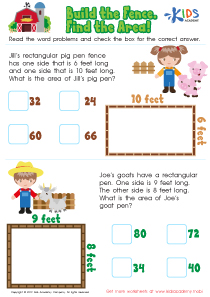
Pattern recognition Extra Challenge Matching Worksheets for Ages 4-7
3 filtered results
Difficulty Level
Grade
Age
-
From - To
Subject
Activity
Standards
Unlock your child’s potential with our extra challenge matching worksheets designed for ages 4-7! These engaging resources focus on pattern recognition, helping young learners identify and understand sequences through vibrant visuals and fun activities. Ideal for reinforcing essential math skills in a playful manner, our worksheets encourage critical thinking and problem-solving. Kids will love matching items, shapes, and colors, developing their cognitive abilities while having fun! Perfect for home schooling or classroom use, these printables cater to varying skill levels, ensuring every child can rise to the challenge. Download these interactive worksheets today and watch your child thrive in learning!
Favorites
With answer key
Interactive
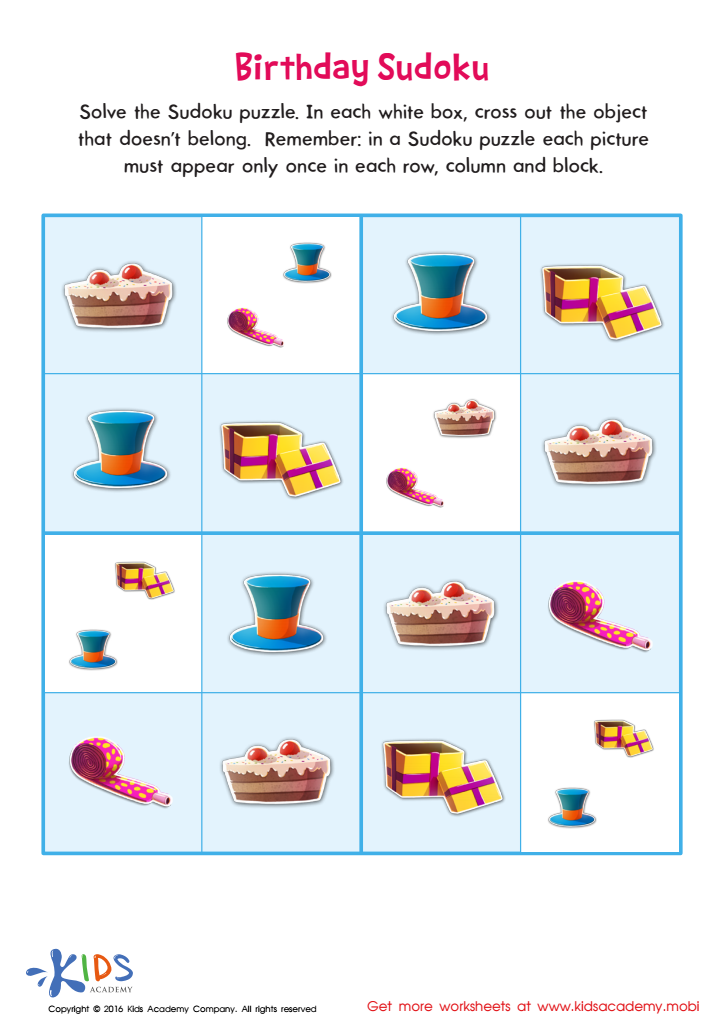
Birthday Sudoku Sorting Worksheet
With this Sudoku printable, your child will have fun and strengthen their problem-solving skills.
 Assign to My Students
Birthday Sudoku Sorting Worksheet
Worksheet
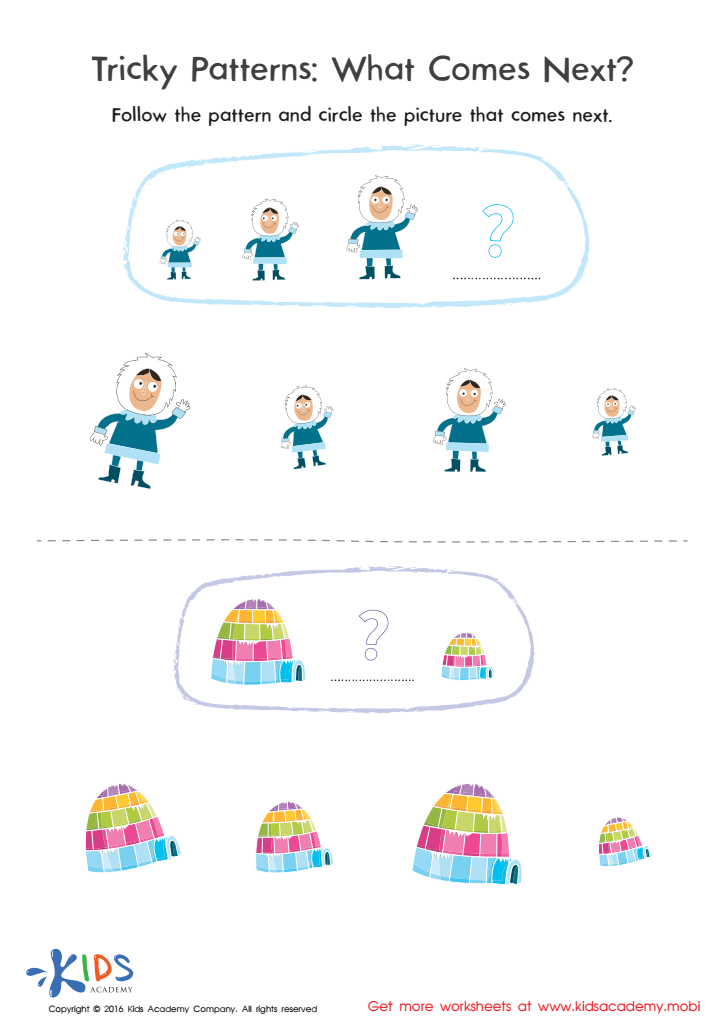
Tricky Patterns Size Worksheet
Give your child a head start on critical thinking with this picture pattern worksheet! It's an intriguingly fun way to help them master important skills like spatial reasoning, critical thinking, and logical reasoning. They'll differentiate between shapes, complete the pattern with a logical answer, and look for and understand patterns. It's the perfect foundation for future math skills, setting them up for future success!
Tricky Patterns Size Worksheet
Worksheet
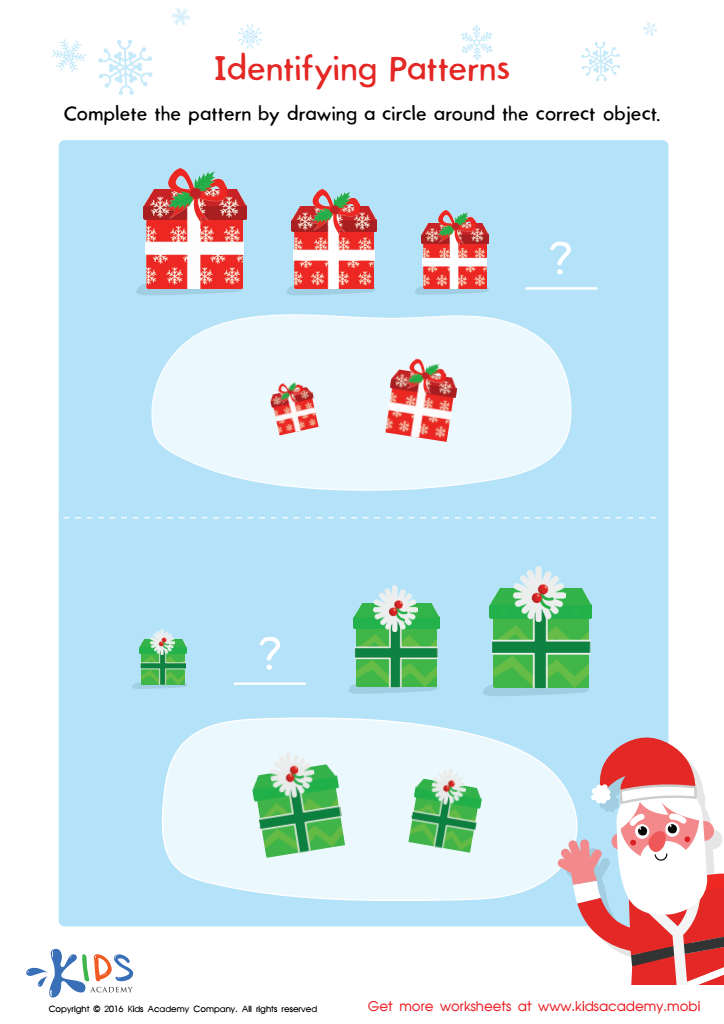
Identifying Patterns Worksheet
Kids can have fun as they learn with this festive worksheet! They'll practice early math skills while identifying patterns with colorful Christmas presents. Have your child get ready for the holidays by finding out which box comes next in the pattern!
Identifying Patterns Worksheet
Worksheet
Join Kids Academy for Free
Who is primarily going to use this learning content?








Pattern recognition is a fundamental cognitive skill that develops during early childhood and is crucial for various aspects of learning. The Extra Challenge Matching activity for ages 4-7 encourages young learners to recognize, predict, and extend patterns, which supports their mathematical understanding and problem-solving skills. Recognizing patterns helps children make sense of the world around them, fostering critical thinking from a young age.
Parents and teachers should care about such activities for several reasons. Firstly, engaging with pattern recognition enhances children's ability to identify relationships and sequences. This skill translates to success in math, reading, and science as children learn to recognize patterns in numbers, sounds, and concepts. Moreover, pattern recognition activities promote concentration, memory, and cognitive flexibility, allowing children to tackle complexities in their learning journey.
Additionally, matching activities encourage collaboration and communication among peers, facilitating essential social skills. Through playful engagement, children build confidence and a positive attitude towards learning. By emphasizing the importance of pattern recognition, parents and teachers can lay a strong foundation for lifelong learning and critical thinking, preparing young minds for academic success and insightful problem-solving in the future. Ultimately, fostering these skills early on is essential for developing well-rounded, capable learners.