Extra Challenge Skip Counting Worksheets for Ages 4-7
4 filtered results
-
From - To
Unlock your child's math potential with our Extra Challenge Skip Counting Worksheets designed for ages 4-7. These engaging worksheets encourage young learners to grasp essential skip counting concepts, helping them leap forward in their math skills. With colorful illustrations and varied activities, children will enjoy practicing counting by twos, threes, fives, and more. Our easy-to-use format allows parents and educators to seamlessly supplement their classroom or homeschooling curriculum. Ideal for improving number sense and enhancing mathematical fluency, these worksheets are a fantastic resource to make learning fun and effective. Help your child build confidence in math today!
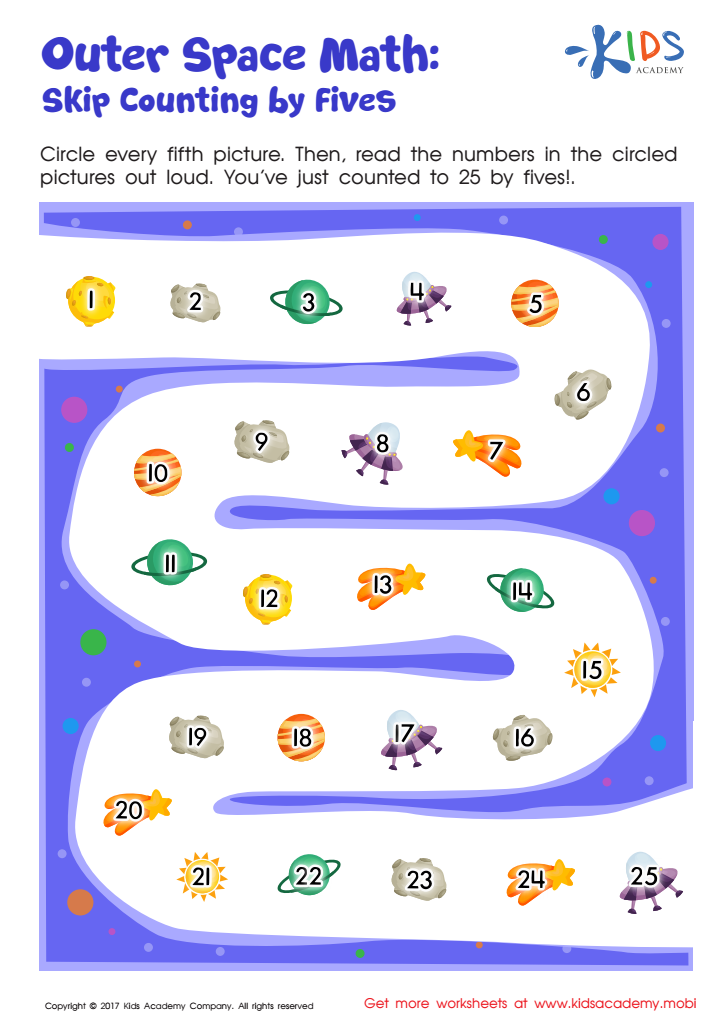
Skip Counting by 5s: Outer Space Math Printable
 Assign to My Students
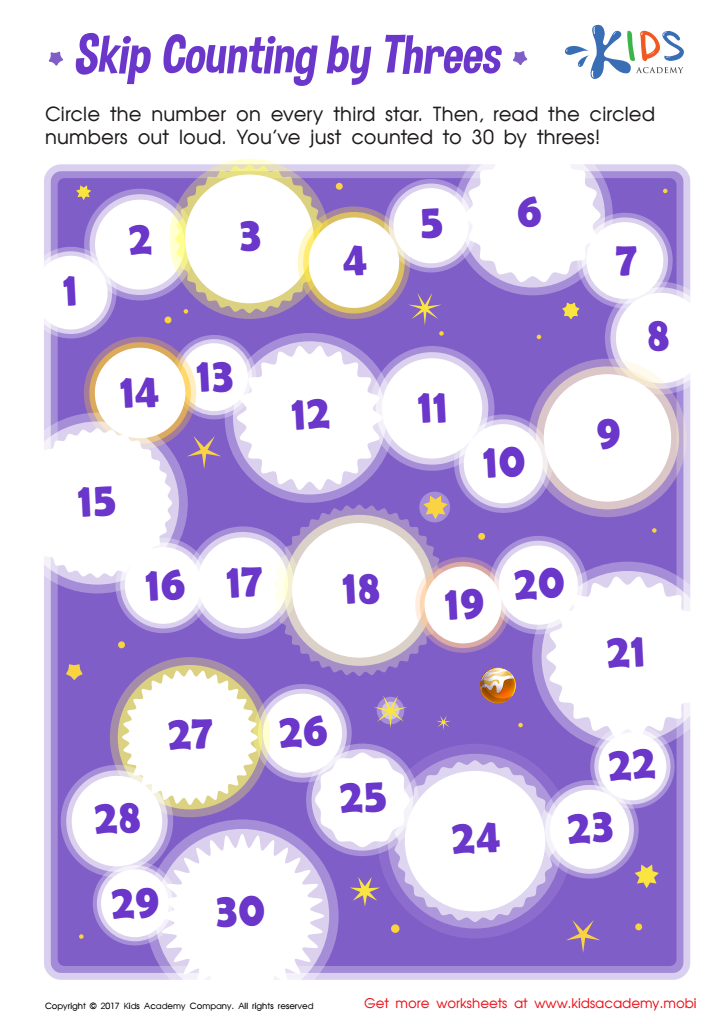
Skip Counting By Three Printable
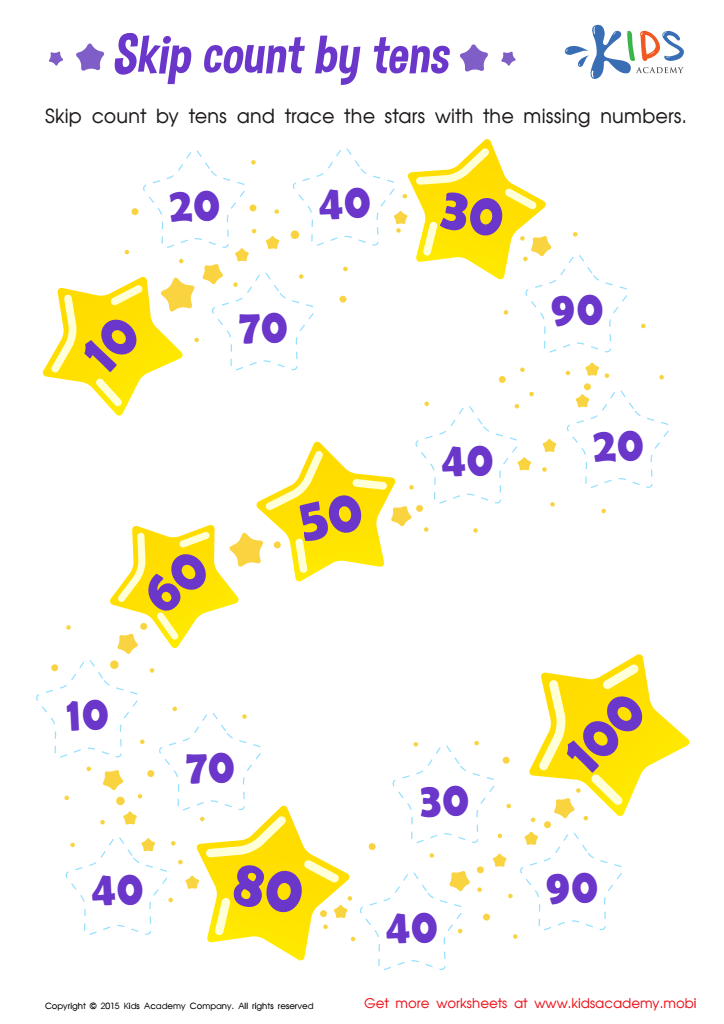
Learn dozens: Skip Count by Tens Printable
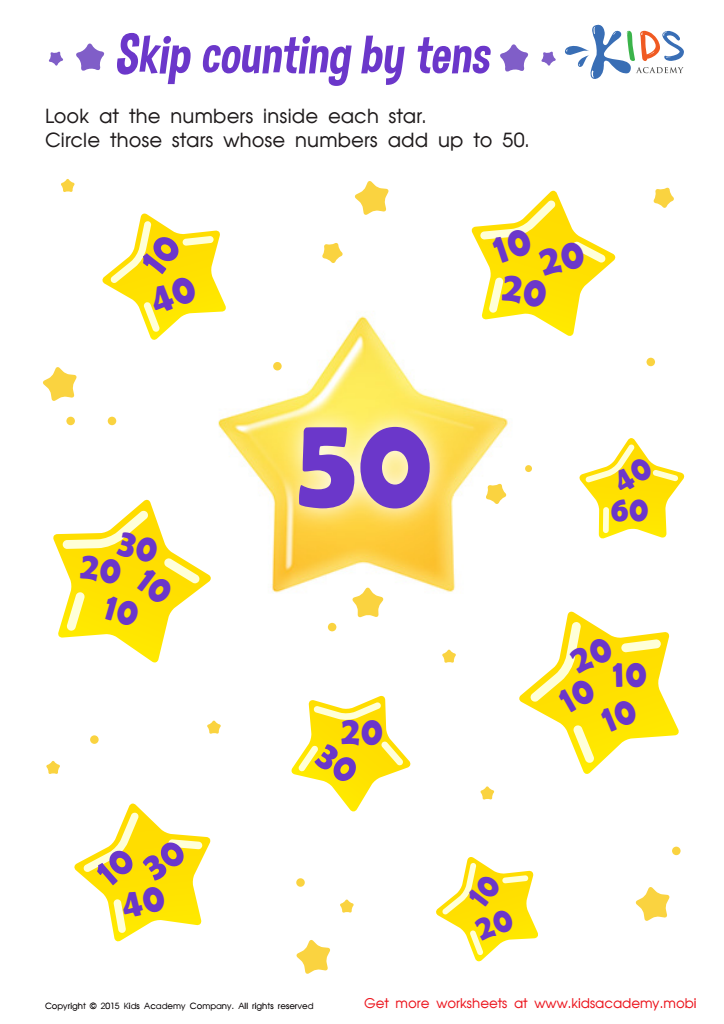
Learn Dozens: Skip Counting by Tens Printable








Extra Challenge Skip Counting serves as a vital educational tool for children aged 4-7, reinforcing essential mathematical skills often encountered in everyday life. Skip counting—counting by twos, threes, fives, etc.—helps develop foundational number sense, promotes mental math capabilities, and enhances overall mathematical fluency.
Parents and teachers should prioritize this practice because it lays the groundwork for more advanced concepts such as addition, multiplication, and problem-solving. By engaging in skip counting, children improve their rhythm of numbers, fostering a deeper understanding of patterns and sequences, which is critical for later mathematics success.
Furthermore, mastering digital skip counting supports cognitive development, encouraging children to recognize numbers in different formats, promoting flexibility in thinking. This approach also nurtures a love for math through interactive and fun activities, making learning enjoyable, which is crucial for young learners who are developing their educational interests.
Lastly, skip counting cultivates confidence in mathematics. Children who engage in this practice often perform better in the subject area, reducing math anxiety as they progress in their academic journey. Parents and teachers play a vital role in guaranteeing that these early experiences are positive and productive, ultimately shaping a child’s attitude toward learning and success.








