Identification skills Extra Challenge Worksheets for Ages 4-8
3 filtered results
-
From - To
Boost your child's cognitive development with our Identification Skills Extra Challenge Worksheets for ages 4-8. Designed to enhance critical thinking and observational abilities, these engaging worksheets cover a variety of themes including shapes, patterns, and visual discrimination. Perfect for young learners looking to advance beyond basic skills, our worksheets provide an exciting, interactive way to strengthen attention and problem-solving. Created by educational experts, each activity is both fun and educational, making learning an enjoyable adventure. Ideal for classroom use or home schooling, these printables support foundational skills that set the stage for future academic success.
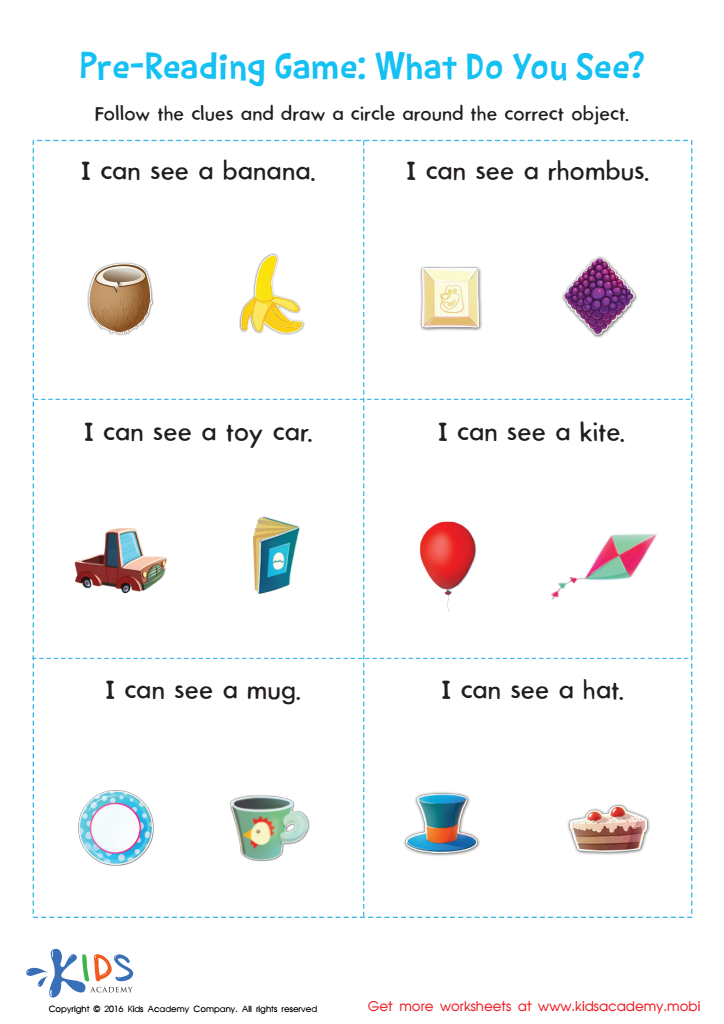
Pre–reading Worksheet: What Do You See?
 Assign to My Students
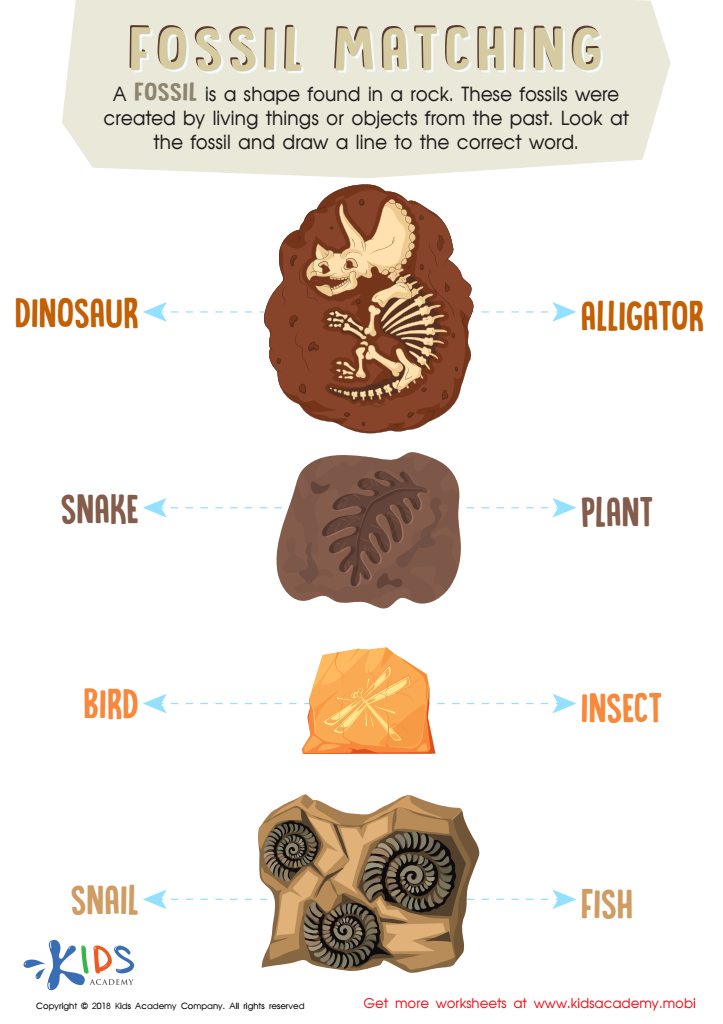
Fossil Matching Worksheet
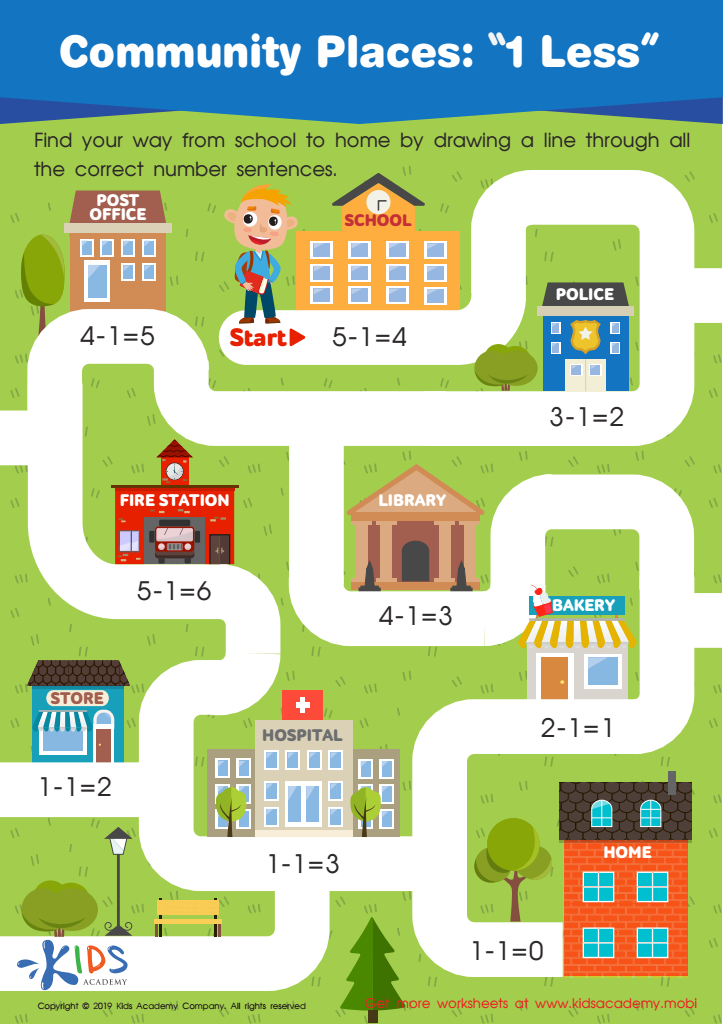
Community Places: 1 Less Worksheet








Identification skills play a crucial role in a child's cognitive development, particularly in the early years between ages 4-8. These skills encompass recognizing and naming objects, shapes, colors, letters, and numbers, which lays the foundation for early literacy and numeracy. When parents and teachers focus on boosting identification skills through extra challenges, they actively enhance a child’s observational and memory capabilities.
Engaging children in these identification activities demands concentration and analytical thinking, promoting neural connections that are vital for future complex learning. For instance, a child who practices identifying letters and sounds is better prepared for phonics instruction, which is essential for reading skills. Similarly, activities that involve recognizing patterns and shapes directly support mathematical thinking.
Moreover, these challenges foster confidence and curiosity, turning learning into an exciting adventure. Children develop a sense of accomplishment and are more inclined to take on new challenges. Fostering an environment that celebrates discovery equips children with problem-solving skills early on.
Lastly, an added focus on identification skills can help teachers and parents identify any developmental delays or learning disabilities early. Early intervention can significantly impact a child's educational trajectory, making early-grade identification vital for long-term academic success and personal growth.








