Mathematical thinking Extra Challenge Worksheets for Ages 4-8
4 filtered results
-
From - To
Unlock your child's mathematical potential with our "Mathematical Thinking Extra Challenge Worksheets for Ages 4-8". Specially designed to stimulate young minds, these printable worksheets cover key learning skills such as number recognition, problem-solving, and logical thinking. Ideal for kindergarten and early elementary students, each activity aims to make math fun and engaging while fostering critical thinking and foundational math skills. Tailored to challenge and inspire, our worksheets support educational growth through interactive and captivating exercises. Equip your child with the tools they need for mathematical success. Explore now and let the learning adventures begin!
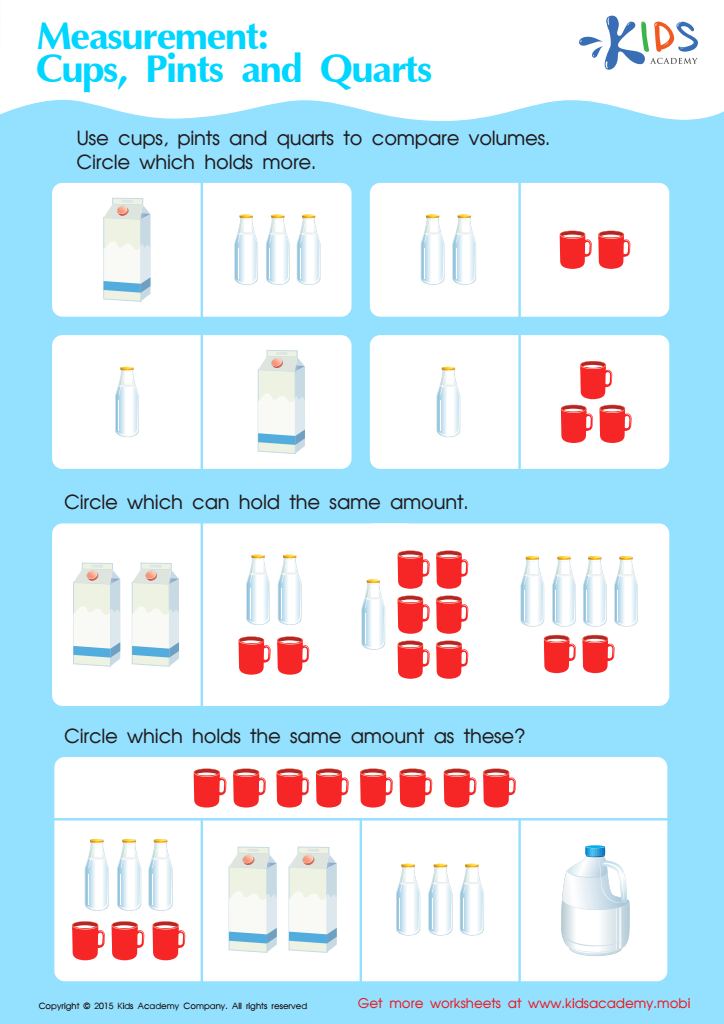
Measurement: Compare Volumes Worksheet
 Assign to My Students
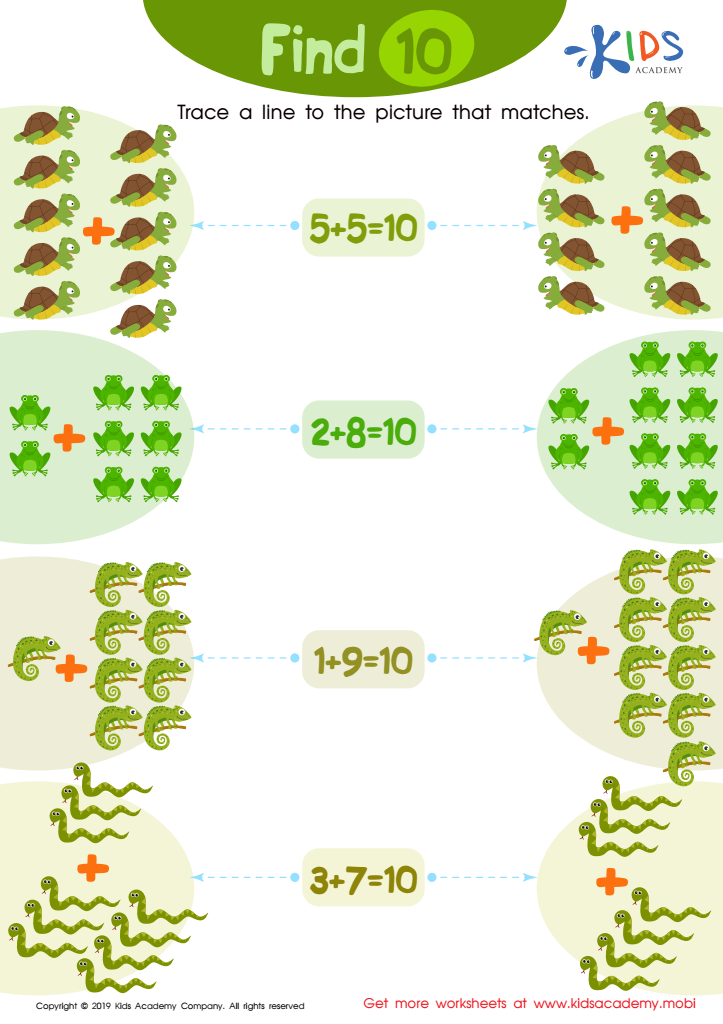
Find 10 Worksheet
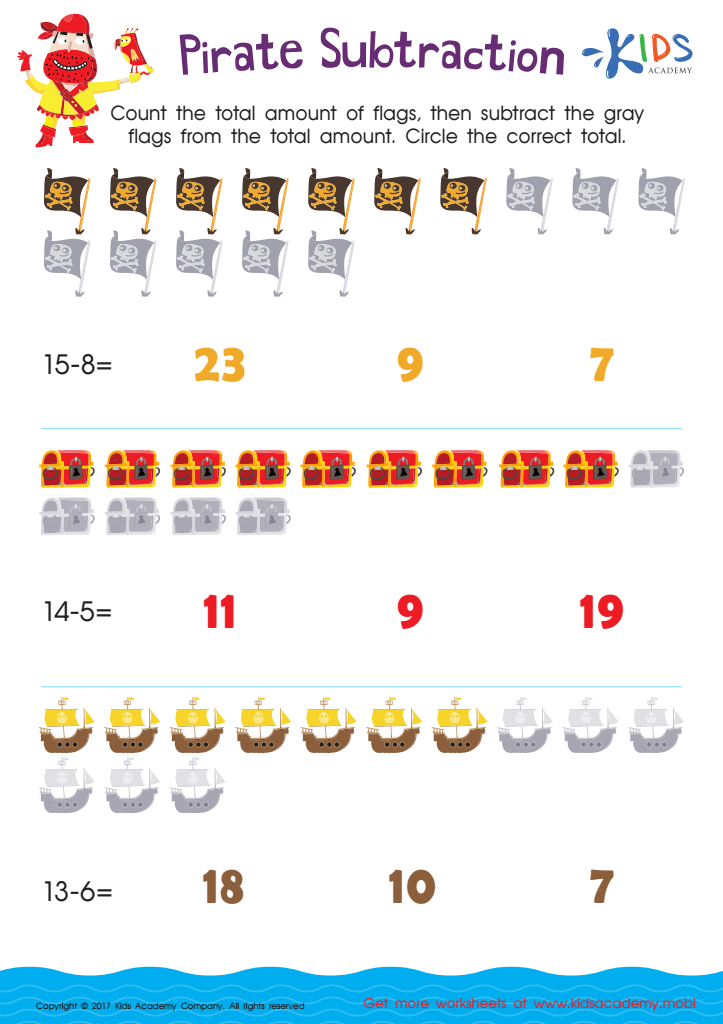
Pirate Subtraction Substraction Worksheet
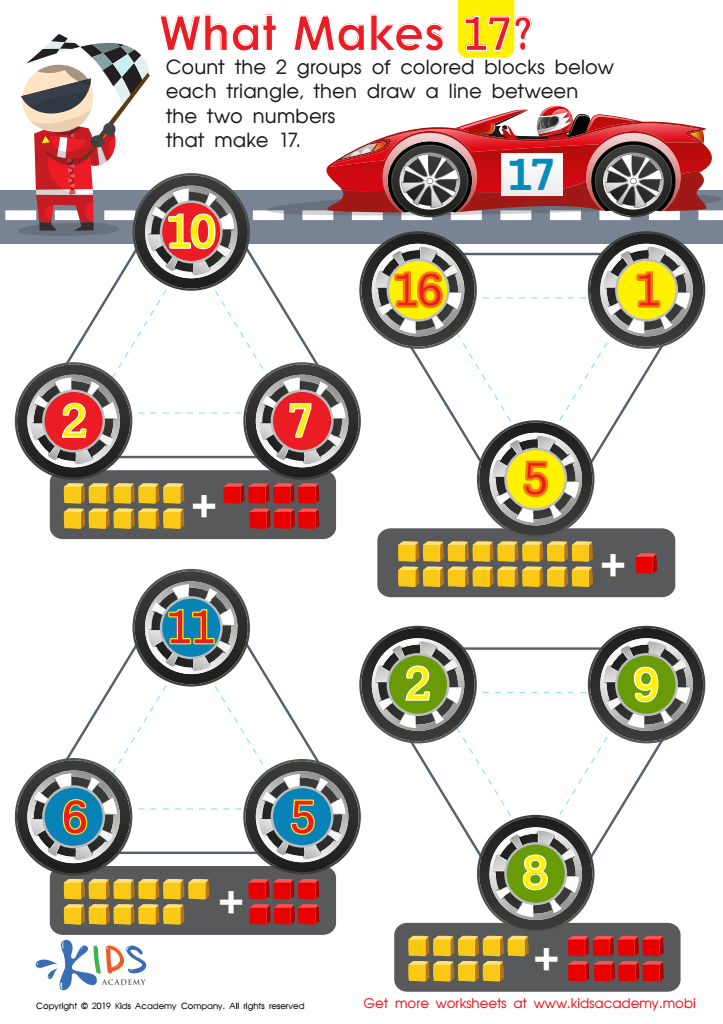
What Makes 17 Worksheet






Mathematical thinking extra challenges provide young children with the opportunity to develop critical thinking skills that underpin their overall cognitive and academic growth. For children aged 4-8, early exposure to structured problem-solving activities helps establish a solid foundation for more complex mathematical concepts. By engaging in these challenges, children not only improve their numeracy skills—including counting, addition, and subtraction—but also learn to recognize patterns, understand shapes, and develop spatial awareness. Importantly, this early engagement fosters a positive attitude towards math, teaching children that it can be fun and rewarding.
Moreover, tackling mathematical challenges builds perseverance and resilience as children learn to navigate and solve problems independently or collaboratively. This problem-solving experience nourishes their ability to think logically and approach tasks methodically. It also enhances their verbal reasoning skills as they articulate their thought processes and solutions.
For parents and teachers, it is essential to nurture these skills at a young age since they translate into enhanced academic performance in later years. Encouraging mathematical thinking through extra challenges also equips children with skills valuable beyond the classroom, such as critical analysis, deductive reasoning, and the ability to make data-driven decisions. In summary, fostering mathematical thinking through supplemental challenges is a proactive approach to cultivating a lifelong love for learning and intellectual curiosity.








