Understanding measurements Extra Challenge Worksheets for Ages 4-8
6 filtered results
-
From - To
Discover our "Understanding Measurements Extra Challenge Worksheets" designed for children ages 4-8! These engaging and interactive worksheets help young learners grasp essential measurement concepts, including length, weight, and volume. With colorful illustrations and age-appropriate activities, students will sharpen their skills through hands-on measurement challenges that foster critical thinking and problem-solving. Perfect for home practice or classroom use, these worksheets cater to various learning styles, ensuring that each child can excel. Support your child’s mathematical journey while making learning fun with our quality resources! Explore the world of measurements and watch your child gain confidence in their abilities today!
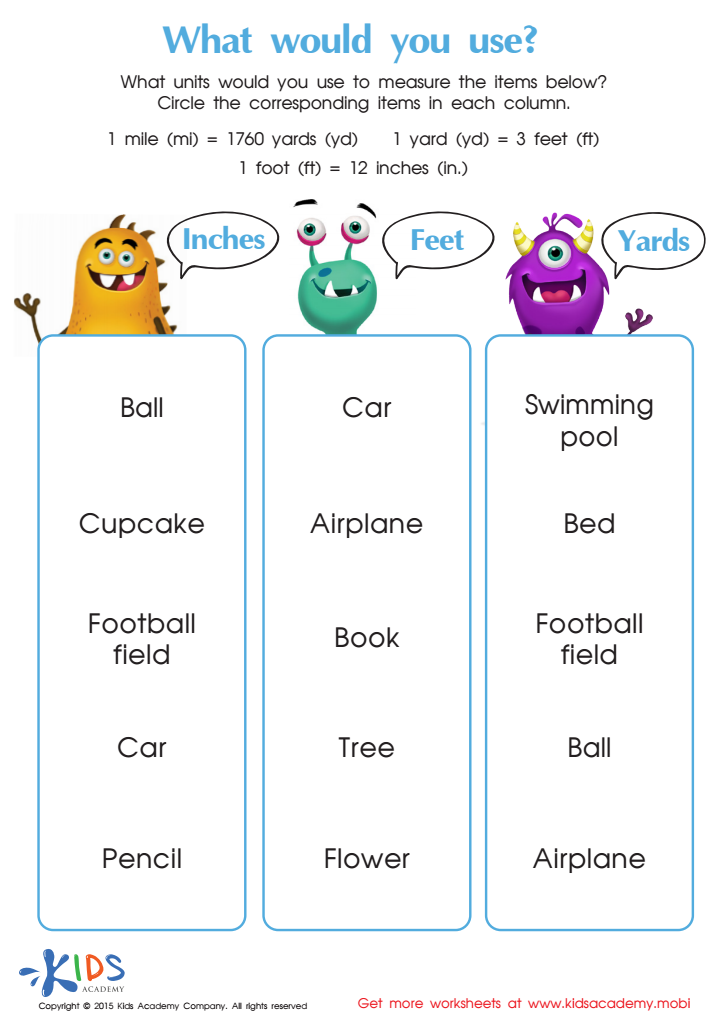
Learning about measuring objects in inches, feet and yards Worksheet
 Assign to My Students
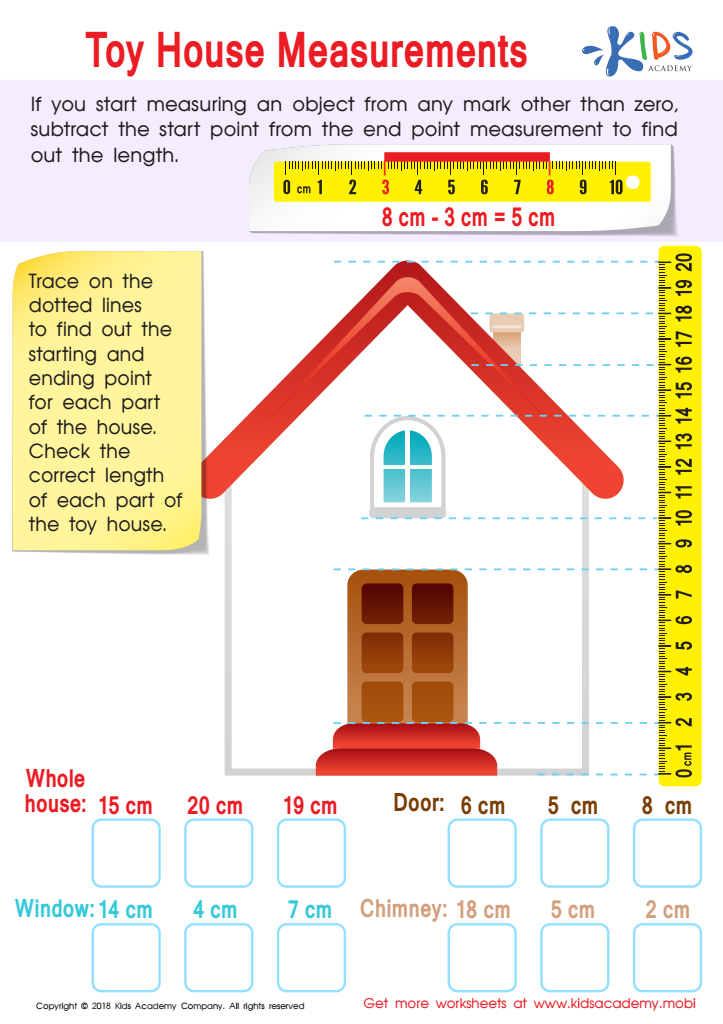
Toy House Measurements Worksheet
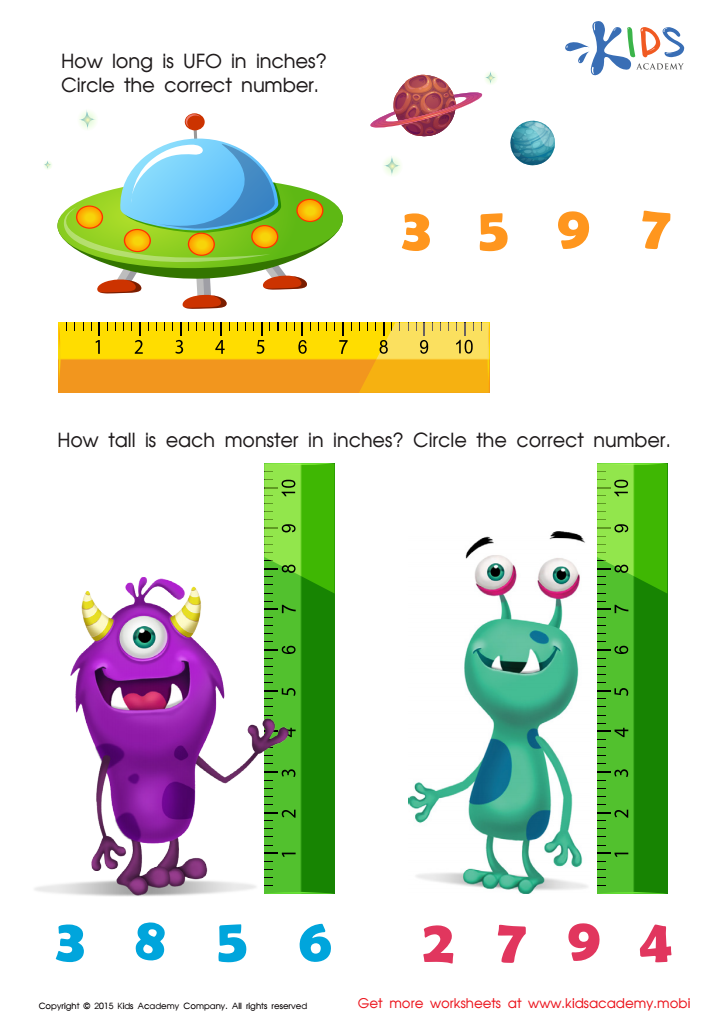
Measuring in Inches Worksheet
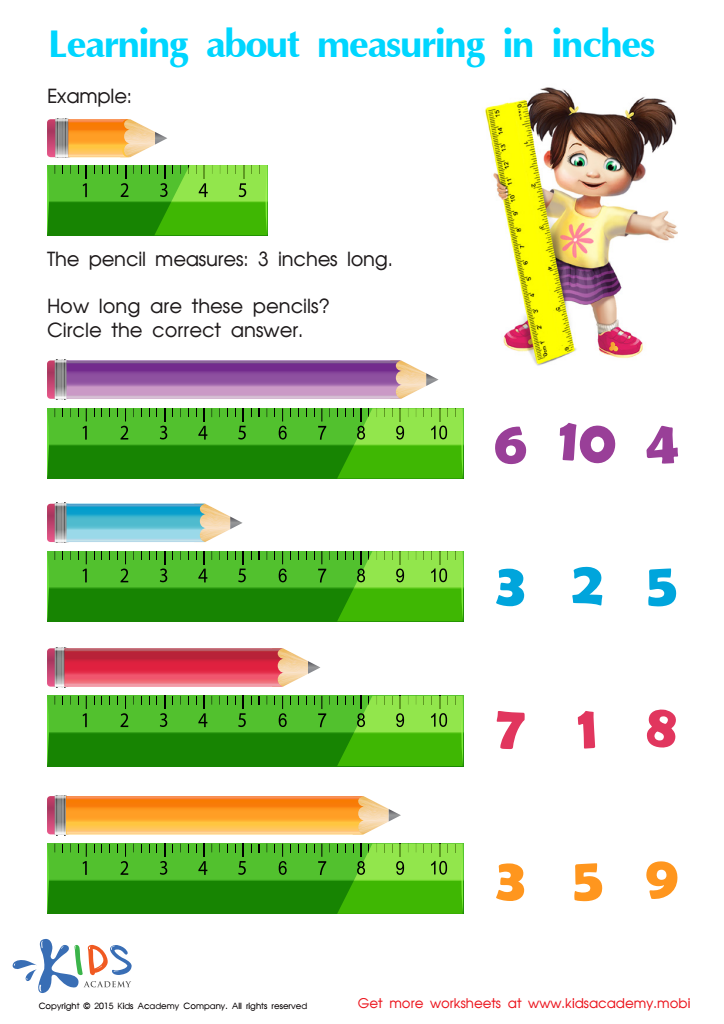
Learning About Measuring In Inches Printable
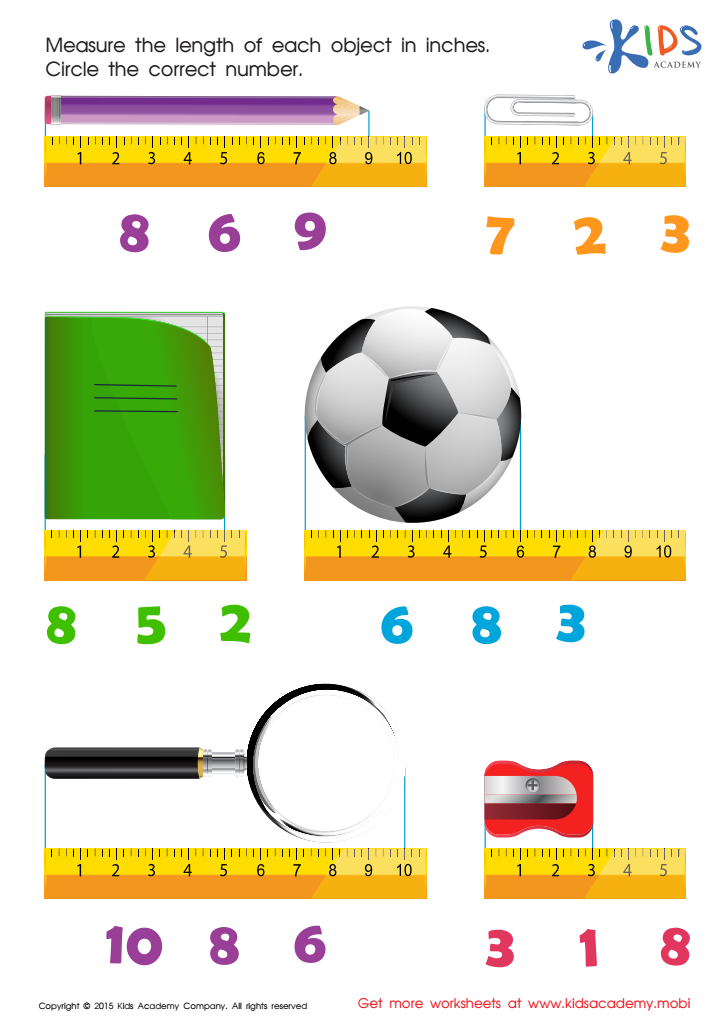
Learning measuring objects in inches Worksheet
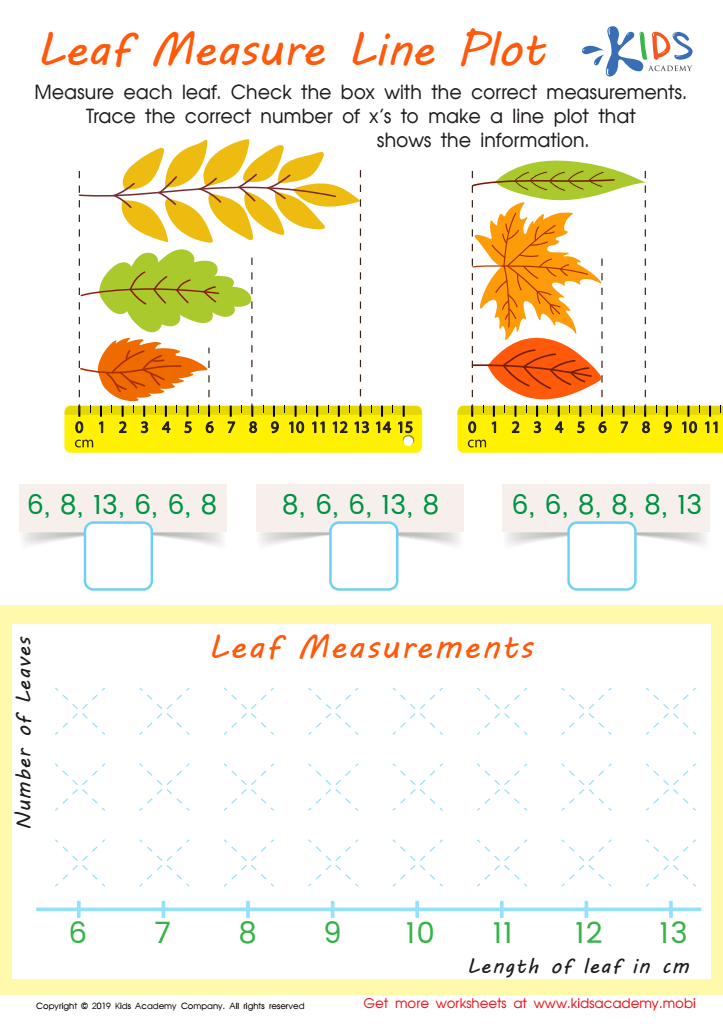
Leaf Measure Line Plot Worksheet


.jpg)




Understanding measurements is crucial for children aged 4-8, as it forms the foundation for their mathematical skills and everyday problem-solving abilities. Parents and teachers should prioritize this learning phase because measurement concepts facilitate a child’s ability to comprehend size, quantity, and spatial relationships. Learning about measurements helps improve critical thinking, enabling children to compare, contrast, and analyze objects.
Activities involving measuring can be engaging and practical, allowing children to connect academic concepts with real-world applications. For instance, measuring ingredients for a recipe teaches them not only about addition and subtraction but also fosters skills like following directions and sequencing. Moreover, these activities can support language development as children describe what they are measuring, enhancing their vocabulary and communication skills.
Additionally, early experiences with measurements translate into skills essential for advanced mathematics in later grades. They also enhance perseverance and the ability to overcome challenges when children encounter tasks that require precision and attention. By concentrating on understanding measurements, parents and teachers can empower children with confidence and competence, ensuring they are better prepared for academic success and functional skills in everyday life. Engaging in these challenges cultivates a love for learning while preparing children for future educational pursuits.








