Understanding plurals Extra Challenge Worksheets for Ages 4-8
5 filtered results
-
From - To
Explore our "Understanding Plurals Extra Challenge Worksheets" designed for children ages 4-8! These engaging worksheets provide an exciting way for young learners to grasp the concept of plurals while enhancing their vocabulary and writing skills. Each activity is thoughtfully crafted to challenge kids beyond the basics, encouraging critical thinking and creativity. With fun illustrations and a variety of activities, children will enjoy learning how to transform singular nouns into their plural forms. Perfect for teachers and parents seeking to boost literacy skills at home or in the classroom, our worksheets make learning about plurals interactive and enjoyable! Grab your free printable today!
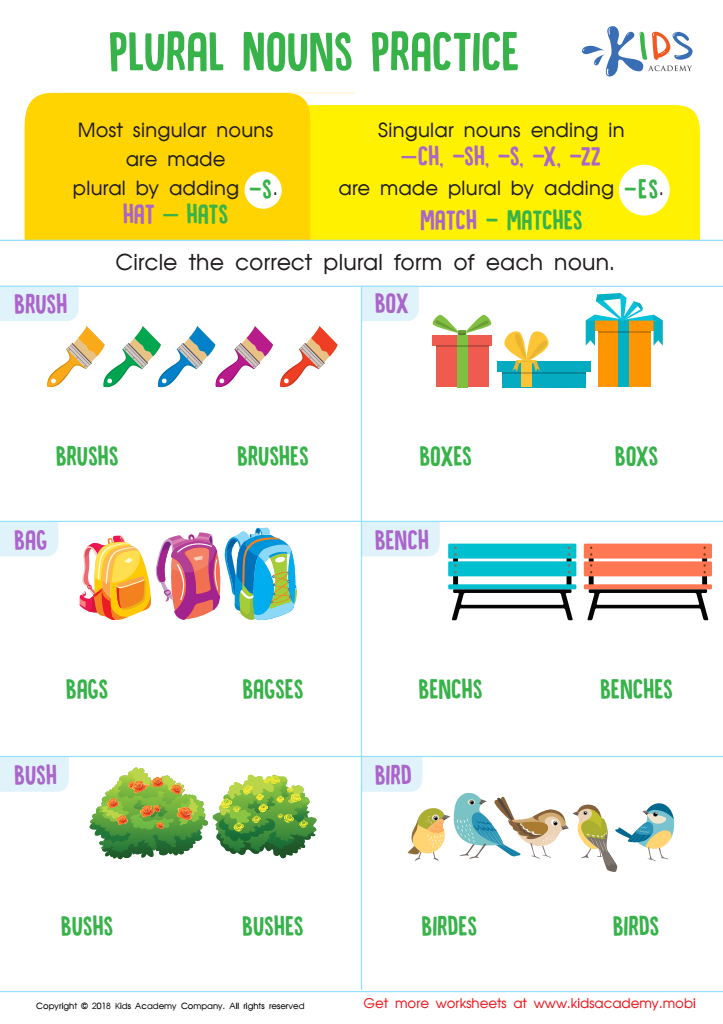
Plural Nouns Practice Worksheet
 Assign to My Students
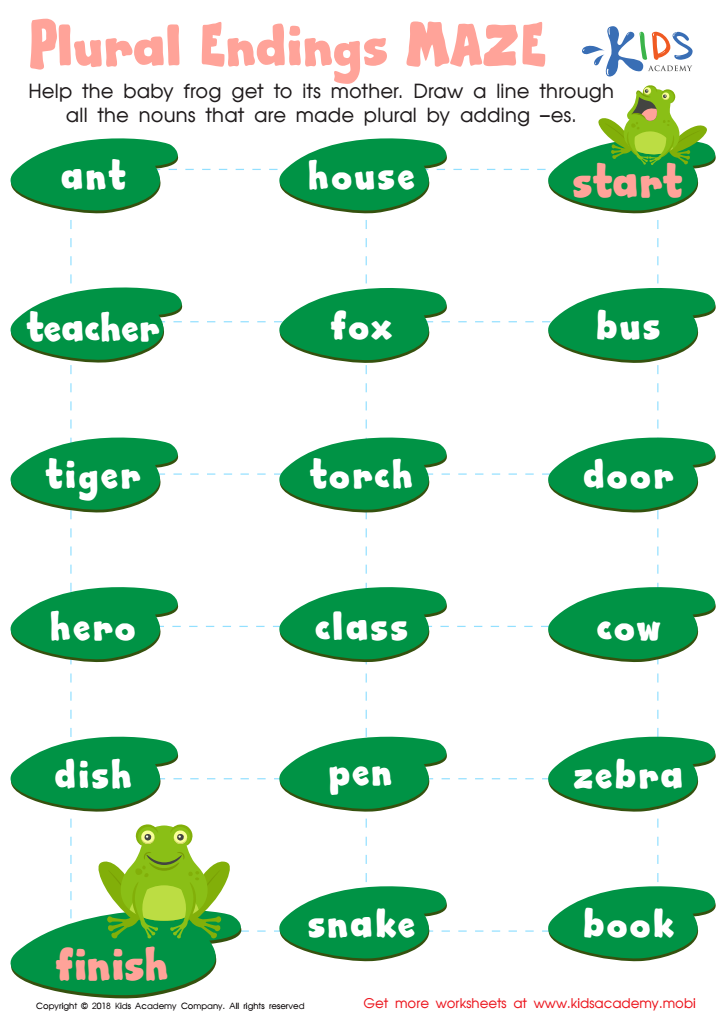
Plural Endings Maze Worksheet
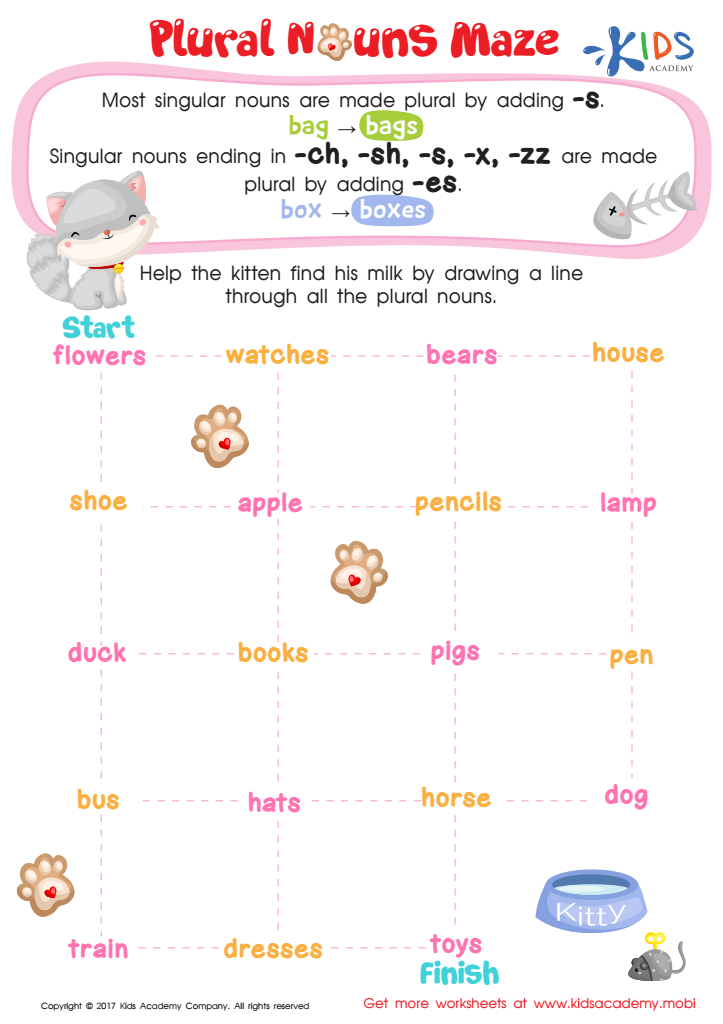
Plural Nouns Maze Worksheet
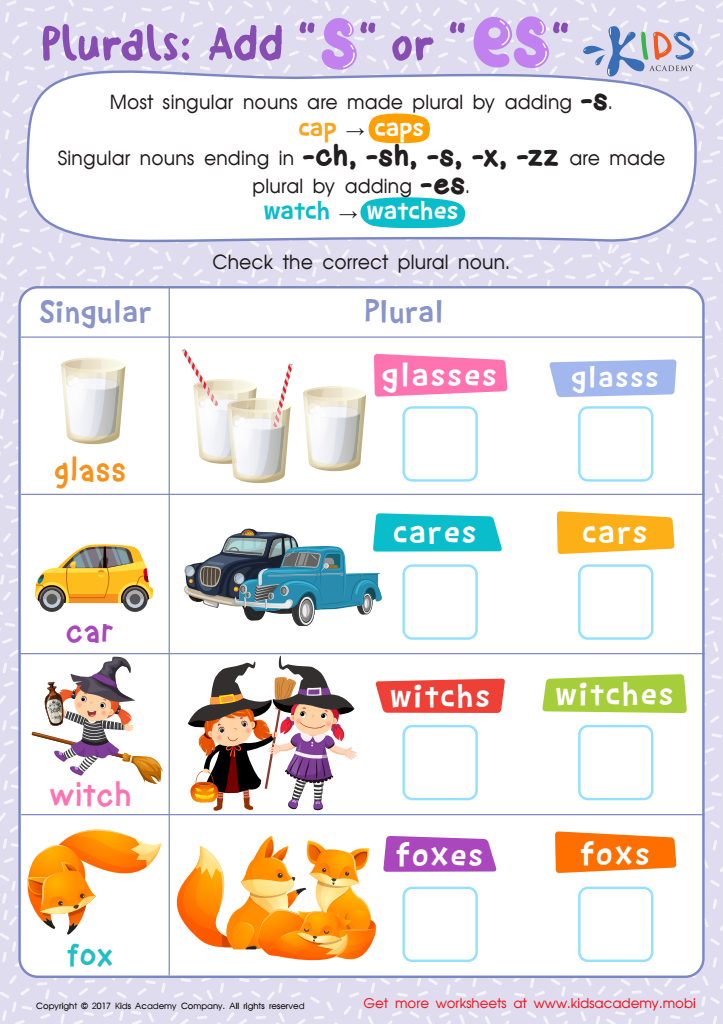
Plurals: "–es" or "–es"? Worksheet
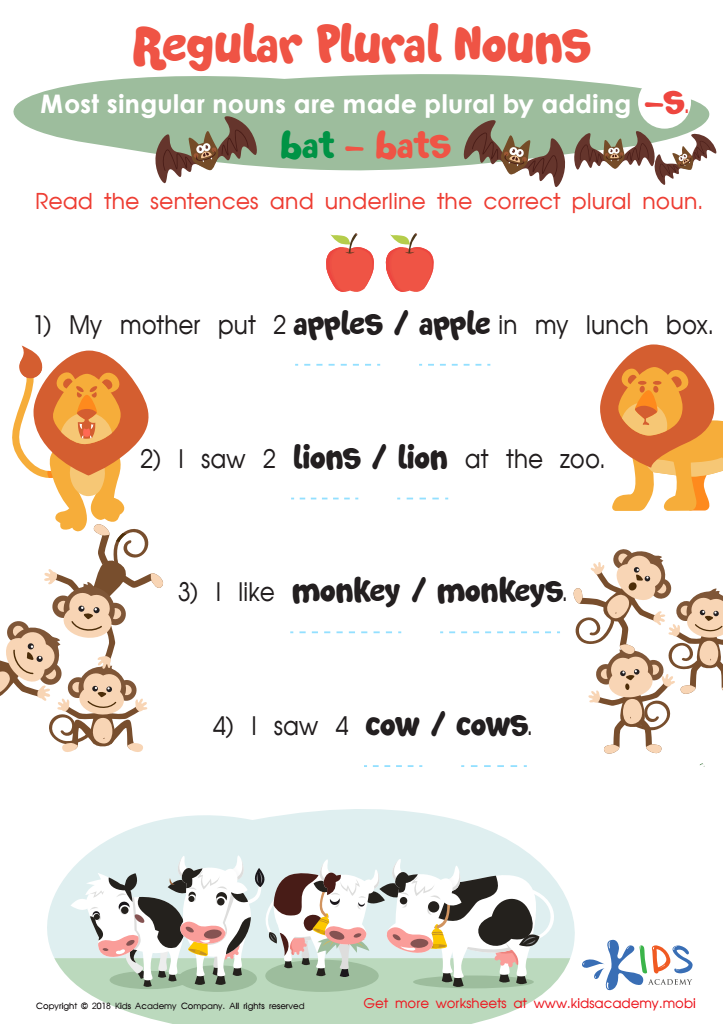
Regular Plural Nouns Worksheet






.jpg)

Understanding plurals is essential for young learners, as it lays a foundational aspect of language development and communication skills. For parents and teachers of children ages 4-8, grasping the concept of plurals is crucial for several reasons.
Firstly, plurals introduce children to the idea that language can express quantity and variety. This understanding enhances vocabulary, enabling children to communicate effectively about more than one object, person, or idea. For example, knowing the difference between "cat" and "cats" allows a child to share their experiences more vividly.
Secondly, grappling with plurals fosters critical thinking and cognitive development. Children learn to make associations between words and their meanings. This connection supports their reading and writing skills, making it an integral part of literacy.
Lastly, recognizing plurals encourages social interaction. As children grow, they engage in conversations where understanding group concepts is essential. Teachers and parents who emphasize this concept prepare children for collaborative learning environments.
In summary, a strong grasp of plurals enhances children's communication, cognitive development, and social skills, enriches their vocabulary, and equips them for future academic success, making it vital for caregivers to prioritize this learning objective.








