
Understanding currency Extra Challenge Money Worksheets for Ages 4-8
3 filtered results
Difficulty Level
Grade
Age
-
From - To
Subject
Activity
Standards
Boost your child's money management skills with our "Understanding Currency Extra Challenge Money Worksheets" tailored for ages 4-8! These engaging printable worksheets are designed to make learning about counting money fun and interactive. Dive deep into recognizing coins and bills, mastering the concepts of value, and practicing essential problem-solving techniques. Perfect for young learners, these worksheets offer an extra challenge to enhance their math skills. Create a solid foundation in financial literacy and prepare them for everyday math situations with our expertly crafted activities. Visit Kids Academy to download and kickstart your child's journey to understanding currency today!
Favorites
With answer key
Interactive
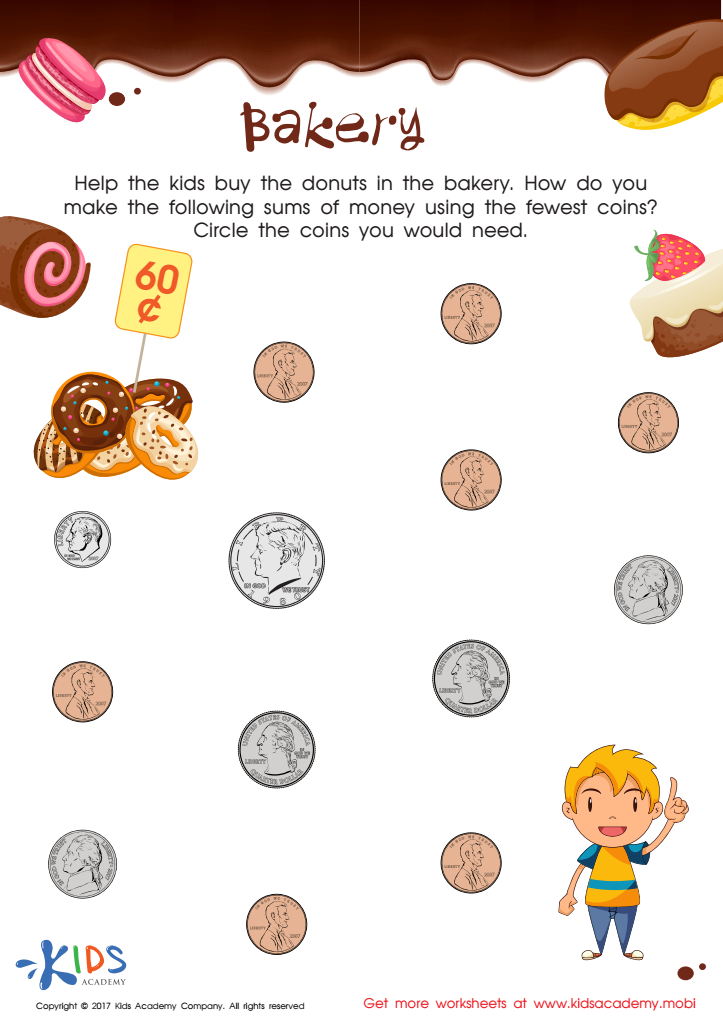
Counting Coins Worksheet
It will challenge them to spend a given amount using the least coins possible. Perfect for 2nd grade.
Help your child learn to count coins with this fun bakery-themed worksheet. It's perfect for 2nd graders and will challenge them to use the least coins possible to spend a set amount. Develop a valuable life skill and have fun while doing it!
 Assign to My Students
Counting Coins Worksheet
Worksheet
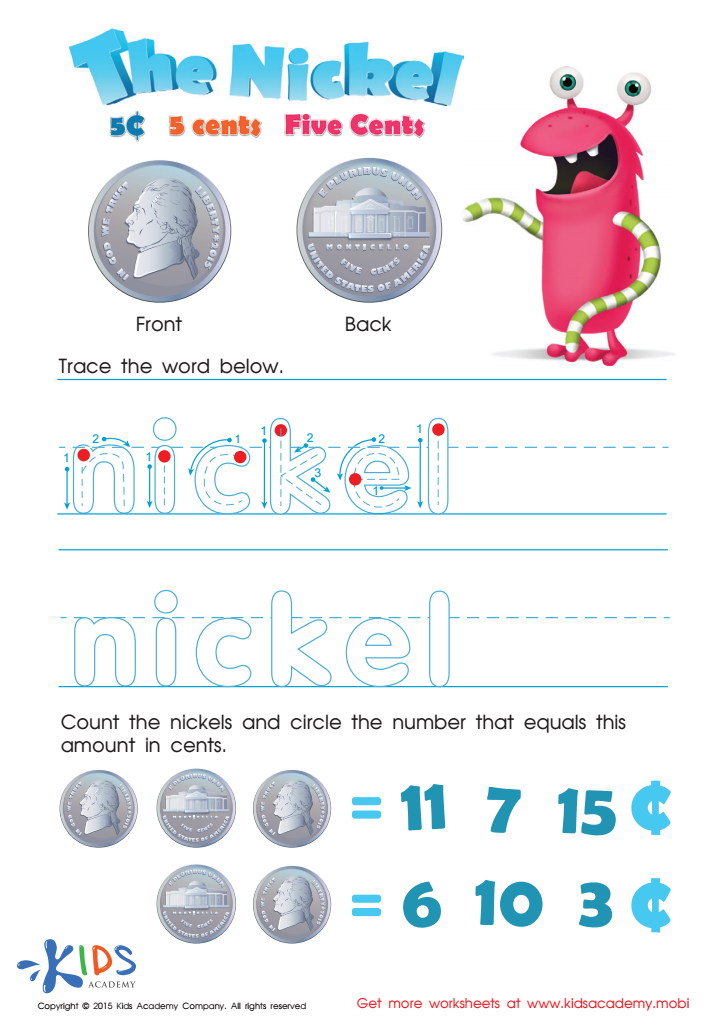
Five Cents or the Nickel Money Worksheet
Counting money games help kids make learning money fun and easy. Next up: the 5 cent coin, or nickel. Look at both sides and remember them. Then, trace the word "nickel" to help you remember. Finally, count the nickels and work out amounts in cents. Let's do this! Kids Academy helps make money learning easy and fun!
Five Cents or the Nickel Money Worksheet
Worksheet
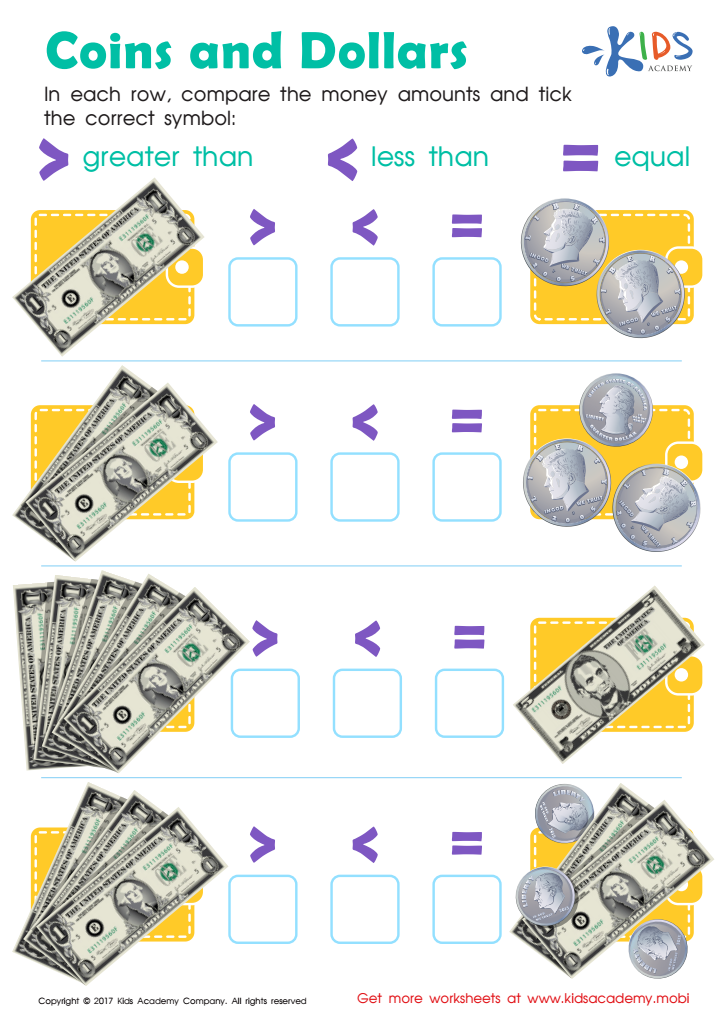
Money: Coins Dollars Printable
Motivate your kid to learn and practise essential math skills, like 'greater than' and 'less than', by introducing the importance of money! The money worksheet "Coins and Dollars" will give them a hands-on experience of counting coins and dollars, making math symbols more memorable.
Money: Coins Dollars Printable
Worksheet
Join Kids Academy for Free
Who is primarily going to use this learning content?








Helping children ages 4-8 understand currency and engage in extra challenges related to money is crucial for their holistic development. Firstly, grasping the concept of currency at a young age fosters essential life skills such as financial literacy and responsibility. This foundation empowers kids to make smarter financial decisions in the future. By understanding basic money management—like saving, spending, and the intrinsic value of items—children start to appreciate the importance of earning and budgeting.
Moreover, introducing extra challenges related to money encourages problem-solving and critical thinking. Activities like setting up a small "store" where they can "buy" and "sell" items with play money teach negotiation, fair trading, and math skills in a fun, engaging way. This kind of experiential learning supports cognitive development and reinforces academic concepts such as addition and subtraction.
Additionally, understanding currency instills a sense of independence and confidence in young children. Simple tasks involving money, such as sorting coins or making small purchases under supervision, can build a sense of accomplishment.
Ultimately, early exposure to money handling sets a concrete foundation for more advanced financial concepts and establishes a positive relationship with money from a young age. Parents and teachers play a pivotal role in shaping these critical life skills and should prioritize incorporating money-related activities into early childhood education.








