Recognizing shapes Extra Challenge Geometry Worksheets for Ages 4-8
3 filtered results
-
From - To
Enhance your child's geometric understanding with our "Recognizing Shapes Extra Challenge Geometry Worksheets" designed for ages 4-8. These engaging worksheets are perfect for young learners eager to expand their knowledge of shapes. Each activity is tailored to challenge and develop important skills such as visual discrimination, spatial reasoning, and shape recognition. Through a variety of fun exercises, children will identify, compare, and categorize different shapes while strengthening their problem-solving abilities. Ideal for both classroom and home use, these worksheets provide an excellent foundation for more advanced geometry concepts. Unlock the door to early math success today!
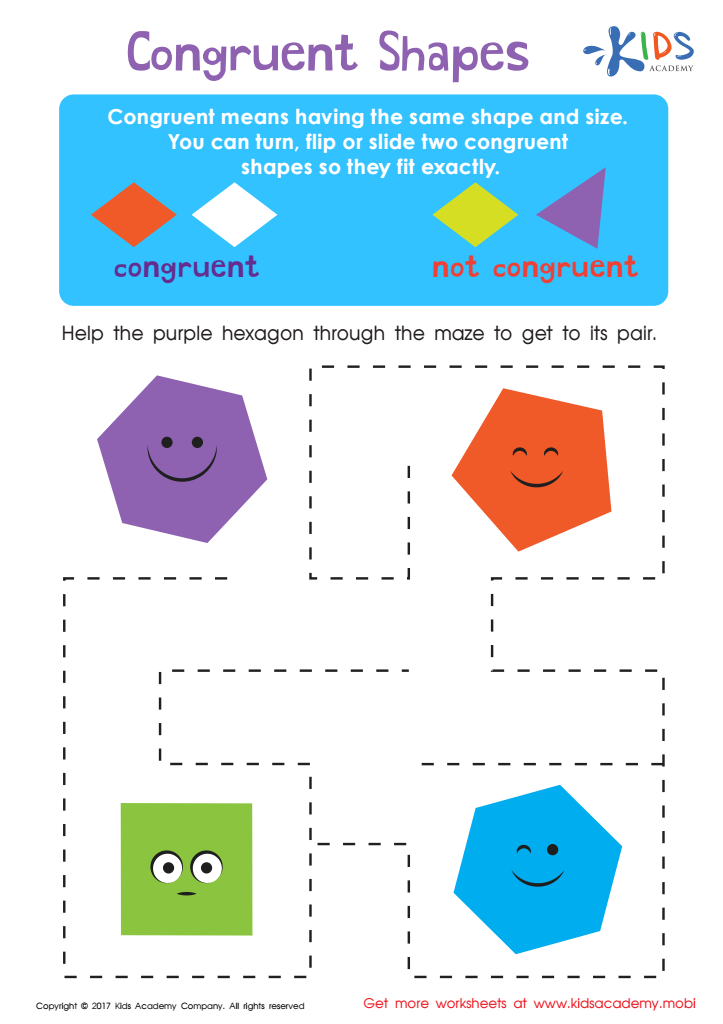
Congruent Shapes Worksheet
 Assign to My Students











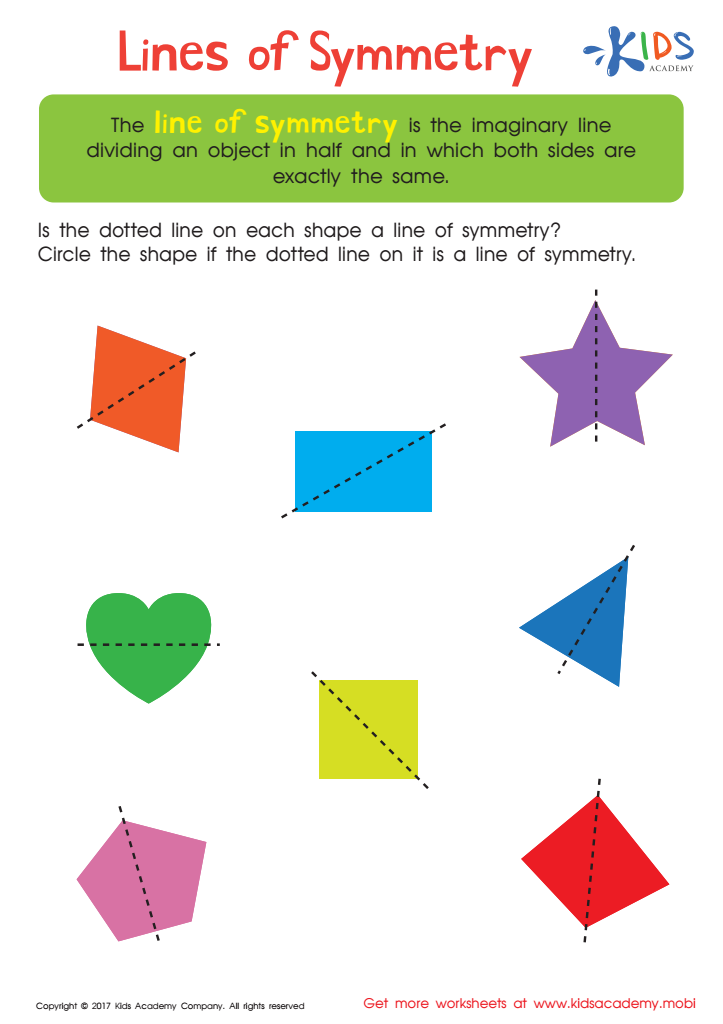
Lines of Symmetry Printable
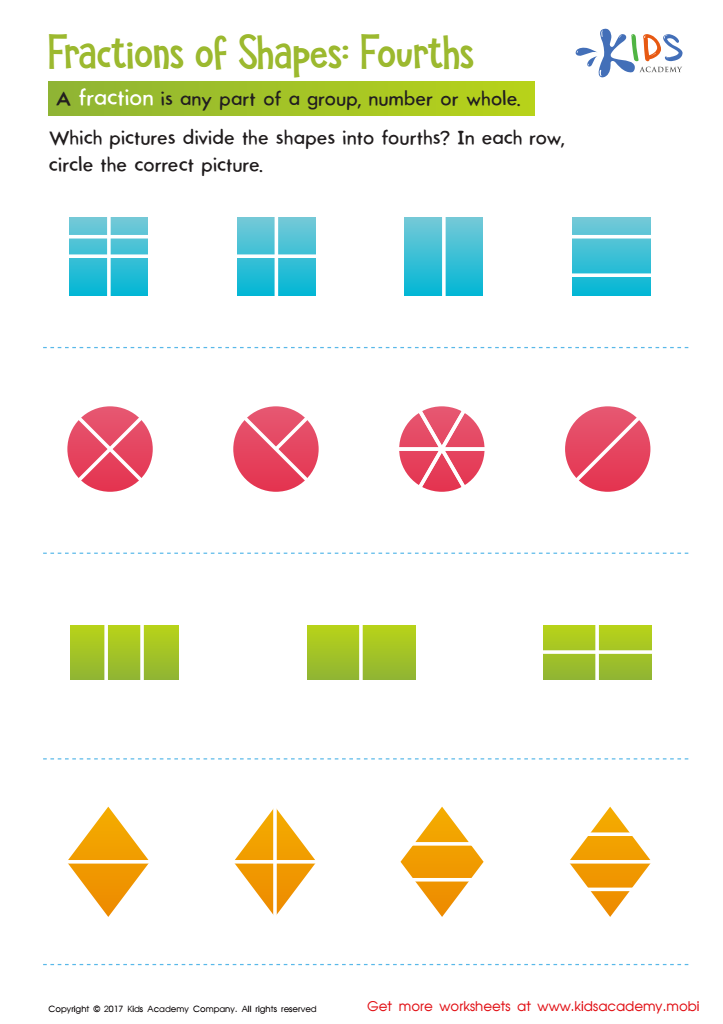
Fractions of Shapes Worksheet








Recognizing shapes is a fundamental skill in early childhood development, and the "Extra Challenge Geometry" activities for ages 4-8 offer crucial benefits that parents and teachers should value. First, understanding shapes boosts children's spatial awareness, a critical component for cognitive development. Engaging in shape recognition exercises improves their ability to categorize and compare visual information, which translates to better problem-solving skills in math and other areas.
Shapes also lay the groundwork for more advanced mathematics. Grasping basic geometric concepts paves the way for understanding more complex ideas like symmetry, area, and volume. Introducing challenging geometric tasks in a supportive environment encourages children to push beyond simple recognition, fostering perseverance and confidence in their skills.
Moreover, recognizing shapes enhances fine motor skills and coordination as children often draw, trace, or construct shapes. Engaging in activities that involve shapes can improve handwriting, as it requires precise hand movements and control.
Socially, activities related to shape recognition promote collaborative learning. Group tasks foster teamwork, communication, and the ability to follow instructions, important skills for school readiness.
Ultimately, by investing attention in geometric challenges from a young age, parents and teachers equip children with critical thinking skills, mathematical literacy, and social abilities that will benefit them across multiple dimensions of learning.








