Vocabulary enhancement Extra Challenge Geometry Worksheets for Ages 4-8
3 filtered results
-
From - To
Unlock your child's potential with our Vocabulary Enhancement Extra Challenge Geometry Worksheets, designed for ages 4-8. These expertly crafted worksheets blend geometry with language skills, fostering both mathematical and vocabulary growth. Each sheet presents fun, engaging activities where young learners identify shapes and expand their descriptive vocabulary. Perfect for home or classroom use, these worksheets challenge children to think critically and develop a deeper understanding of geometry concepts. Through interactive word problems and creative tasks, kids will make meaningful connections between words and shapes. Elevate your child’s learning experience today with our exciting, free resources aimed at holistic growth.
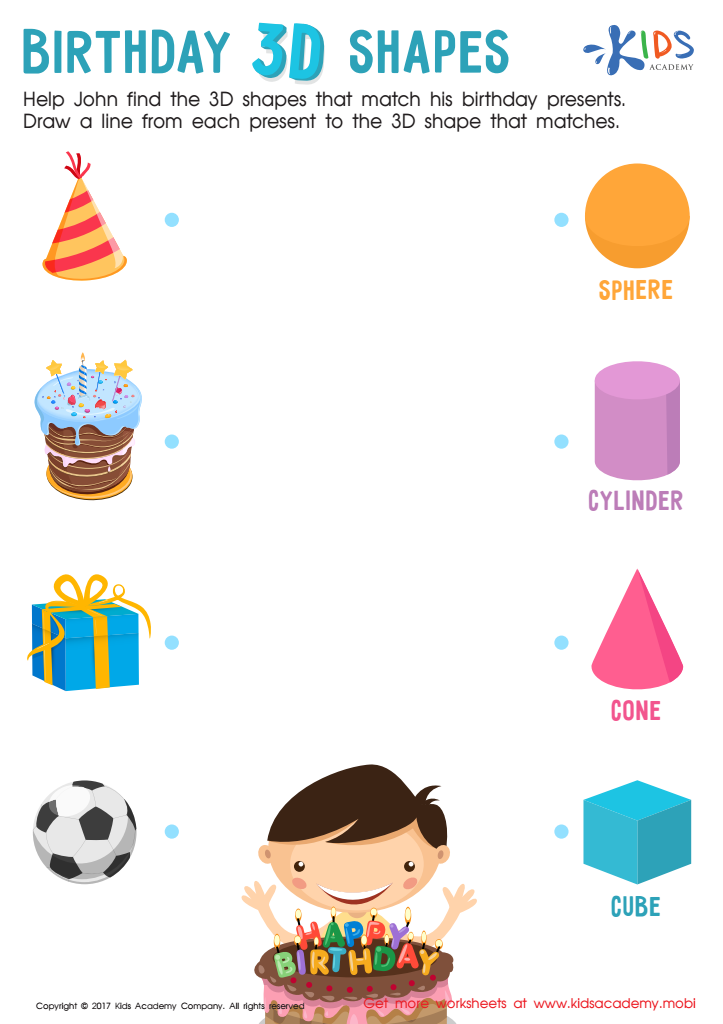
Birthday 3D Shapes Worksheet
 Assign to My Students











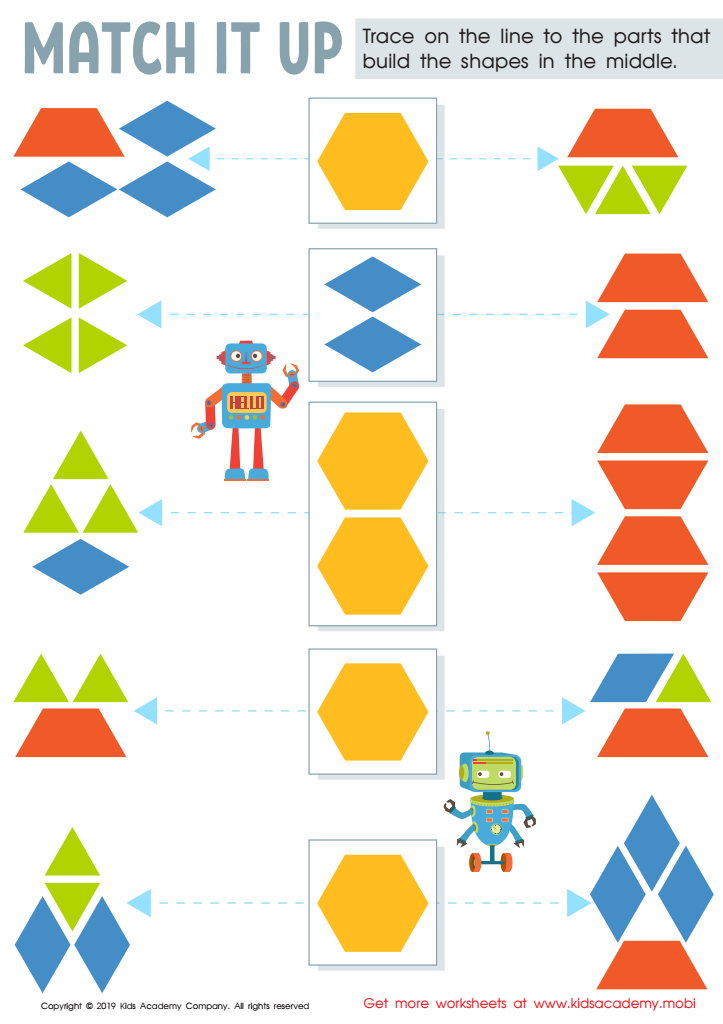
Match It up Worksheet
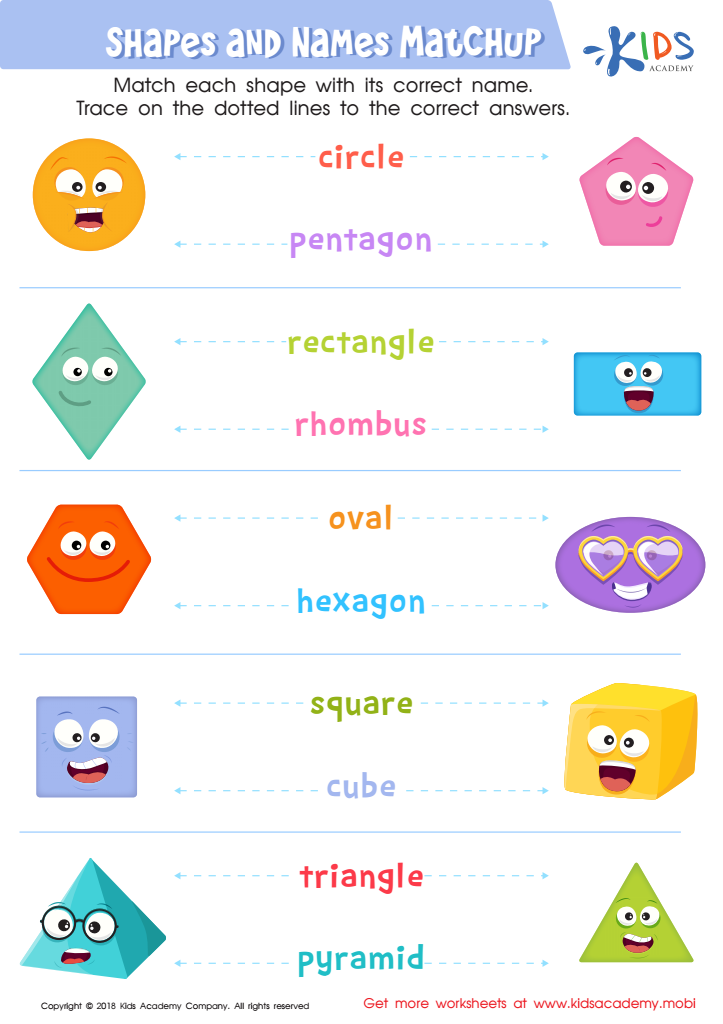
Shapes and Names Matchup Worksheet








Vocabulary enhancement and introductory geometry are pivotal components of early childhood education that parents and teachers should emphasize for children aged 4-8. This formative period is crucial for cognitive and linguistic development. A rich vocabulary serves as the foundation for effective communication, better comprehension, and overall academic success. When children are exposed to an extensive vocabulary, they’re more likely to recognize patterns in words and meaning, which enhances reading and writing skills. Furthermore, a strong vocabulary can improve children's ability to express their thoughts and emotions, fostering better social interactions and emotional intelligence.
Introducing geometry concepts like shapes, spatial relations, and measurements at a young age helps develop logical thinking and problem-solving skills. Geometry fosters visual-spatial awareness, which is not only crucial in math but also in everyday tasks. It encourages kids to observe their surroundings critically and understand the properties and relationships of objects in space.
Combining vocabulary enhancement with the extra challenge of geometry provides a balanced and robust educational strategy. This dual focus stimulates different areas of the brain, ensuring a holistic development. Such integrated learning methods nurture curiosity and a lifelong love for learning, setting a solid foundation for future academic pursuits. Hence, parents and teachers should champion these essential areas in children's early education.








