Math problem-solving Extra Challenge Math Worksheets for Ages 4-8
4 filtered results
-
From - To
Discover our "Extra Challenge Math Worksheets" designed specifically for children aged 4-8! These engaging and beautifully illustrated worksheets focus on enhancing problem-solving skills through fun, age-appropriate math challenges. Perfect for reinforcing key concepts such as addition, subtraction, and counting, our worksheets encourage critical thinking and provide an additional layer of difficulty for young learners. Ideal for home learning, classroom activities, or extracurricular enrichment, these resources cater to various learning styles. Foster a love for math and boost confidence as children tackle these stimulating problems! Explore our collection now and ignite your child’s mathematical curiosity and skills!

Starstruck Addition Printable
 Assign to My Students


Snowflake Subtraction Worksheet
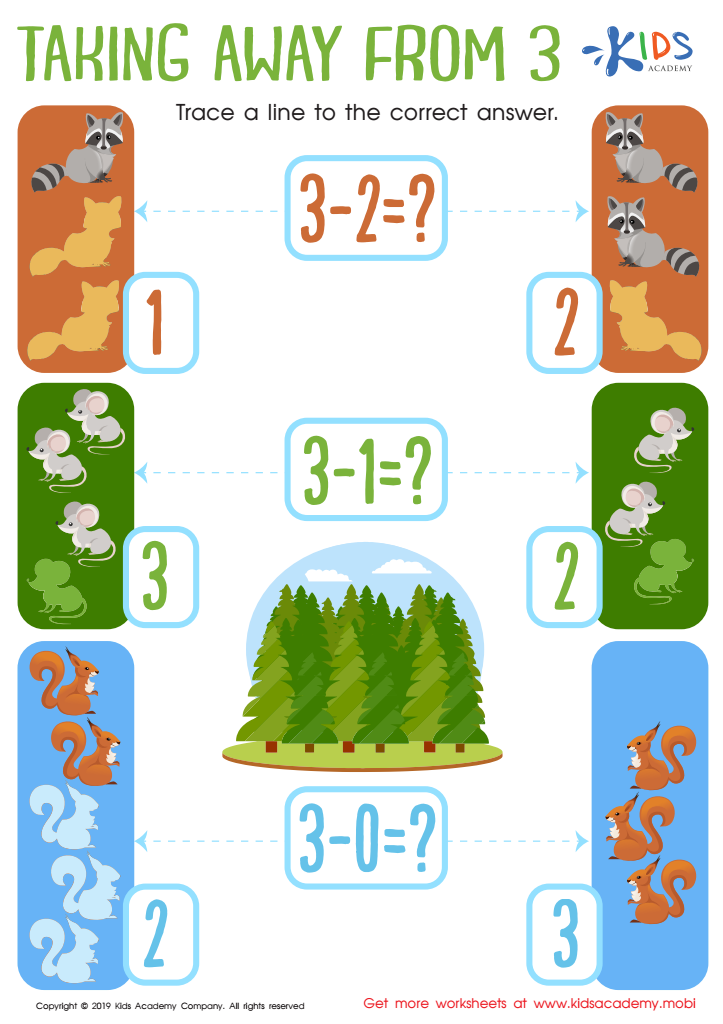
Taking Away From 3 Worksheet








Parents and teachers should place a high priority on Math problem-solving Extra Challenge Math for Ages 4-8 as it fosters essential skills crucial for early cognitive development. At this formative age, children are developing foundational mathematical concepts, and engaging in challenging activities enhances critical thinking and problem-solving abilities. These skills are not only vital in math but also translate into various aspects of life, helping children tackle everyday challenges.
Through extra challenges, children learn to approach problems systematically, breaking them down into manageable steps. This promotes perseverance and resilience when faced with difficulties, attributes that are beneficial in academic and personal contexts. Furthermore, math problem-solving enhances their ability to make connections between numbers and real-world scenarios, developing practical reasoning.
Additionally, fostering a love for math and problem-solving from a young age sets the stage for academic success in later years. It combats math anxiety, ensuring that children view the subject with positivity rather than fear. Involving parents in these challenges closes the learning gap between home and school, creating a supportive and encouraging environment. By prioritizing these activities, parents and teachers contribute significantly to determining children's attitudes toward learning, empowering them to become confident, capable problem solvers.








