Time reading skills Extra Challenge Worksheets for Ages 4-9
5 filtered results
-
From - To
Enhance your child's understanding of time with our engaging "Time Reading Skills Extra Challenge Worksheets" designed for ages 4-9. These worksheets provide fun, interactive exercises that help young learners grasp important time concepts like reading clocks, understanding hours and minutes, and distinguishing between AM and PM. Perfect for supporting classroom learning or reinforcing skills at home, our worksheets cater to varying levels of ability, ensuring every child can benefit from the challenge. Stimulate critical thinking and boost confidence in time-related math through colorful illustrations and enjoyable activities. Unlock your child’s potential and make learning about time an exciting adventure!
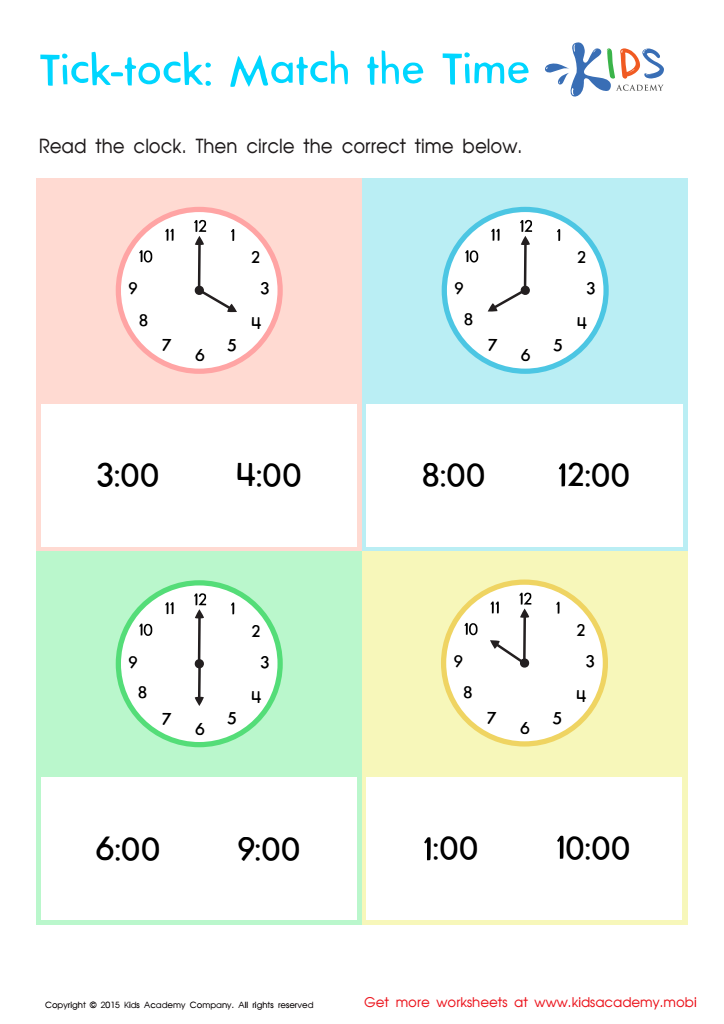
Telling The Time Worksheet: Part 4
 Assign to My Students
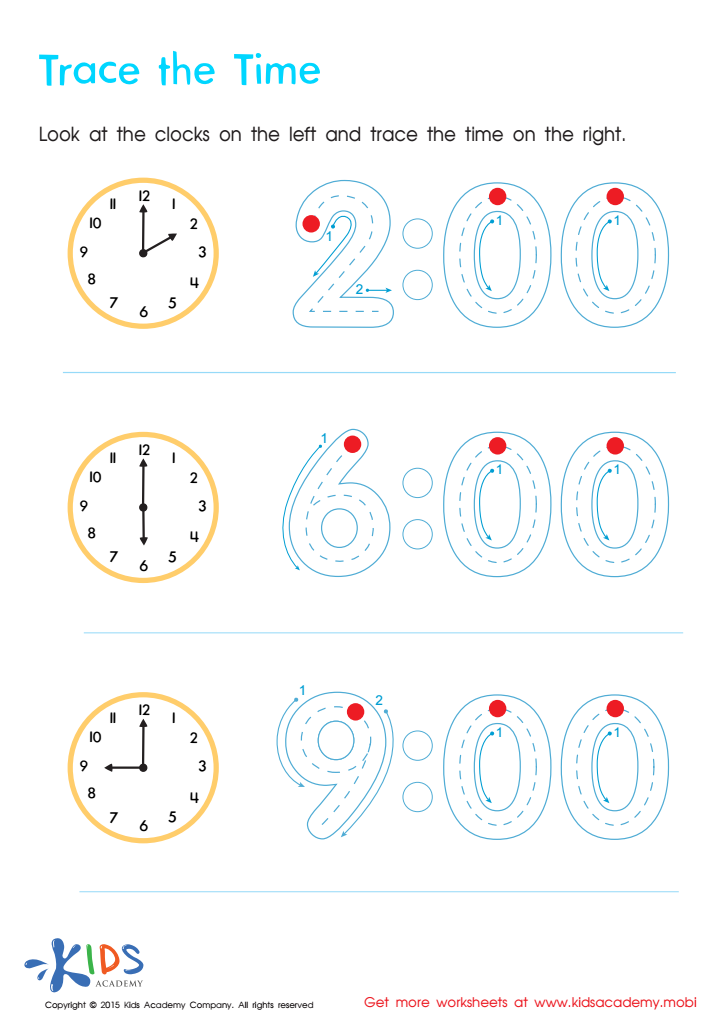
Telling The Time Worksheet: Part 2
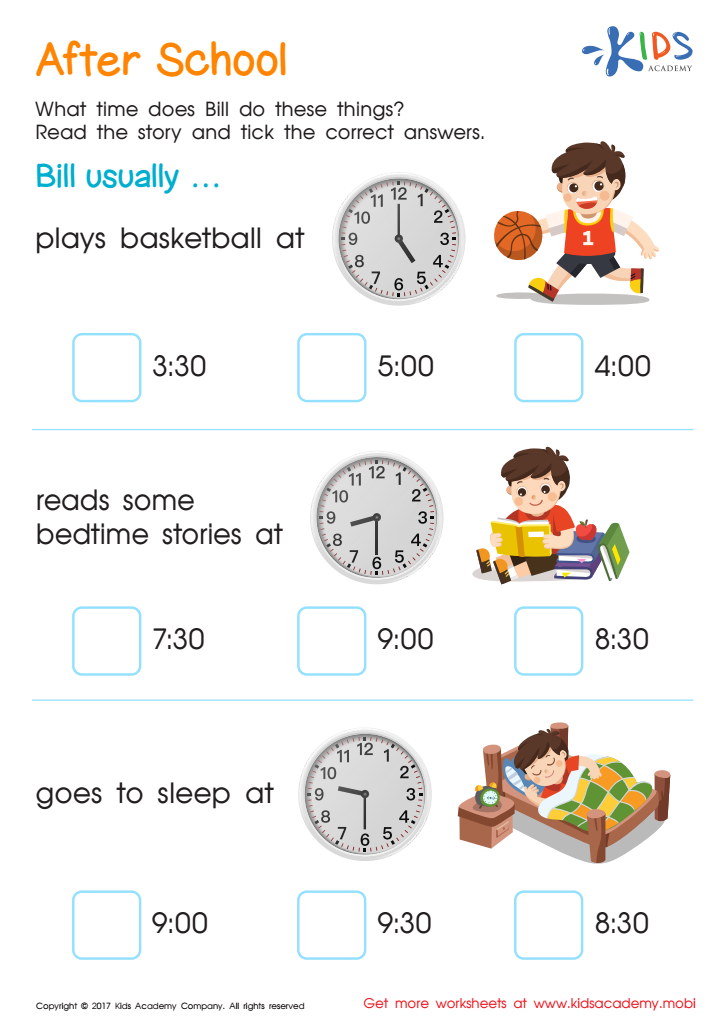
After School Time Printable
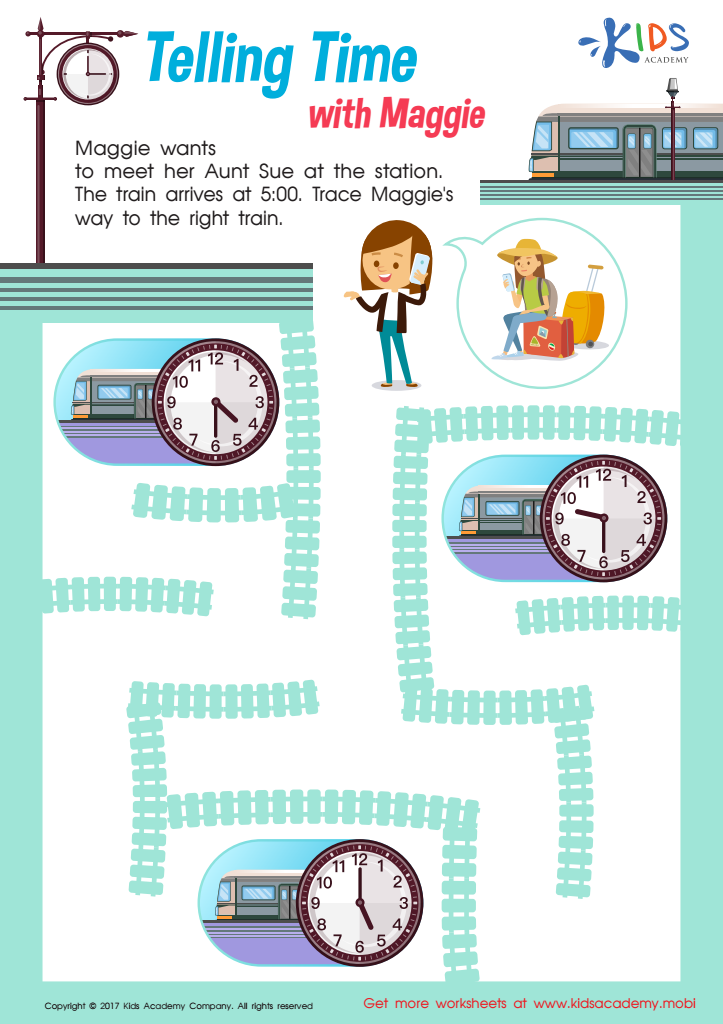
Telling Time With Maggie Time Worksheet
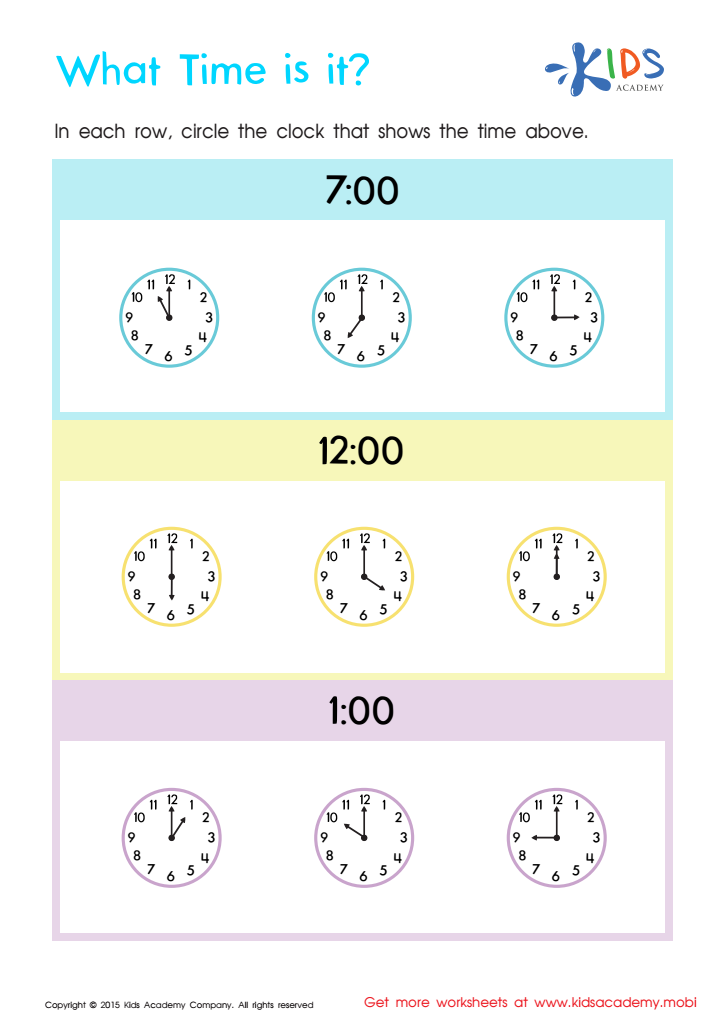
Telling The Time Worksheet: Part 3



.jpg)
.jpg)


Parents and teachers should prioritize developing time reading skills in children aged 4-9 for several compelling reasons. First, time reading is a fundamental life skill that fosters independence. As children learn to read clocks and understand time, they gain the ability to manage their daily routines, from getting ready for school to meeting friends for playdates, which enhances their sense of responsibility and autonomy.
Moreover, time reading skills promote critical thinking and reasoning. Children engage not only in recognizing numbers and interpreting clock faces but also in understanding how time affects various aspects of daily life, such as scheduling activities and managing transitions. Additionally, proficiency in reading time helps build mathematical skills, as it introduces concepts of measurement, addition, and subtraction in practical contexts.
Furthermore, these skills lay the groundwork for future academic success. As time management becomes increasingly crucial in higher education and professional settings, children with strong time reading abilities will find themselves better prepared to face these challenges.
Encouraging engagement in activities that develop these skills—such as playing time-based games or involving children in daily tasks requiring time awareness—can make learning both fun and effective, ultimately benefiting their overall development and well-being.








