
Visual discrimination Extra Challenge Worksheets for Ages 4-9
3 filtered results
Difficulty Level
Grade
Age
-
From - To
Subject
Activity
Standards
Unlock your child's potential with our "Visual Discrimination Extra Challenge Worksheets for Ages 4-9"! These thoughtfully designed worksheets enhance visual skills, helping young learners distinguish between different shapes, patterns, and details—key components for academic success. Featuring engaging and age-appropriate activities, these worksheets encourage critical thinking and attention to detail. Perfect for home or classroom use, they foster essential skills like observation and analysis. Ideal for students who are ready for a challenge, our worksheets provide a fun and interactive way to advance visual discrimination abilities. Explore our collection and watch your child thrive in learning and confidence!
Favorites
With answer key
Interactive
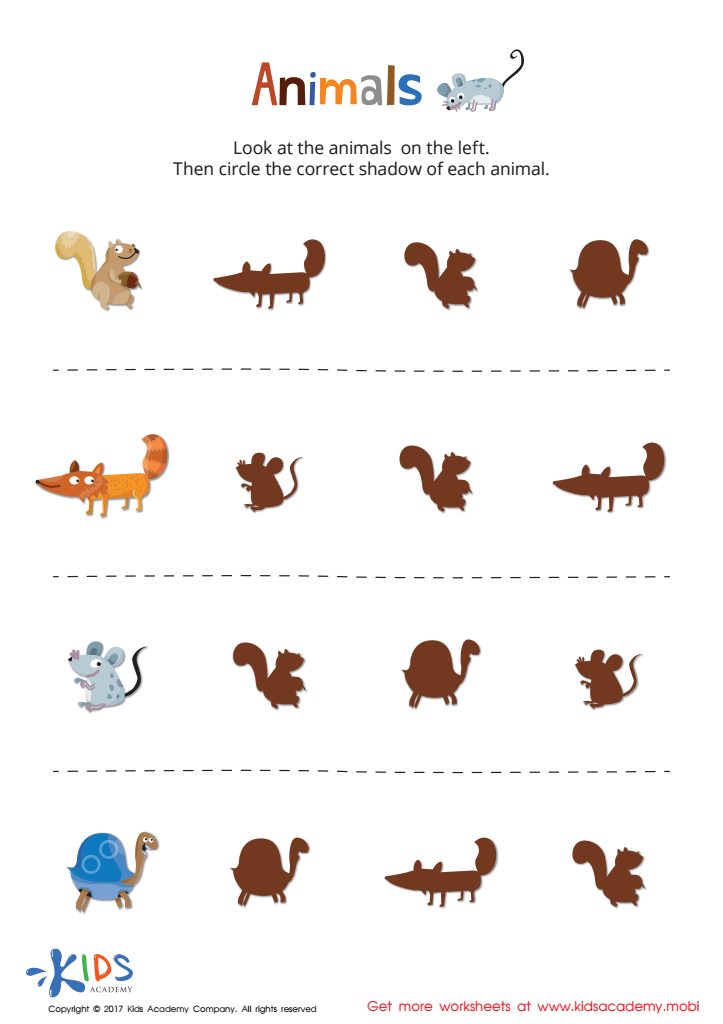
Animal Shadows Sorting Worksheet
This fun worksheet helps your child sharpen many skills. It features animals to match shapes and practice relative directions. Your child will sort animal features, practice spatial recognition, and recognize right/left. Plus, you can use it to start conversations about the animals. And try it also with fruits and veggies to boost sorting skills.
 Assign to My Students
Animal Shadows Sorting Worksheet
Worksheet
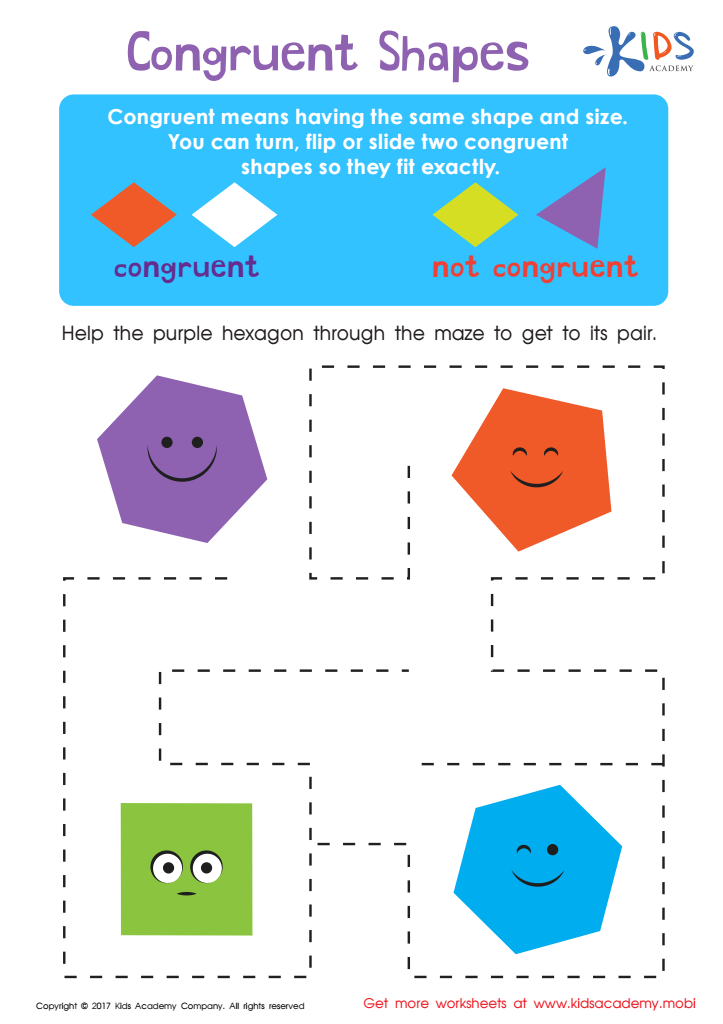
Congruent Shapes Worksheet
Help your child find the twin of the purple hexagon! This congruent shapes worksheet is great for increasing vocabulary while challenging mental rotation skills.
Congruent Shapes Worksheet
Worksheet
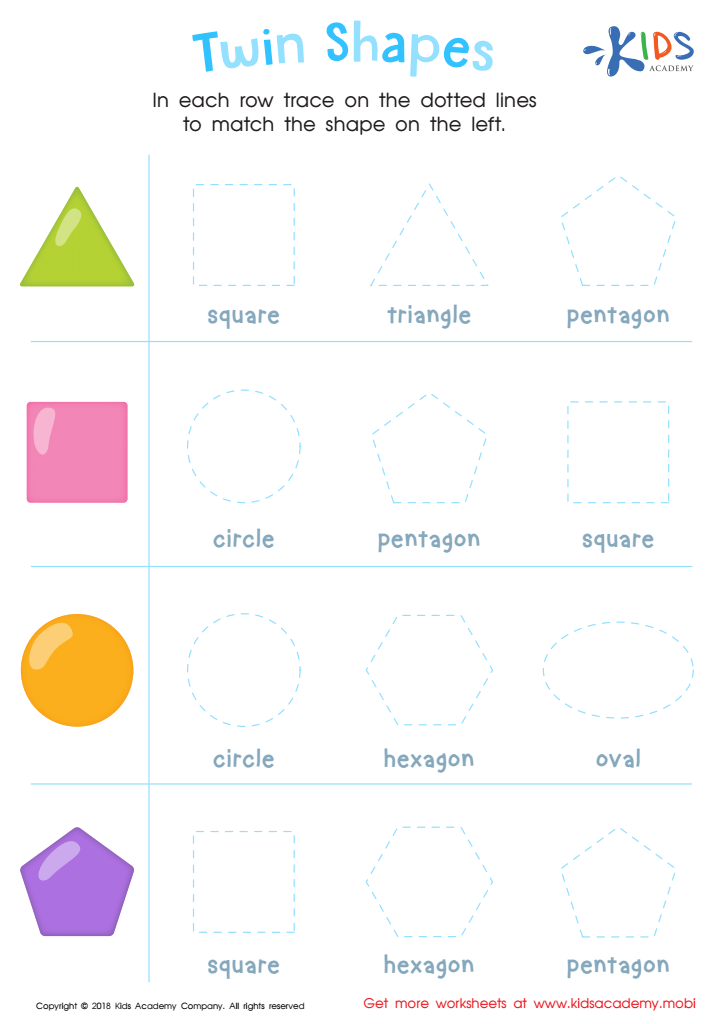
Twin Shapes Dot-to-Dot Worksheet
Test your child's ability to copy with this worksheet. Ask them to find and name the four shapes on the left. Then, they must match each with the dotted lines on the right. Help your child with all four shapes in this fun exercise.
Twin Shapes Dot-to-Dot Worksheet
Worksheet
Join Kids Academy for Free
Who is primarily going to use this learning content?




.jpg)



Visual discrimination is the ability to notice similarities and differences in shapes, sizes, colors, and patterns. For children aged 4-9, this skill is crucial as it forms the foundation for various developmental milestones, particularly in literacy and numeracy. Parents and teachers should care about enhancing visual discrimination abilities because these skills help children recognize letters and numbers, which are essential for reading and mathematics.
Moreover, strong visual discrimination skills boost a child's critical thinking and problem-solving abilities. For example, recognizing subtle differences in shapes and patterns supports spatial awareness and improves their ability to navigate their environment safely. Enhancing these skills can also aid in everyday tasks, like sorting objects or identifying details in their surroundings, which fosters independence.
Additionally, visual discrimination activities can be instrumental in building focus and attention, two skills that are critical for successful learning experiences. Engaging children with challenging visual discrimination tasks encourages patience, persistence, and a growth mindset as they learn to tackle difficulties. Consequently, when parents and teachers prioritize visual discrimination activities, they not only bolster academic success but also equip children with valuable life skills that will serve them well beyond the classroom.








