
Financial literacy Extra Challenge Coins Worksheets for Ages 4-9
3 filtered results
Difficulty Level
Grade
Age
-
From - To
Subject
Activity
Standards
Discover our "Financial Literacy Extra Challenge Coins Worksheets" designed for young learners aged 4-9. These engaging resources help children master essential money concepts through fun activities focused on coin recognition, counting, and basic financial principles. Our challenges limit screen time and foster hands-on learning, encouraging kids to solve problems confidently while enhancing their math skills. With a variety of worksheets that cater to different learning styles, your child will gain a solid foundation in financial literacy that promotes smart money management from an early age. Download now to add a playful twist to your child’s education and instill good financial habits for life!
Favorites
With answer key
Interactive
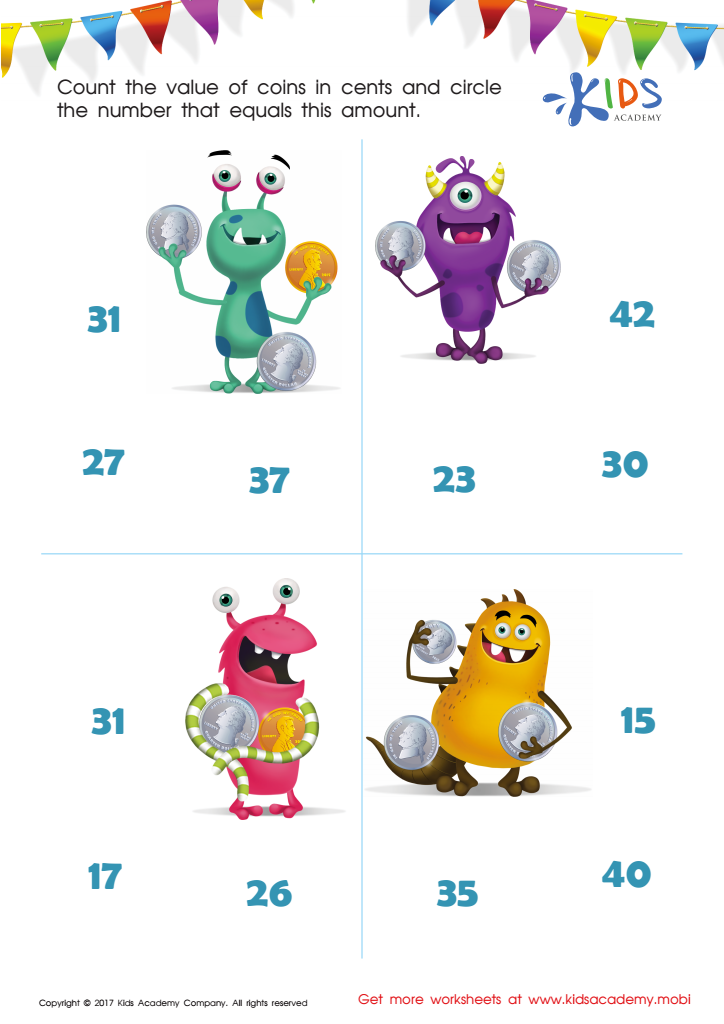
How Many Coins Money Worksheet
Have fun while counting coins: look at the monsters and count the coins in their hands. Challenge your little learners to count and write down the number of coins each one has. Enjoy the time together!
 Assign to My Students
How Many Coins Money Worksheet
Worksheet
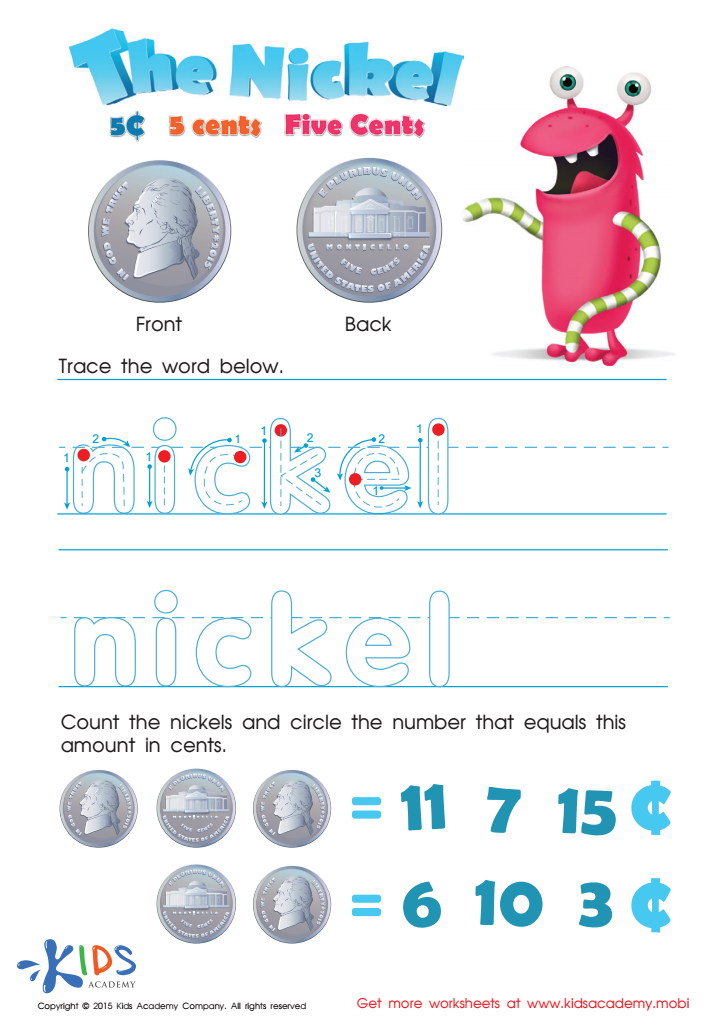
Five Cents or the Nickel Money Worksheet
Counting money games help kids make learning money fun and easy. Next up: the 5 cent coin, or nickel. Look at both sides and remember them. Then, trace the word "nickel" to help you remember. Finally, count the nickels and work out amounts in cents. Let's do this! Kids Academy helps make money learning easy and fun!
Five Cents or the Nickel Money Worksheet
Worksheet
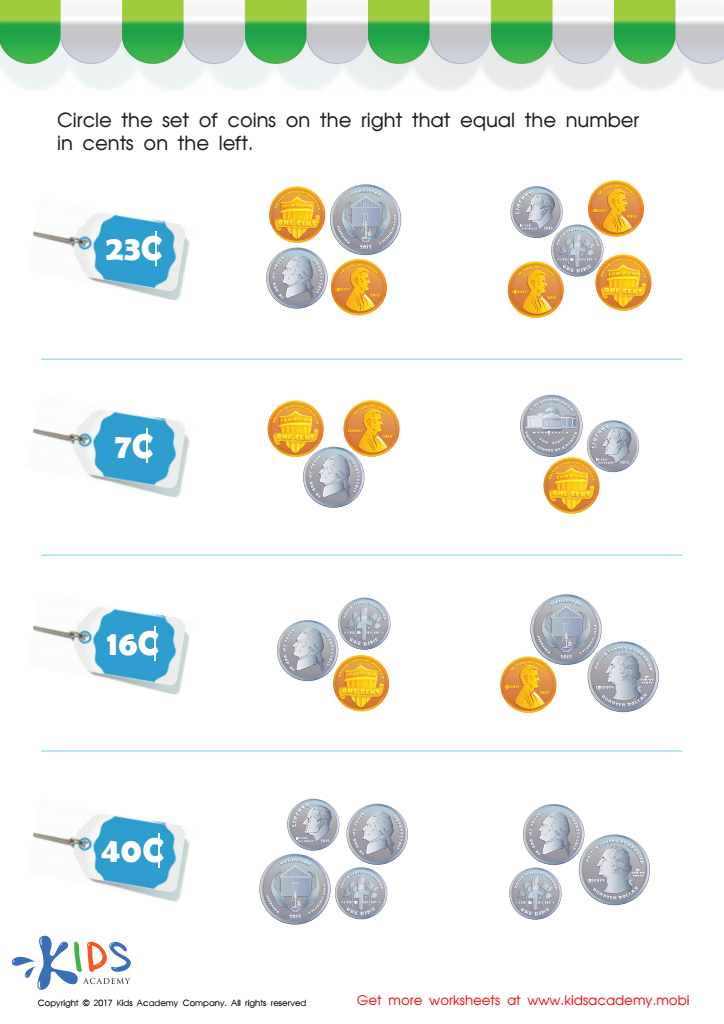
Picking the Coins You Need Money Worksheet
Let's learn to count money with Parents and Kids Academy! Investigate a real shop together: buy a globe, pencils, books, and a school bag using coins. Then, circle the coins you'll need. Visit our website for more free and fun money games for kids!
Picking the Coins You Need Money Worksheet
Worksheet
Join Kids Academy for Free
Who is primarily going to use this learning content?








Parents and teachers should prioritize financial literacy for children aged 4-9 because early lessons in money management lay the groundwork for lifelong financial habits. During these formative years, children are naturally curious and absorb information quickly, making it an ideal time to introduce basic concepts like saving, spending, and sharing. Utilizing engaging tools such as Extra Challenge Coins can enhance this learning process, making abstract concepts tangible through play and hands-on experiences.
Teaching financial literacy at a young age empowers children to make informed choices about their money as they grow. It helps them develop skills like prioritizing needs over wants, understanding value, and setting financial goals. Furthermore, instilling these principles cultivates responsibility and can reduce anxiety about money later in life.
By incorporating finance-focused activities and challenges with rewards like coins, parents and teachers can create a fun and motivating environment that encourages experimentation and learning. Ultimately, nurturing financial literacy early on prepares children not only to navigate their financial futures but also to appreciate the importance of good money habits as part of their overall education and personal growth. This foundational knowledge can lead to healthier financial behaviors and contribute to breaking cycles of financial stress in future generations.








