Multiplication practice Extra Challenge Social Studies Worksheets for Ages 4-9
3 filtered results
-
From - To
Boost your child's multiplication skills while exploring fascinating social studies topics with our "Multiplication Practice Extra Challenge Social Studies Worksheets" for ages 4-9! These engaging worksheets combine essential math practice with themes from geography, history, and culture, making learning fun and relevant. Perfect for parents and educators, our worksheets provide age-appropriate challenges that enhance children's critical thinking and problem-solving abilities. Each activity promotes not only math proficiency but also a deeper understanding of the world around them. Let your young learners discover the joy of numbers while gaining valuable knowledge about societies and their histories through these interactive and educational resources!
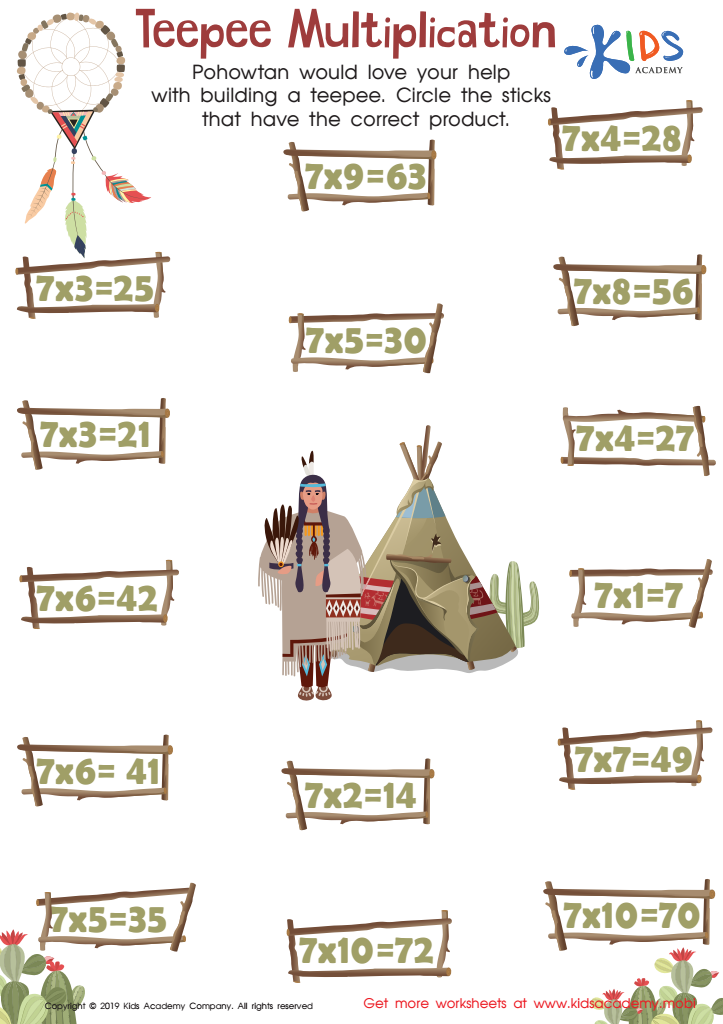
Teepee Multiplication Worksheet
 Assign to My Students
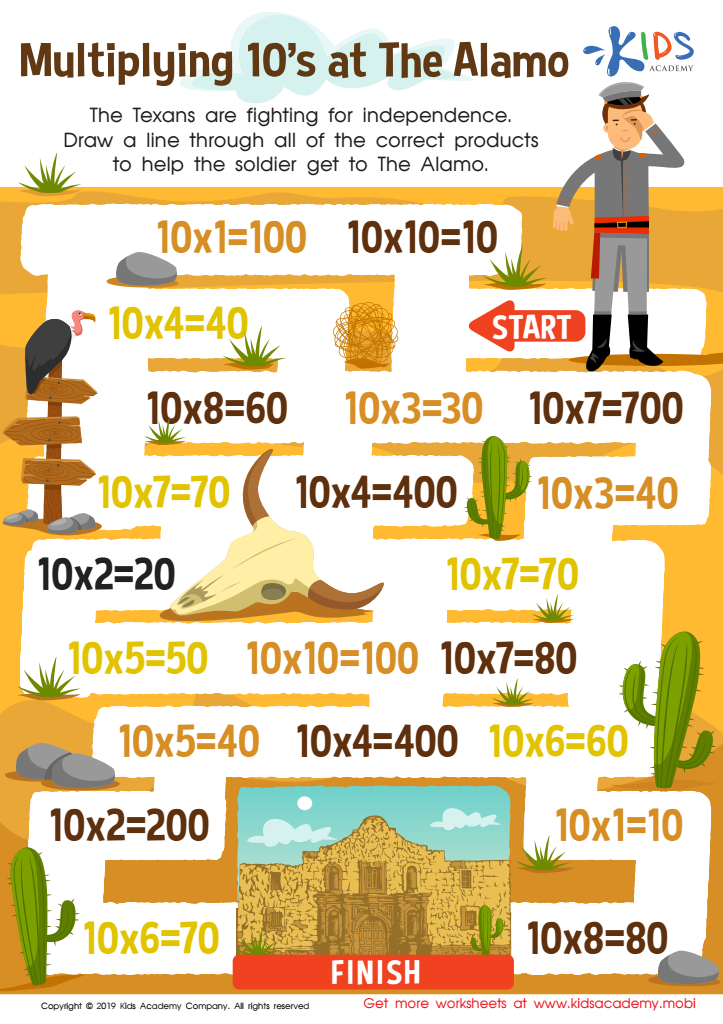
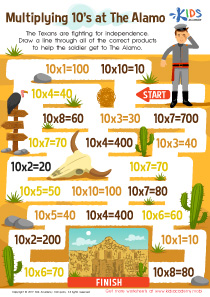
Multiplying 10’s at The Alamo Worksheet
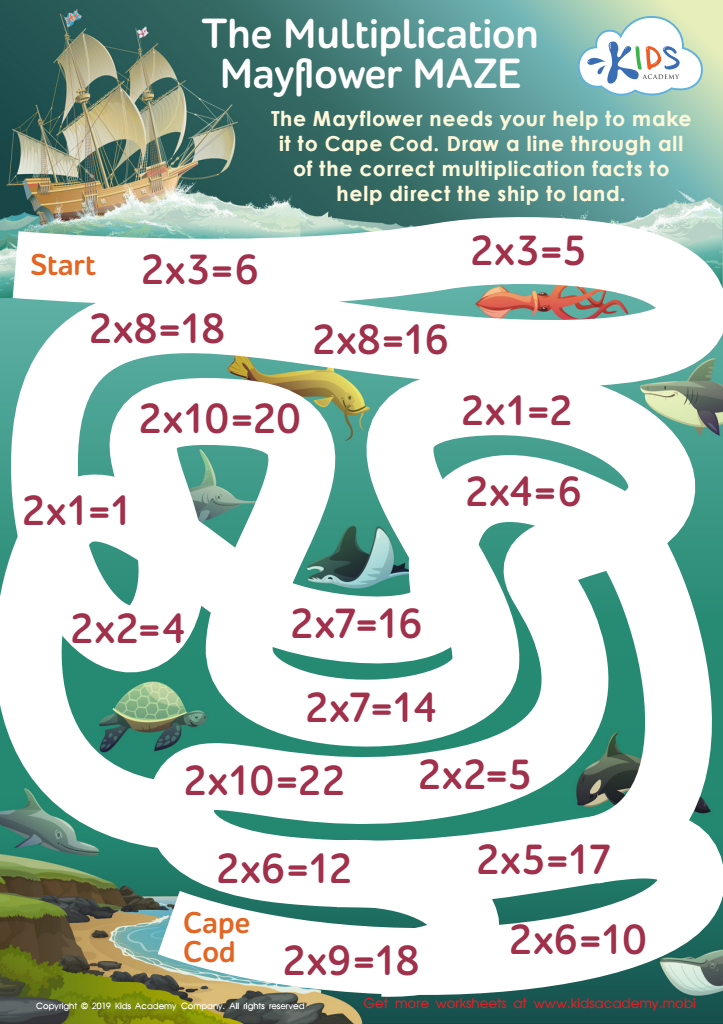
The Multiplication Mayflower Maze Worksheet








Multiplication practice in early education, particularly when integrated with subjects like social studies, plays a crucial role in a child's cognitive and social development. For children aged 4-9, mastering multiplication fosters not only mathematical skills but also strengthens critical thinking and problem-solving abilities. Engaging in multiplication helps children understand concepts of grouping, sharing, and the relationships between numbers, forming a foundational block for more complex mathematics in the future.
Incorporating social studies allows children to learn multiplication in context, making it relevant and engaging. For example, they can explore historical events or cultural aspects while practicing math, such as calculating the number of resources needed for a community event or understanding population statistics. This interdisciplinary approach nurtures curiosity and a deeper understanding of the world around them.
Furthermore, multiplication practice prepares children for advanced educational challenges, promoting academic success. It embeds a sense of achievement and confidence young learners, essential qualities for lifelong learning. By emphasizing both multiplication and social studies, parents and teachers promote an integrated learning experience, enriching children’s education and helping them to become informed and numerically literate citizens. Ultimately, this holistic approach not only enhances academic skills but also cultivates a well-rounded worldview.