Basic geometry understanding Extra Challenge Worksheets for 4-Year-Olds
3 filtered results
-
From - To
Unlock your child's potential with our "Basic Geometry Understanding Extra Challenge Worksheets for 4-Year-Olds." Specially designed to nurture young minds, these exciting worksheets cover fundamental geometric principles, helping preschoolers recognize and distinguish different shapes. Through engaging activities, children will enhance their spatial awareness, fine motor skills, and critical thinking. Each worksheet offers a variety of challenges to keep learners motivated and interested. Ideal for parents and teachers seeking to provide a strong foundation in early geometry, our worksheets transform learning into an enjoyable adventure. Start discovering the fun and excitement of geometry today!
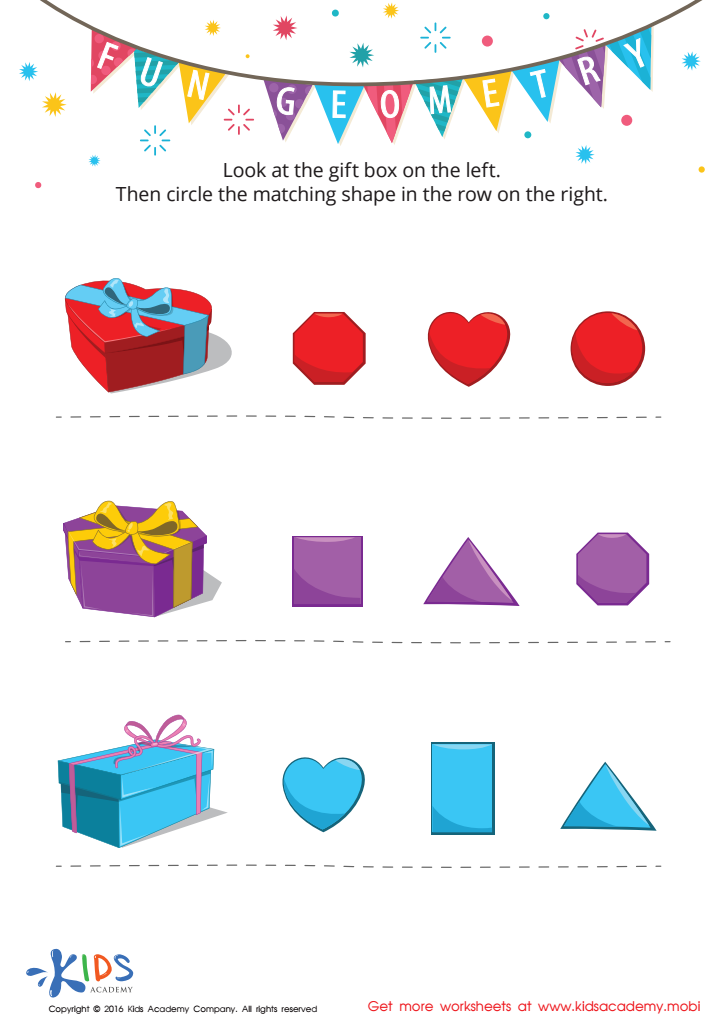
Fun Geometry Worksheet
 Assign to My Students
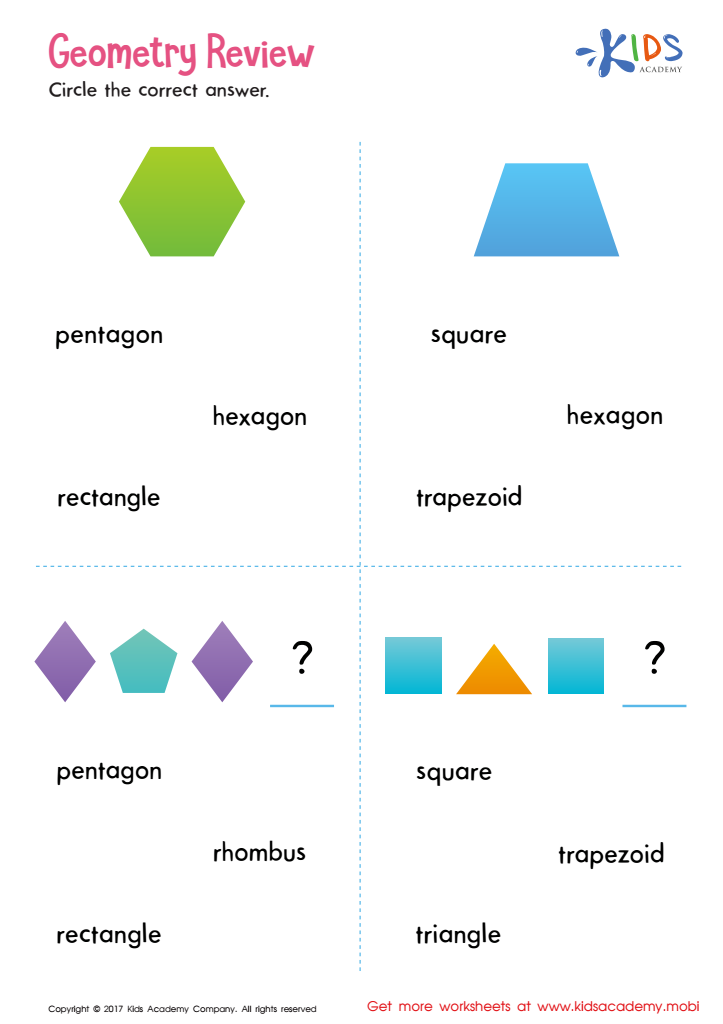
Geometry Review Printable
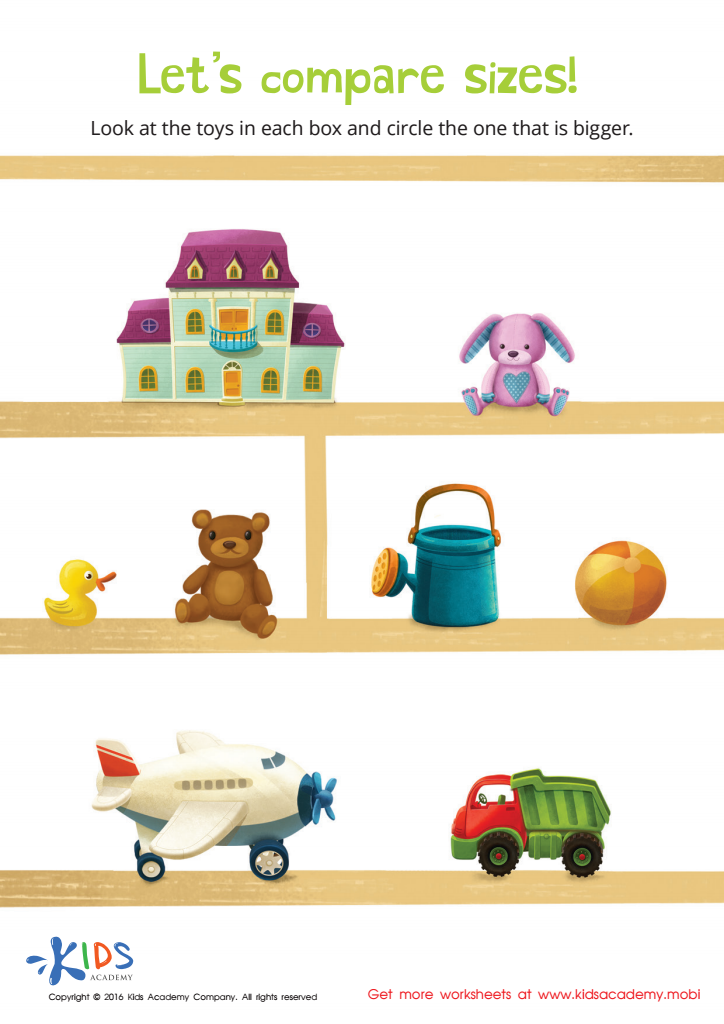
Classifying by Size Sorting Worksheet







Encouraging a basic understanding of geometry in 4-year-olds, along with extra challenges, lays a strong foundation for their future learning. At this age, children’s brains are highly receptive and formulating spatial awareness is critical. Introducing basic geometric concepts sharpens their cognitive abilities, especially skills relating to problem-solving and logical thinking.
The extra challenge component caters to young minds that thrive on stimulation and engagement. It helps in maintaining their curiosity and enthusiasm towards learning. For instance, tasks like identifying shapes in everyday objects or arranging them in patterns help children to mentally visualize and manipulate objects, which in turn enhances their spatial reasoning skills. These activities further improve fine motor skills through hands-on manipulative play, boosting their confidence in handling more complex tasks later.
For parents and teachers, focusing on geometry fosters an environment where educational play facilitates broader curricular enhancements. It also helps in recognizing and nurturing early mathematical talents by identifying children who might excel in STEM (Science, Technology, Engineering, Mathematics) disciplines. Moreover, an understanding of geometric principles, even at a basic level, builds a foundation for future learning, including reading, math, and science, ensuring a holistic developmental trajectory for young learners.








