Practical math application Extra Challenge Worksheets for 4-Year-Olds
3 filtered results
-
From - To
Unlock your child's potential with our "Practical Math Application Extra Challenge Worksheets for 4-Year-Olds"! Designed to engage and inspire young minds, these worksheets provide fun, hands-on activities that reinforce essential math concepts while promoting critical thinking skills. Your little learners will explore basic arithmetic, patterns, measurement, and problem-solving through captivating exercises that make learning enjoyable. Ideal for preschoolers, these extra challenges encourage independent thinking and boost confidence in their math abilities. Download now to support your child's educational journey and help them tackle math concepts with excitement and enthusiasm! Perfect for at-home learning or as a classroom resource!
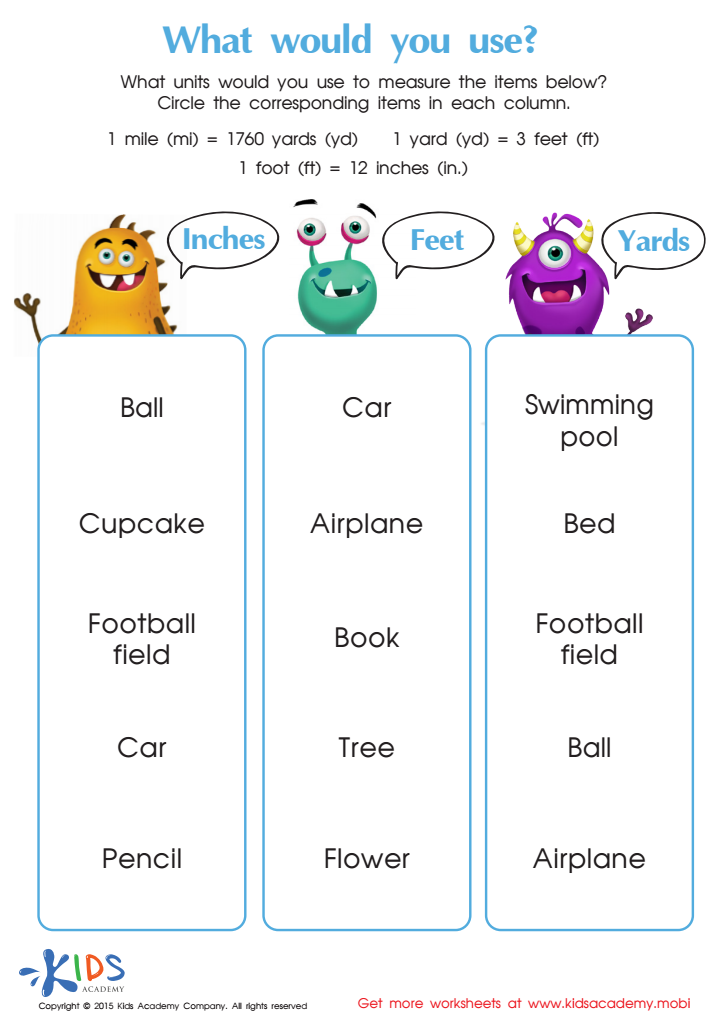
Learning about measuring objects in inches, feet and yards Worksheet
 Assign to My Students
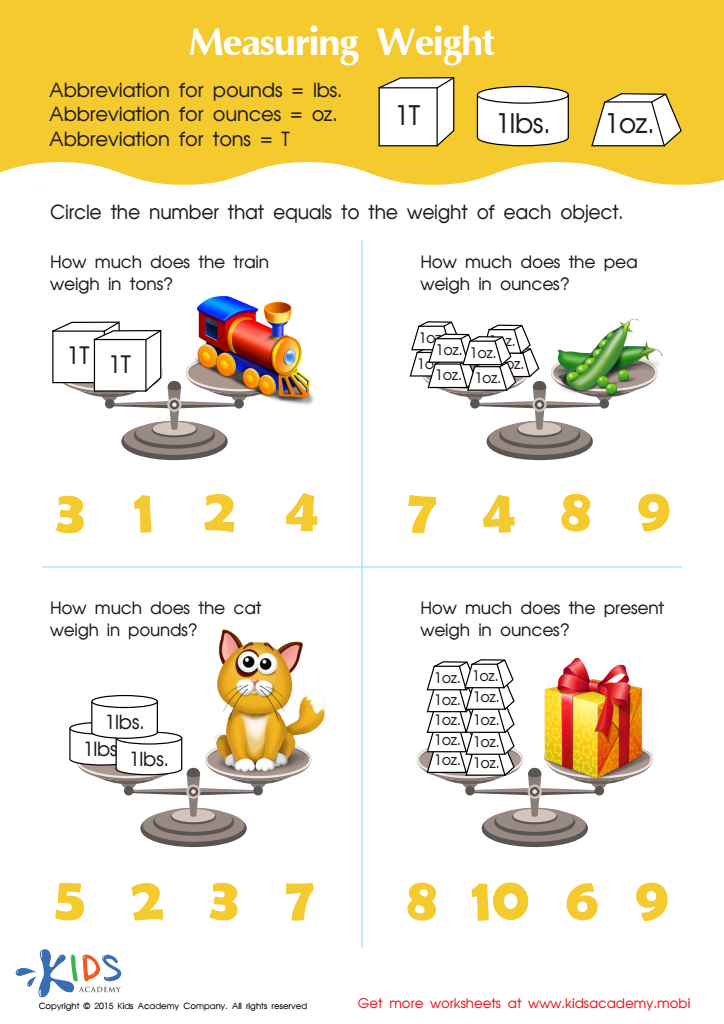
Measuring Weight in Ounces, Pounds and Tons Worksheet
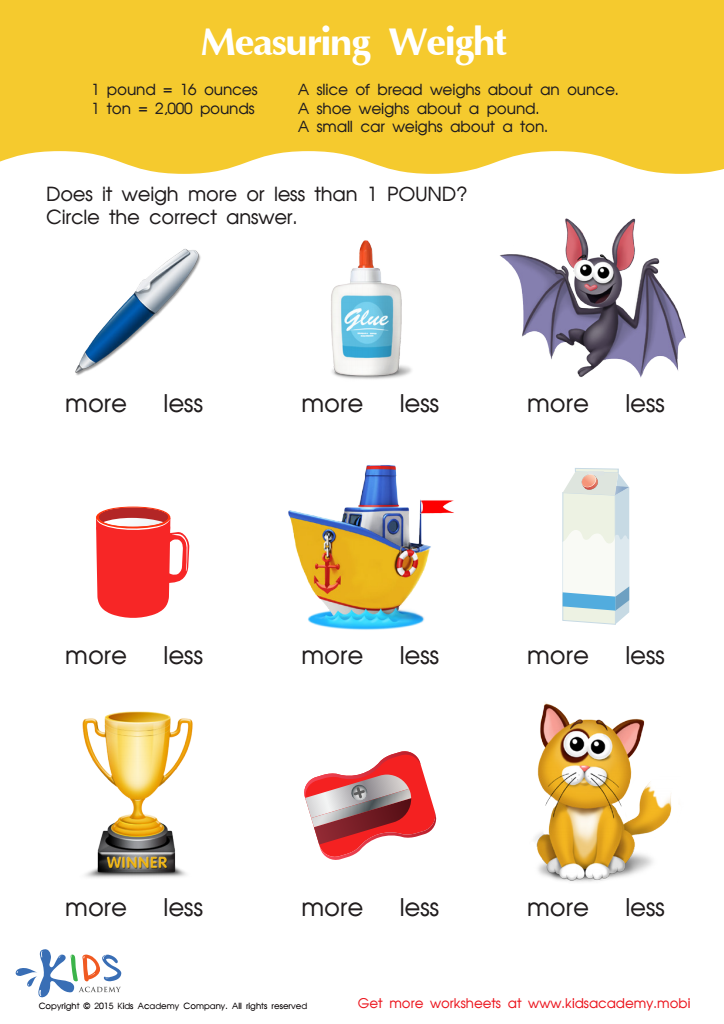
Measuring weight in pounds Worksheet






Practical math applications are essential for 4-year-olds as they lay the foundational skills for future learning. Engaging children in real-life math scenarios, like counting fruit during snack time or measuring ingredients while cooking, helps them understand numbers and quantities in meaningful contexts. This early exposure cultivates their problem-solving abilities and critical thinking skills, encouraging academic confidence as they progress through school.
For parents and teachers, incorporating practical math challenges into daily routines promotes a love for learning. Children are naturally curious and learn best through hands-on experiences, so using everyday activities to introduce concepts like addition, subtraction, and patterns can make math enjoyable. By presenting math in relatable scenarios, children can better grasp complex ideas as they advance in education.
Additionally, early math skills correlate with later academic success. Research shows that children who develop a solid math foundation in preschool are more likely to excel in math and related subjects in later grades. Thus, by recognizing the value of practical math applications, parents and teachers can inspire curiosity and motivation in young learners, setting the stage for lifelong learning and enjoyment of mathematics. Encouraging this engagement early on fosters both cognitive skills and a positive attitude towards education.








