Shape identification Extra Challenge Worksheets for 4-Year-Olds
3 filtered results
-
From - To
Enhance your child's shape recognition skills with our "Shape Identification Extra Challenge Worksheets for 4-Year-Olds" designed to provide a fun and educational experience. These worksheets offer engaging activities that encourage young learners to identify and differentiate between various shapes. Perfectly suited for preschoolers, these extra challenges will help strengthen their cognitive and fine motor skills while keeping them entertained. Each worksheet is thoughtfully curated to balance learning with enjoyment, ensuring that your little one remains captivated and eager to learn. Download now to give your child the head start they need with our expertly crafted shape identification tasks.
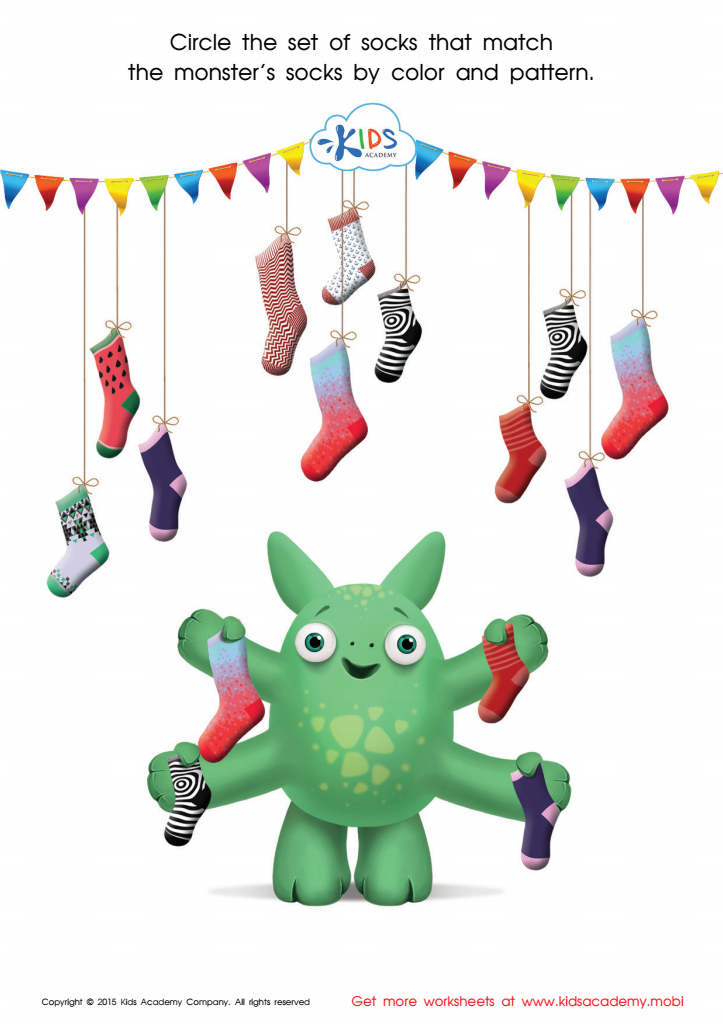
Sort the Monster's Socks Worksheet
 Assign to My Students
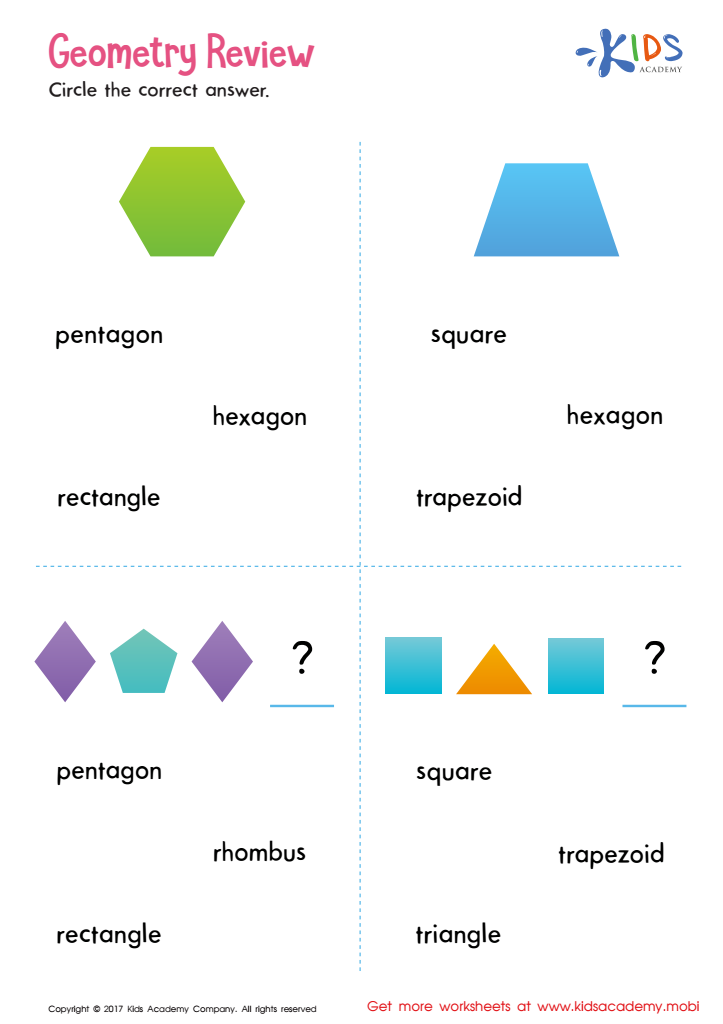
Geometry Review Printable
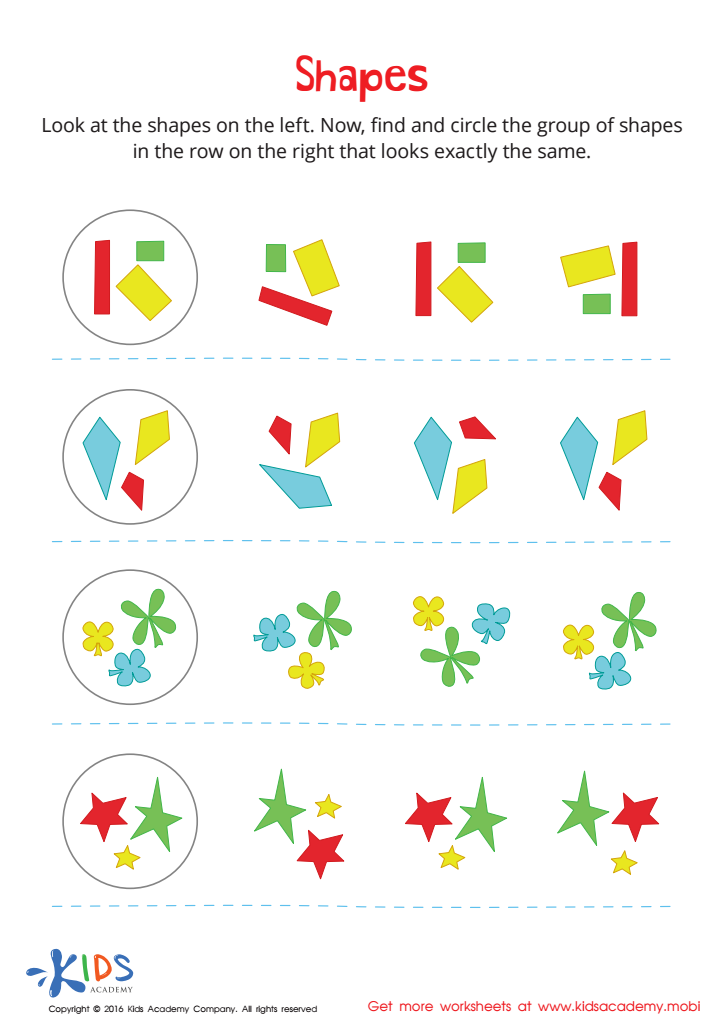
Shapes Worksheet








Parents and teachers should care about Shape Identification Extra Challenge activities for 4-year-olds because these endeavors lay a critical foundation for cognitive and motor development. At this age, children are like sponges, absorbing information rapidly. Shape identification is not just about recognizing circles and squares—it's a critical step in honing visual-spatial understanding, an essential skill for later success in subjects like math and science.
Engaging in shape identification challenges also boosts fine motor skills, as children often trace or manipulate shapes with their hands. This activity aids in hand-eye coordination and prepares them for writing tasks. Additionally, discussing and describing shapes enhances vocabulary and language skills, supporting robust communication abilities.
Incorporating extra challenges maintains and heightens a child's intrinsic curiosity and motivation. It cultivates problem-solving abilities as children learn to distinguish subtle differences among shapes, which is fundamental for logical reasoning tasks. Furthermore, it fosters a sense of accomplishment and builds self-confidence, reinforcing the notion that effort brings success—which is a crucial attitude for lifelong learning.
Overall, investing time in these shape-related activities leverages a comprehensive developmental approach, promoting intellectual growth, motor skills, and emotional resilience. It ensures that children are well-equipped to transition smoothly into formal schooling with a set of essential skills firmly in place.








