Cognitive Development Extra Challenge Geometry Worksheets for 4-Year-Olds
5 filtered results
-
From - To
Help your child advance their cognitive skills with our Cognitive Development Extra Challenge Geometry Worksheets for 4-Year-Olds. Specially designed to stimulate young minds, these engaging exercises go beyond basic shapes to include sorting, pattern recognition, and spatial reasoning tasks. As children explore these advanced yet fun activities, they build foundational skills essential for future success in math and critical thinking. Perfect for parents and educators seeking to offer that extra cognitive push, our worksheets combine play with learning, making complex concepts accessible and enjoyable. Embark on a journey of intellectual growth with dynamic resources tailored for young geometers.
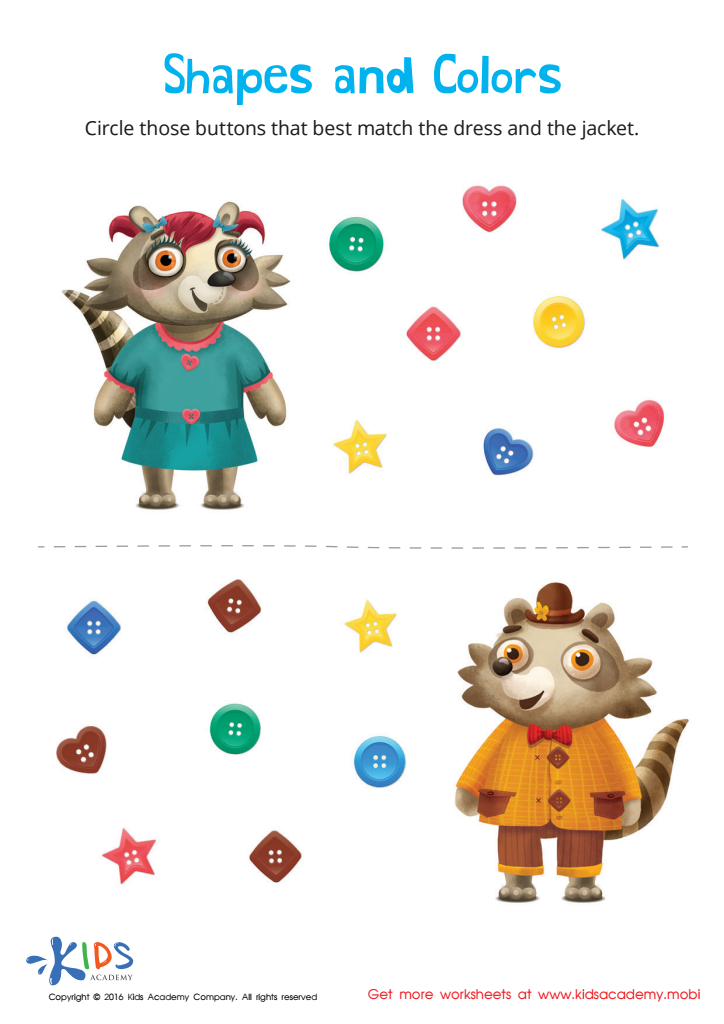
Matching: Shapes and Colors Worksheet
 Assign to My Students











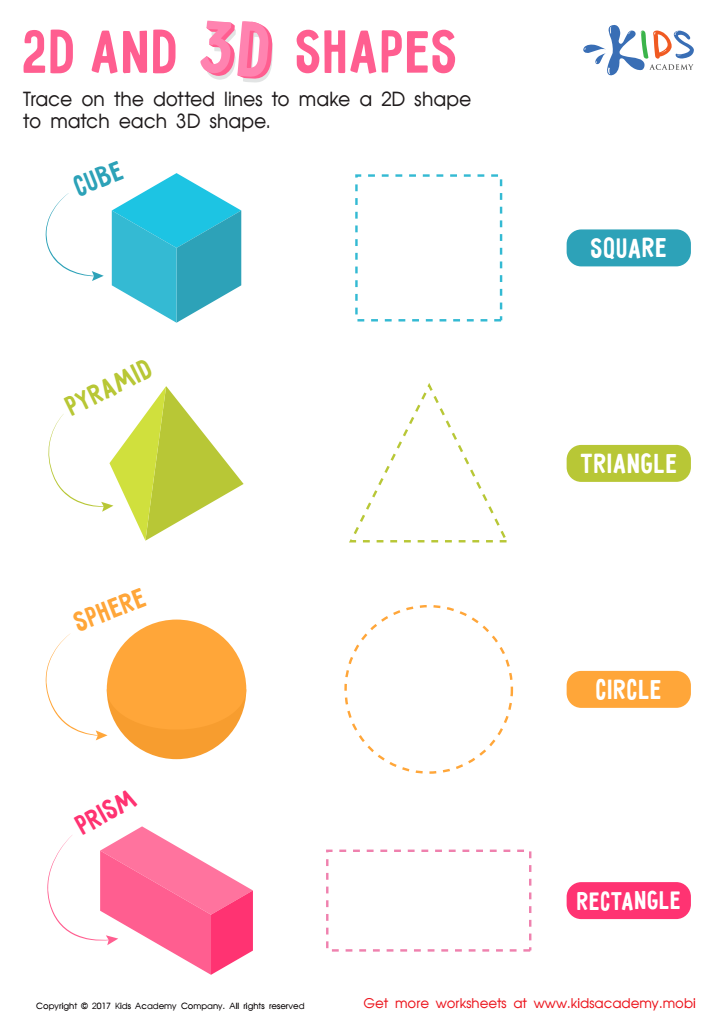
2D and 3D Shapes Worksheet
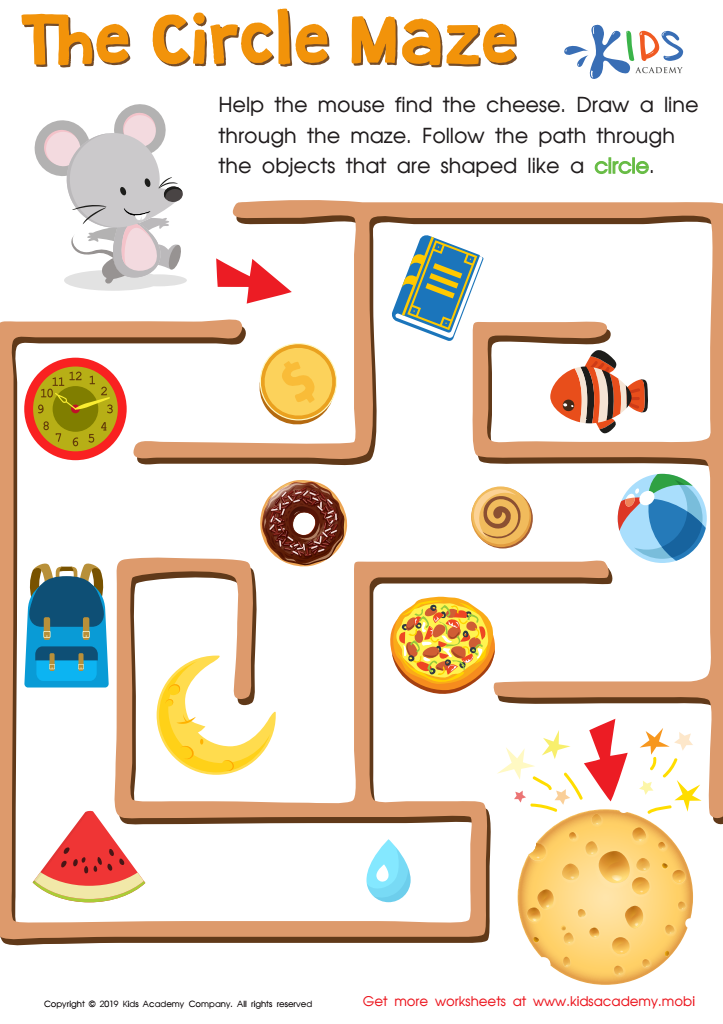
The Circle Maze Worksheet
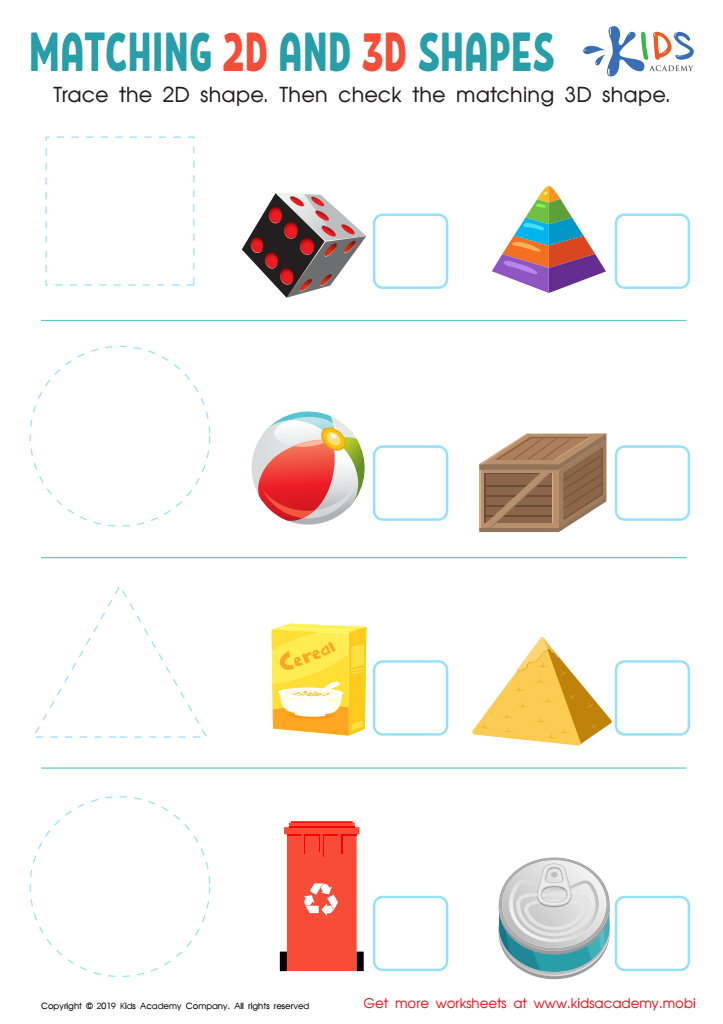
Matching 2D and 3D Shapes Worksheet
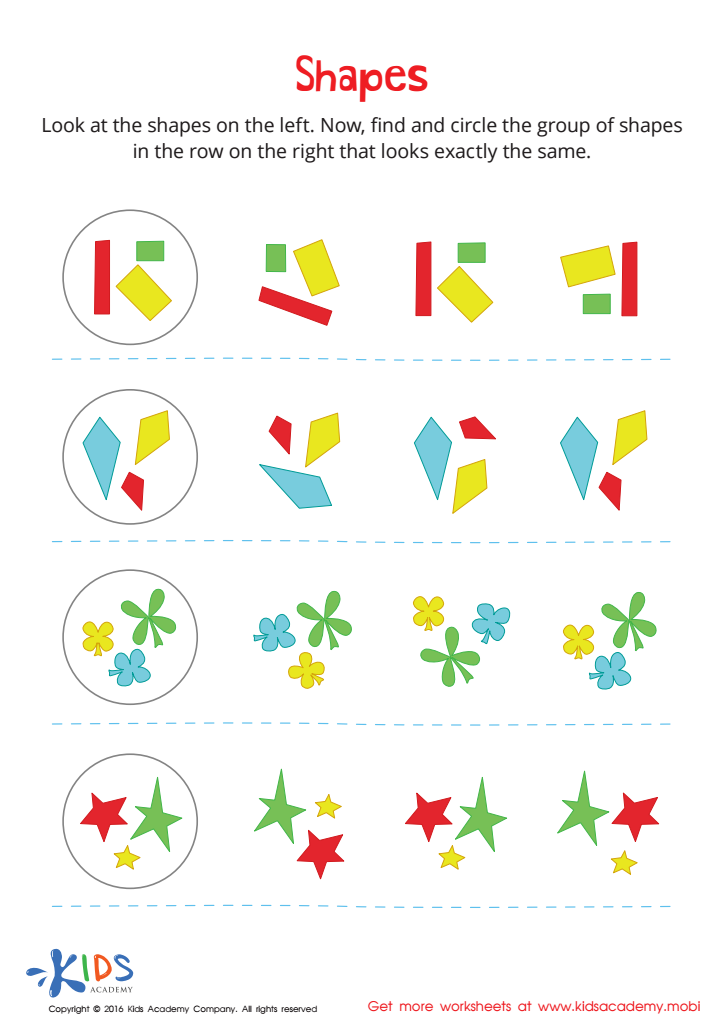
Shapes Worksheet








Parents and teachers should care about Cognitive Development Extra Challenge Geometry for 4-year-olds because early exposure to geometric concepts plays a crucial role in foundational cognitive growth, problem-solving skills, and mathematical thinking. At this age, children's brains are incredibly receptive to new information and experiences, making it an ideal time to introduce geometric ideas, which help them understand and organize the world around them.
Engaging with shapes, patterns, and spatial relationships boosts children's ability to visualize and comprehend abstract concepts, fostering early math skills that are essential for future academic success. Geometry activities stimulate critical thinking and reasoning, encouraging children to explore, predict, and solve problems in creative ways.
Moreover, working on geometry challenges in a supportive and interactive environment can enhance children’s fine motor skills and visual-spatial awareness, both of which are important for activities such as writing and navigating everyday surroundings. These challenges also promote social skills when done in group settings, as children learn to collaborate, communicate, and share their discoveries.
By prioritizing cognitive development through geometry, parents and teachers provide children with a strong foundation that supports a lifelong love of learning and an increased capacity for academic and personal growth.