
Attention to Detail Extra Challenge Worksheets for Ages 5-6
5 filtered results
Difficulty Level
Grade
Age
-
From - To
Subject
Activity
Standards
Enhance your child's focus and observation skills with our "Attention to Detail Extra Challenge Worksheets" for ages 5-6! Designed to spark curiosity and engagement, these worksheets offer fun and stimulating activities that encourage kids to closely examine images, identify subtle differences, and complete engaging puzzles. Perfect for young learners, these resources promote cognitive development while making learning enjoyable. As children work through these challenges, they'll improve their attention span, visual perception, and critical thinking skills. Explore our collection of printable worksheets and provide your little one with the tools to succeed in their educational journey! Perfect for home or classroom use.
Favorites
With answer key
Interactive
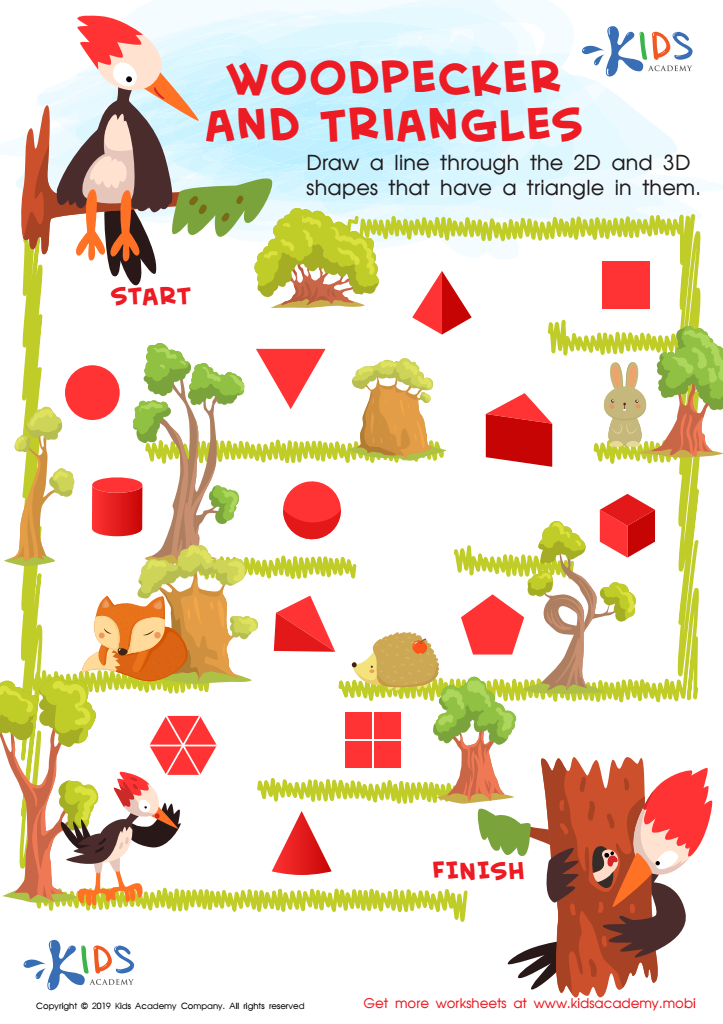
Woodpecker and Triangles Worksheet
Woodpeckers peck wood, and this printout helps kids learn about triangles. Ask your kindergartners to draw a triangle, then draw a line through the shapes that have a triangle in them to help the woodpecker get out of the maze.
 Assign to My Students
Woodpecker and Triangles Worksheet
Worksheet
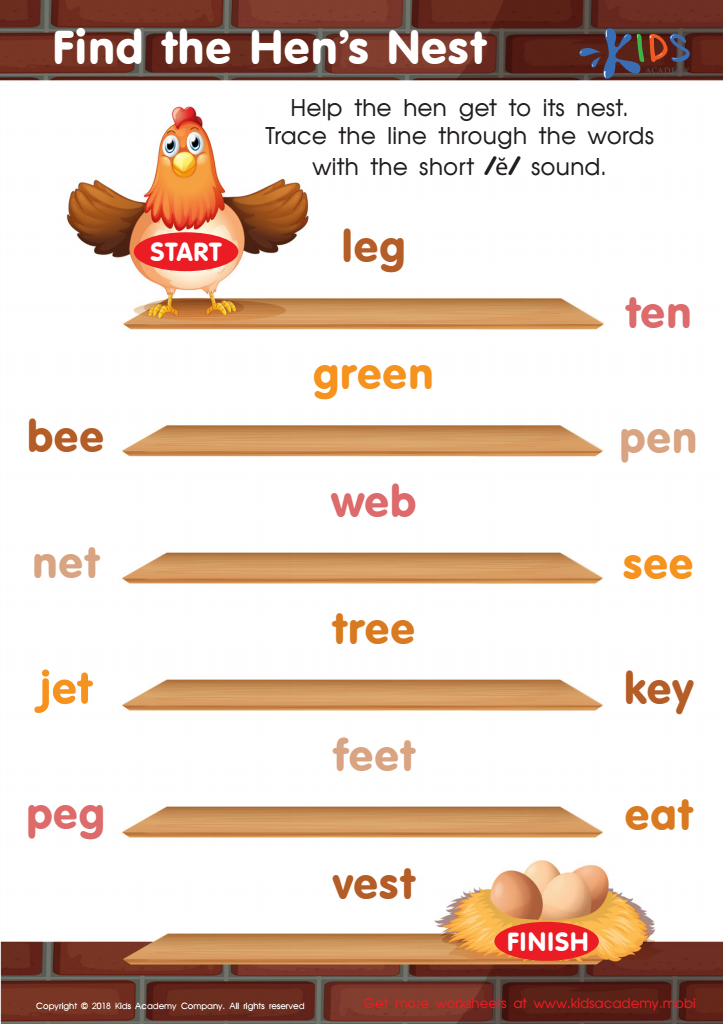
Find Hens Nest Reading Worksheet
Learning the short and long «e» sound can be tricky for kids just starting to learn the alphabet. Make it fun with this worksheet: it leads your kindergarten child to a hen's nest by following words with the short «e» sound. They'll be able to identify words with the sound by the end of the exercise.
Find Hens Nest Reading Worksheet
Worksheet
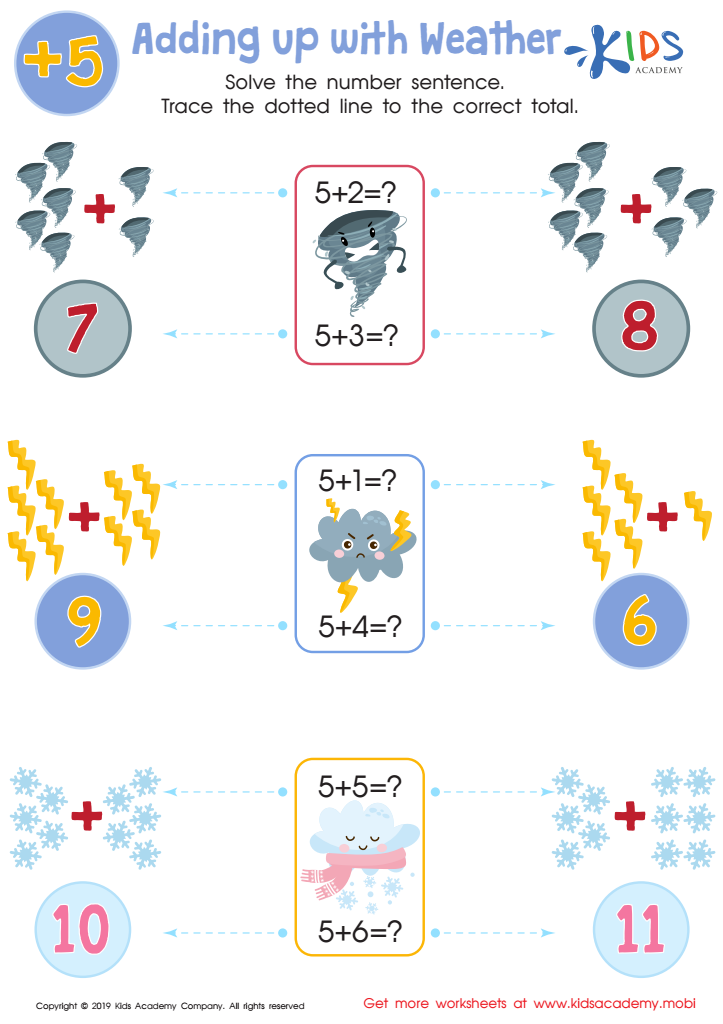
Adding up With Water Worksheet
Ask your kids to name different kinds of weather and what it's like outside now. Then, help them solve the number sentences on the worksheet by tracing the dotted line to the correct total.
Adding up With Water Worksheet
Worksheet
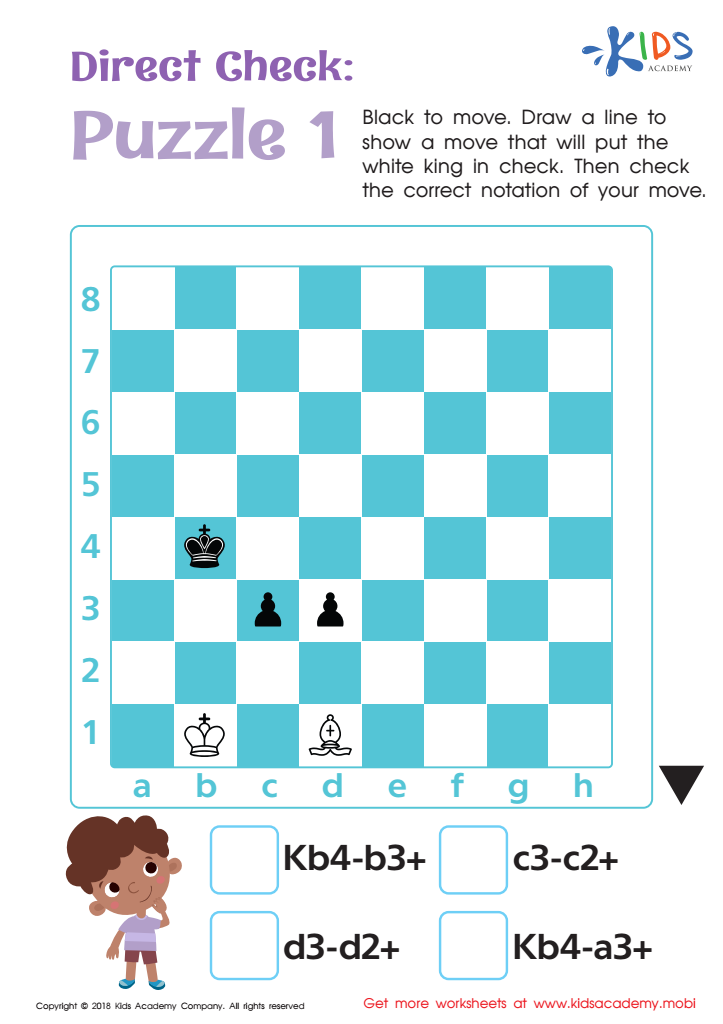
Direct Check: Puzzle 1 Worksheet
Your child can test their chess knowledge with this worksheet. If they've been taking lessons or playing regularly, they'll enjoy connecting the dots to put the white king in checkmate, then checking the correct notation. Challenge their chess skills!
Direct Check: Puzzle 1 Worksheet
Worksheet
Find Words Worksheet
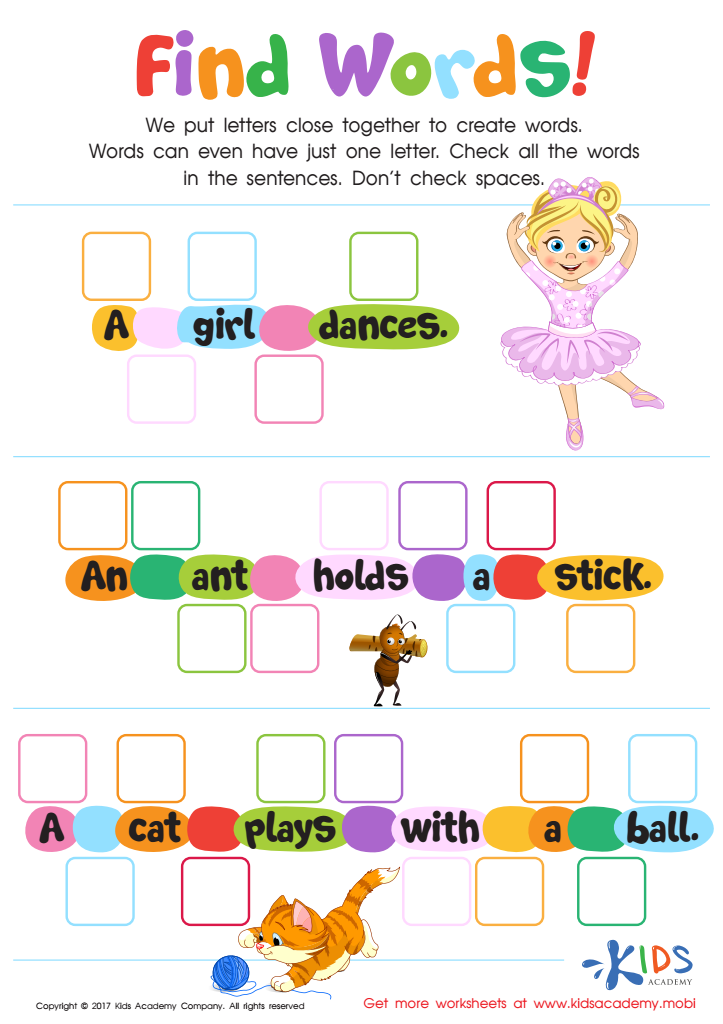
Help your little learner recognize that one letter words can be words too using this fun worksheet! As they work on it, they'll learn how to spot the gaps between words and become more familiar with written language. Download it now and get them started!
Find Words Worksheet
Worksheet
Join Kids Academy for Free
Who is primarily going to use this learning content?







Attention to Detail Extra Challenges for ages 5-6 are crucial for fostering a child’s cognitive and developmental skills. During this period, children are developing their ability to observe, analyze, and engage with their environment. By participating in activities that require attention to detail, children enhance their focus and concentration, essential skills for academic success and lifelong learning.
Moreover, these challenges stimulate critical thinking and problem-solving abilities. When children learn to notice and differentiate small details, they become more adept at processing information, allowing them to tackle complex concepts as they progress in their education.
Engaging in detail-oriented activities also supports fine motor skills and hand-eye coordination, both vital for various tasks such as writing and drawing. For parents and teachers, encouraging attention to detail can foster a love for learning and exploration; it can make everyday tasks more meaningful, instilling a sense of achievement and creativity in children.
Ultimately, emphasizing attention to detail can lead to improved academic performance and a stronger foundation for future learning, highlighting the importance of these Extra Challenges in early childhood education. By promoting these skills, parents and teachers can equip children with tools needed for personal and educational success.








