
Phonics practice Extra Challenge Worksheets for Ages 5-6
4 filtered results
Difficulty Level
Grade
Age
-
From - To
Subject
Activity
Standards
Elevate your child's reading skills with our "Phonics Practice Extra Challenge Worksheets" tailored for ages 5-6. These engaging and fun worksheets offer just the right amount of challenge, encouraging young learners to explore letter sounds, word formation, and early reading strategies. Designed by education experts, our activities enhance phonemic awareness, boost confidence, and foster a love for reading. Perfect for supplementing classroom learning or reinforcing skills at home, these printable worksheets provide a structured yet enjoyable approach to mastering phonics. Help your child succeed with our expertly crafted phonics practice resources!
Favorites
With answer key
Interactive
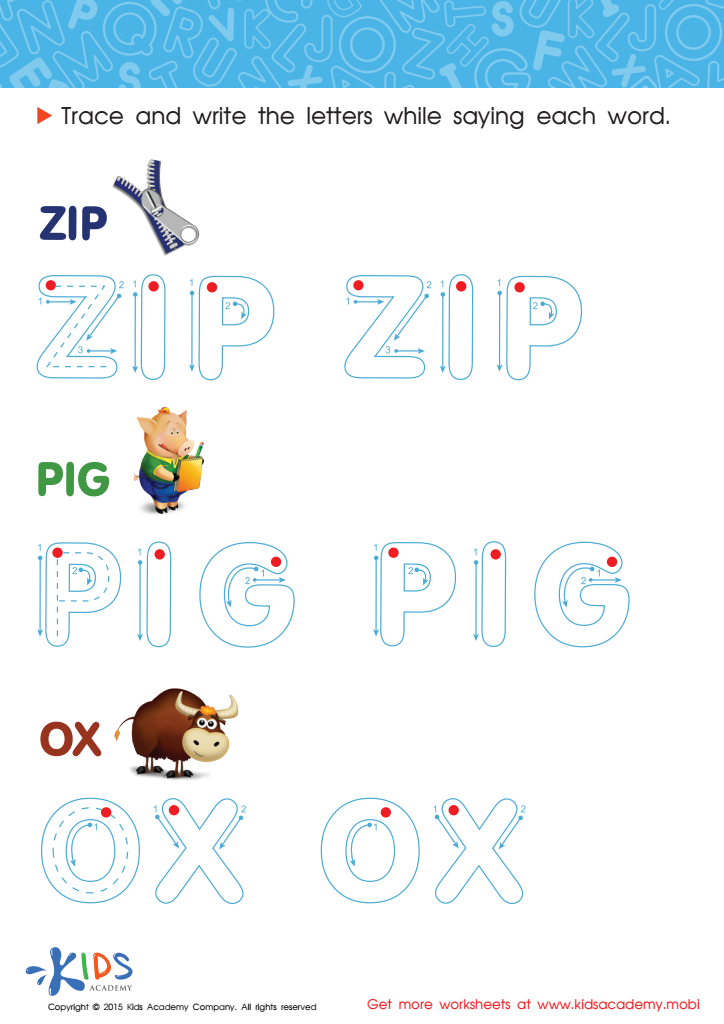
A Zip, a Pig and an Ox Spelling Worksheet
Check out this vocabulary building worksheet with three new words. Learn to say them, then trace and write them. Have fun with Kids Academy's writing practice worksheets and build your vocab! Do the tasks with care.
 Assign to My Students
A Zip, a Pig and an Ox Spelling Worksheet
Worksheet
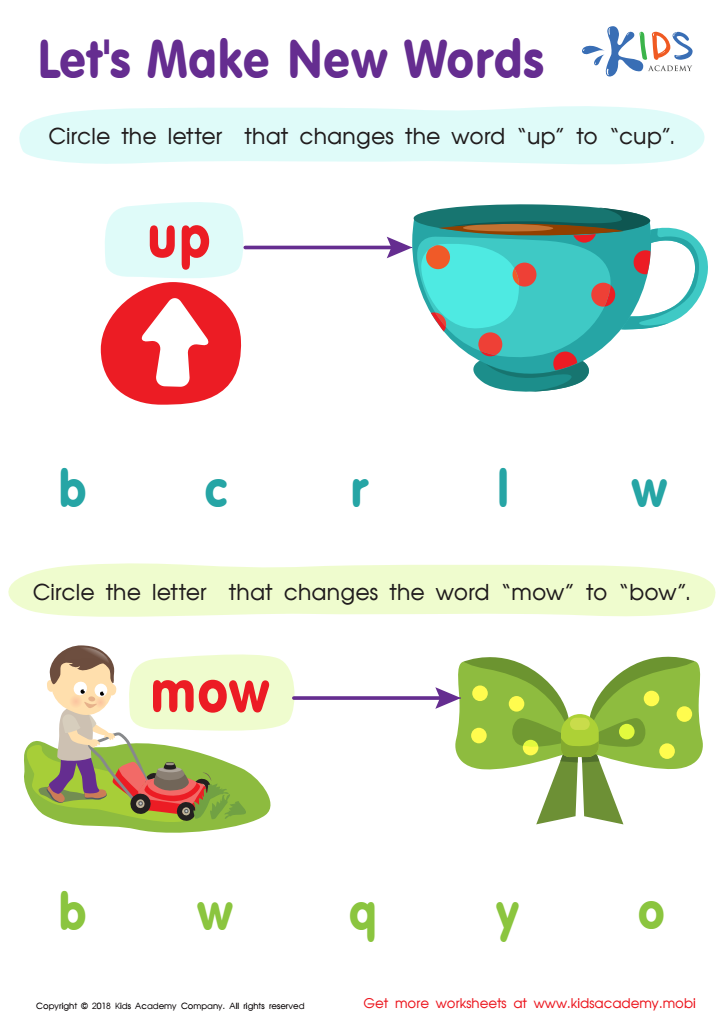
Let's Make New Words Worksheet
This fun and colorful downloadable worksheet is perfect for helping young readers to build confidence and practice their skills. They'll circle the letters to magically make new words, while developing fine motor skills. It'll be so much fun, they won't even realize they're honing their reading skills!
Let's Make New Words Worksheet
Worksheet
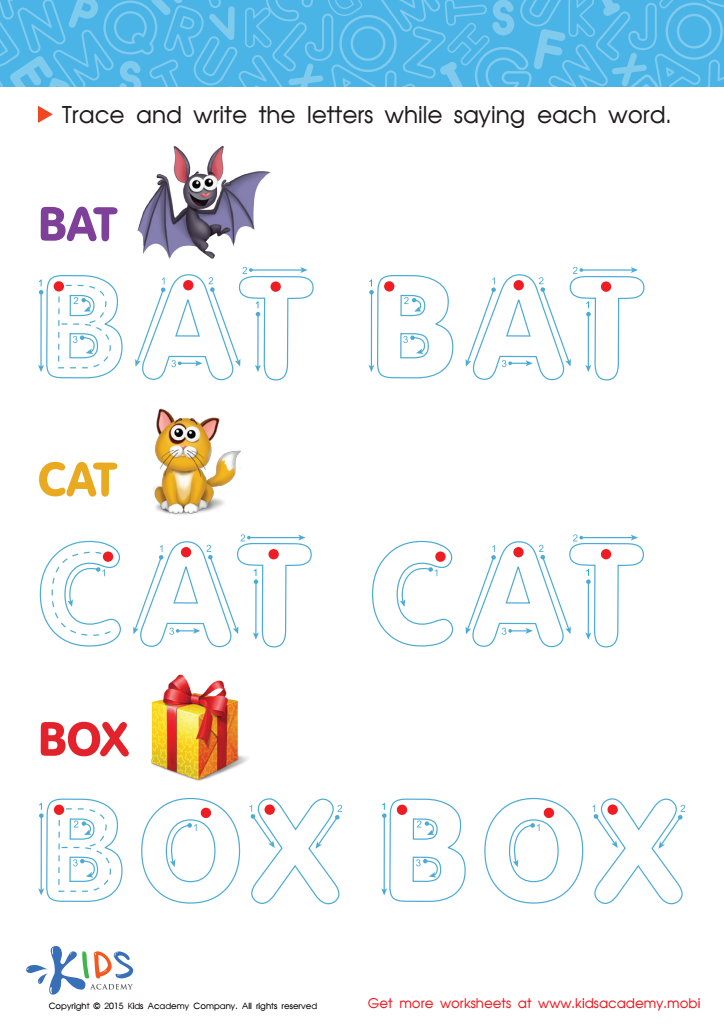
A Bat, a Cat and a Box Spelling Worksheet
Check out this new spelling worksheet, perfect for kids! It includes three lines with three small words to learn. Let's practice pronunciation, reading, and writing them. Trace and write the words on your own, then explore more free vocabulary worksheets at Kids Academy. Learn and make your studies enjoyable!
A Bat, a Cat and a Box Spelling Worksheet
Worksheet
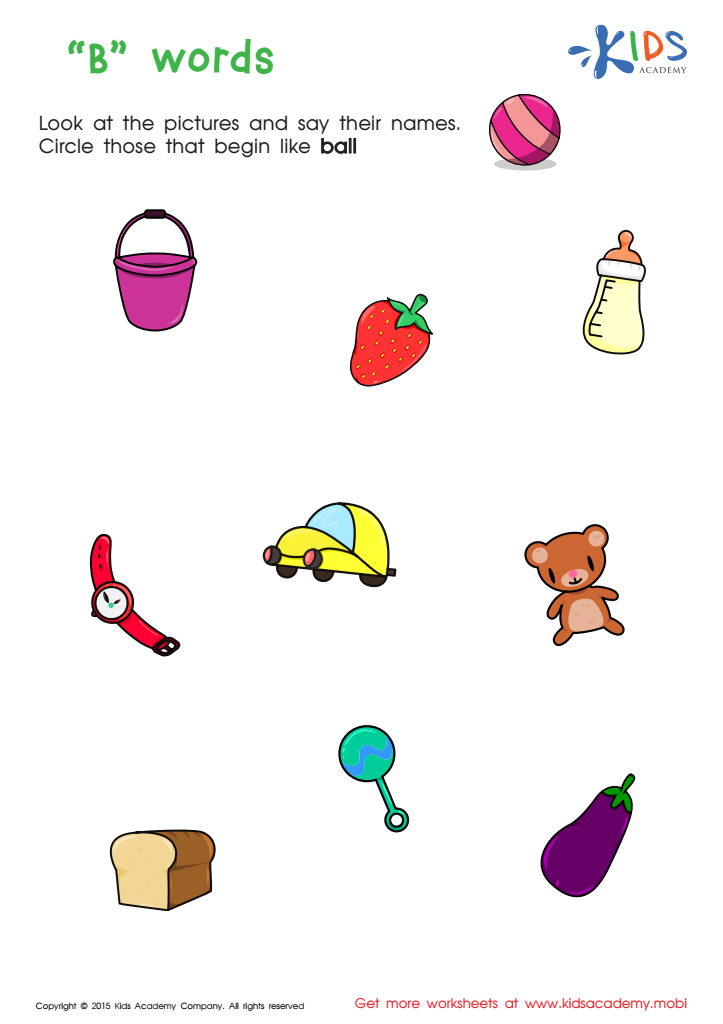
First Words Worksheet
Want to help your preschooler learn to read and write? Start with this 'B' words printable worksheet. It will help your child match pictures to the letters they know, sound out words, and build literacy. Once they understand the concept, they can start sounding out words and building reading skills.
First Words Worksheet
Worksheet
Join Kids Academy for Free
Who is primarily going to use this learning content?







Phonics practice is crucial for children ages 5-6 because it lays the foundation for successful reading and writing skills. At this developmental stage, children are beginning to understand the relationship between letters and sounds, which is essential for decoding words and fostering fluency. An extra challenge in phonics practice ensures that children are not only reinforcing their existing skills but also tackling more complex concepts that prevent stagnation and promote continued learning.
For parents and teachers, incorporating phonics practice into daily routines can significantly boost a child’s academic confidence and performance. Young learners who excel in phonics typically find it easier to read independently, understand new vocabulary, and express themselves accurately in writing. These capabilities translate to better comprehension in all subject areas, making the entire learning process smoother and more enjoyable.
Additionally, the extra challenge in phonics practice teaches perseverance and problem-solving. By confronting and overcoming more difficult tasks, children develop resilience and a positive attitude towards learning. Early investment in phonics not only benefits children academically but also encourages personal growth, setting a strong precedent for future educational success. For these reasons, parents and teachers should prioritize and actively engage in challenging phonics practice for young learners.








