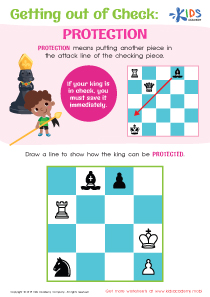
Strategic thinking development Extra Challenge Chess Worksheets for Ages 5-7
3 filtered results
-
From - To
Elevate your child’s cognitive skills with our "Strategic Thinking Development Extra Challenge Chess Worksheets" designed specifically for ages 5-7. These engaging worksheets introduce young learners to the fundamentals of chess while fostering critical thinking, problem solving, and strategic planning. Each activity is tailored to inspire creativity and encourage a love for strategy games, perfect for budding chess enthusiasts. With captivating illustrations and easy-to-follow instructions, children will enjoy honing their skills as they navigate various chess scenarios and challenges. Empower your child's mind and nurture their analytical abilities while they play—starting their journey in the world of chess has never been more fun!
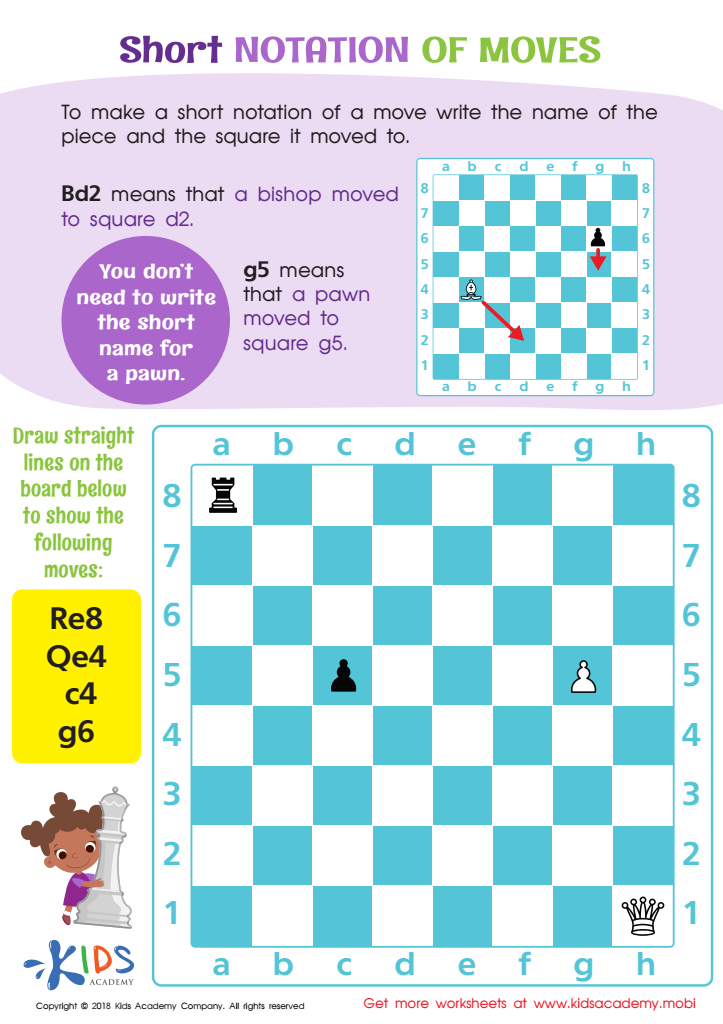
Short Notation of Moves Worksheet
 Assign to My Students
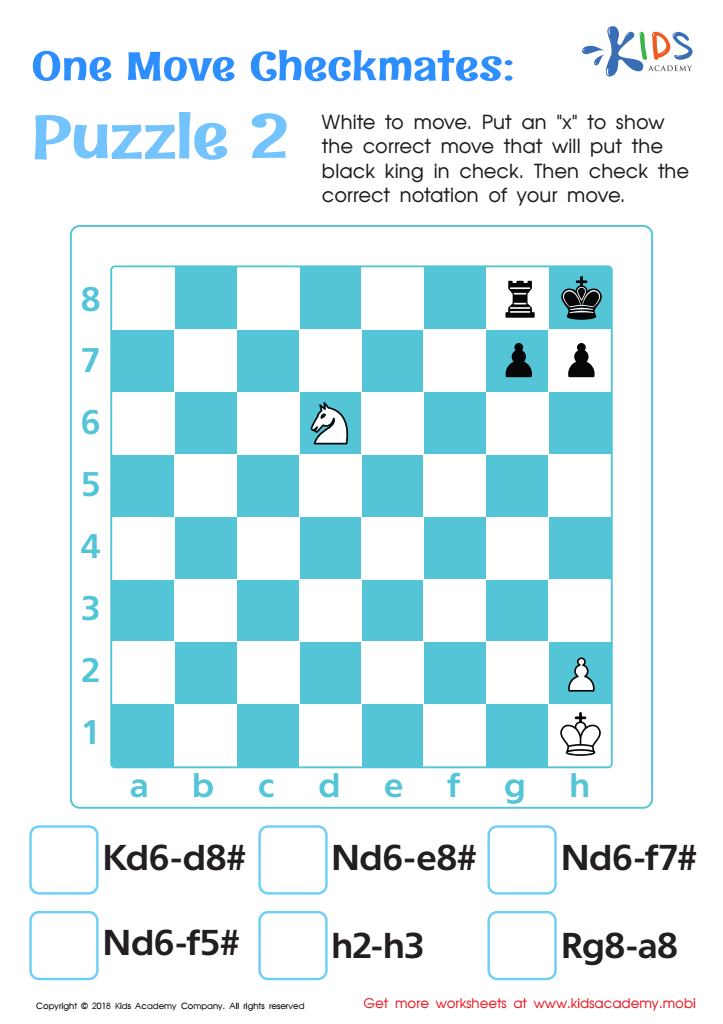
One Move Checkmates: Puzzle 2 Worksheet
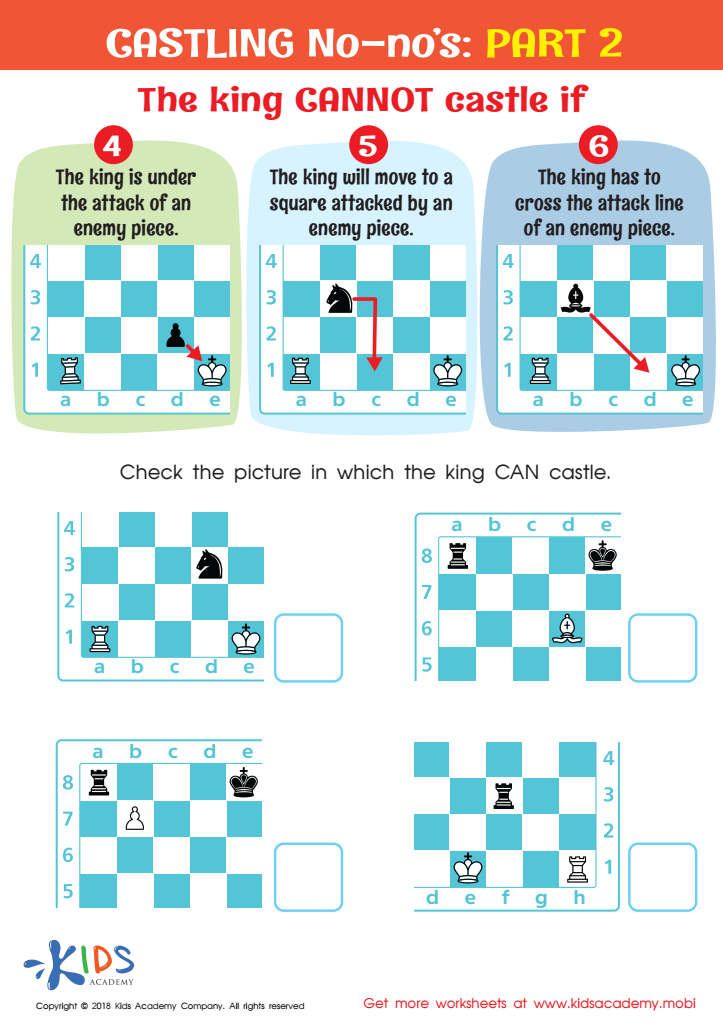
Castling No - no's: Part 2 Worksheet






Strategic thinking is a crucial cognitive skill that lays the foundation for problem-solving, decision-making, and critical analysis. Introducing children aged 5-7 to Extra Challenge Chess is an engaging way to cultivate these skills early on. Chess encourages young learners to think several steps ahead, weighing potential outcomes and adapting strategies to changing circumstances. This stimulation of cognitive development not only enhances academic performance but also nurtures qualities such as patience, discipline, and resilience.
Parents and teachers should care about much more than just academic proficiency; they should be concerned with nurturing well-rounded individuals capable of navigating life's challenges. By involving children in chess, they learn to anticipate others’ moves, fostering empathy and social skills through understanding different perspectives. Additionally, the game promotes mathematical thinking and enhances concentration.
Participating in chess at a young age can also lower anxiety levels when facing competition, as children become accustomed to strategic planning against an opponent. Furthermore, the joy of overcoming challenges in chess fosters a growth mindset, encouraging children to understand that mastery comes through practice and perseverance. Ultimately, developing strategic thinking through Extra Challenge Chess prepares children not just for academic success but also for everyday decision-making throughout their lives.