Chess strategy learning Extra Challenge Worksheets for Ages 5-7
7 filtered results
-
From - To
Unlock the world of strategic thinking with our "Chess Strategy Learning Extra Challenge Worksheets" tailored for ages 5-7! These engaging worksheets are designed to enhance problem-solving skills, boost concentration, and introduce young learners to essential chess concepts. Each challenging activity encourages kids to think critically while having fun, making it perfect for budding chess enthusiasts. Our colorful, interactive worksheets provide a delightful way to develop cognitive skills while exploring the intricacies of chess strategies. Ideal for parents and educators looking to inspire a love for learning through this timeless game. Get ready for an exciting journey into the strategic universe of chess!
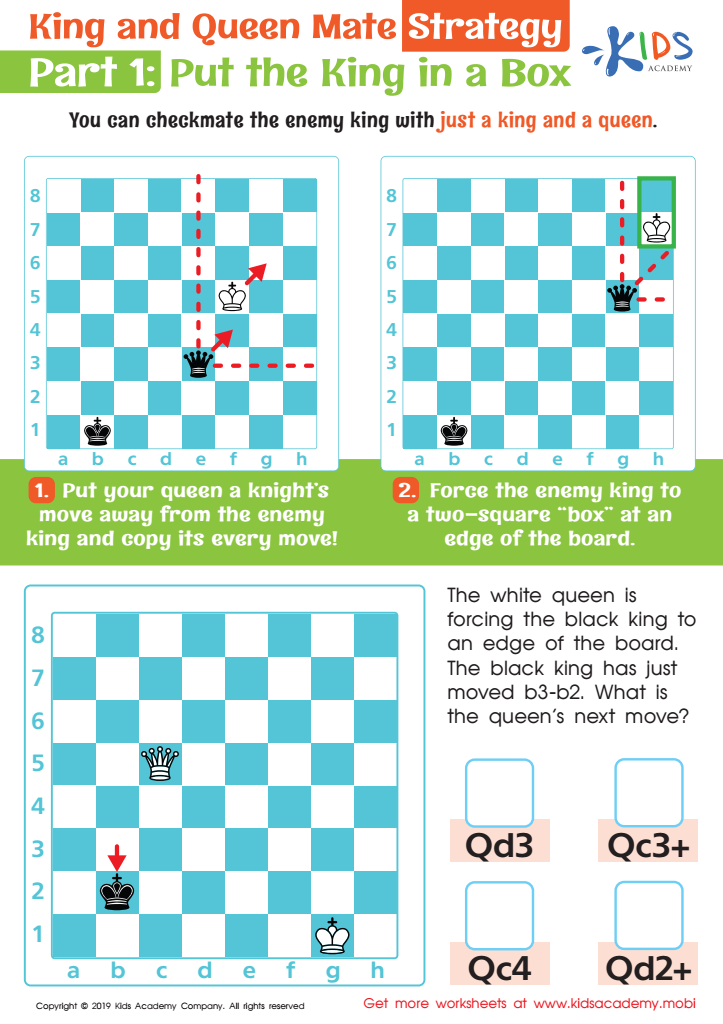
King and Queen Mate Strategy: Part 1 Worksheet
 Assign to My Students
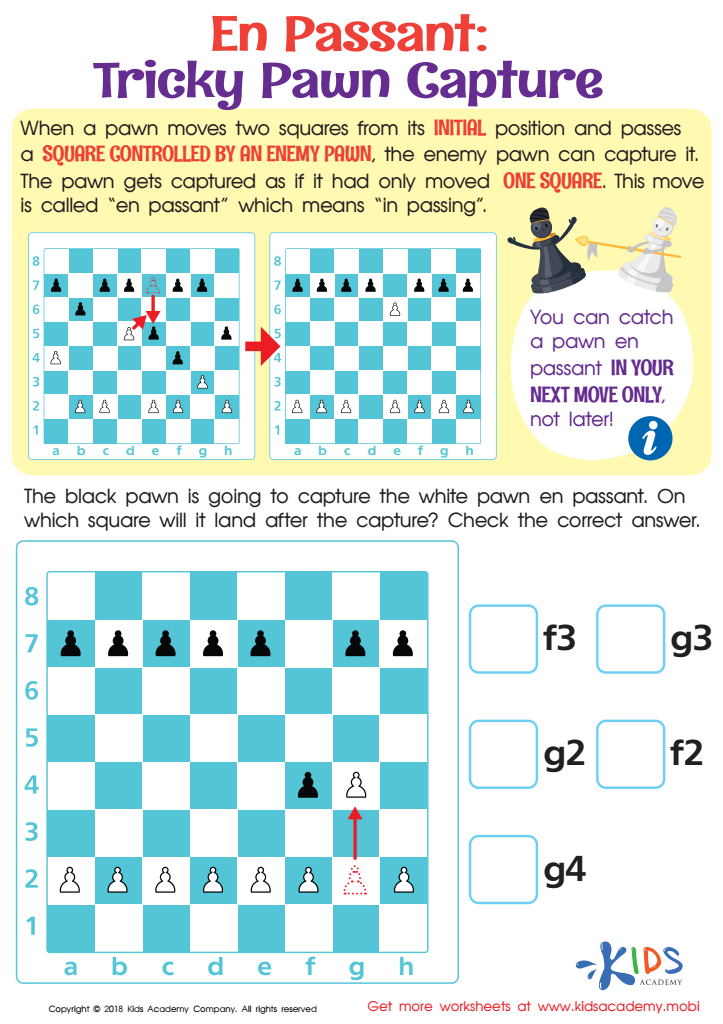
En Passant: Tricky Pawn Capture Worksheet
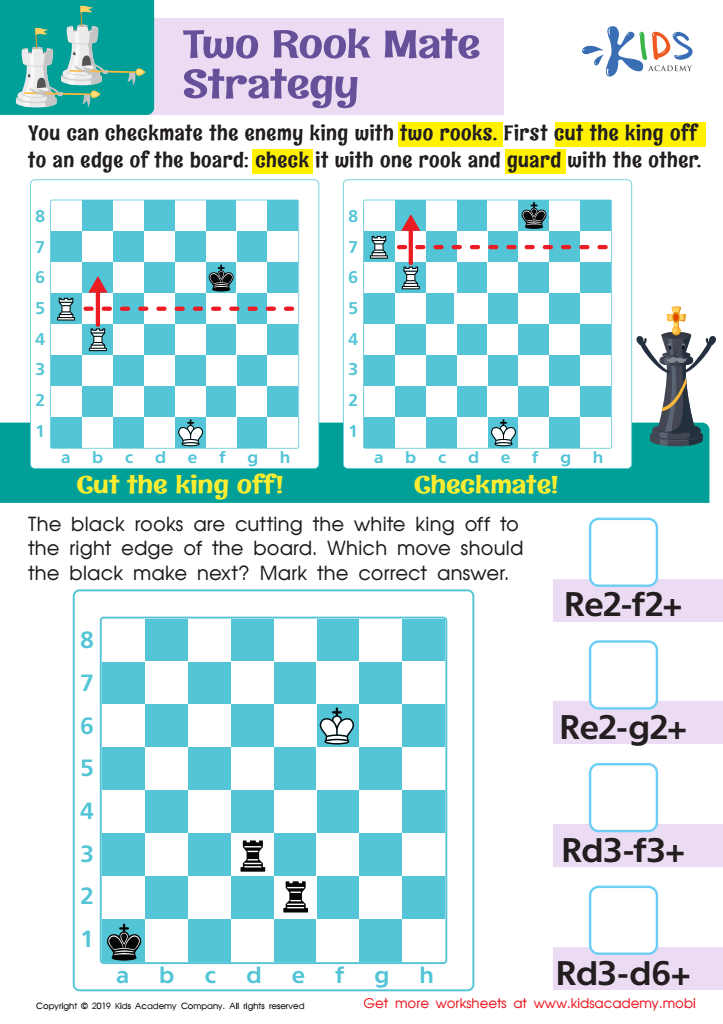
Two Rook Mate Strategy Worksheet
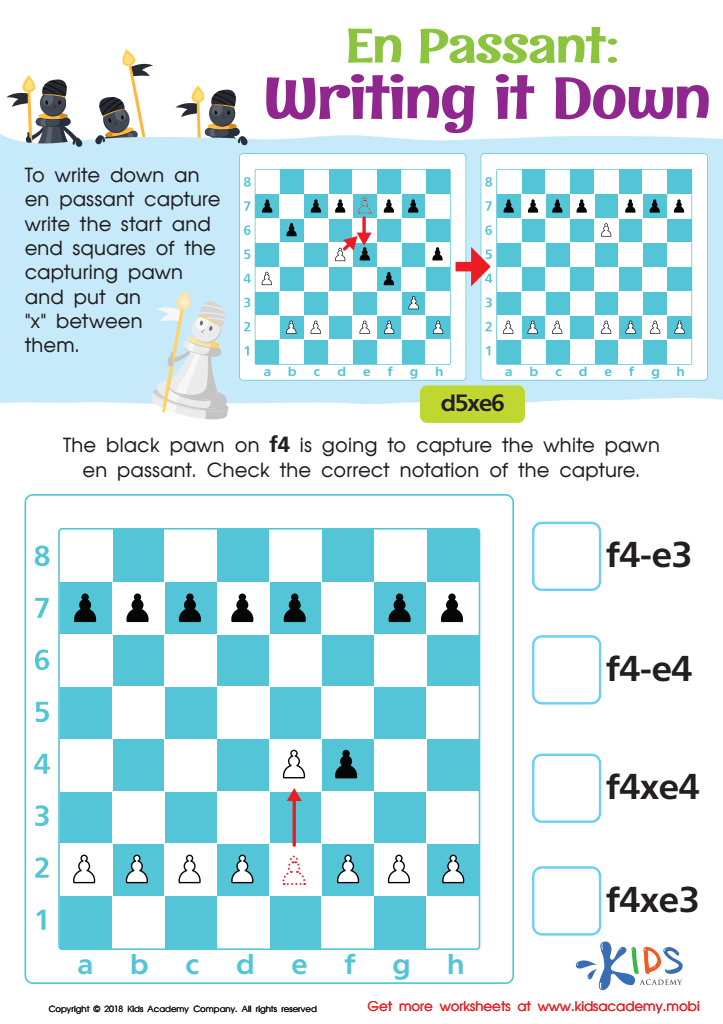
En Passant: Writing it Down Worksheet
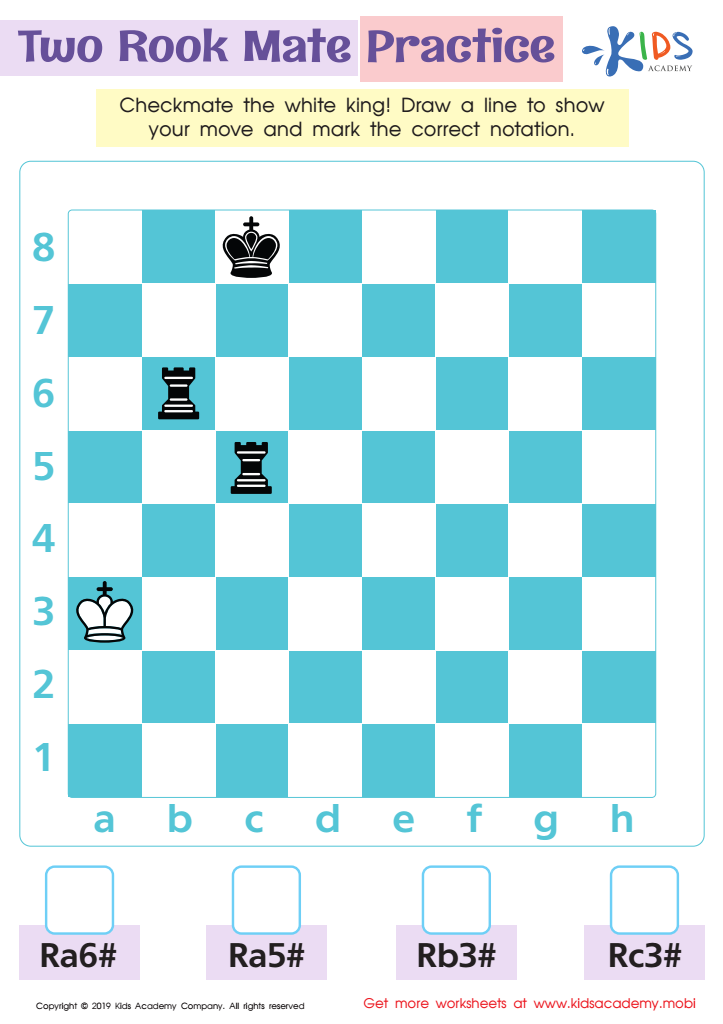
Two Rook Mate Practice Worksheet
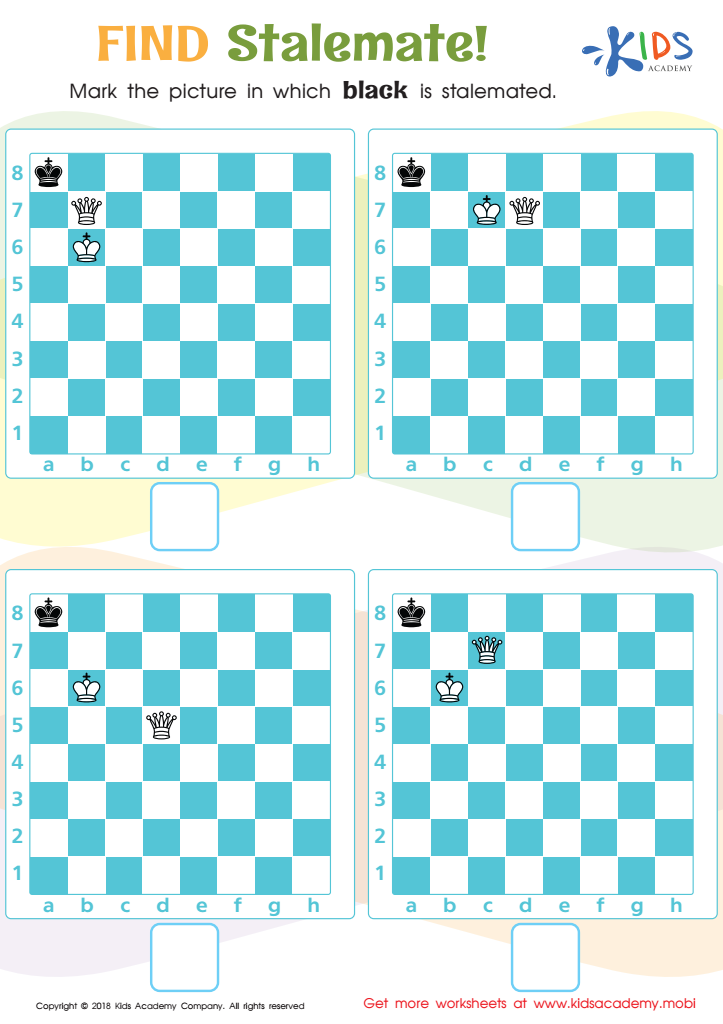
Find Stalemate! Worksheet
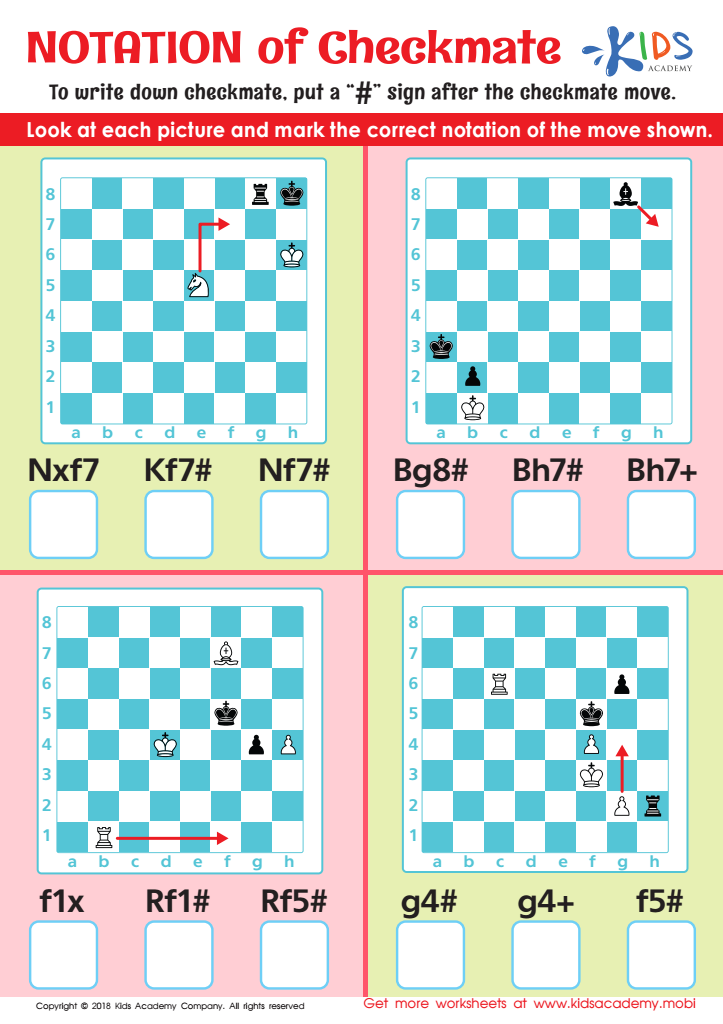
Notation of Checkmate Worksheet






Teaching chess strategy to children ages 5-7 offers numerous benefits that extend beyond the game itself. Firstly, chess enhances critical thinking and problem-solving skills. Young children learn to assess situations, consider multiple possibilities, and make informed decisions, skills that are invaluable in their academic and personal lives.
Moreover, chess encourages patience and perseverance. In a game where each move is significant, children learn the importance of thinking ahead and resisting impulsive decisions. This patience translates into better focus and attention in the classroom, helping them tackle various subjects more effectively.
Chess also promotes social skills; as children engage in the game together, they learn cooperation, taking turns, and sportsmanship. This interaction helps develop emotional intelligence, as players must manage both their own emotions and respond to their opponents.
Additionally, studying chess strategy builds memory and cognitive skills. Remembering pieces, movements, and strategic approaches challenges the brain, fostering overall cognitive development.
For parents and teachers, introducing chess can be a fun, engaging way to support children's brain development, nurture socio-emotional skills, and establish a foundation for lifelong learning. Investing in chess education encourages not just mastery of the game but also equips children with essential life skills.








