Comparing objects Extra Challenge Worksheets for Ages 5-7
3 filtered results
-
From - To
Unlock your child's potential with our Comparing Objects Extra Challenge Worksheets for Ages 5-7! These engaging, printable activities are designed to enhance critical thinking and comparison skills. Perfect for young learners, these worksheets encourage children to identify similarities and differences among various objects in a fun, interactive way. Ideal for both classroom and home use, they help build foundational skills in observation and reasoning while promoting creativity. Watch as your child develops confidence and adaptability through these thoughtfully crafted challenges. Dive into a world of discovery and support your child's learning journey today with our exciting and educational resources!
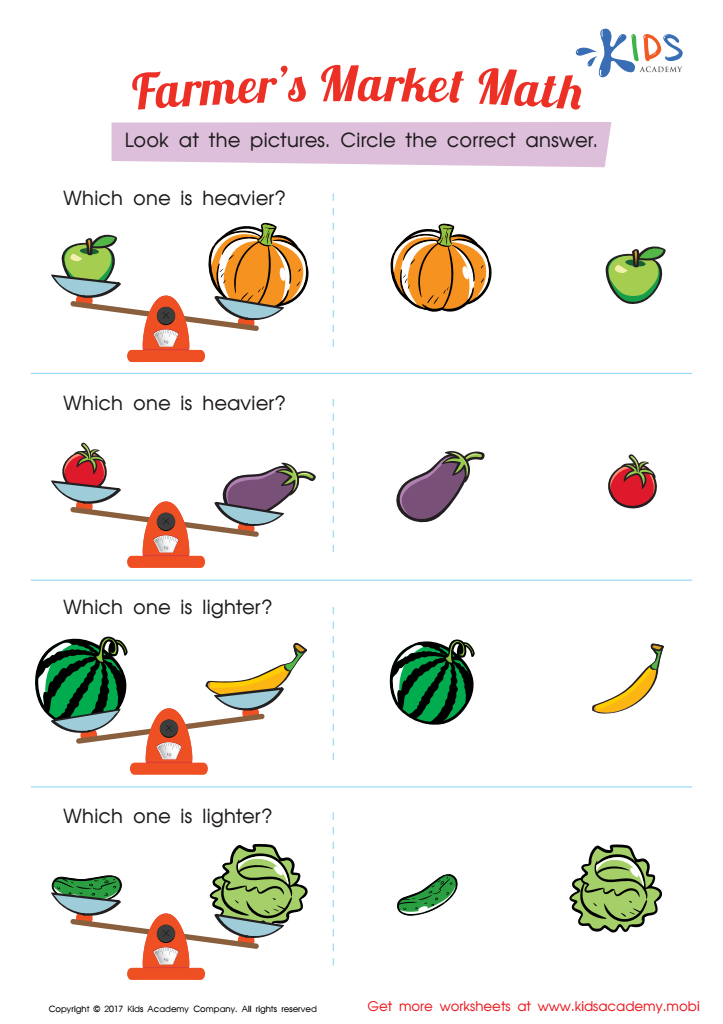
Which One Is Heavier Worksheet
 Assign to My Students
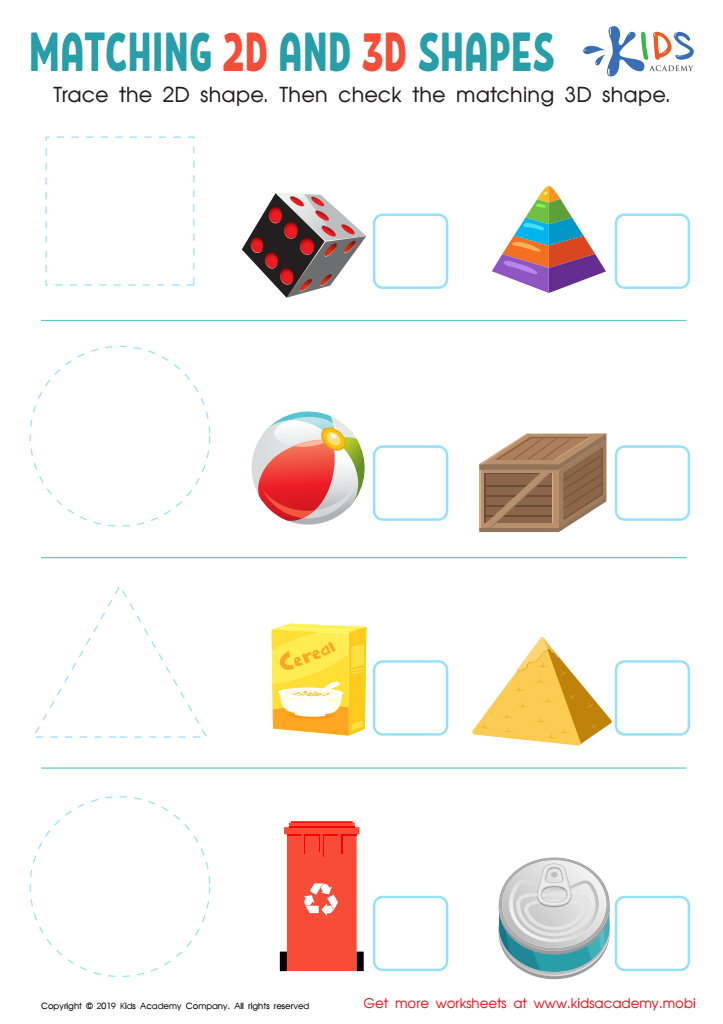
Matching 2D and 3D Shapes Worksheet
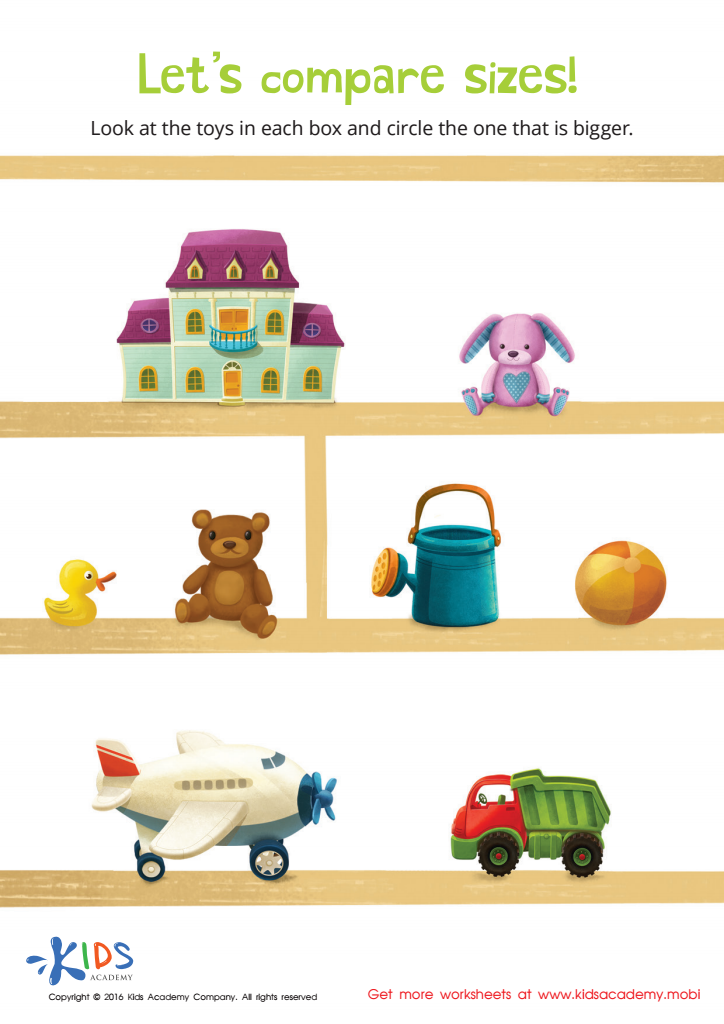
Classifying by Size Sorting Worksheet




Comparing objects is an essential skill for children aged 5-7, and parents and teachers should actively support its development for several reasons. Firstly, it aids in the foundational understanding of mathematics. By comparing sizes, lengths, weights, or quantities, children learn to categorize and quantify objects—skills that are vital for more complex mathematical concepts later on.
Moreover, engaging in comparative activities nurtures critical thinking. When children analyze differences and similarities, they begin to develop reasoning skills that are fundamental to problem-solving in everyday situations. It encourages observation and language development as they articulate their thoughts about the characteristics of objects.
Comparative activities also promote social skills when done collaboratively. Discussing observations with peers or adults fosters communication and teamwork, which are invaluable in both academic and life contexts. Finally, comparison encourages curiosity and exploration. Children become more engaged learners, prompting them to ask questions and seek answers about the world around them.
In summary, supporting the activity of comparing objects enriches a child's cognitive, social, and linguistic skills, laying the groundwork for a lifelong love of learning and an ability to think critically about their environment. Parents and teachers play a pivotal role in facilitating these benefits.








