Observational skills Extra Challenge Worksheets for Ages 5-7
3 filtered results
-
From - To
Sharpen your child's observational skills with our thoughtfully designed Extra Challenge Worksheets for Ages 5-7. These engaging, high-quality printables are perfect for developing attention to detail and critical thinking in young learners. Each worksheet presents fun and educational activities that require kids to identify differences, find hidden objects, and make observations about various scenes. Perfect for home or classroom use, these worksheets not only entertain but also help in enhancing visual perception and cognitive abilities. Equip your child with the tools they need to excel—download our observational skills worksheets today!
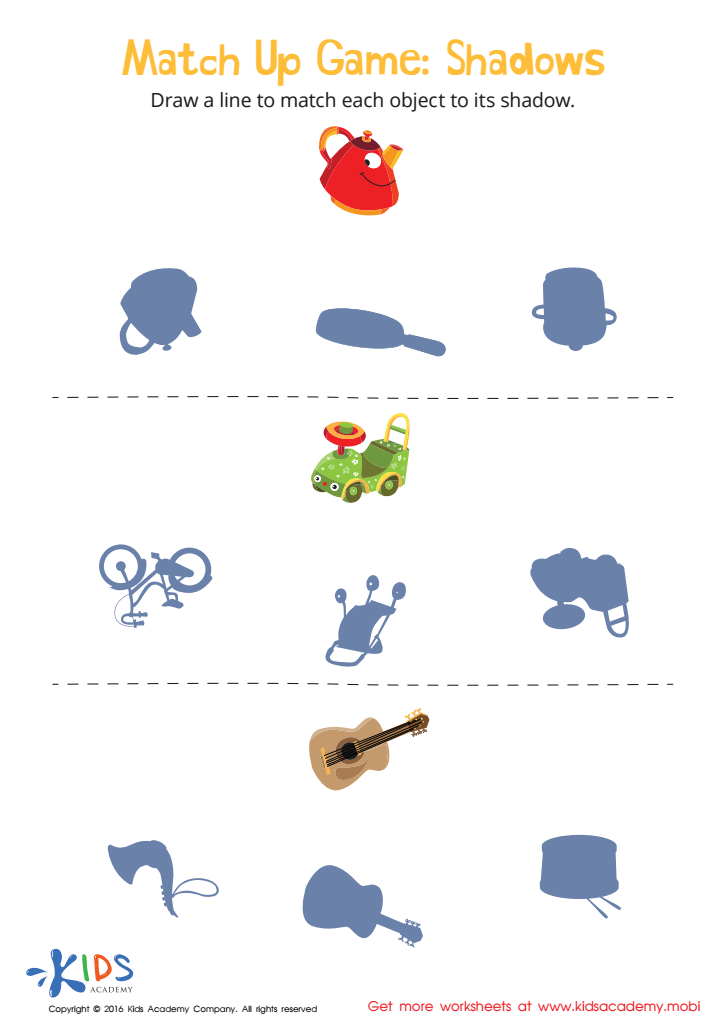
 Assign to My Students
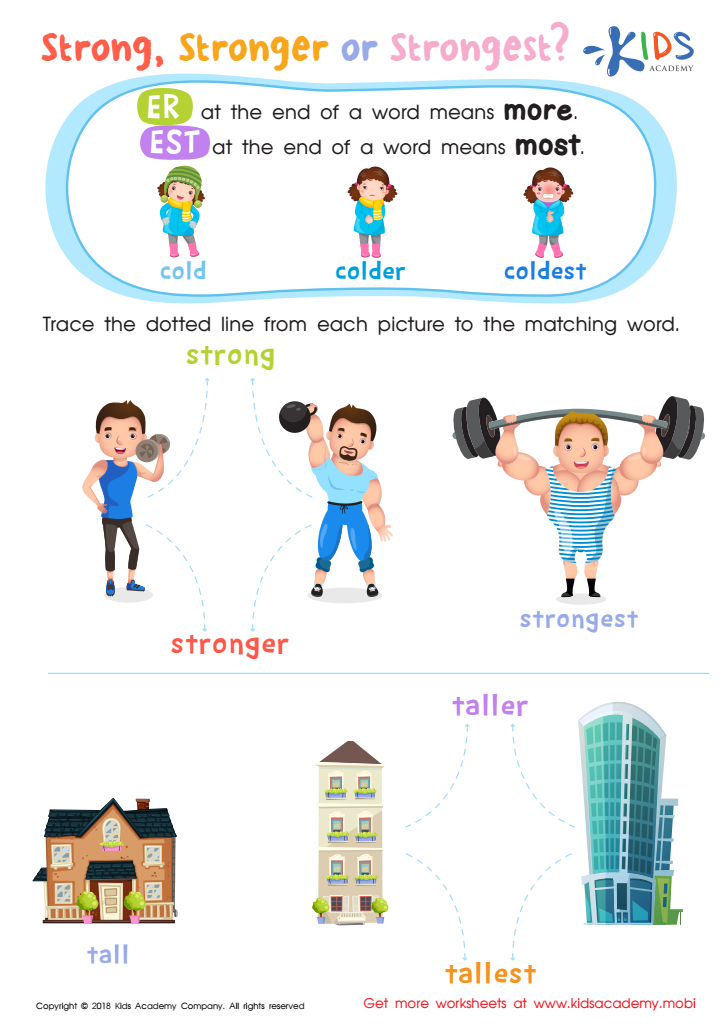
Strong or Stronger? Worksheet
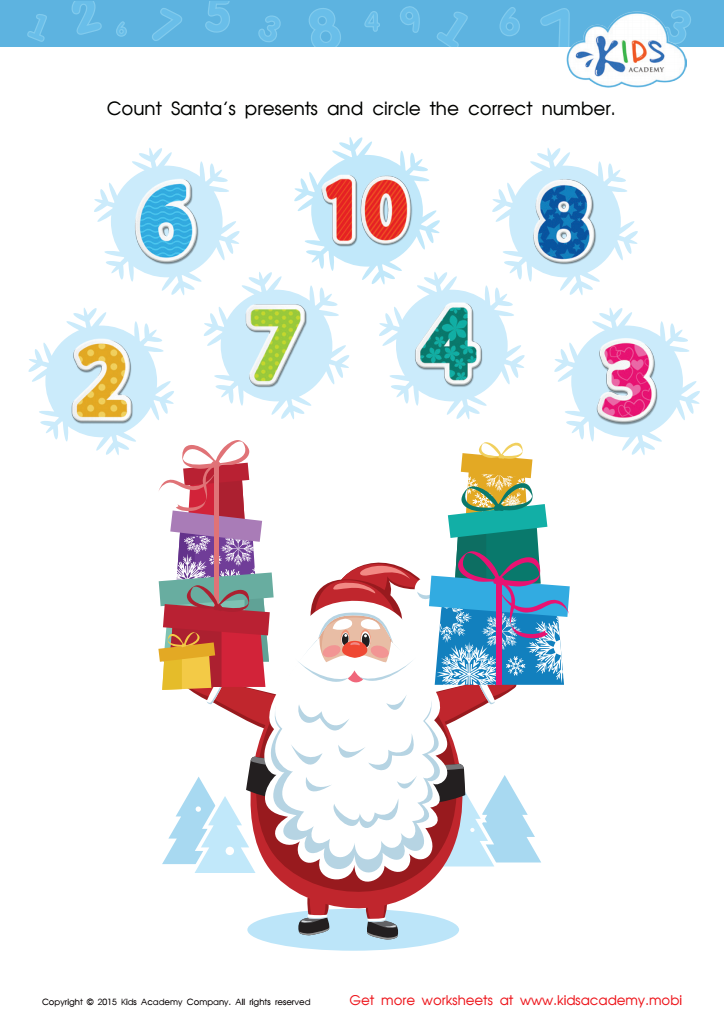
Count Santa's Presents Worksheet








Observational skills are critical for young children because they lay the foundations for effective learning and critical thinking. For children ages 5-7, enhancing these skills through extra challenges can have lasting benefits. Observational skills enable children to gather information about the world around them, which is fundamental for scientific inquiry and problem-solving. When children are encouraged to notice details, patterns, and differences, they naturally develop better attention to their surroundings.
Parents and teachers should care about enhancing observational skills as it promotes cognitive development. By engaging in observational activities, children improve their concentration and focus. These skills are essential for academic success, particularly in subjects such as reading and mathematics. Observational challenges can also foster creativity and curiosity, as children learn to ask questions and seek answers through careful observation.
Moreover, these activities can be fun and engaging, making learning less about rote memorization and more about discovery and exploration. For example, a simple nature walk where children are asked to observe different types of leaves or insects not only makes learning interactive but also integrates physical activity, promoting overall health.
Incorporating observational skills extra challenges into the curriculum helps build a solid educational groundwork, preparing children for more complex tasks and subjects in the future. As such, parents and teachers play a crucial role in reinforcing the importance of keen observation in their young learners.








