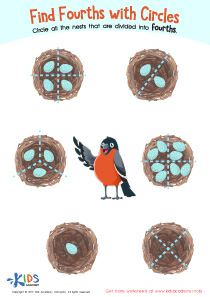
Shape identification Extra Challenge 2D Shapes Worksheets for Ages 5-7
3 filtered results
-
From - To
Enhance your child's shape identification skills with our engaging "Shape Identification Extra Challenge 2D Shapes Worksheets" designed for ages 5-7. These worksheets provide a fun and interactive way for young learners to explore, recognize, and differentiate various 2D shapes, including circles, triangles, squares, and more. Each worksheet offers a variety of challenges to keep your little ones motivated and encouraged while they build essential math skills. Suitable for classroom use or at-home learning, these resources promote critical thinking and creativity. Download our worksheets today and watch your child develop confidence as they master shape identification in a playful format!
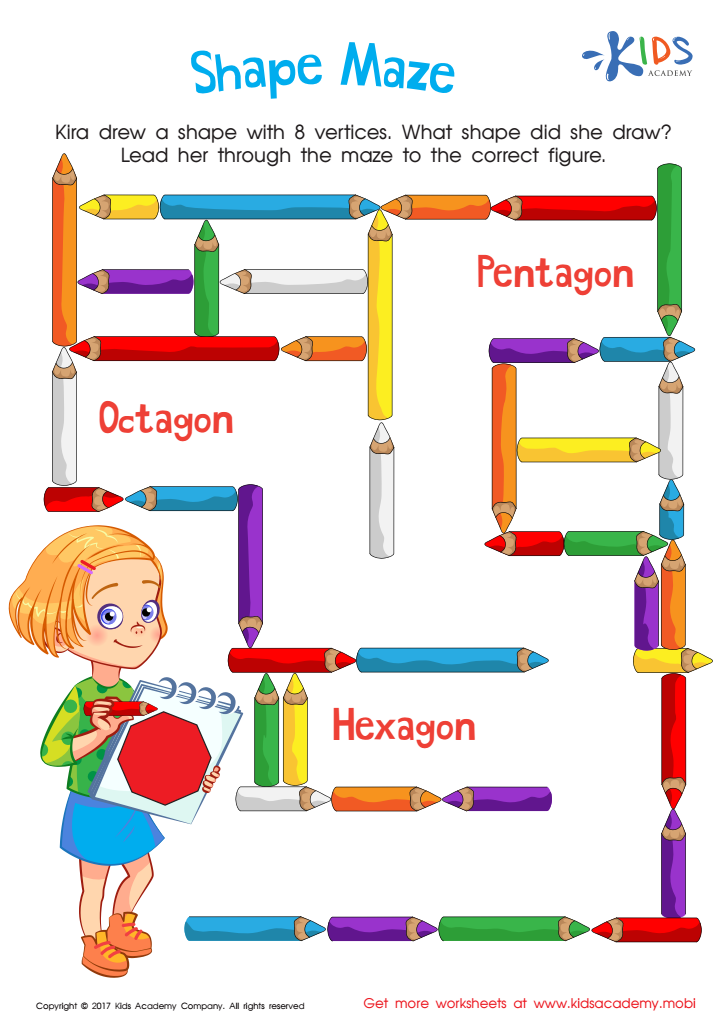
Shape Maze Worksheet
 Assign to My Students











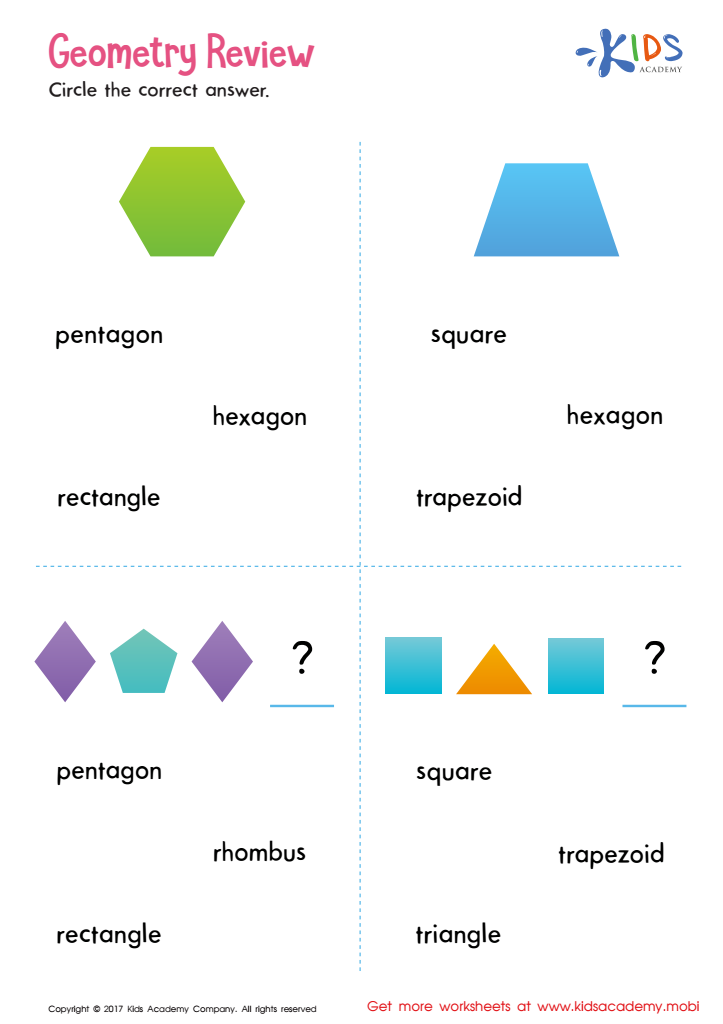
Geometry Review Printable
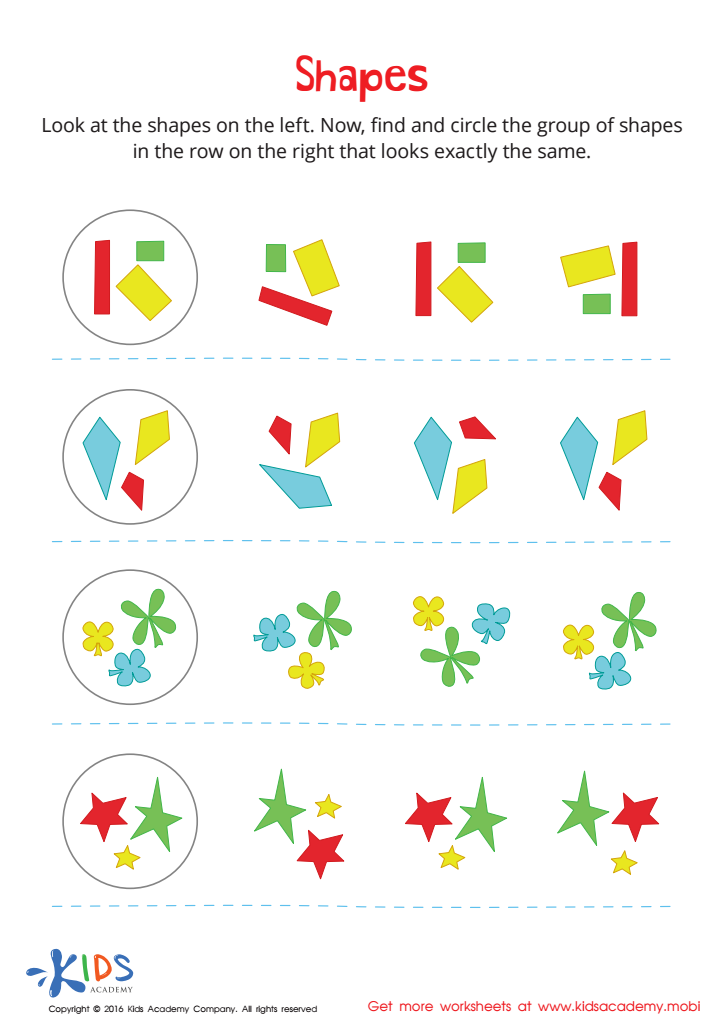
Shapes Worksheet








Parents and teachers should prioritize shape identification for children ages 5-7 because it serves as a foundational skill that promotes overall cognitive development and critical thinking. Recognizing and naming 2D shapes such as circles, squares, triangles, and rectangles helps young learners build spatial awareness, which is essential for their future mathematics understanding. It equips them with the ability to categorize and make sense of the world around them.
Beyond mathematics, understanding shapes enhances problem-solving skills and encourages creativity. Activities that involve identifying and manipulating shapes reinforce fine motor skills as children engage in hands-on experiences. Furthermore, early shape recognition lays the groundwork for more complex concepts, such as geometry and measurement, which they will encounter in higher grades.
Engaging children in shape identification also promotes collaboration and social skills when done in group activities. This kind of interaction helps children learn from one another and fosters communication. In addition, encouraging children to explore and identify shapes in their environment can connect their learning experiences to real-life applications, making education relevant and enjoyable.
Ultimately, investing time in shape identification cultivates a child's love for learning and paves the way for a successful educational journey.