Logical Reasoning Extra Challenge Math Worksheets for Ages 5-7
6 filtered results
Difficulty Level
Grade
Age
-
From - To
Subject
Activity
Standards
Unlock your child's potential with our "Logical Reasoning Extra Challenge Math Worksheets for Ages 5-7"! Designed to enhance critical thinking and problem-solving skills, these engaging worksheets offer a fun way for young learners to tackle logic puzzles and reasoning challenges. Each activity is tailored to boost cognitive development while reinforcing essential math concepts through playful scenarios. Perfect for at-home learning or supplementing classroom instruction, our worksheets cater to diverse learning styles. Help your child build confidence in their math abilities and discover the joys of logical reasoning today! Start the journey towards analytical thinking by exploring our vibrant, curriculum-aligned materials.
Favorites
With answer key
Interactive
 Assign to My Students
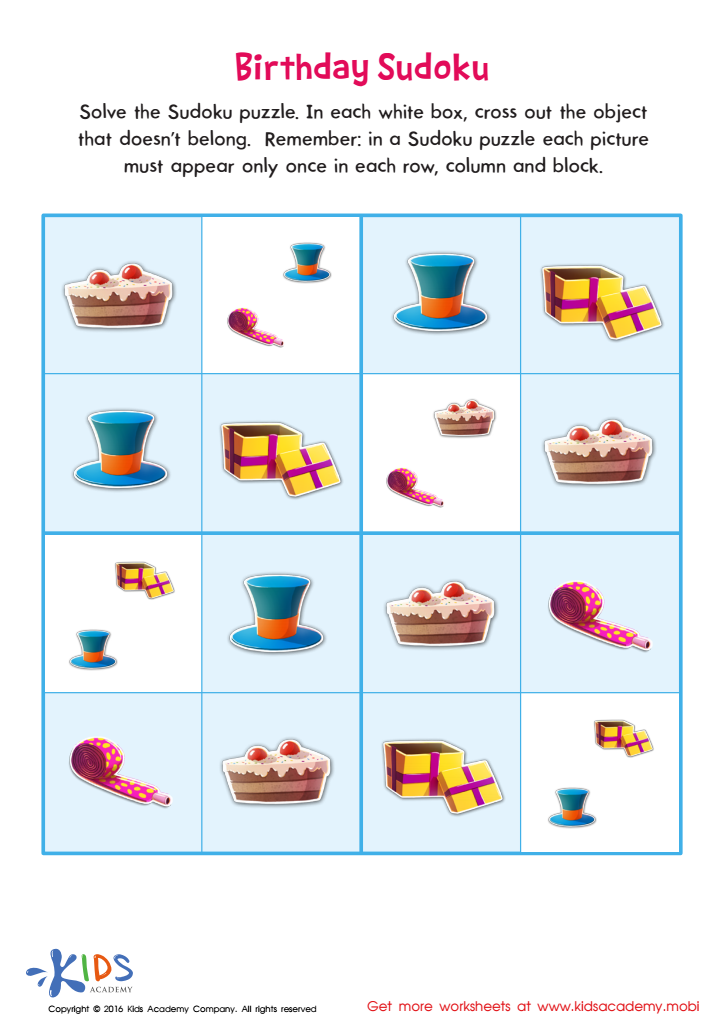
Birthday Sudoku Sorting Worksheet
With this Sudoku printable, your child will have fun and strengthen their problem-solving skills.
Birthday Sudoku Sorting Worksheet
Worksheet
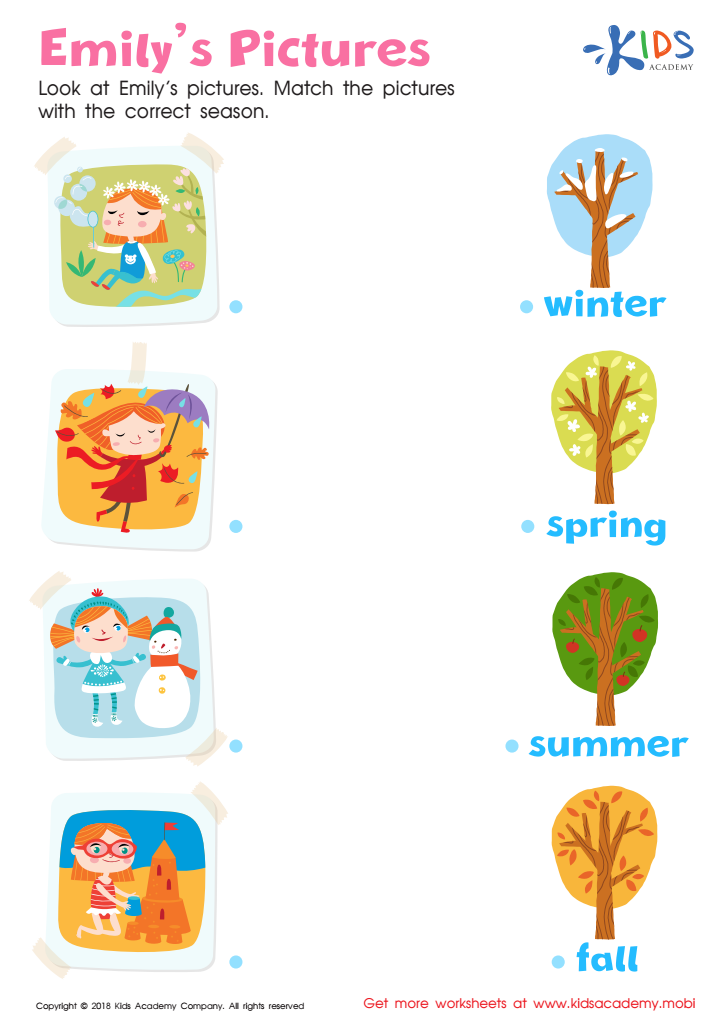
Emily's Pictures Worksheet
Look at the pictures of Emily on the left. Ask your child what she's doing in each one. Then, match the activities to the seasons on the right. Help your kids identify the correct season for each activity. Shorten to 80 words: Look at the pictures of Emily on the left. Ask your child what she's doing in each one, then match the activities to the seasons on the right. Help your kids find the correct season for each activity.
Emily's Pictures Worksheet
Worksheet
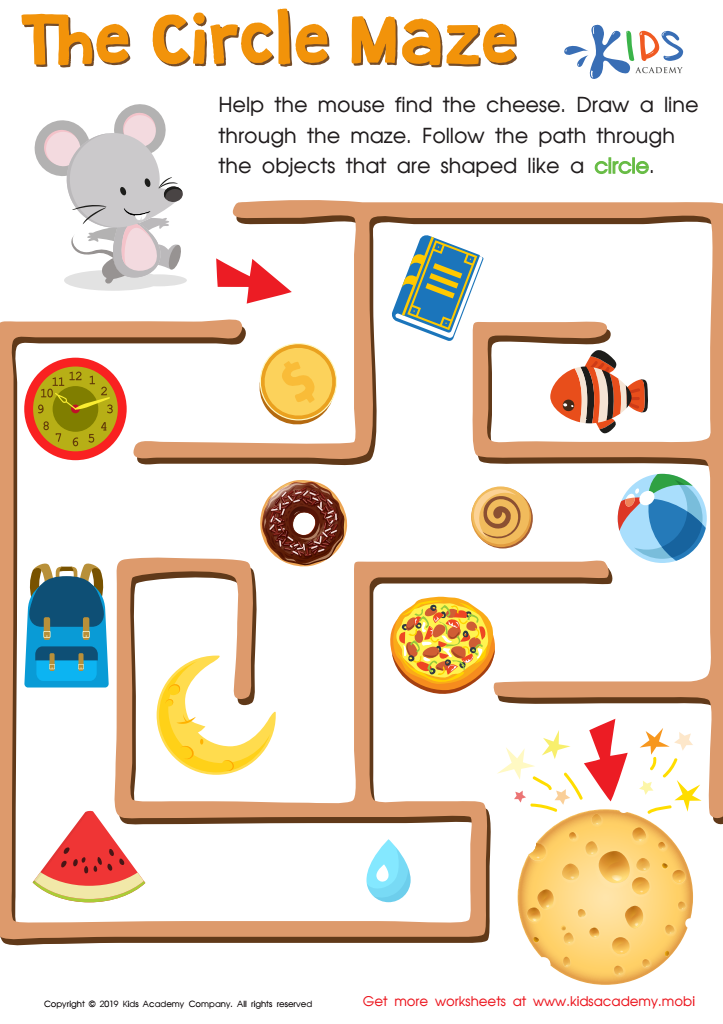
The Circle Maze Worksheet
Kids can have fun learning shapes with this maze worksheet. They can help the mouse find its cheese by tracing the path of a circle through the maze. This printable is great for classroom learning or as an activity at home.
The Circle Maze Worksheet
Worksheet
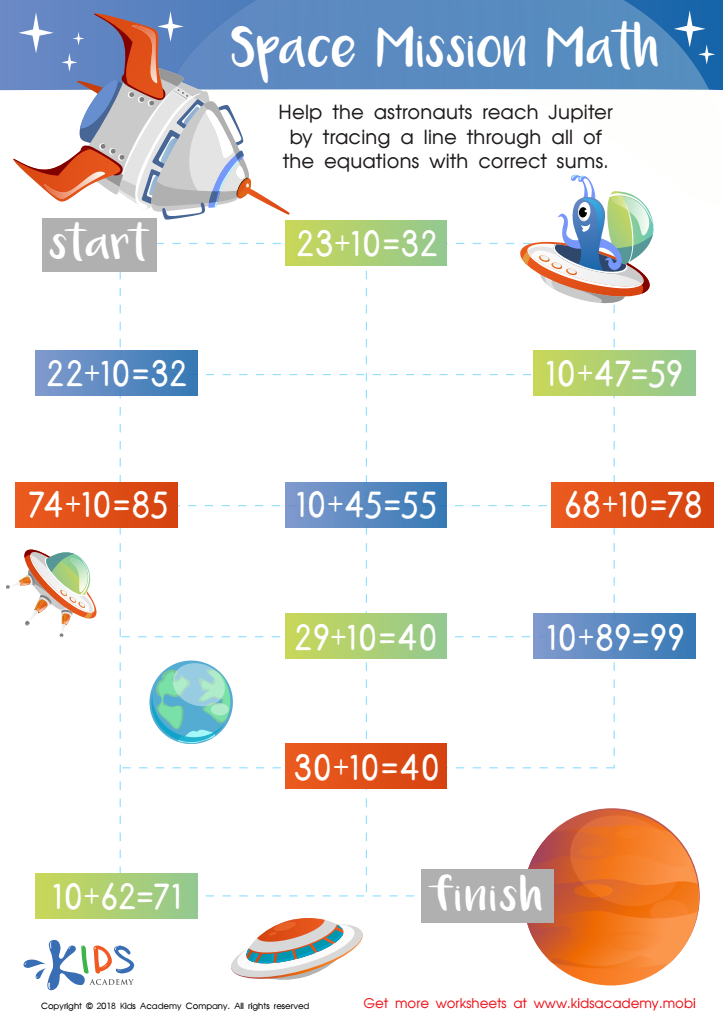
Space Mission Math Worksheet
Your kids will love this worksheet! They can help astronauts reach Jupiter by tracing a line through all the equations and adding them up correctly. Spark their curiosity about space by exploring asteroids, planets, and aliens. Astronauts are professionals who study the complexities of space - let them help your child join in the journey!
Space Mission Math Worksheet
Worksheet
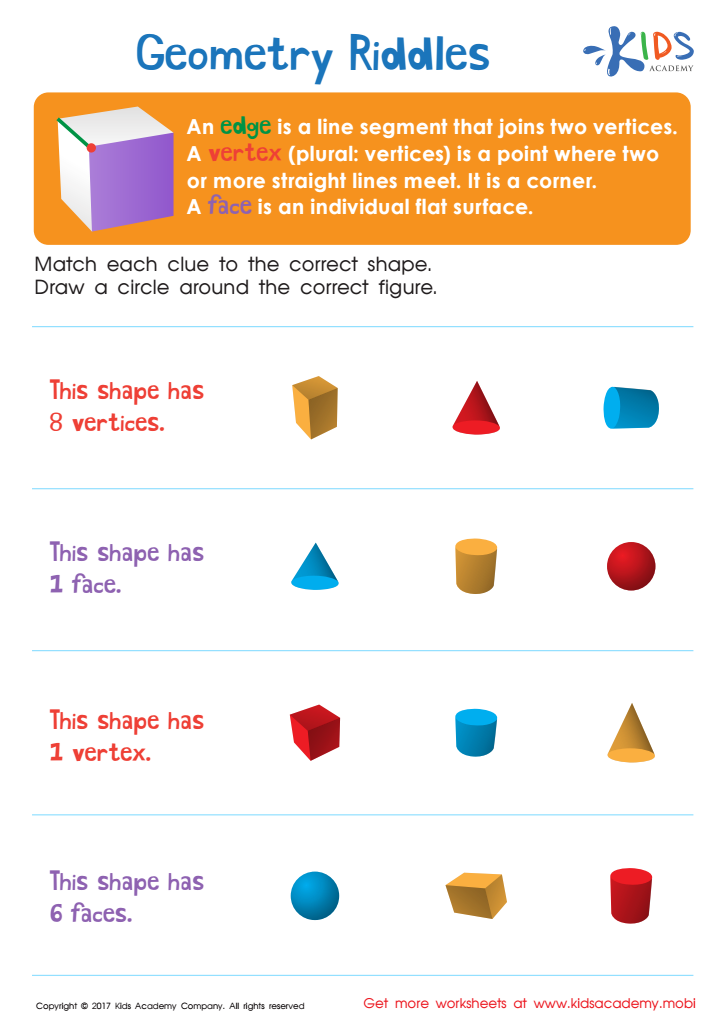
Geometry Riddles Printable
Review geometry terms with your child using this challenging worksheet of tricky riddles. Identifying and counting vertices, edges, and faces of shapes becomes fun as they solve the riddles!
Geometry Riddles Printable
Worksheet
Join Kids Academy for Free
Who is primarily going to use this learning content?








Parents and teachers should care about Logical Reasoning Extra Challenge Math for ages 5-7 because it plays a crucial role in developing foundational cognitive skills. At this age, children are highly responsive to stimulating activities that enhance their problem-solving abilities and critical thinking. Engaging in logical reasoning exercises helps children learn to make connections, recognize patterns, and draw conclusions—all essential skills for academic success across subjects.
Furthermore, introducing logical reasoning challenges in a fun and interactive way fosters a positive attitude towards learning math. This early engagement can reduce math anxiety often encountered later in schooling, instilling confidence as they progress. Parents and teachers also benefit from observing children's growth in logical reasoning, allowing for tailored support based on individual capabilities.
Incorporating these challenges into a child’s learning routine encourages collaboration, communication, and persistence. It nurtures their ability to think independently and approach problems systematically. As a precursor to more advanced topics in mathematics and other disciplines, Logical Reasoning Extra Challenge Math serves as a vital tool for equipping children with the skills necessary for lifelong learning and informed decision-making. Ultimately, prioritizing such development provides a solid stepping stone for future academic achievements.