Money counting skills Extra Challenge Math Worksheets for Ages 5-7
3 filtered results
-
From - To
Enhance your child's financial literacy with our "Money Counting Skills Extra Challenge Math Worksheets" designed for ages 5-7. These engaging worksheets provide an exciting way for young learners to understand the concept of money through practical counting exercises. With fun and colorful visuals, children practice identifying coins, counting denominations, and making change, all tailored to build confidence and competence in basic math. Ideal for both classroom and home use, these worksheets promote hands-on learning and critical thinking. Give your little ones the extra challenge they need to master essential money skills while having fun! Start fostering financial independence early today.
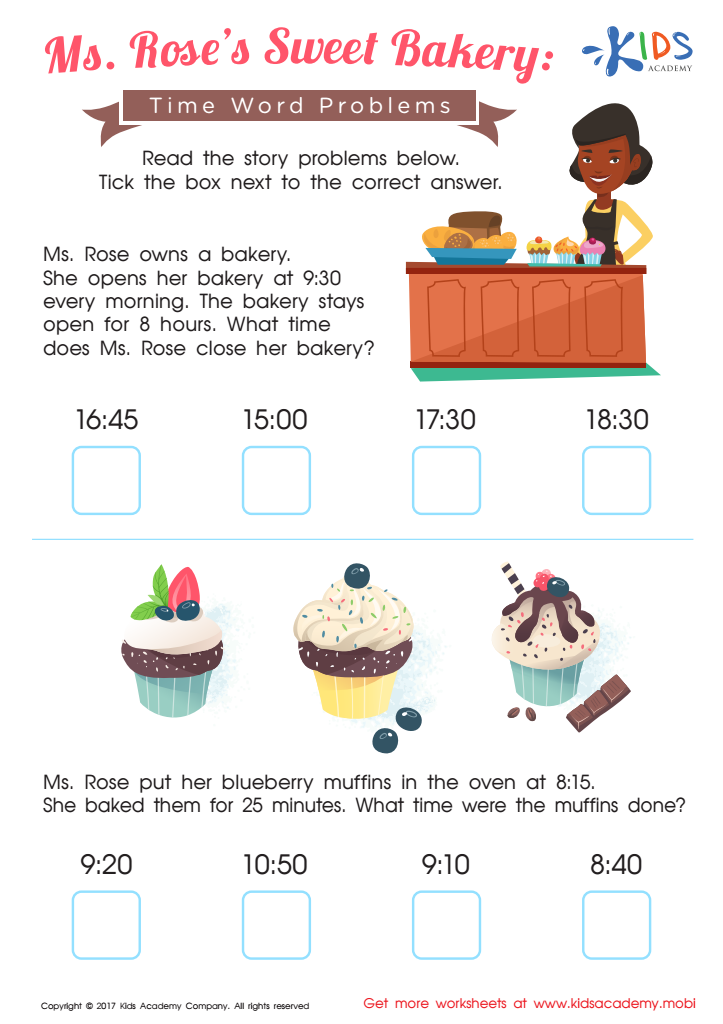
Ms. Roseв's Sweet Bakery Time Worksheet
 Assign to My Students
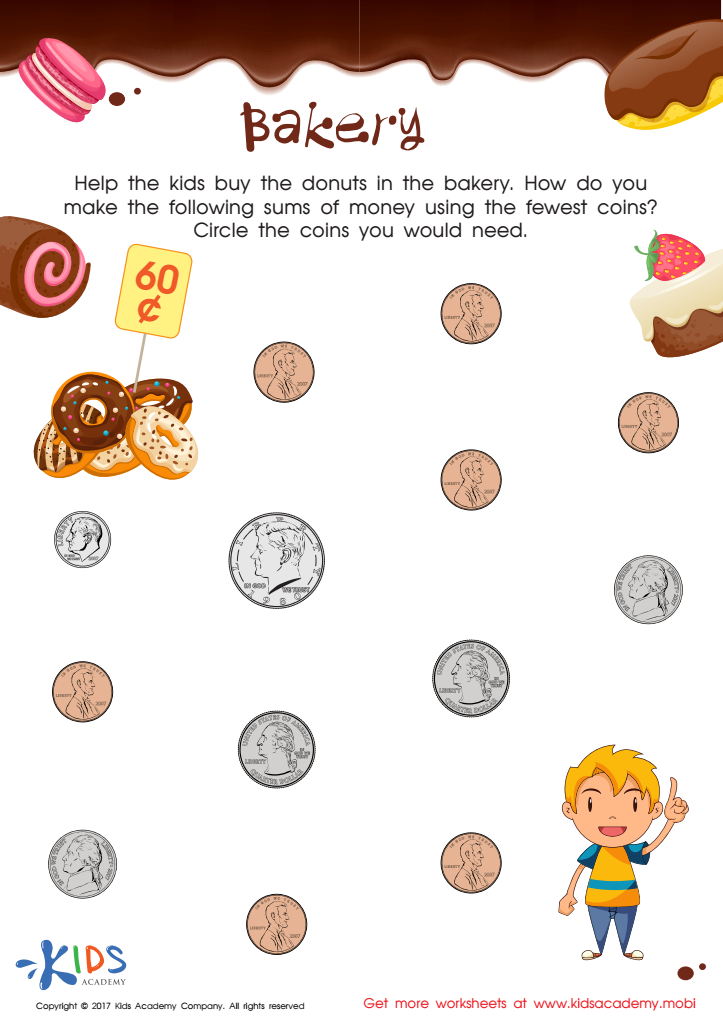
Counting Coins Worksheet
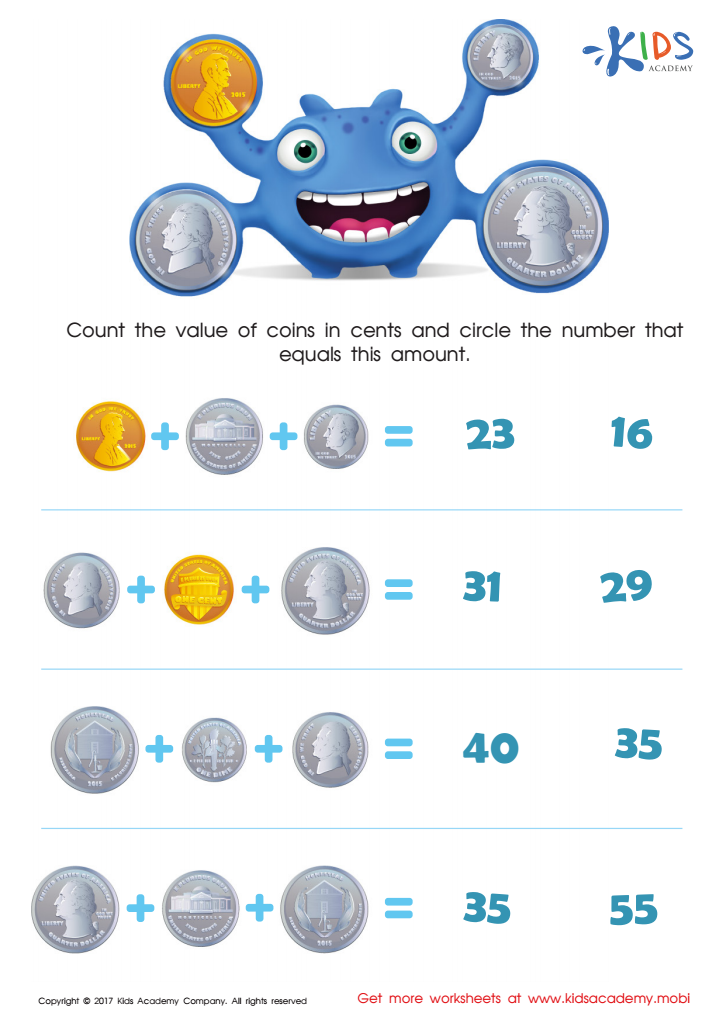
Counting the Coins Money Worksheet








Money counting skills are essential for children aged 5 to 7 as they lay the groundwork for critical financial literacy and practical math abilities. Understanding money helps children not only recognize coins and bills but also master fundamental counting, addition, and subtraction skills in a fun and engaging context. Proficient money counting boosts confidence in handling real-world situations, such as shopping or saving.
Parents and teachers should prioritize these skills because they encourage children to develop problem-solving strategies and a deeper understanding of value, helping them understand the concept of spending and saving wisely. Structured programs like "Extra Challenge Math" make learning interactive and enjoyable, turning abstract math concepts into relatable scenarios.
Furthermore, strong money counting abilities can stimulate conversations about financial responsibility, teaching children the value of money from an early age. This promotes responsible decision-making, laying the foundation for lifelong skills they'll need in their future. As children learn to identify denominations and make transactions, they gain essential life skills that empower them to manage their finances effectively as adults. Therefore, investing time in developing money counting skills early on benefits not only academic performance but also emotional and practical everyday competencies.