Practical math application Extra Challenge Measurement Worksheets for Ages 5-7
3 filtered results
-
From - To
Discover our "Practical Math Application Extra Challenge Measurement Worksheets" designed specifically for ages 5-7! These engaging worksheets offer a hands-on approach to measuring and understanding dimensions in real-world contexts. With fun, interactive activities, children will sharpen their measurement skills while exploring everyday applications like building, cooking, and crafting. Each worksheet encourages critical thinking and problem-solving, helping young learners grasp essential math concepts in a playful manner. Ideal for at-home practice or classroom settings, these extra challenge worksheets enhance children's confidence in measurement and empower them with practical skills they'll utilize throughout their educational journey. Perfect for inspiring a love of math!
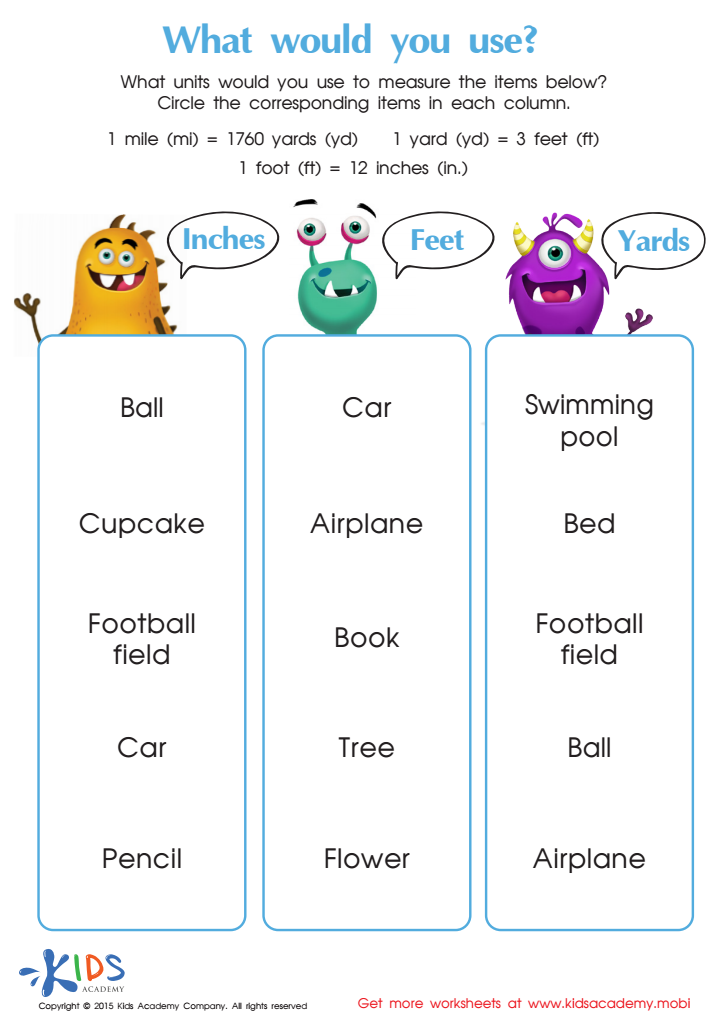
Learning about measuring objects in inches, feet and yards Worksheet
 Assign to My Students
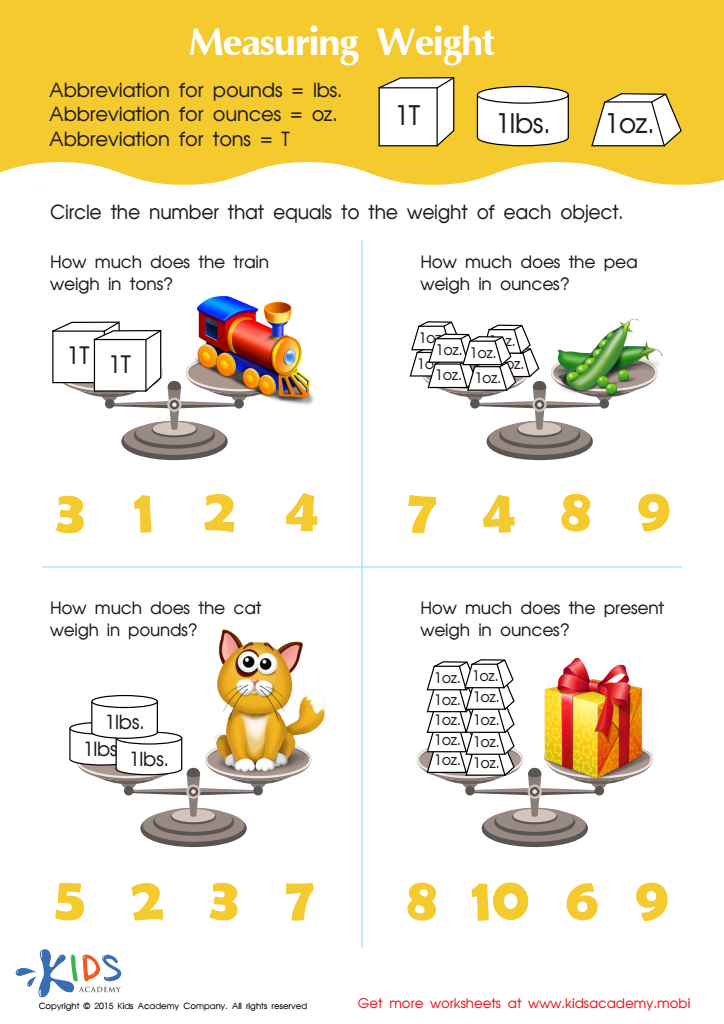
Measuring Weight in Ounces, Pounds and Tons Worksheet
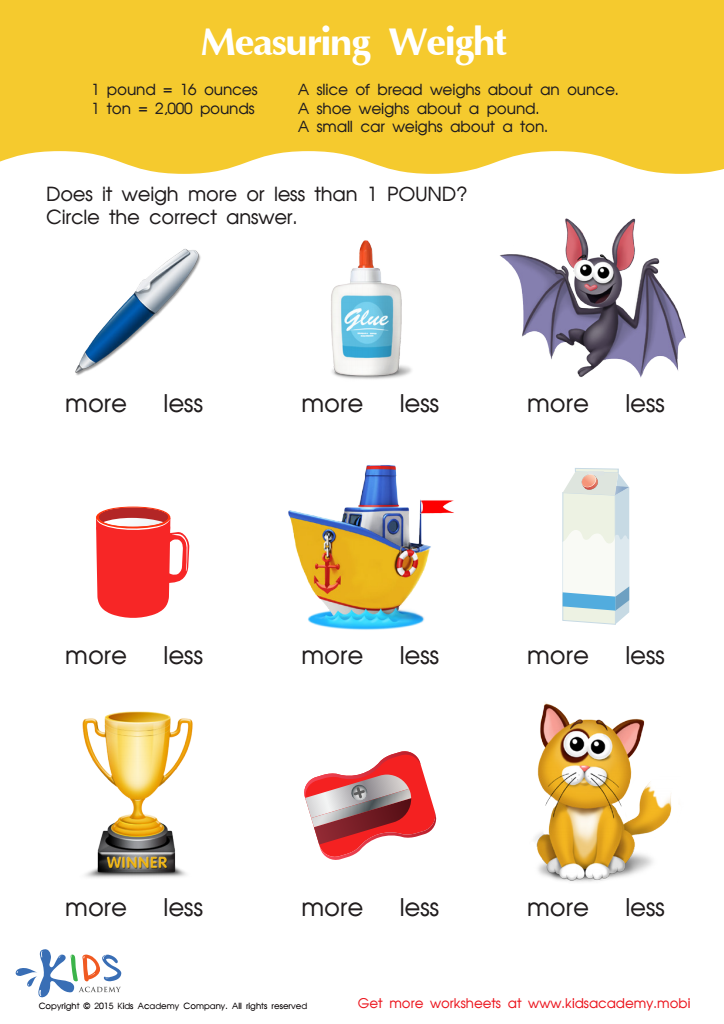
Measuring weight in pounds Worksheet








Parents and teachers should prioritize practical math applications, particularly in measurement, for children ages 5-7 for several compelling reasons. Firstly, this age group is at a critical developmental stage where foundational skills form the basis for future learning. Engaging children in hands-on measurement activities fosters their understanding of mathematical concepts in a tangible way. For instance, using rulers, measuring cups, or simple scales builds their ability to estimate, compare, and quantify.
Moreover, practical applications of measurement help children relate mathematics to real-world scenarios. Whether baking cookies, planting a garden, or measuring their height, these activities spark curiosity and show how math functions in daily life. This relevance enhances motivation and retention, making learning enjoyable and meaningful.
Furthermore, engaging young learners with measurement concepts supports the development of critical thinking and problem-solving skills. Through exploration and experimentation, they learn to formulate inquiries, make predictions, and verify results.
Ultimately, incorporating practical math measurement challenges not only equips children with essential skills but also nurtures confidence, creativity, and a positive attitude toward math. Building a strong mathematical foundation in early years is crucial to lifelong learning, sparking a passion for inquiry and discovery.








