Understanding plurals Extra Challenge Worksheets for Ages 5-8
5 filtered results
-
From - To
Boost your child’s language skills with our "Understanding Plurals Extra Challenge Worksheets" designed specifically for ages 5-8! These engaging worksheets go beyond basic pluralization, encouraging young learners to explore tricky plural forms and improve their vocabulary. Each carefully crafted activity provides a fun way to strengthen understanding through interactive exercises, recognizing irregular plurals and applying rules effectively. Perfect for classroom use or at-home practice, these worksheets engage children with colorful illustrations and captivating prompts. Elevate your child’s language development journey today with these dynamic extra challenges that will spark curiosity and excitement about learning plurals!
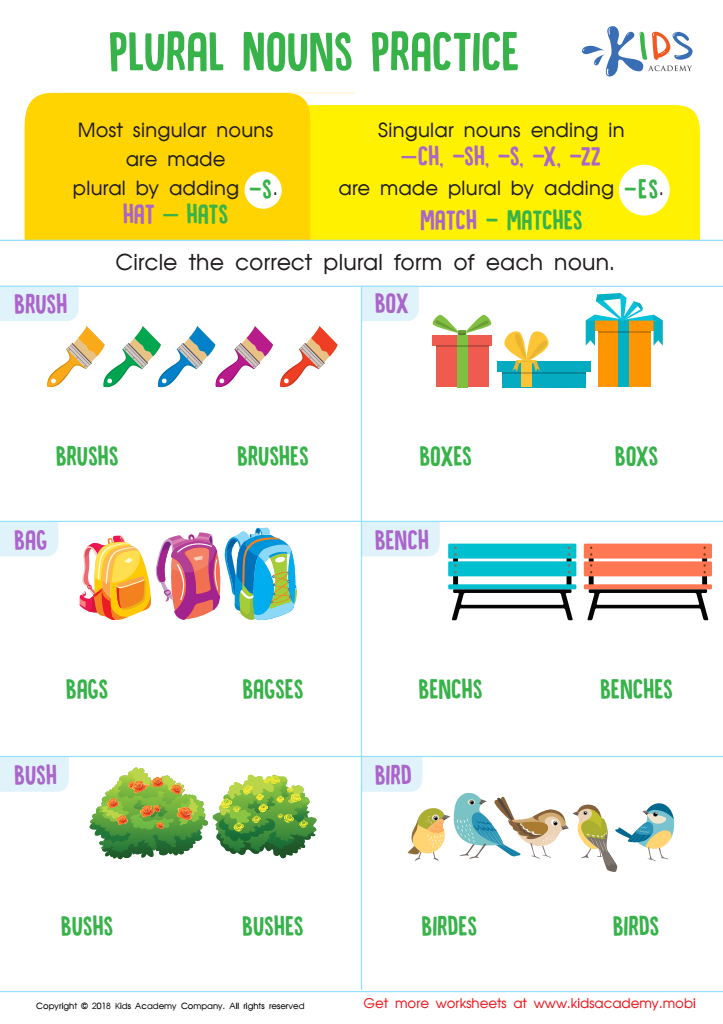
Plural Nouns Practice Worksheet
 Assign to My Students
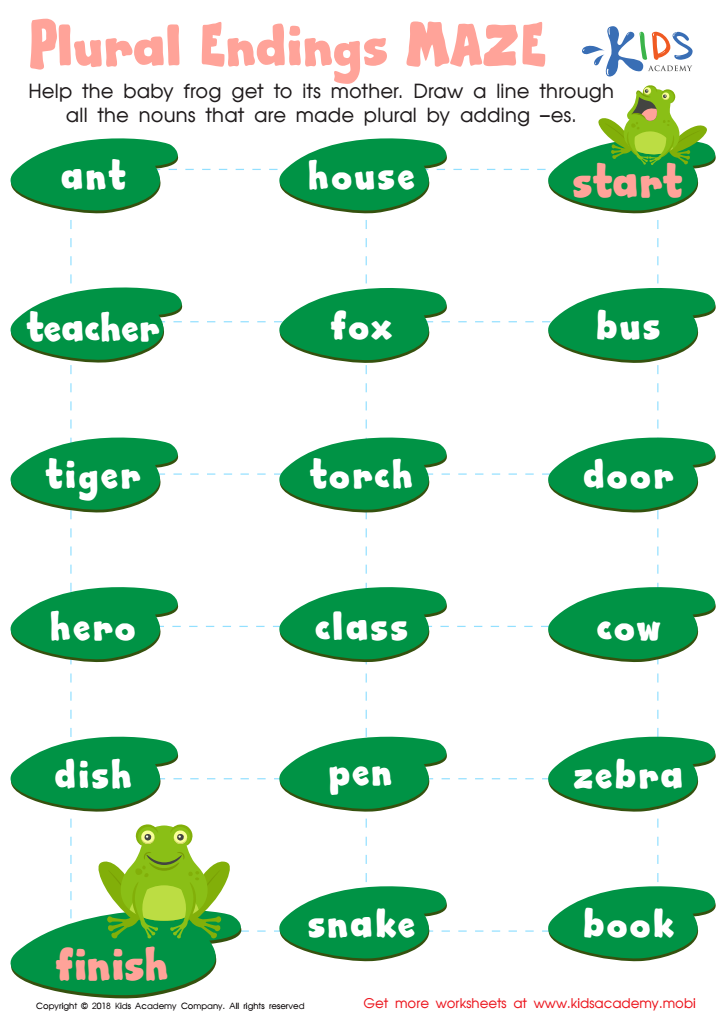
Plural Endings Maze Worksheet
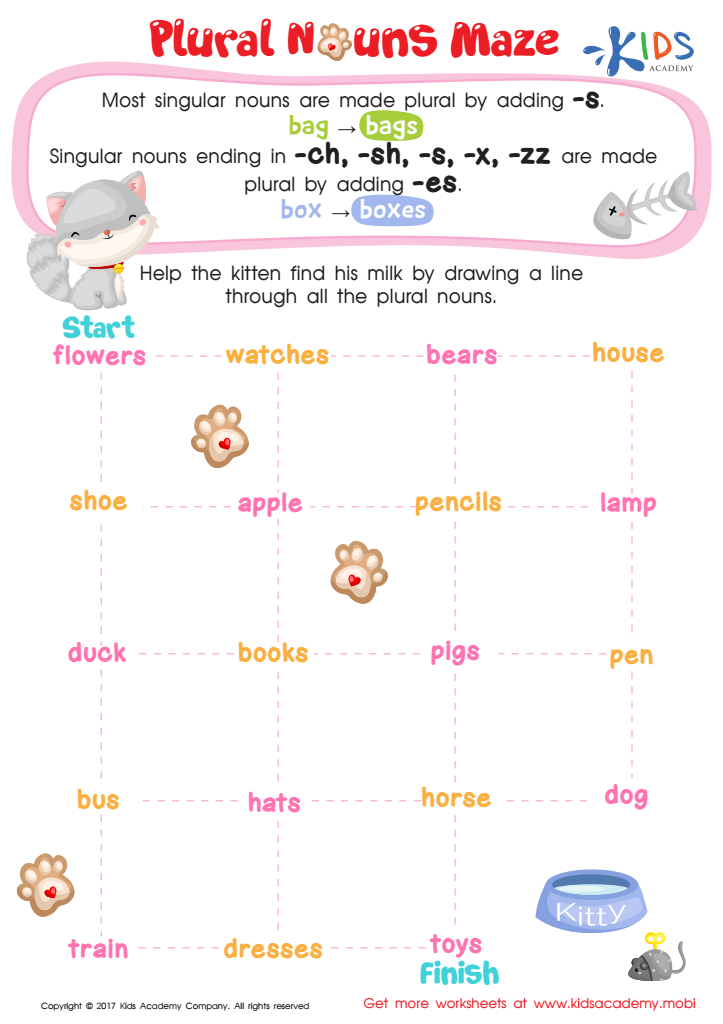
Plural Nouns Maze Worksheet
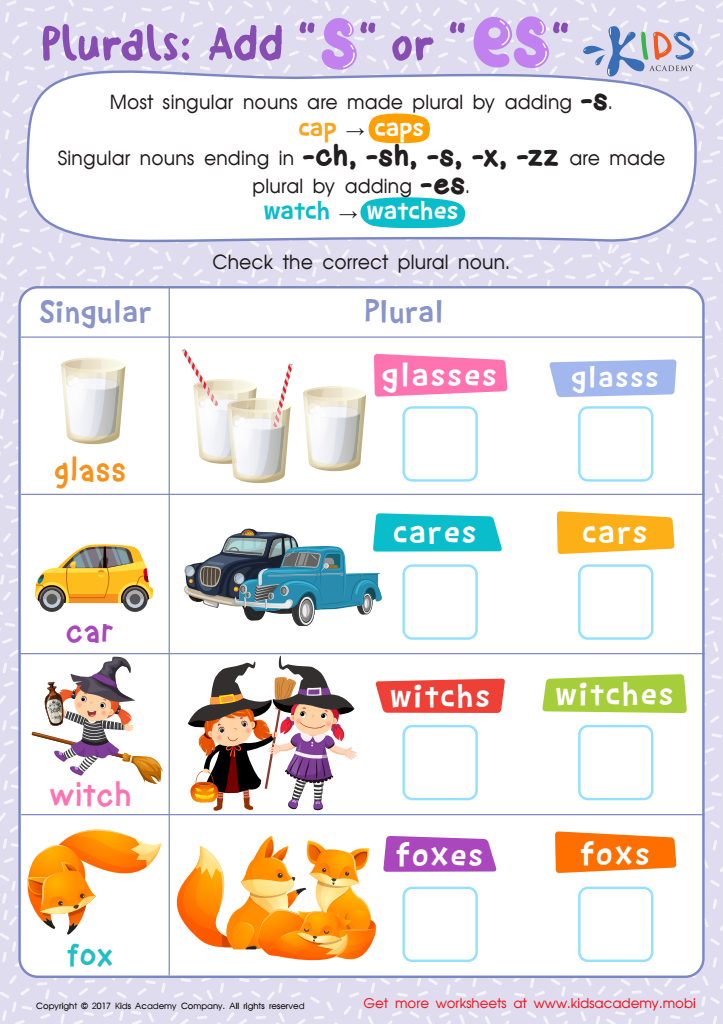
Plurals: "–es" or "–es"? Worksheet
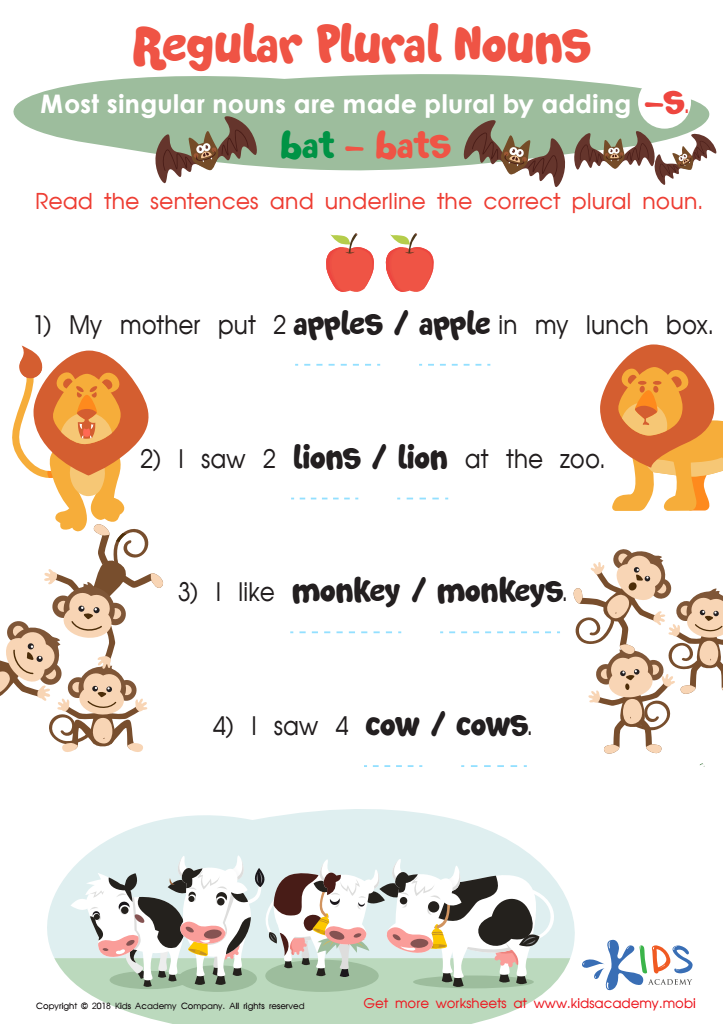
Regular Plural Nouns Worksheet




.jpg)


Understanding plurals is a fundamental aspect of language development for children aged 5-8. Parents and teachers should prioritize teaching plurals because they form the basis for effective communication and literacy skills. Plural forms signal that a quantity involves more than one, which helps children make sense of the world around them; for example, differentiating between one cat and several cats allows for greater clarity in conversations and storytelling.
Moreover, mastering plurals enhances vocabulary acquisition. As children learn plural forms, they also encounter new words and concepts, deepening their understanding of language structure. This knowledge is vital for reading comprehension, as many texts for young readers feature plural nouns.
Additionally, learning plurals can be made engaging through games and interactive activities, fostering a love for learning. It encourages collaboration and social interaction among peers during group play or classroom settings, nurturing essential social skills.
Overall, understanding plurals cultivates cognitive, linguistic, and social development, which are critical for a child’s growth. By integrating plural instruction into daily routines, caregivers and educators empower children with the tools they need for clear expression and effective communication in both oral and written forms.








