Number Sequencing Extra Challenge Numbers Worksheets for Ages 5-8
6 filtered results
Difficulty Level
Grade
Age
-
From - To
Subject
Activity
Standards
Unlock your child's potential with our "Number Sequencing Extra Challenge Numbers Worksheets" designed for ages 5-8. These engaging and educational worksheets provide the perfect blend of fun and challenge, helping young learners master number sequencing concepts. Through a variety of exercises, children will enhance their counting, number recognition, and logical thinking skills. Ideal for both classroom and at-home learning, these worksheets support foundational math development. Ensure your child has a head start in math with our expertly crafted, printable resources that make learning an enjoyable adventure. Embrace the challenge today!
Favorites
With answer key
Interactive
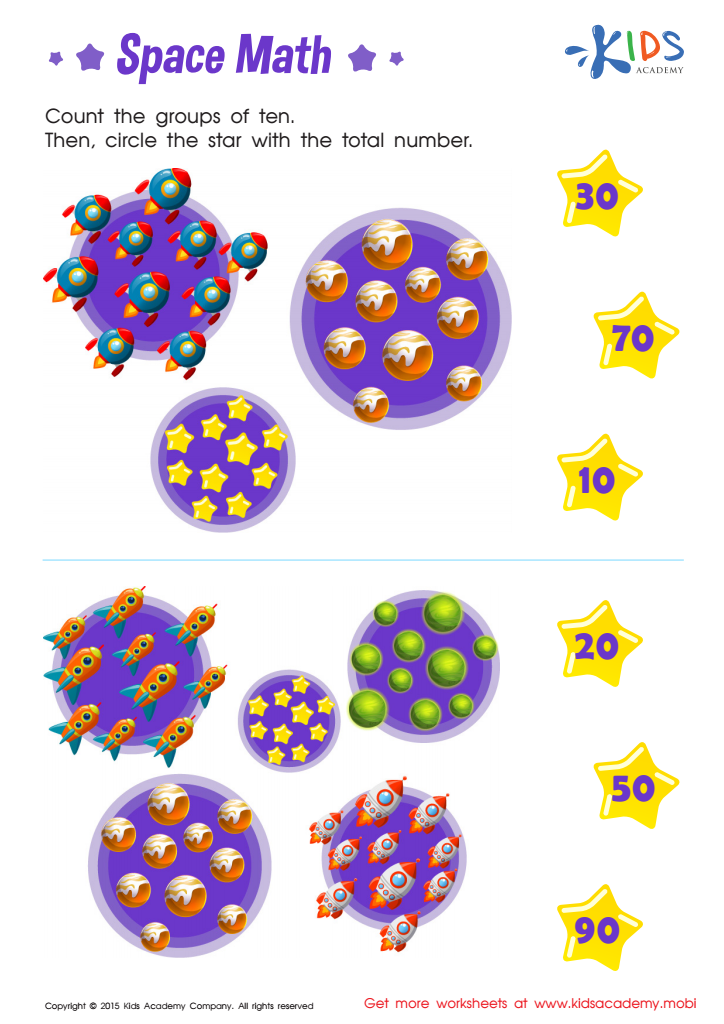
Learn dozens: Space math Worksheet
This worksheet uses Singapore Math's approach to help your child visually understand basic counting and math problems.
 Assign to My Students
Learn dozens: Space math Worksheet
Worksheet
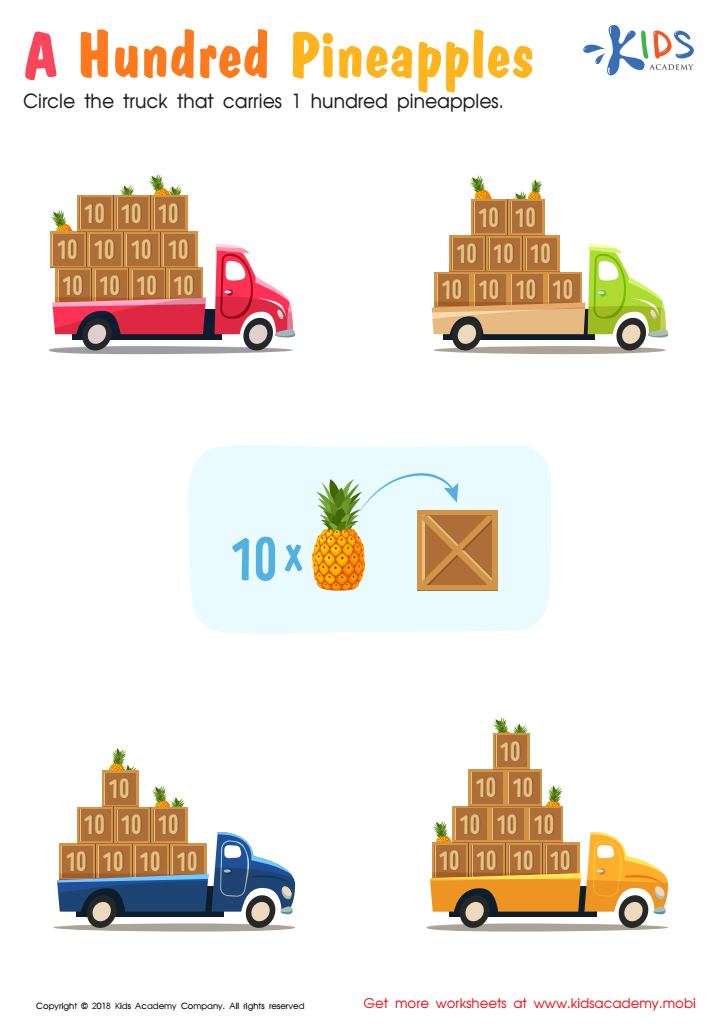
A Hundred Pineapples Worksheet
Can your child count in tens? Show them how to count 100 boxes in stacks of tens. A worksheet can help them understand the concept. Ask them to count boxes of pineapples in stacks of tens and circle the truck with 100 pineapples.
A Hundred Pineapples Worksheet
Worksheet
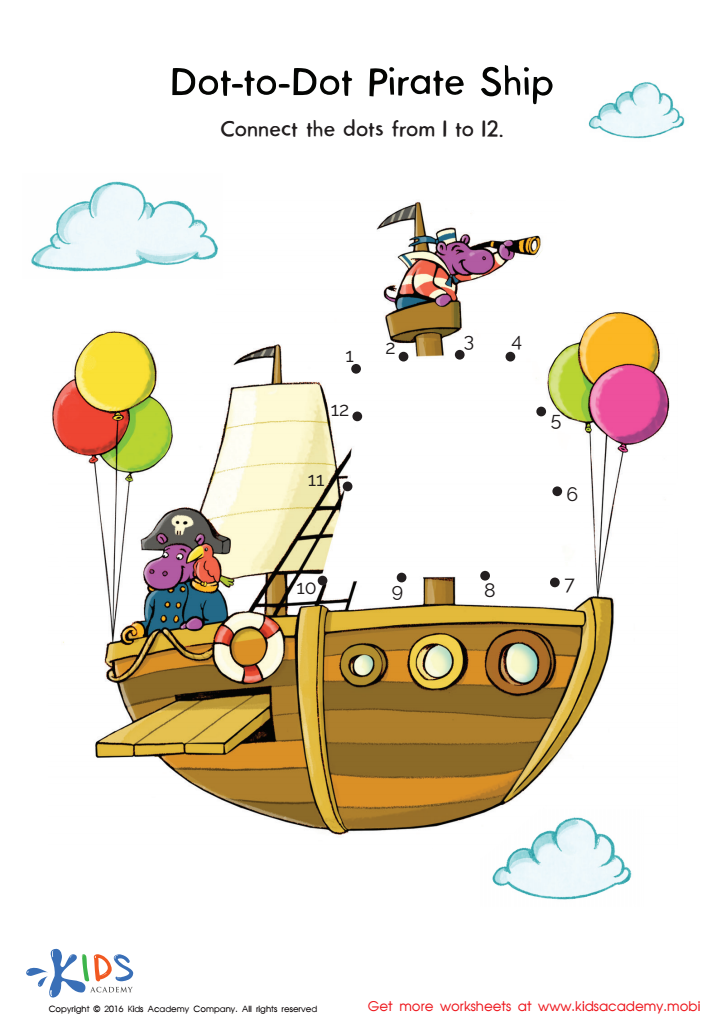
Pirate Ship Connect Dots Worksheet
Encourage your child's creativity with this pirate dot to dot! They'll connect the dots to craft a ship and then decorate the sail. This worksheet will help them practice numeracy, counting, and other reasoning skills. Once they understand how the dots come together to make a picture, they'll be motivated to move on to tougher challenges.
Pirate Ship Connect Dots Worksheet
Worksheet
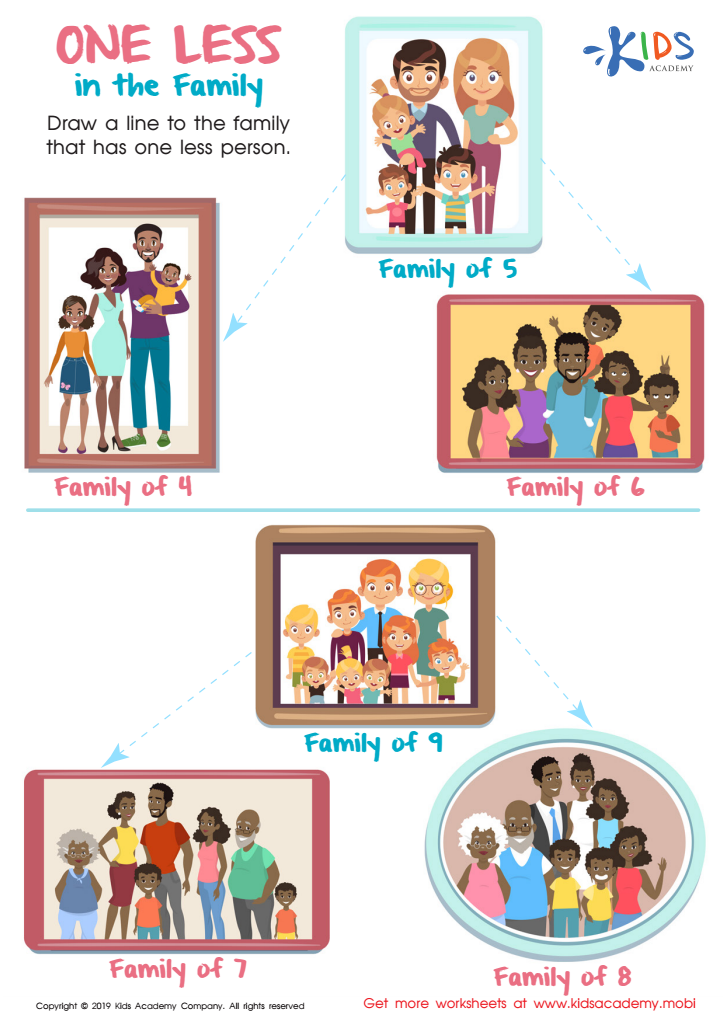
One Less in the Family Worksheet
How many people are in your family? Can your little ones count and tell you? A family usually consists of a mum, dad and kids, but may also include grandparents, uncles, aunties and cousins. This worksheet has pictures of different families; help your kids count the members and draw a line to the one with one less person.
One Less in the Family Worksheet
Worksheet
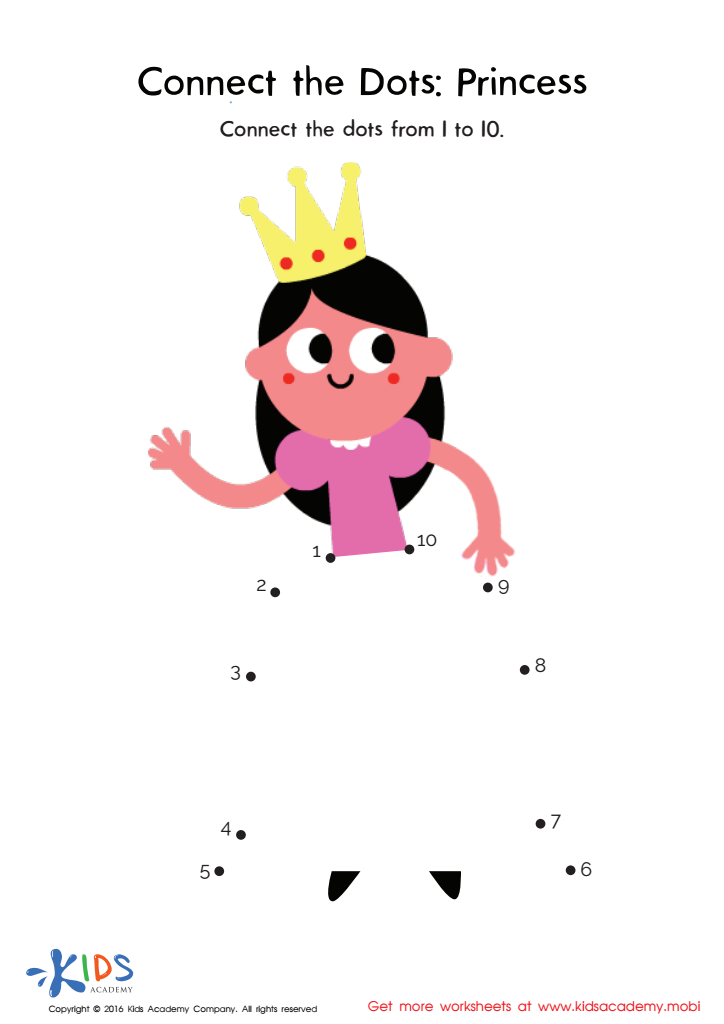
Princess Connect Dots Worksheet
Kids love fairy tales and their enchanting characters. With this princess connect the dots worksheet, your child will practice recognizing numbers, boost creativity, and find out that following the numbers leads to a beautiful picture. After connecting the dots, let your child decorate the princess’ dress for even more fun. It's a great way for kids to practice skills with plenty of fun and joy!
Princess Connect Dots Worksheet
Worksheet
Join Kids Academy for Free
Who is primarily going to use this learning content?







Number Sequencing Extra Challenge Numbers designed for ages 5-8 hold significant importance for early childhood development both for parents and teachers. These challenges help young children build a strong foundation in number sense, which is crucial for all later mathematical learning. Engaging in number sequencing activities helps improve children’s understanding of the order of numbers, which is essential for developing skills in addition, subtraction, and even more advanced arithmetic operations.
For parents, number sequencing activities serve as an enjoyable and interactive way to bond with their children while promoting essential cognitive skills. At home, practicing these exercises reassures parents that their child is on the right track development-wise and can be a good complement to what is taught in school.
Teachers should care about these activities because they offer a structured approach to mastering counting and basic number order, often through games and playful exercises, keeping young learners engaged. Number sequencing also lays the groundwork for pattern recognition, logical thinking, and problem-solving skills within the curriculum. Therefore, incorporating these extra challenge activities can turn abstract numerical concepts into engaging and manageable tasks, fostering a positive relationship with mathematics at an early age.