
Data interpretation Extra Challenge Math Worksheets for Ages 5-8
3 filtered results
Difficulty Level
Grade
Age
-
From - To
Subject
Activity
Standards
Unlock your child's potential with our "Data Interpretation Extra Challenge Math Worksheets for Ages 5-8." These engaging and challenging worksheets are designed to enhance young learners' skills in analyzing and understanding data. Perfect for children who are ready to advance beyond basic math, each worksheet offers stimulating problems that encourage critical thinking and problem-solving. Activities include interpreting graphs, tables, and charts, promoting early mastery of essential math concepts. Ideal for both classroom use and at-home practice, our worksheets ensure a fun and educational experience that will help your child excel in their mathematical journey.
Favorites
With answer key
Interactive
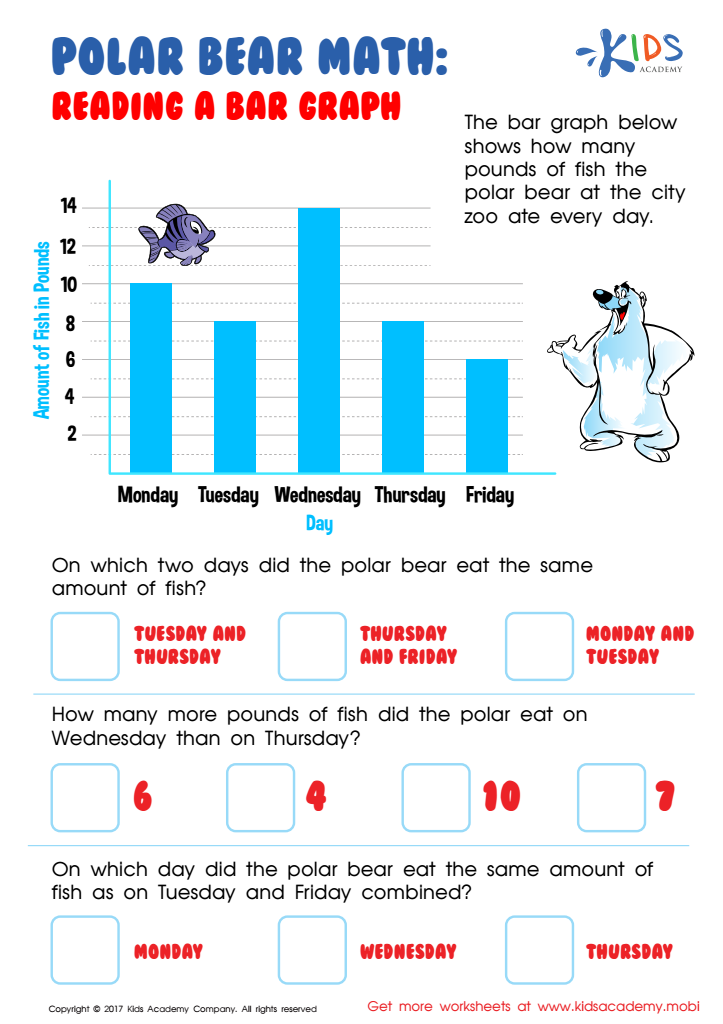
Reading Bar Graph Worksheet
Take your child north to practice data reading with a polar bear friend! This worksheet challenges 3rd graders to interpret data on a graph and solve related math problems.
 Assign to My Students
Reading Bar Graph Worksheet
Worksheet
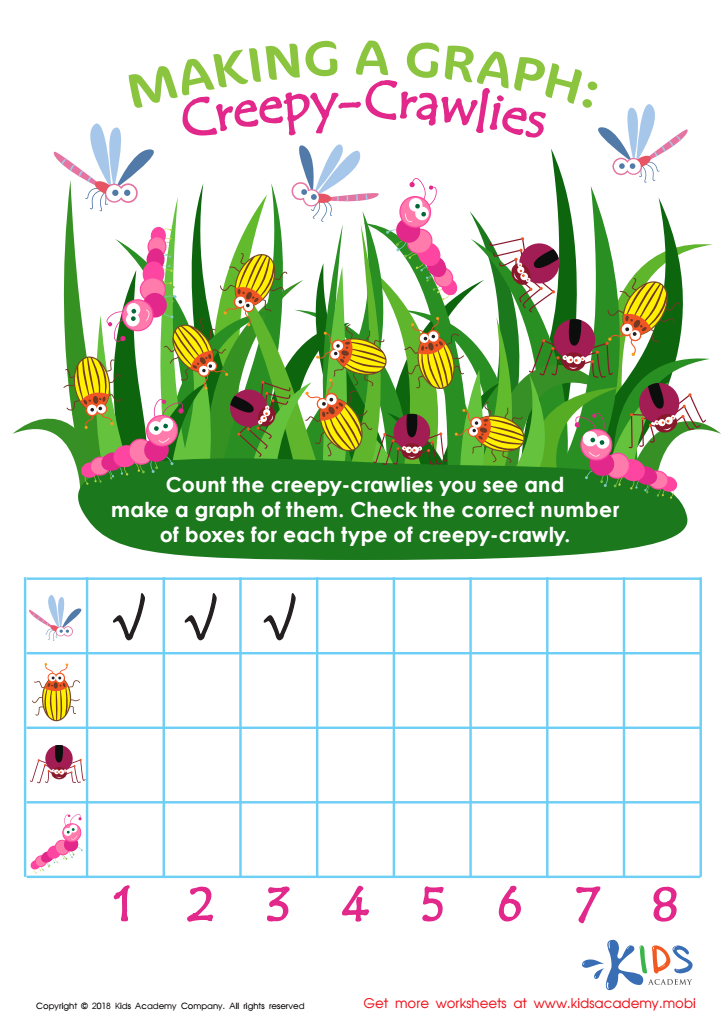
Making a Graph: Creepy Crawlies Worksheet
Let your little math whiz create a graph with this free PDF worksheet. They can count and sort the creepy-crawlies, checking off the correct number of boxes for each type. This engaging activity will help them hone their visual discrimination skills while efficiently organizing data.
Making a Graph: Creepy Crawlies Worksheet
Worksheet
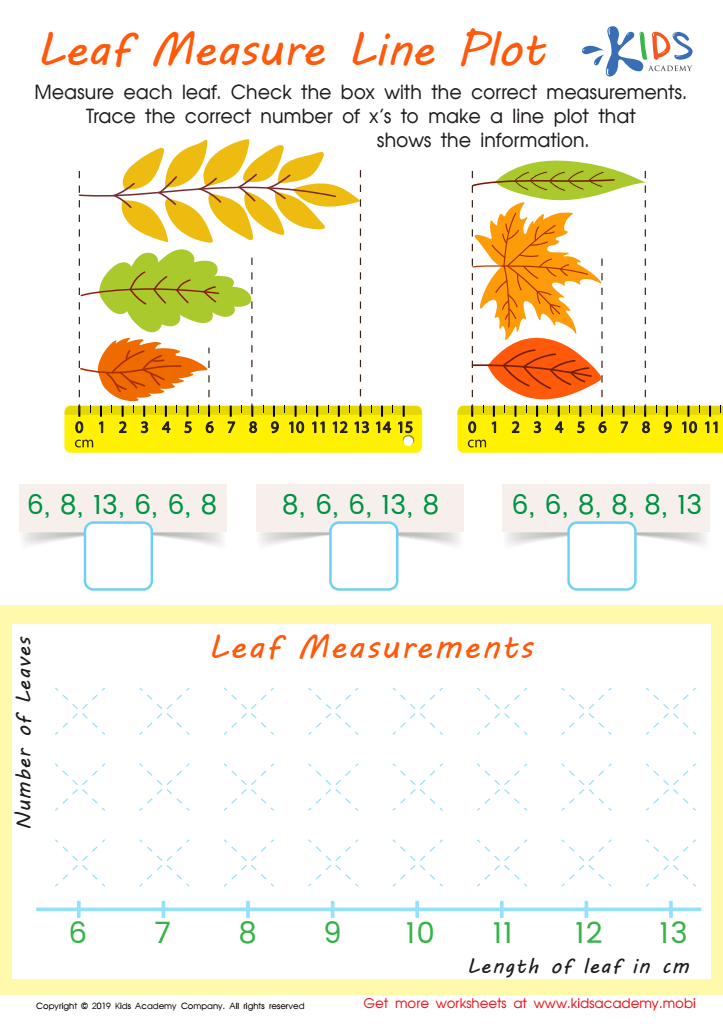
Leaf Measure Line Plot Worksheet
Help your third grader measure each of the four leaves, and check the box with the correct measurements. Then, trace the right number of x's to make a line plot showing the data. This exercise will engage your students and make it easier for them to grasp the concept of line plots.
Leaf Measure Line Plot Worksheet
Worksheet
Join Kids Academy for Free
Who is primarily going to use this learning content?






Engaging young children aged 5-8 in Data Interpretation Extra Challenge Math is essential for several key reasons. First, these exercises hone critical thinking and analytical skills early on. In a world increasingly driven by data, cultivating a foundational ability to understand and interpret data sets children up for future success not only in academics but also in everyday decision-making.
For parents and teachers, this focus can enhance a child's numeracy by integrating practical applications of math concepts. Whether it’s understanding simple charts, basic graphs, or sets of numbers, these tasks nurture a mathematical mindset that is highly valuable. By implementing data interpretation challenges, children learn to identify patterns, make predictions, and solve problems logically.
Additionally, these activities can boost engagement and interest in math through interactive and visually appealing projects, like creating bar charts or pictographs based on relatable topics. Encouraging collaborative group work can also promote teamwork and communication skills
Lastly, developing data literacy at a young age aligns with STEAM (Science, Technology, Engineering, Art, and Math) educational goals, preparing children for a future where multidisciplinary knowledge is crucial. Overall, integrating data interpretation tasks engages young minds, supports diverse skill development, and feeds a lifelong curiosity and proficiency in math.








