Matching numbers Extra Challenge Worksheets for Ages 5-9
5 filtered results
-
From - To
Expand your child's numeracy skills with our "Matching Numbers Extra Challenge Worksheets" designed for ages 5-9. These engaging worksheets encourage young learners to develop their matching skills through fun and interactive activities. Each worksheet presents a series of challenging exercises that help reinforce number recognition, association, and logical thinking. Perfect for both classroom and home use, these worksheets provide an excellent opportunity for children to practice independently or in small groups. Tailored to enhance cognitive skills while keeping learning enjoyable, our extra challenge worksheets are ideal for curious minds ready to take on the next level of learning! Download them today!
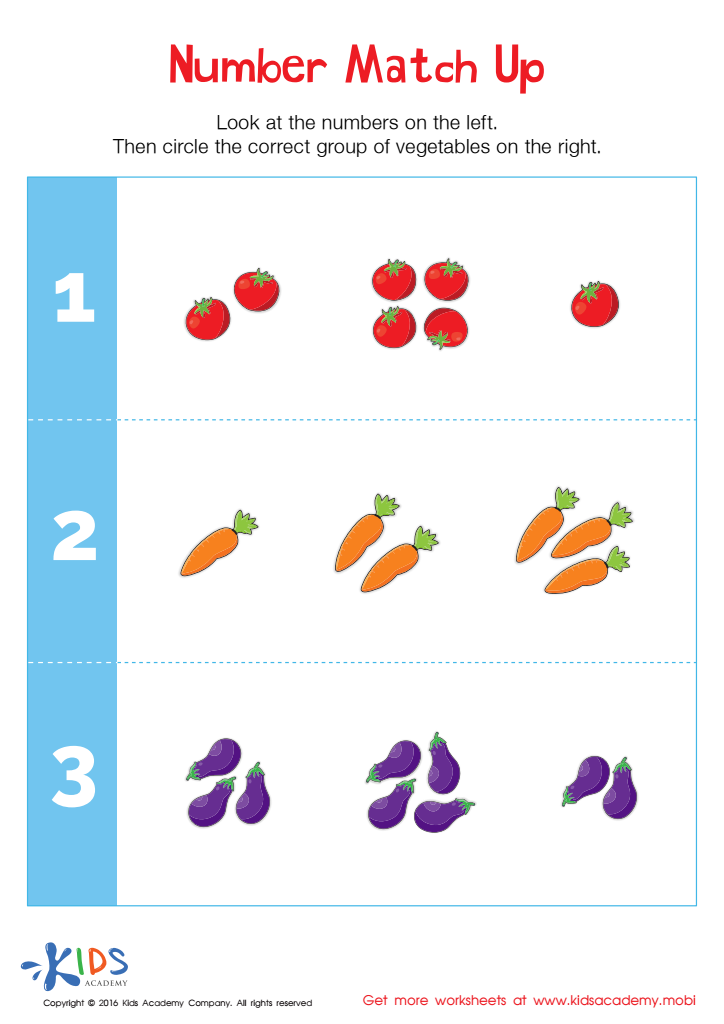
Number Match Up Worksheet
 Assign to My Students

Count and Match Vegetables 1 – 7 Math Worksheet
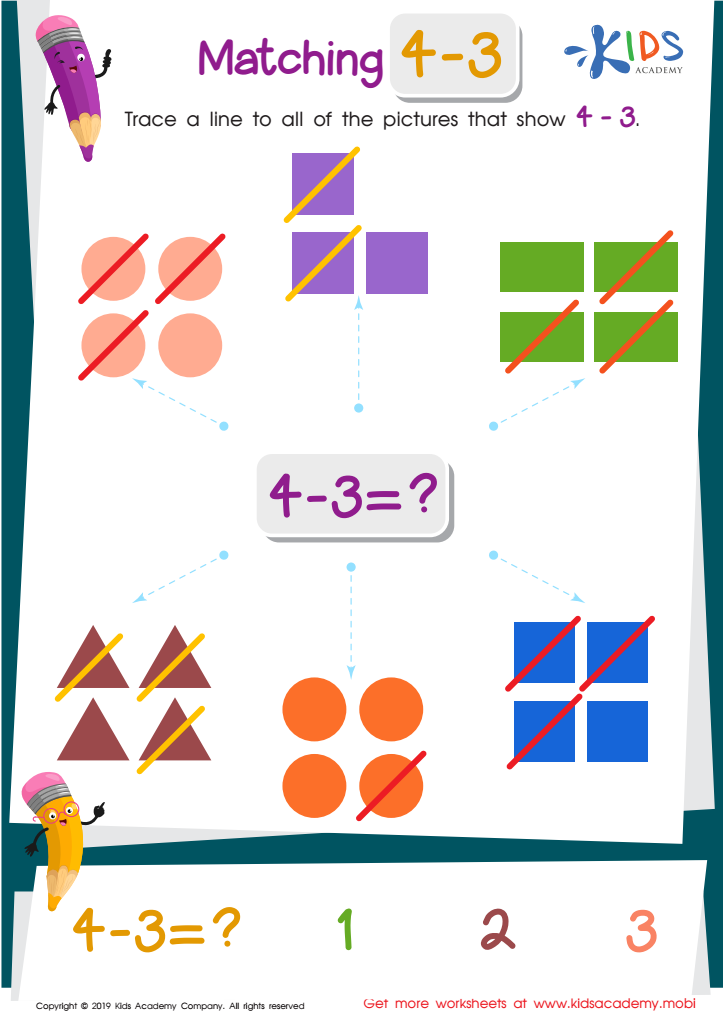
Matching 4 – 3 Worksheet
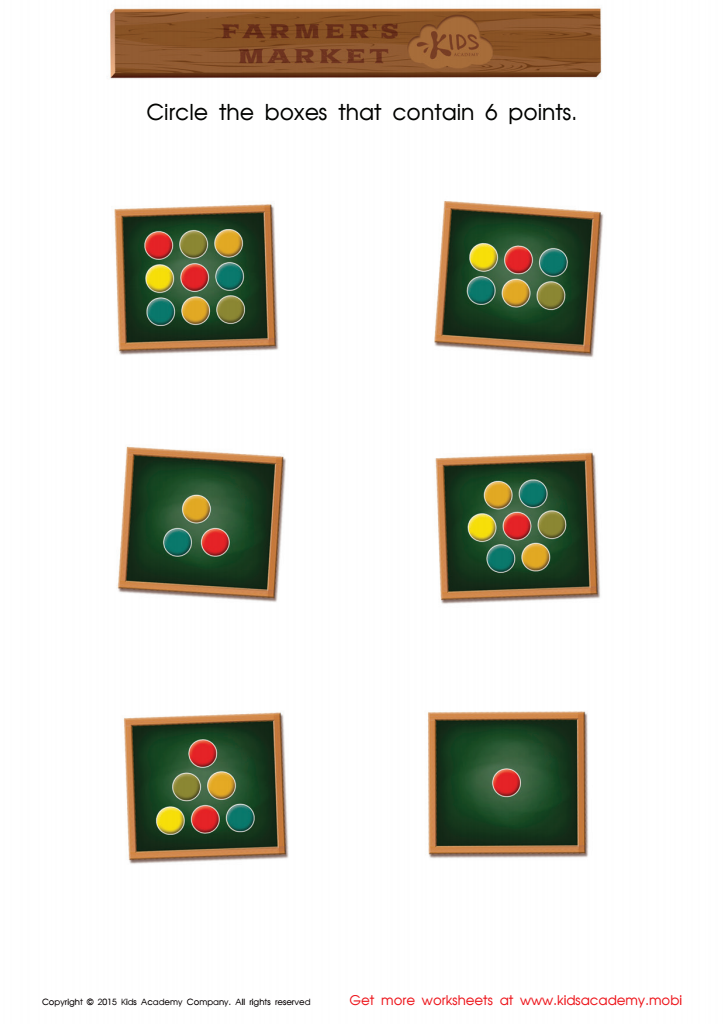
Count and Match Points 6 Math Worksheet
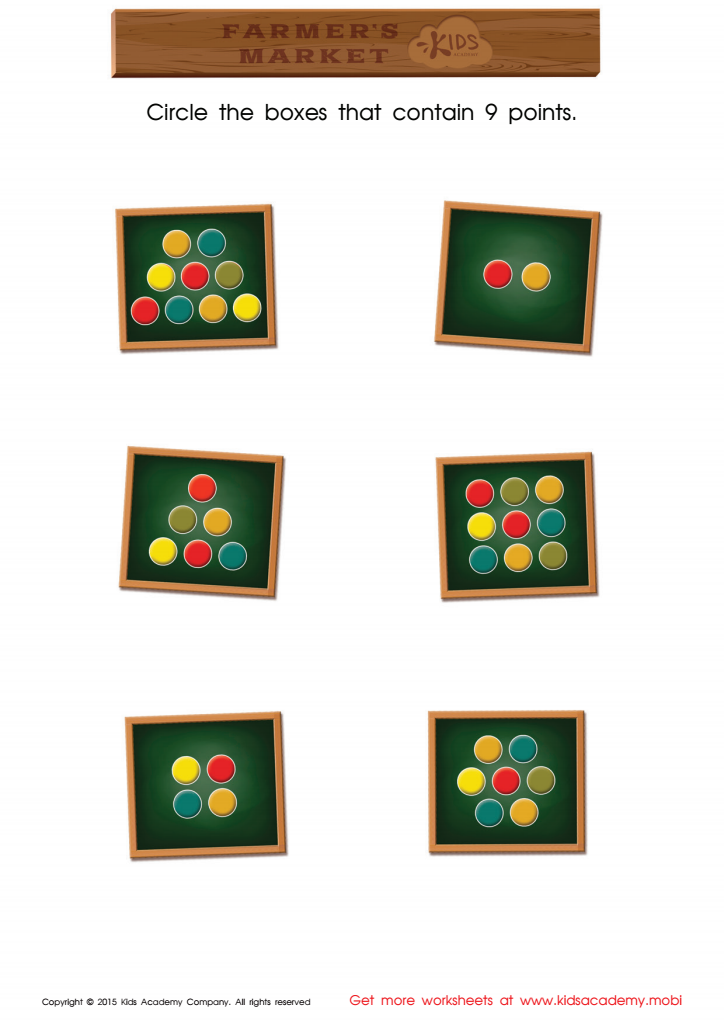
Count and Match Points 9 Math Worksheet


.jpg)



Matching Numbers Extra Challenge for Ages 5-9 is an essential activity that promotes foundational math skills in young learners. At this age, children are developing critical cognitive abilities that are pivotal not only for future academic success but also for daily life. This challenge specifically encourages number recognition, enhances counting skills, and develops an understanding of numerical relationships, which are vital for building more complex math concepts later on.
Parents and teachers should care about this activity as it also fosters essential cognitive skills such as memory retention and problem-solving. Engaging in fun and innovative challenges like Matching Numbers stimulates a child’s interest in mathematics, fostering a positive attitude towards learning. This proactive approach helps to cultivate persistence and resilience, values that benefit children across all areas of study.
Furthermore, these exercises often encourage collaboration and social interaction when done in group settings, allowing young learners to develop teamwork and communication skills. By supporting such activities, parents and teachers ensure that children are not only learning crucial math skills but also enjoying the process—laying a strong foundation for lifelong learning in various disciplines. Ultimately, nurturing these skills fosters confidence and lays the groundwork for future success.








