Story sequencing Extra Challenge Worksheets for Ages 5-9
5 filtered results
-
From - To
Boost your child's storytelling skills with our "Story Sequencing Extra Challenge Worksheets" designed for ages 5-9! These engaging worksheets enhance reading comprehension and critical thinking as children learn to arrange story events in the correct order. Ideal for reinforcing sequencing, these activities invite young learners to think creatively and foster their narrative skills. Perfect for at-home practice or classroom use, our fun challenges encourage children to use illustrations and texts strategically. With vibrant designs and age-appropriate content, these worksheets will captivate your child's mind while providing a strong foundation in logical thinking and creativity. Explore the joys of storytelling today!
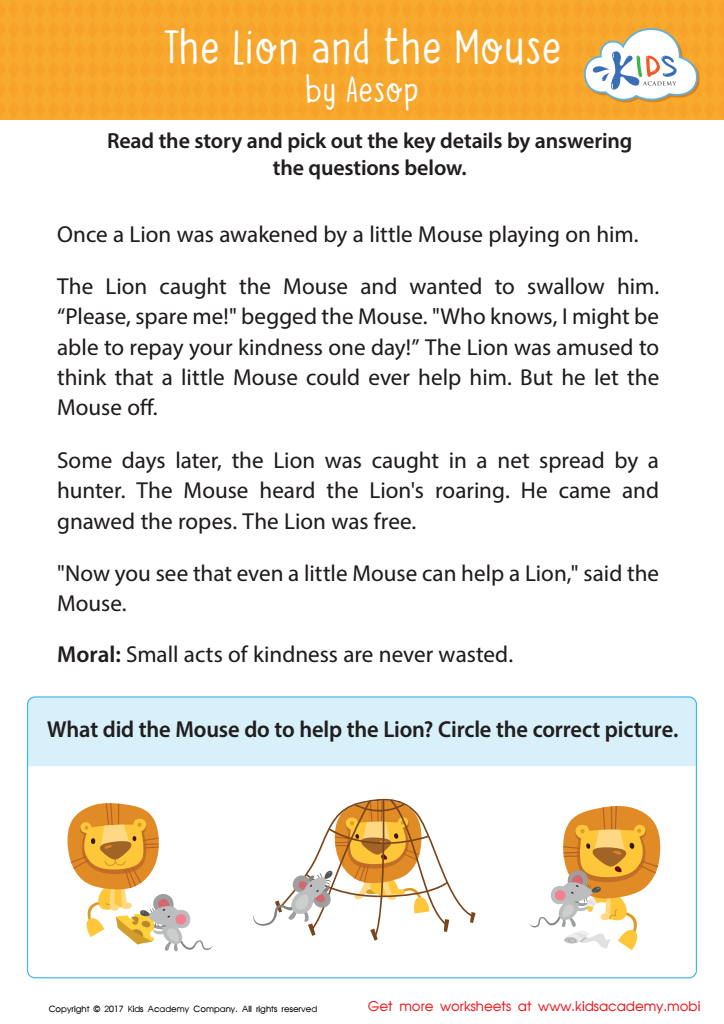
The Lion and The Mouse Sequencing Worksheet
 Assign to My Students
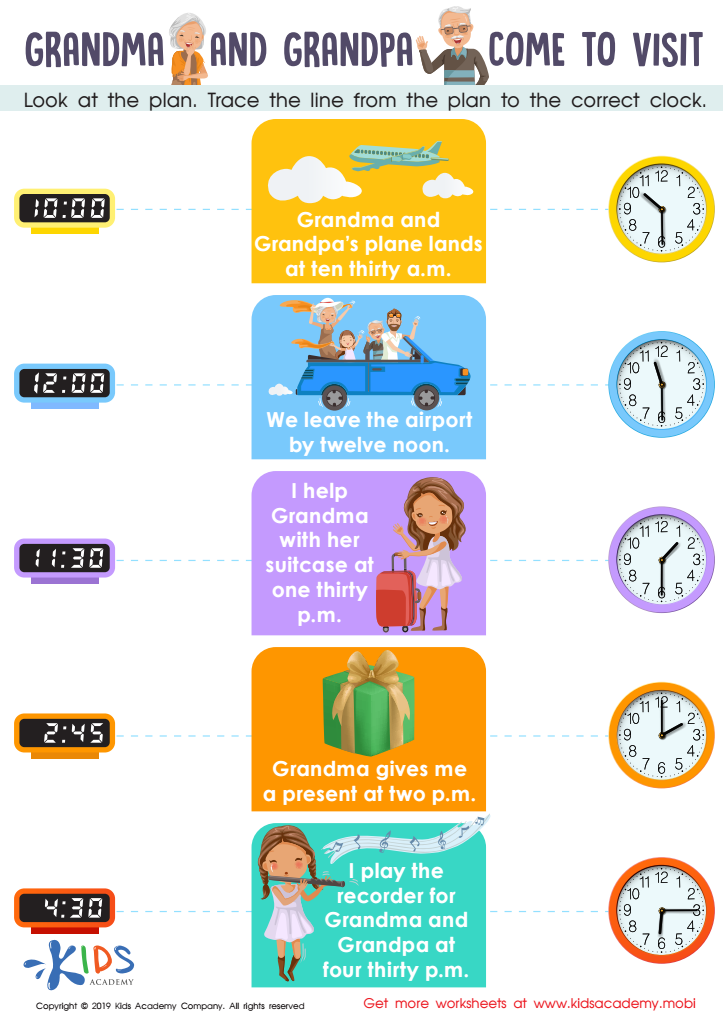
Grandpa and Grandma Come to Visit Worksheet
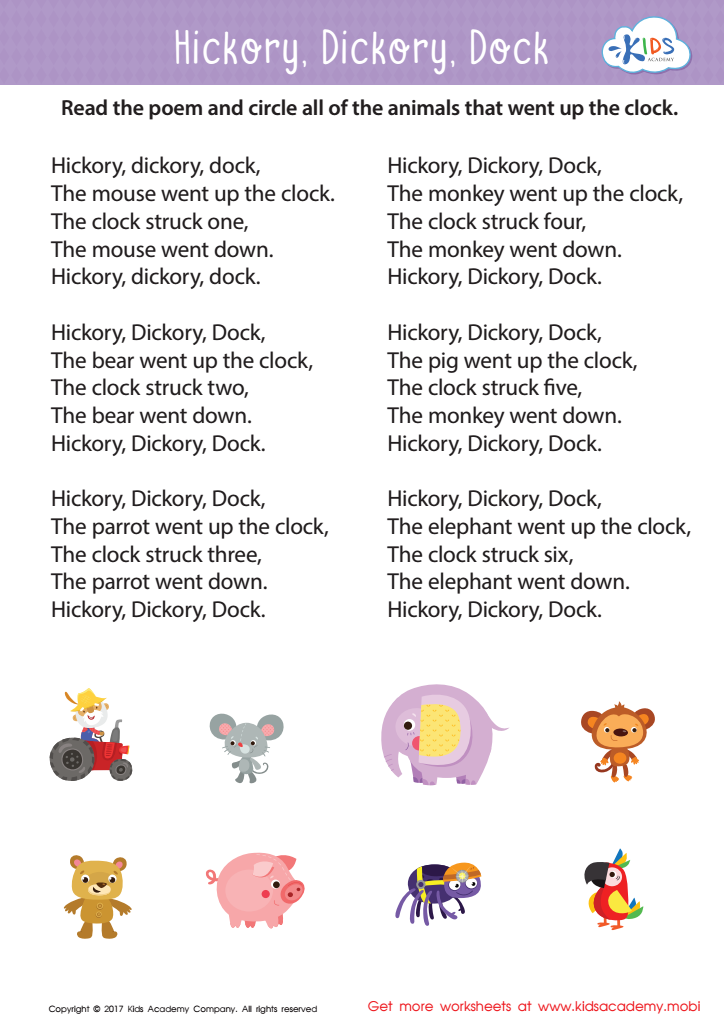
Hickory Dickory Dock Sequencing Worksheet
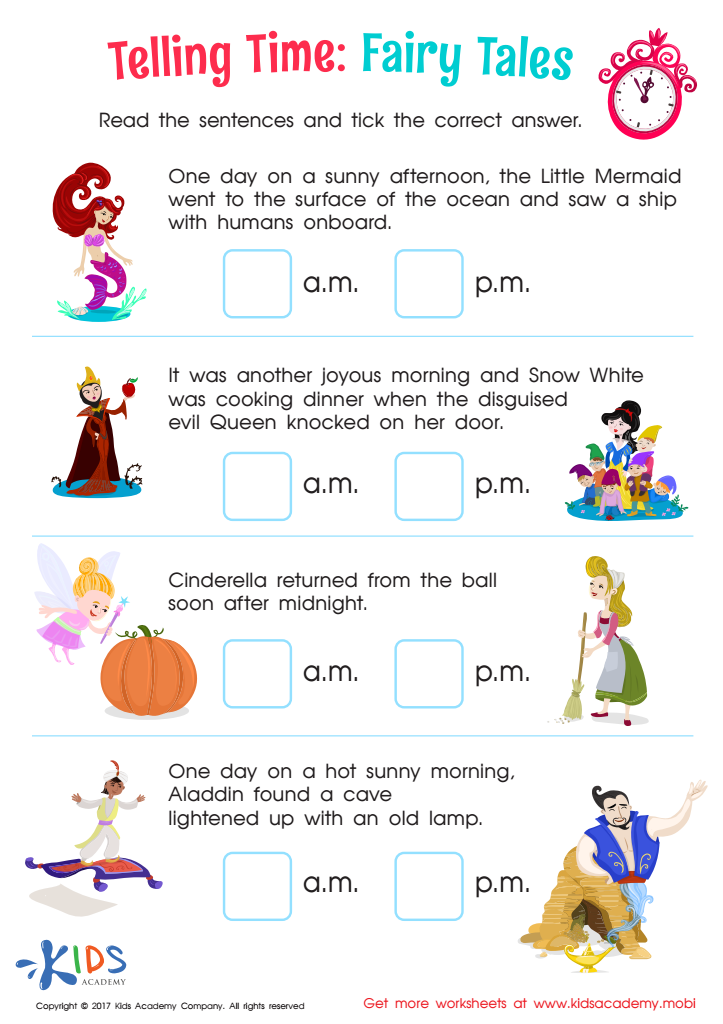
Telling Time: Fairy Tales Worksheet
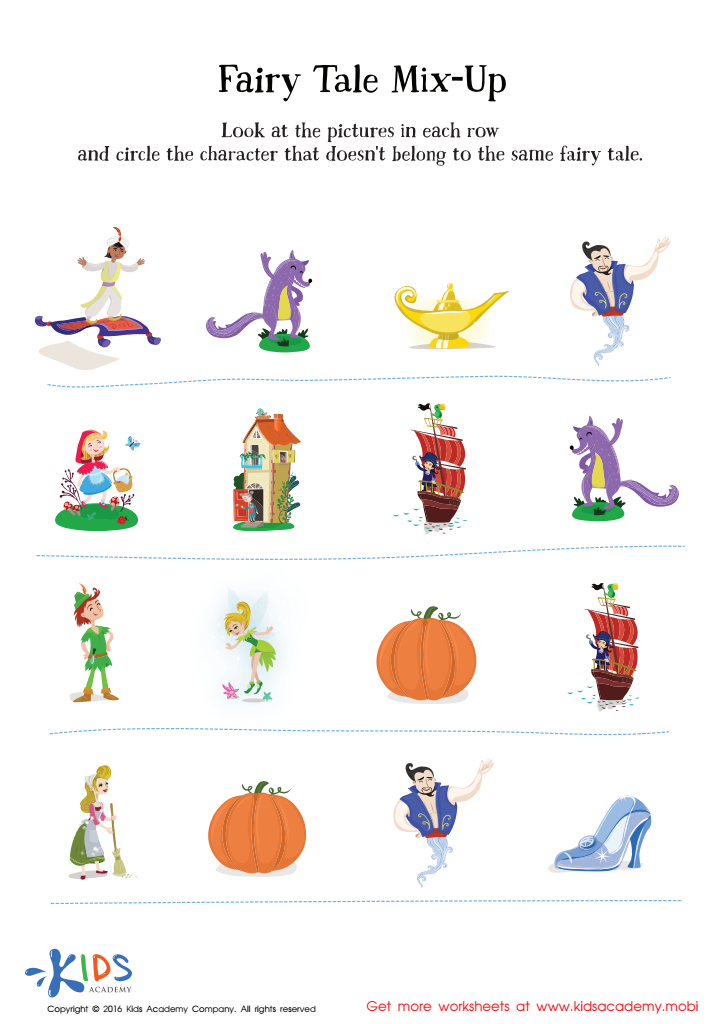
Fairy Tale Worksheet: Story Mix Up







Story sequencing is a crucial skill for young learners, particularly for children aged 5-9. It not only aids in comprehension but also enhances cognitive development. When children work on story sequencing, they learn to identify a narrative’s beginning, middle, and end, which reinforces their understanding of plot structure. This skill helps them comprehend how events unfold and how characters and settings interact, fostering critical thinking.
For parents and teachers, emphasizing story sequencing fosters better communication and expressive skills. By discussing the order of events in a story, children practice verbalizing thoughts and ideas, boosting their vocabulary and language skills. Additionally, mastering sequencing promotes creativity—children often apply their understanding by creating their own stories or rearranging events, which nurtures imaginative thinking.
Engaging in this extra challenge also boosts social-emotional skills. Working collaboratively on sequencing activities helps children learn to share, cooperate, and respect differing opinions, building teamwork abilities. Finally, these activities can enhance a child's love for reading and storytelling, laying a foundation for lifelong learning. Parents and teachers should prioritize story sequencing, as it develops essential skills that support academic success and personal growth.








