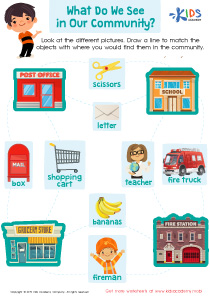
Spatial awareness Extra Challenge Math Worksheets for Ages 5-9
9 filtered results
-
From - To
Enhance your child’s spatial awareness skills with our engaging Extra Challenge Math Worksheets, designed for ages 5-9. These worksheets are perfect for developing abilities in visualizing, understanding, and manipulating shapes and spaces. The activities encourage critical thinking and problem-solving through fun, interactive puzzles that challenge young minds. As children complete these worksheets, they strengthen their foundational math skills while exploring concepts such as symmetry, patterns, and spatial relationships. Ideal for both classroom and home use, our worksheets promote cognitive development in a playful way. Dive into the world of spatial awareness today, and watch your child thrive in their mathematical journey!
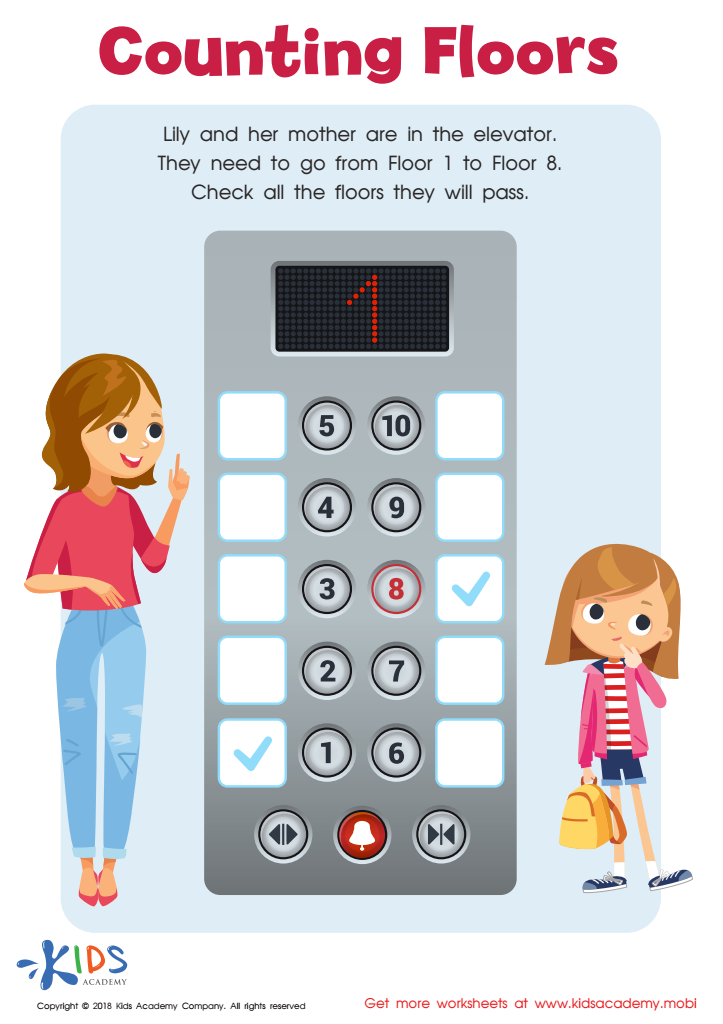
Counting Floors Worksheet
 Assign to My Students
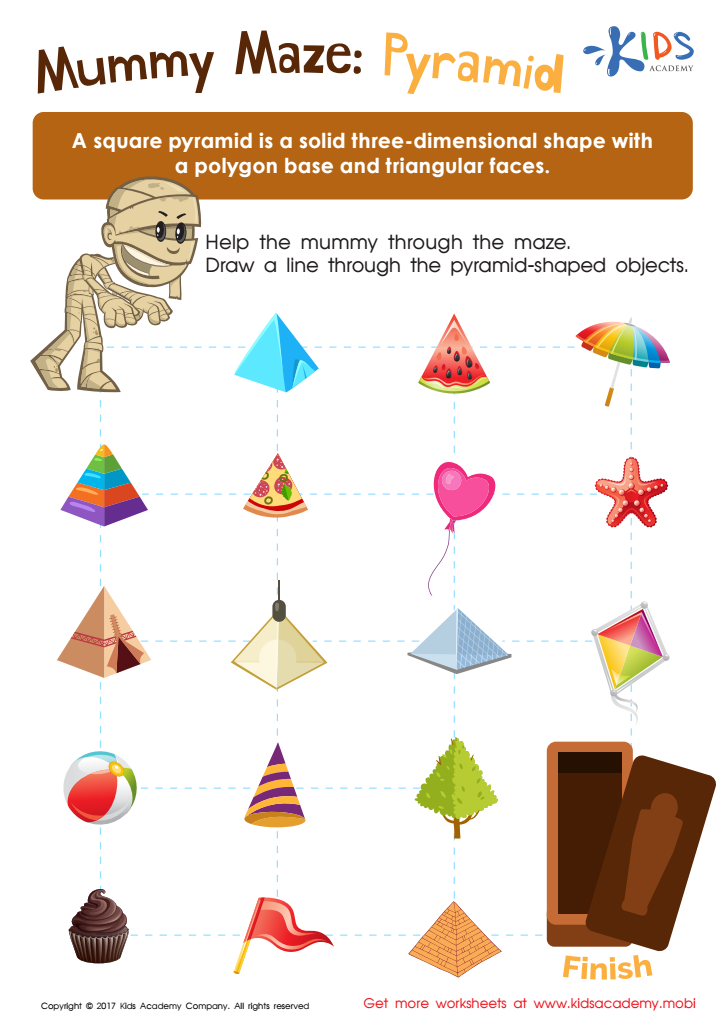
Mummy Maze: Pyramid Printable
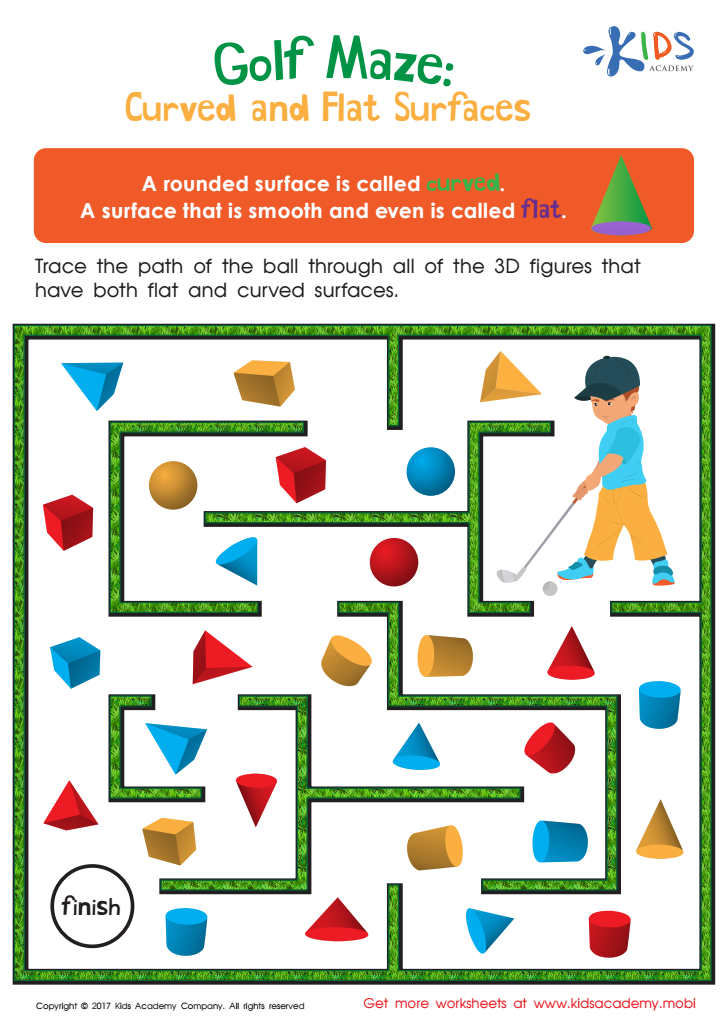
Golf Maze: Curved and Flat Surfaces Worksheet
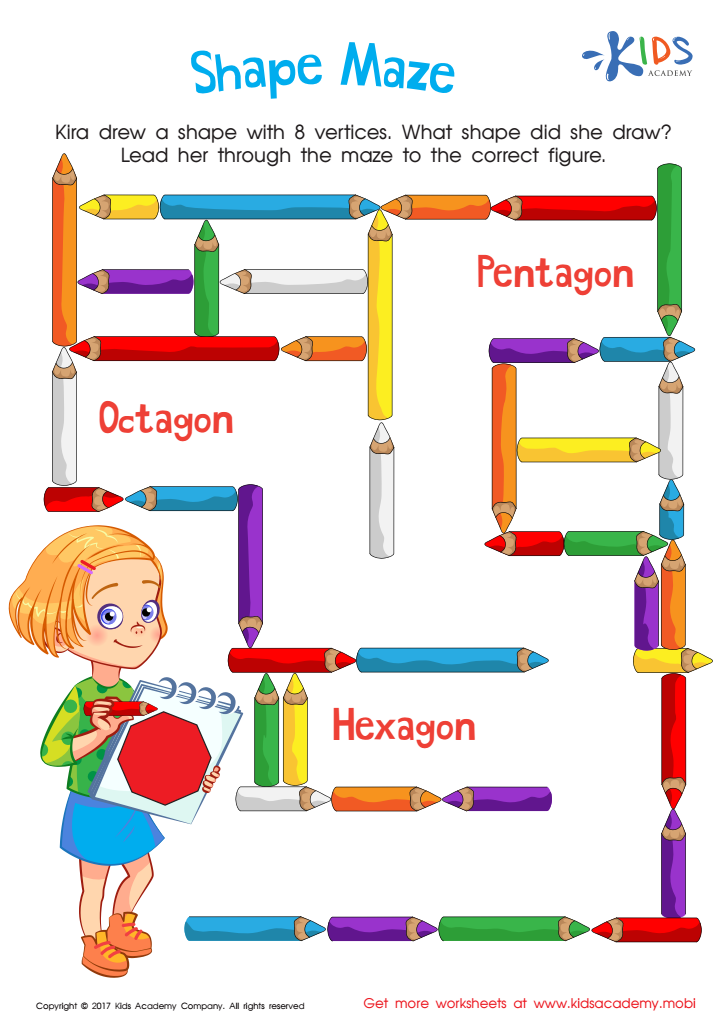
Shape Maze Worksheet
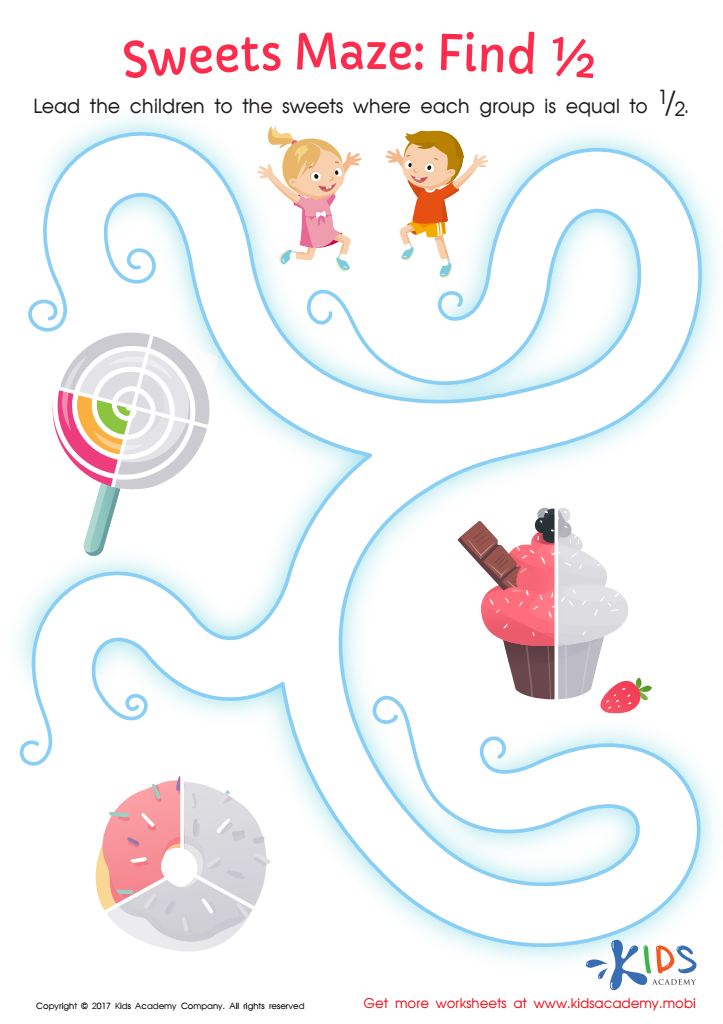
Fractions: Sweets Maze Worksheet
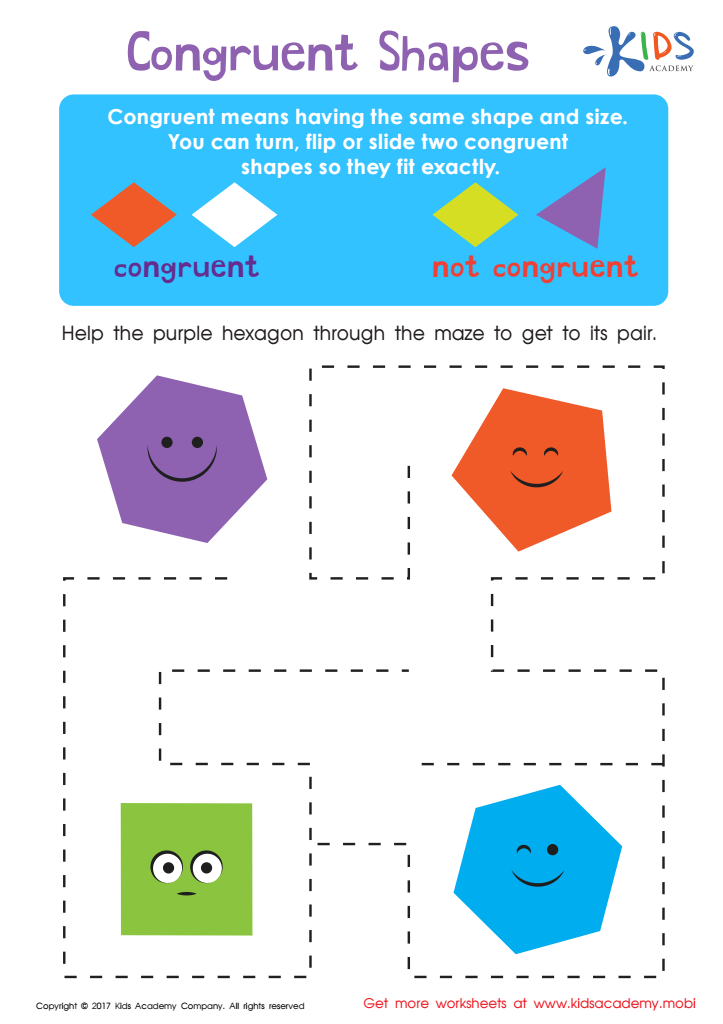
Congruent Shapes Worksheet
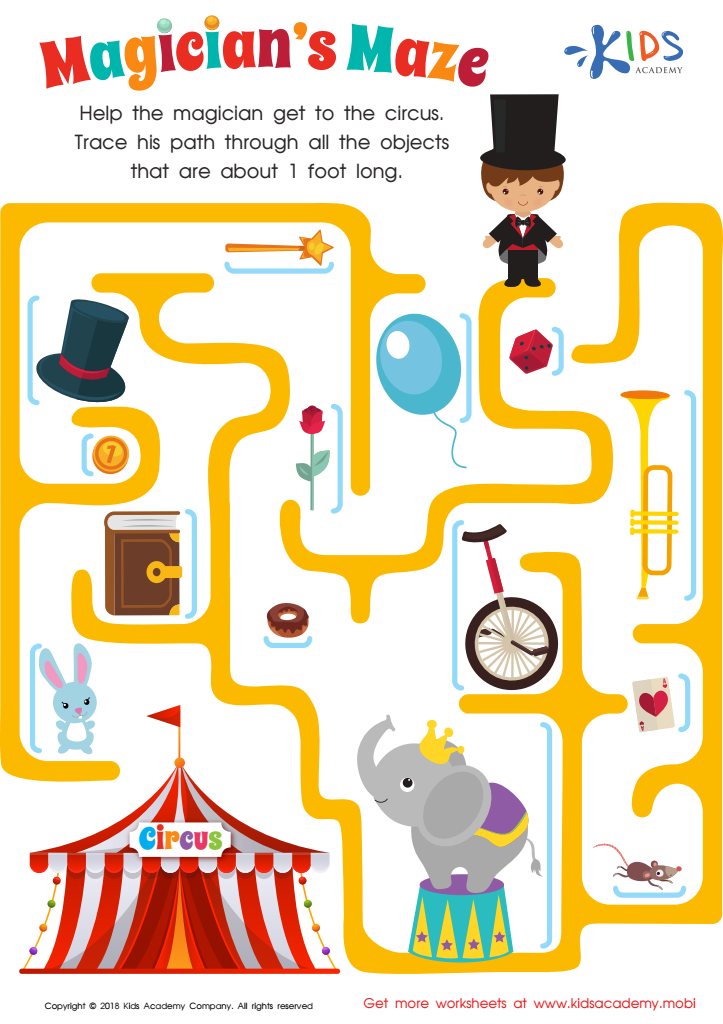
Estimating Length: Magician's Maze Worksheet
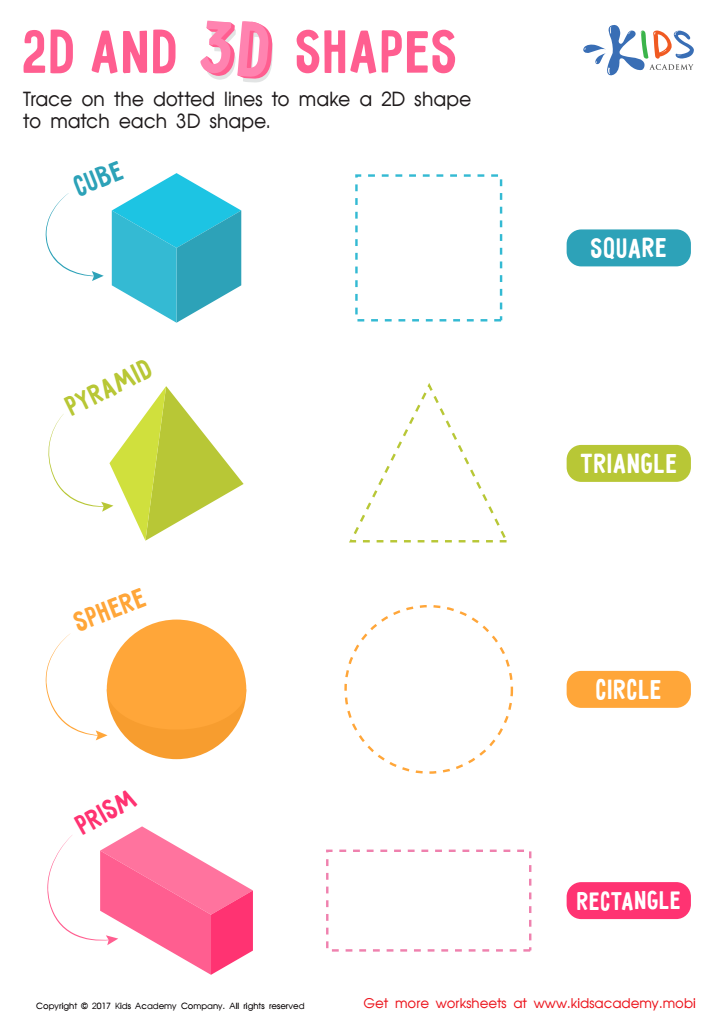
2D and 3D Shapes Worksheet
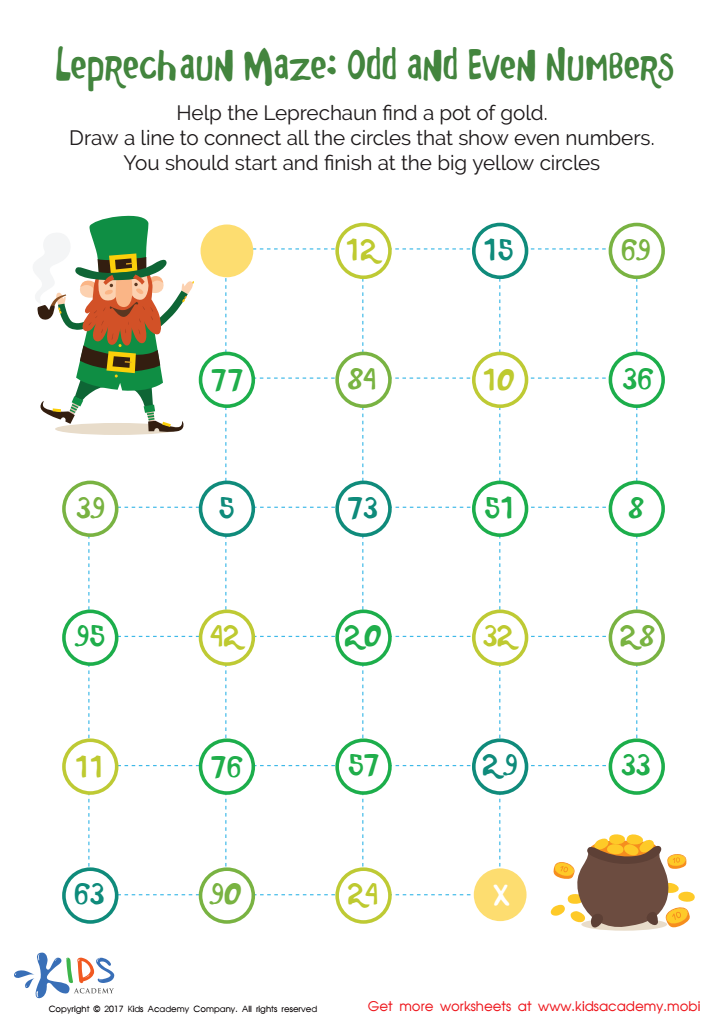
Leprechaun Maze Printable






Spatial awareness is a crucial skill that lays the foundation for various academic and life skills in children, particularly in math. For parents and teachers of children ages 5-9, incorporating spatial awareness challenges is essential for several reasons.
Firstly, spatial awareness skills help children understand concepts related to geometry, measurement, and algebra, fostering a deeper grasp of mathematical principles that will be critical as they progress in their education. When children excel in these areas, they are more confident in their abilities, which positively impacts their overall attitude towards math.
Secondly, engaging with spatial awareness activities enhances problem-solving skills and critical thinking. Children learn to visualize, manipulate objects mentally, and understand spatial relationships, which are vital in everyday scenarios—ranging from puzzle-solving to navigating the environment.
Moreover, spatial awareness is linked to success in STEM fields, opening up future opportunities. By focusing on Spatial Awareness Extra Challenge Math, parents and teachers can help prepare children for a future where these skills are in high demand.
Lastly, incorporating fun and interactive spatial challenges fosters a love for learning. By making math enjoyable, parents and teachers can nurture lifelong learners who appreciate the depth and functionality of mathematics in their lives.