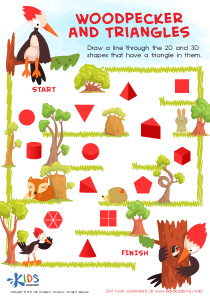
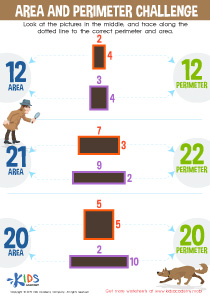
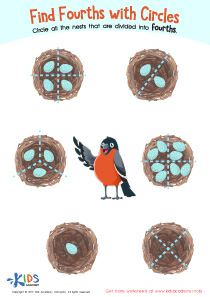
Shape Recognition Extra Challenge Tracing Shapes Worksheets for Ages 5-9
4 filtered results
-
From - To
Enhance your child's shape recognition skills with our "Shape Recognition Extra Challenge Tracing Shapes Worksheets" designed for ages 5-9. These engaging worksheets are perfect for young learners eager to develop their artistic skills and spatial awareness through tracing a variety of shapes. By carefully following outline patterns, kids will not only improve their fine motor skills but also boost their confidence in geometry concepts. Ideal for both classroom settings and at-home learning, our worksheets provide an extra challenge to stimulate young minds. Download these fun, colorful worksheets today and let your child explore the world of shapes while having an enjoyable learning experience!
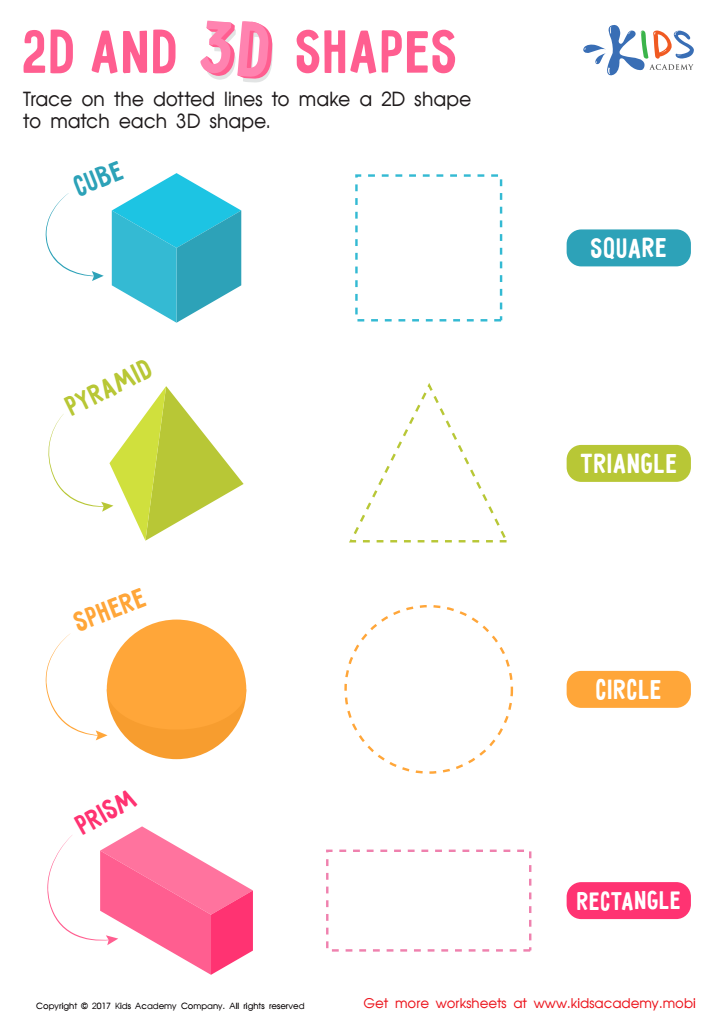
2D and 3D Shapes Worksheet
 Assign to My Students
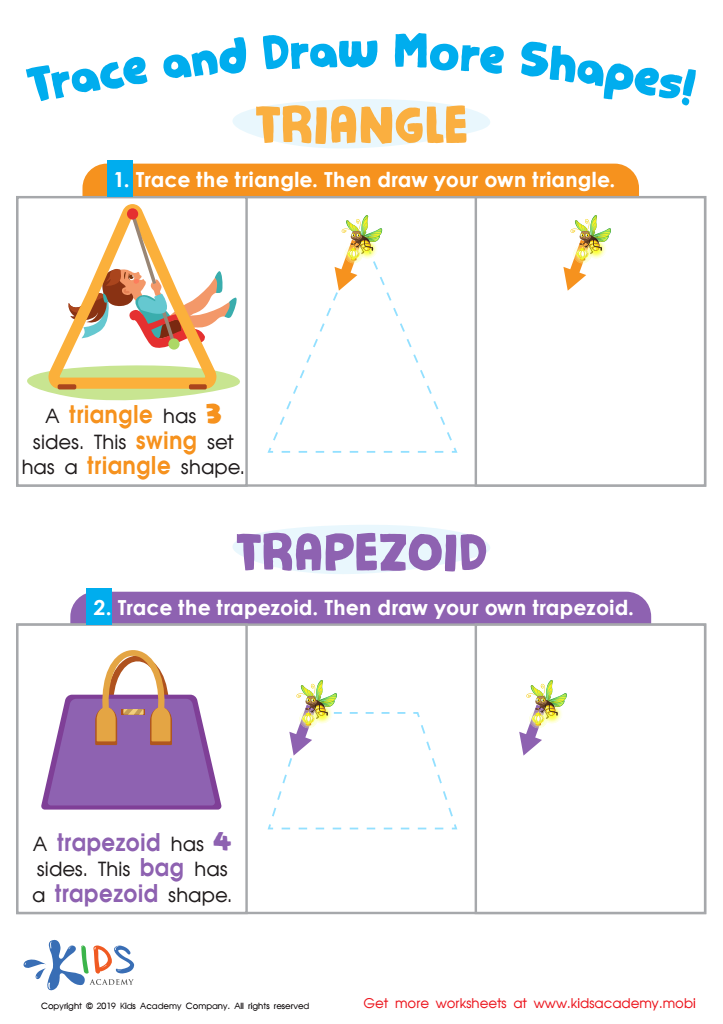
Trace and Draw More Shapes Worksheet
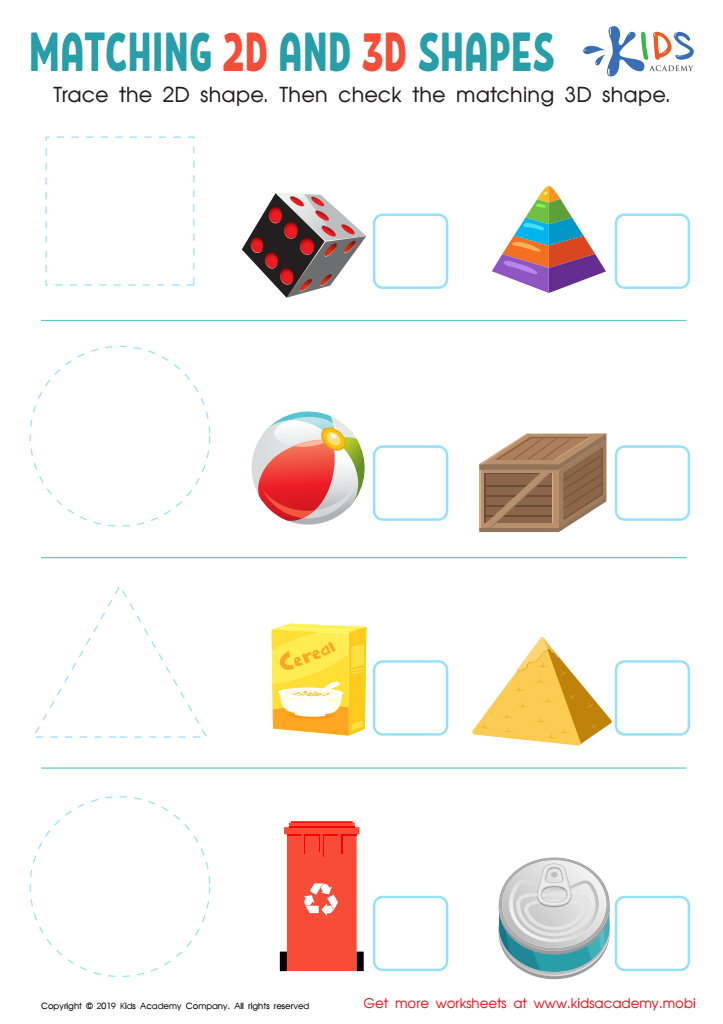
Matching 2D and 3D Shapes Worksheet
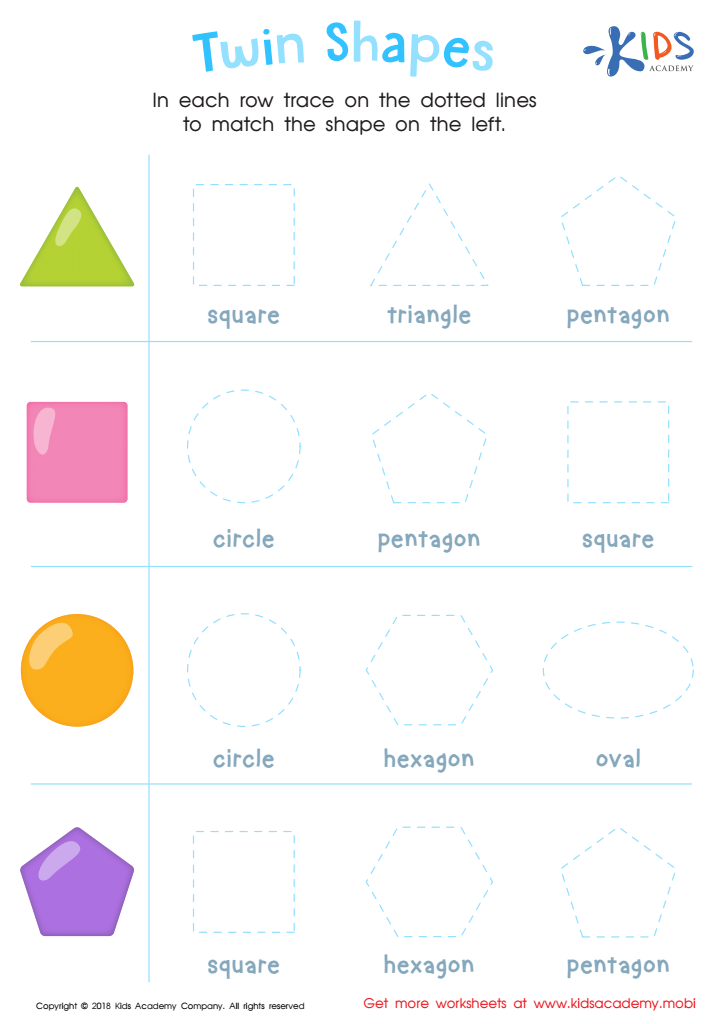
Twin Shapes Dot-to-Dot Worksheet








Shape Recognition Extra Challenge Tracing Shapes for Ages 5-9 is crucial for both parents and teachers, as it supports foundational skills in early childhood development. First, shape recognition is an integral part of mathematical understanding. By engaging in tracing shapes, children enhance their ability to distinguish between different geometric forms, which lays the groundwork for more complex mathematical concepts later on.
Furthermore, tracing activities improve fine motor skills, crucial for everyday tasks such as writing and self-care. As children manipulate the drawing tools, they develop hand-eye coordination and muscle strength in their fingers, essential for grasping and control.
Shape tracing also fosters cognitive skills, promoting memory and recall as children learn to identify and name shapes. This process encourages analytical thinking, as kids begin to understand how shapes are related and can be transformed.
Finally, engaging in shape recognition activities can be a fun bonding experience between parents and children. This interaction not only boosts children's confidence and creativity but also reinforces the importance of learning through play. Overall, Shape Recognition Extra Challenge programs provide a multifaceted approach to child development, benefiting social, cognitive, and motor skills essential for lifelong learning.