Comparing objects Extra Challenge Math Worksheets for 5-Year-Olds
3 filtered results
-
From - To
Boost your child’s math skills with our "Comparing Objects Extra Challenge Math Worksheets for 5-Year-Olds"! Designed to enhance critical thinking and analytical abilities, these engaging worksheets present fun comparisons of various objects, encouraging students to identify differences and similarities. With captivating visuals and age-appropriate activities, your child will develop essential skills in categorization, measurement, and reasoning. Perfect for extra practice at home or in the classroom, our worksheets make learning enjoyable while reinforcing foundational math concepts. Give your little learner the tools they need to succeed and help them become confident problem solvers today! Explore the fun and educational challenges now!
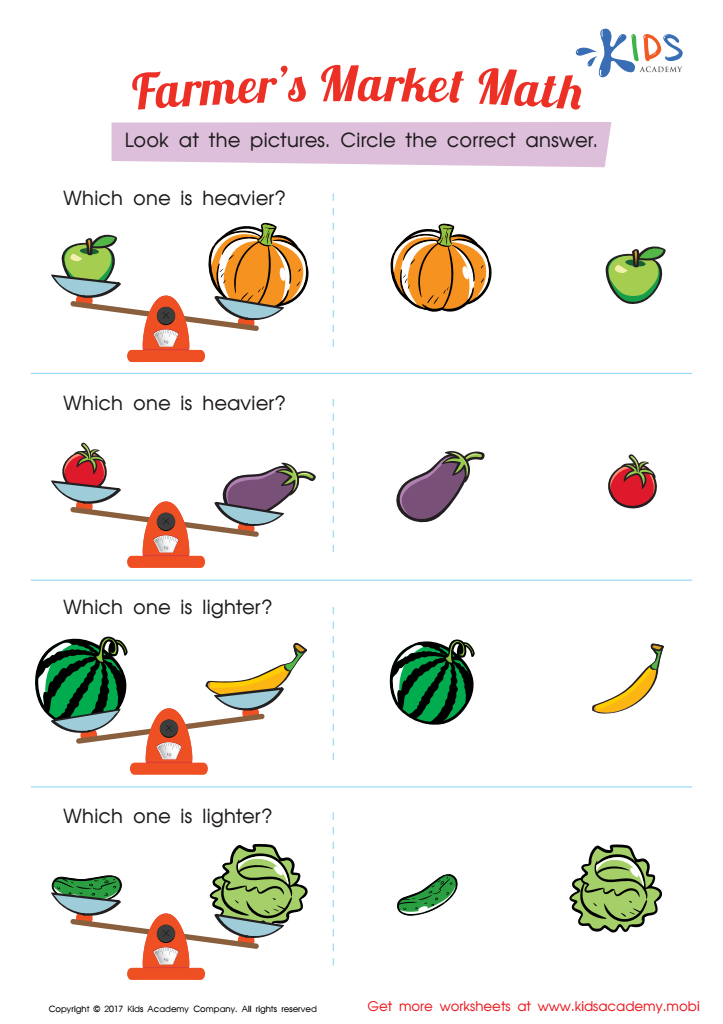
Which One Is Heavier Worksheet
 Assign to My Students
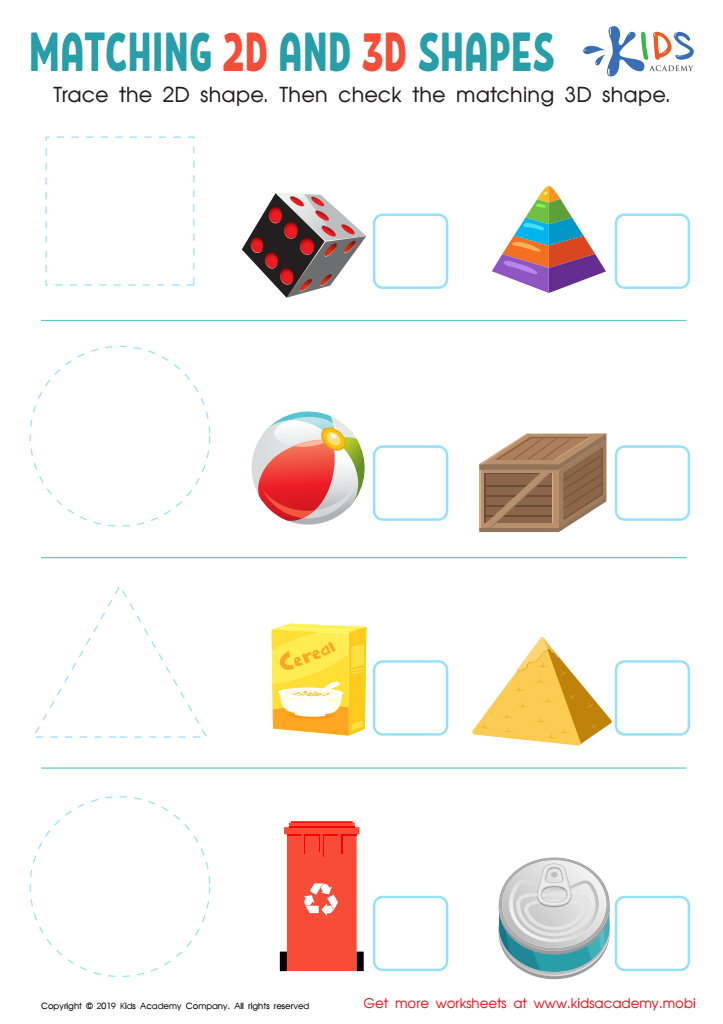
Matching 2D and 3D Shapes Worksheet
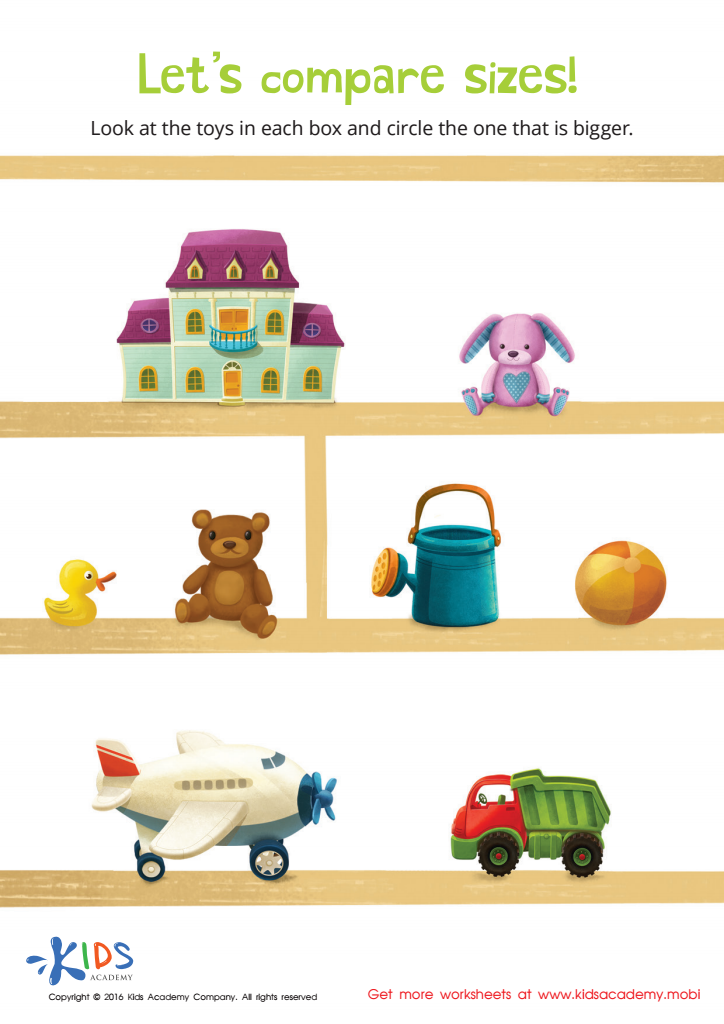
Classifying by Size Sorting Worksheet







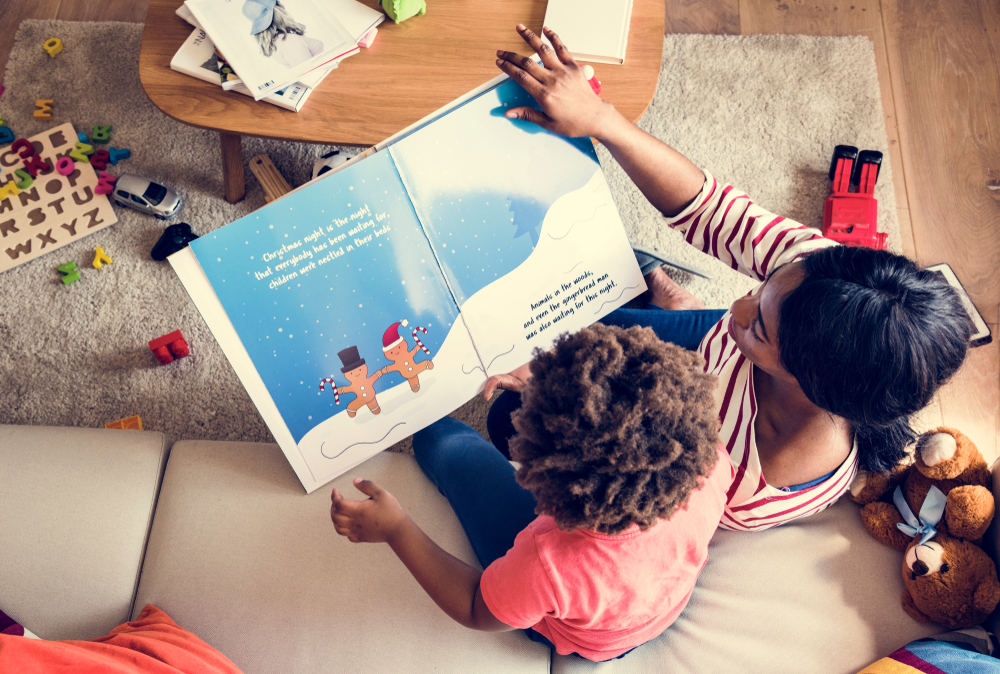
Comparing objects is an essential foundational skill in early mathematics, making it crucial for parents and teachers to engage 5-year-olds with these concepts. This foundational skill not only promotes a basic understanding of quantities and measurement but also cultivates critical thinking and observational abilities. When children compare objects, they learn to recognize differences and similarities, honing their cognitive skills.
Moreover, these activities develop language skills; children articulate their observations using comparative vocabulary such as "more," "less," "big," "small," and "equal." This enhances their vocabulary while embedding mathematical terminology in everyday dialogue.
Additionally, engaging in comparing objects fosters a sense of spatial awareness and helps children make sense of their surroundings. Introducing these concepts through fun, playful activities—like sorting toys, measuring lengths with blocks, or identifying the heaviest items—maintains their interest and matches their energetic learning styles.
By nurturing these skills early, parents and teachers provide children with robust tools to solve problems later in life. Comparative activities set the stage for more advanced mathematical concepts, such as addition, subtraction, and understanding numbers, making them a crucial aspect of early education. Overall, investing time in comparing objects ensures a solid mathematical foundation for children’s future learning.








