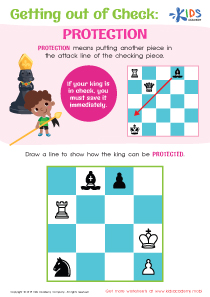
Critical thinking development Extra Challenge Chess Worksheets for Ages 6-7
4 filtered results
-
From - To
Enhance your child's critical thinking skills with our Extra Challenge Chess Worksheets designed specifically for ages 6-7! These engaging printables feature fun, age-appropriate chess problems that encourage young minds to think strategically and solve problems creatively. By tackling various challenges, children will develop essential skills such as pattern recognition, decision-making, and forward planning. Our worksheets not only inspire a passion for chess but also promote cognitive growth through interactive learning. Ideal for use at home or in the classroom, these extra challenges make critical thinking both enjoyable and effective. Equip your child with the tools to think critically and play smarter today!
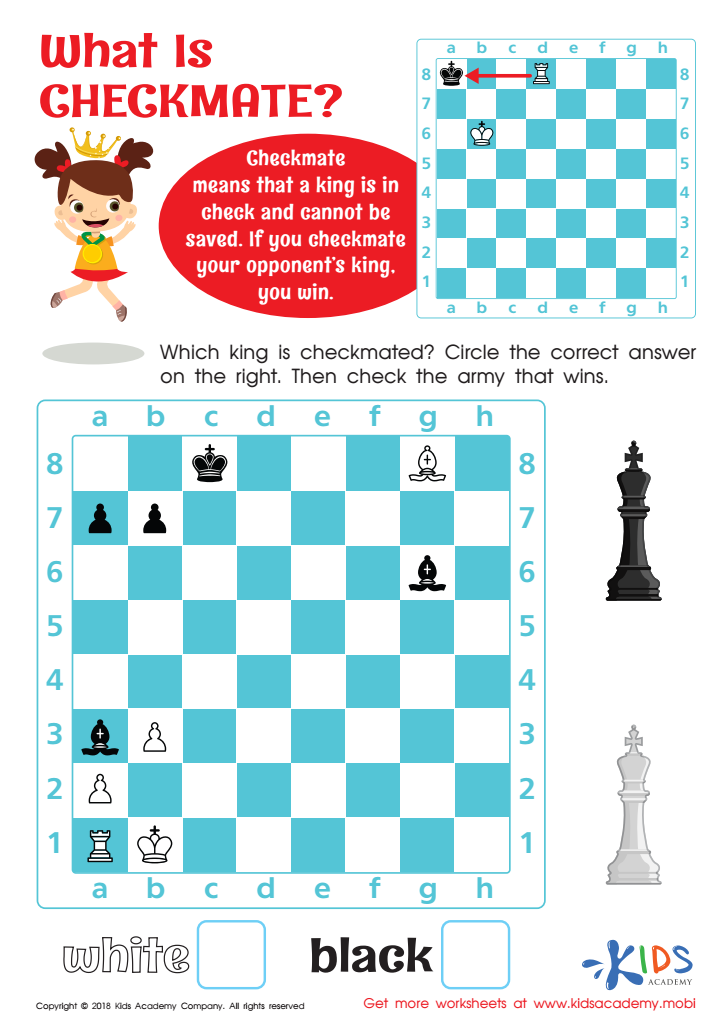
What is Checkmate? Worksheet
 Assign to My Students
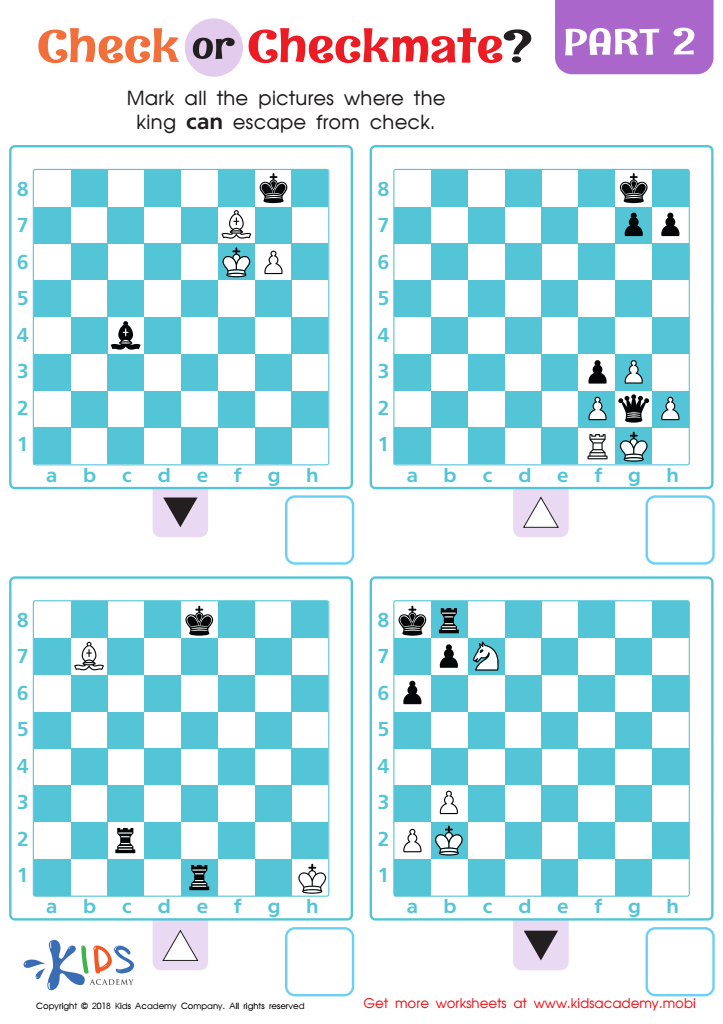
Check or Checkmate: Part 2 Worksheet
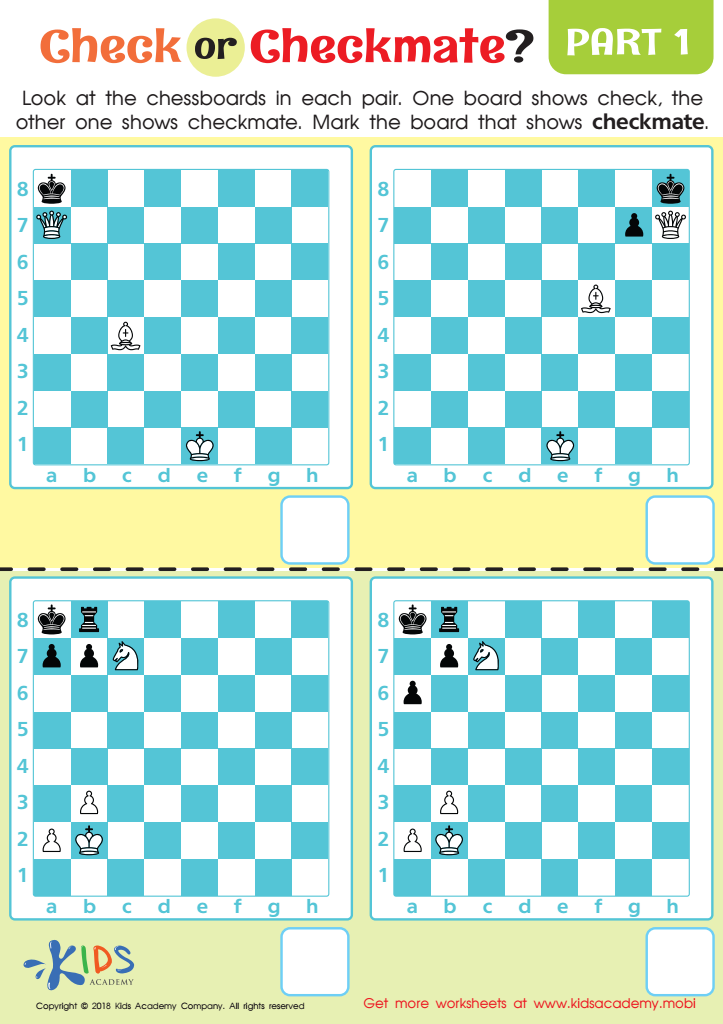
Check or Checkmate: Part 1 Worksheet
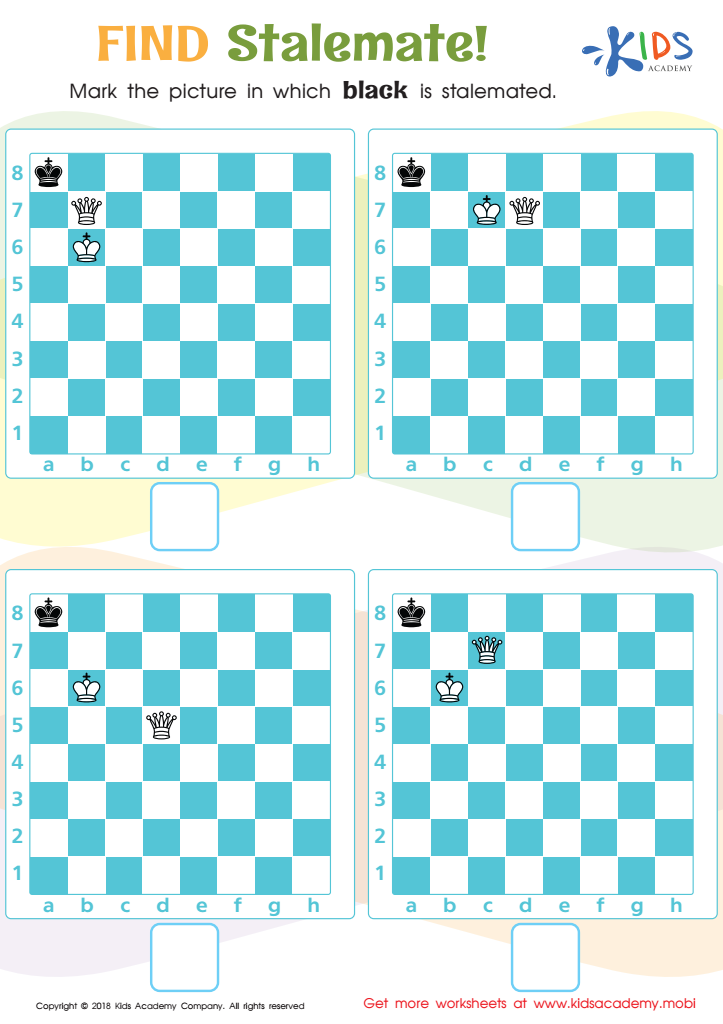
Find Stalemate! Worksheet






Critical thinking development is vital for children aged 6-7, and programs like Extra Challenge Chess offer a profound way to nurture these skills. Engaging with chess at an early age allows children to practice analytical thinking, which is essential for problem-solving and decision-making. Each move in chess requires players to evaluate potential consequences and consider various strategies, fostering cognitive flexibility and foresight.
Parents and teachers should care because the skills honed through chess extend beyond the game itself; they enhance academic performance and everyday life. Children learn to approach challenges with a structured mindset, weigh options, solve problems creatively, and develop patience and concentration. These are foundational skills that will serve them well throughout their educational journey and into adulthood.
Additionally, chess promotes social interaction, teaching kids the importance of sportsmanship and collaboration as they interact with peers during games. This can bolster their emotional intelligence and empathy, further enhancing their interpersonal skills. With tailored programs for this age group, such as Extra Challenge Chess, children are given a stimulating environment to thrive and excel. Ultimately, fostering critical thinking in young learners will prepare them for a rapidly evolving world, making it imperative for educators and caregivers to prioritize such initiatives.