Fraction visualization Extra Challenge Worksheets for Ages 6-7
3 filtered results
-
From - To
Introducing our Fraction Visualization Extra Challenge Worksheets for Ages 6-7, designed to engage young learners in the exciting world of fractions! These specially crafted worksheets help children develop a deeper understanding of fractions through fun visual representations and challenging exercises. Our engaging activities encourage critical thinking and enhance problem-solving skills, making math enjoyable. Perfect for at-home learning or classroom use, each worksheet is aligned with educational standards to ensure an effective learning experience. Empower your child’s mathematical journey with these additional challenges, expertly designed to spark curiosity and boost confidence in fraction concepts. Let the learning begin!
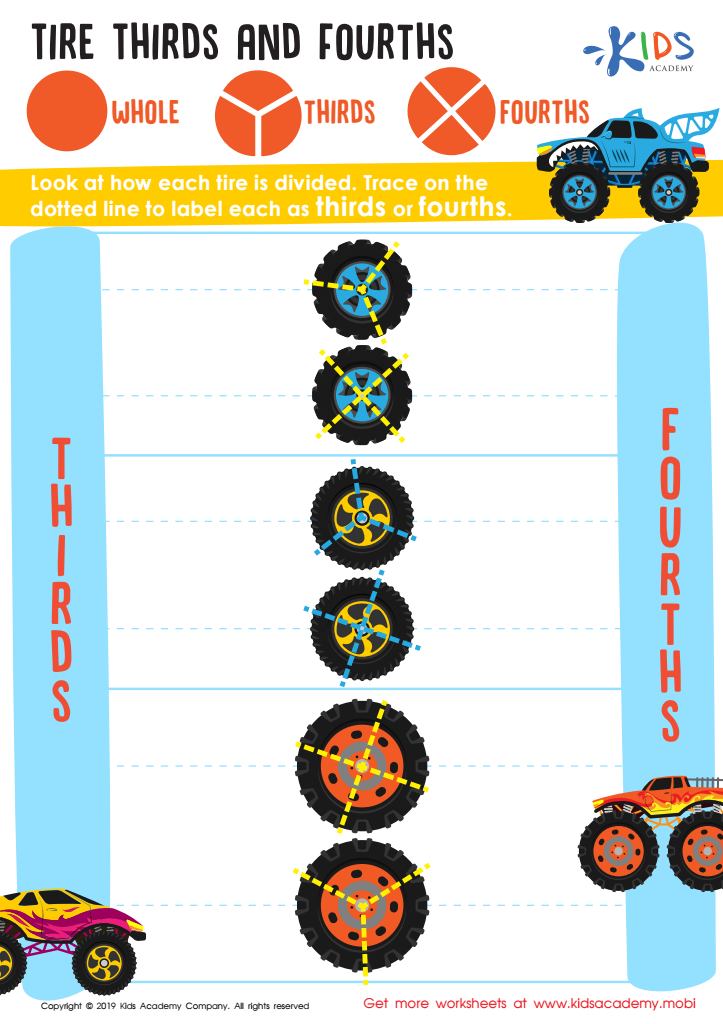
Tire Thirds and Fourths Worksheet
 Assign to My Students
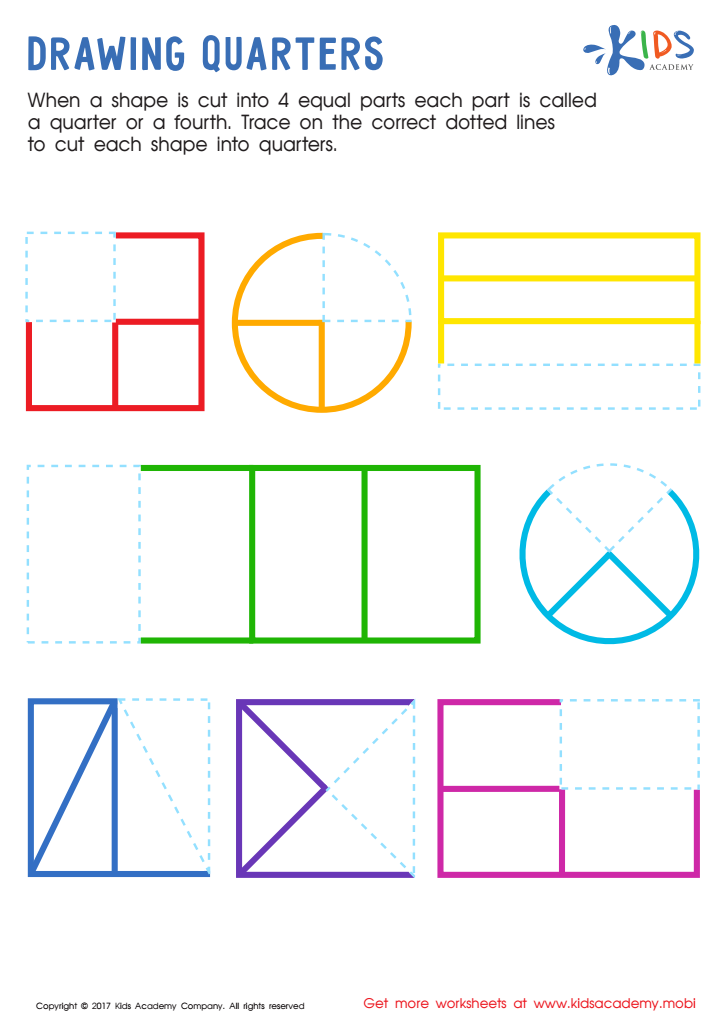
Drawing Quarters Worksheet
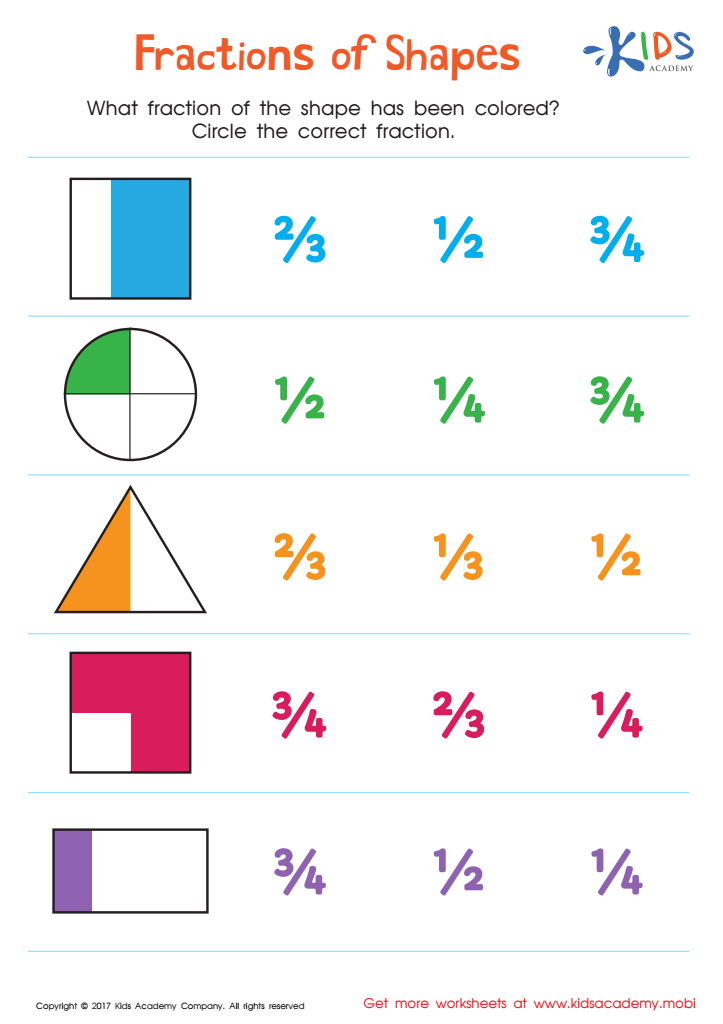
Fractions of Shapes: Math Concept Worksheet


.jpg)





Fraction visualization is critical for children aged 6-7 as it lays the foundation for mathematical understanding and problem-solving abilities. At this developmental stage, children are beginning to explore the concepts of part-whole relationships, making it vital for parents and teachers to support this learning through hands-on activities and engaging challenges.
When children visualize fractions, they develop a stronger grasp of numerical concepts and the relationships between parts and wholes. This ensures they can move beyond rote memorization to a deeper comprehension of the material. Engaging with visual tools such as fraction circles, bars, and interactive games helps children recognize equivalent fractions, understand addition and subtraction of fractions, and grasp the concept of division.
Additionally, fraction visualization fosters critical thinking skills, which are essential not only in mathematics but across the curriculum and in real-life situations. It encourages creativity, logical reasoning, and perseverance in problem-solving.
Moreover, early mastery of fractions can reduce future struggles with more complex mathematical concepts, contributing to a child's overall academic confidence. Therefore, providing children with extra challenges in fraction visualization can enrich their learning experience, making math enjoyable and accessible, leading to lifelong positive attitudes toward mathematics.








