
Recognizing shapes Extra Challenge Worksheets for Ages 6-7
3 filtered results
Difficulty Level
Grade
Age
-
From - To
Subject
Activity
Standards
Enhance your child's understanding of shapes with our "Recognizing Shapes Extra Challenge Worksheets" designed specifically for ages 6-7. These engaging activities are perfect for developing critical visual recognition and spatial awareness skills. Each worksheet encourages kids to identify, classify, and differentiate between various shapes in fun and interactive ways. Packed with vibrant illustrations and varied difficulty levels, these worksheets provide the perfect blend of learning and entertainment. Ideal for independent practice or as supplemental material in the classroom, they will help your young learners build a strong foundation in geometry while boosting their confidence and interest in mathematics!
Favorites
With answer key
Interactive
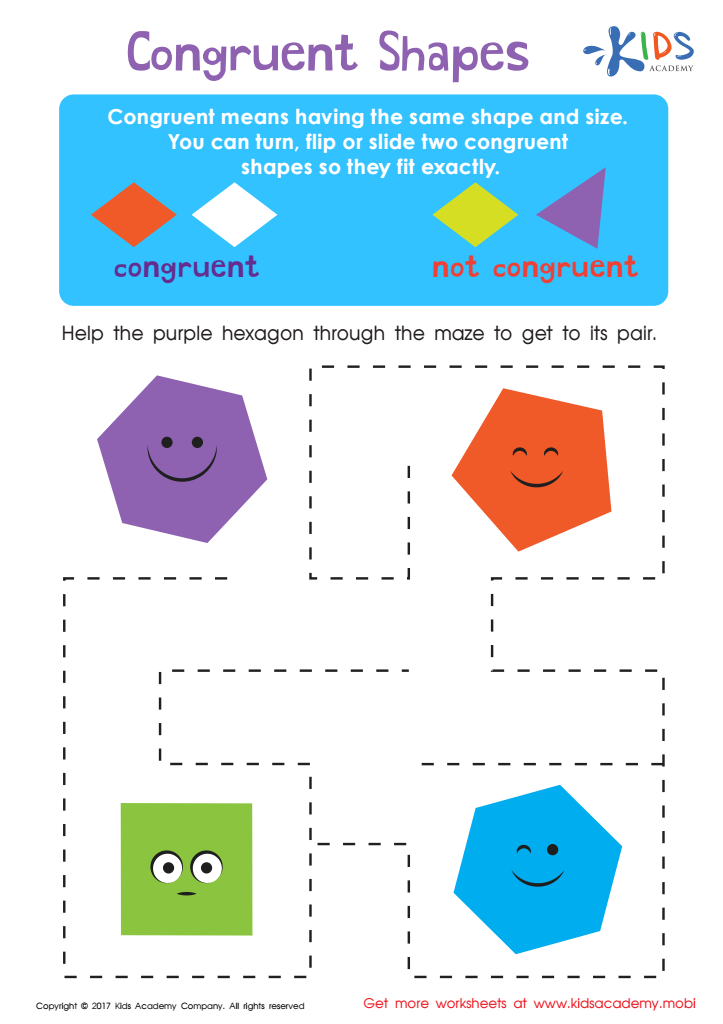
Congruent Shapes Worksheet
Help your child find the twin of the purple hexagon! This congruent shapes worksheet is great for increasing vocabulary while challenging mental rotation skills.
 Assign to My Students
Congruent Shapes Worksheet
Worksheet
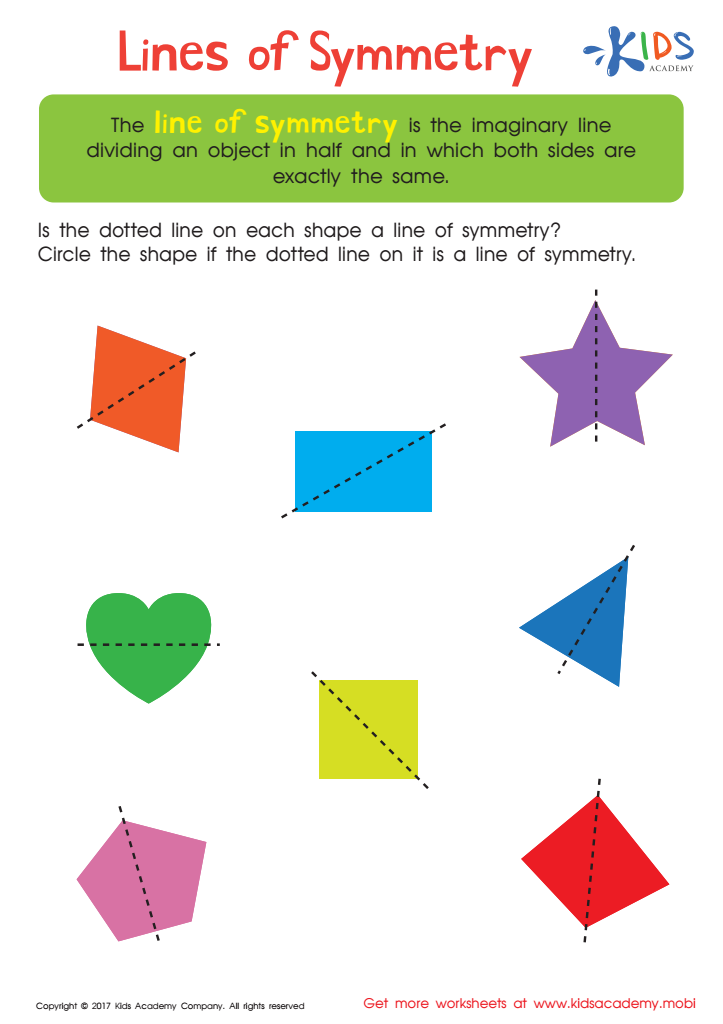
Lines of Symmetry Printable
Symmetry is a key math concept that kids must learn to develop their geometry skills. This fun worksheet helps build this skill, by encouraging kids to recognize symmetrical shapes and find equal parts.
Lines of Symmetry Printable
Worksheet
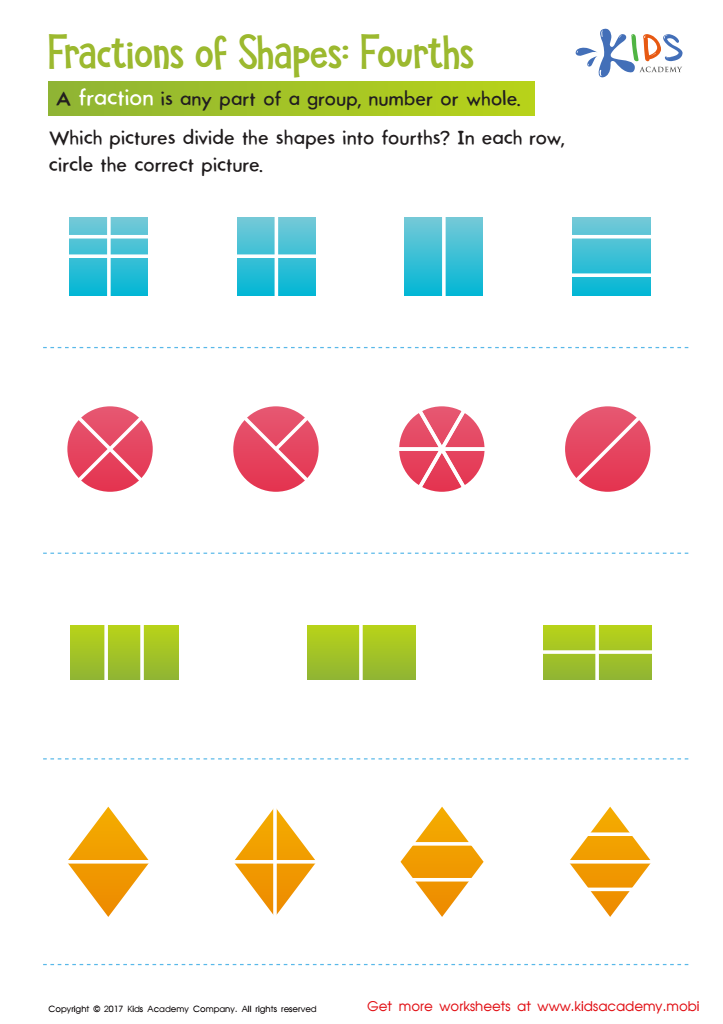
Fractions of Shapes Worksheet
It will also show them how fractions are represented in everyday shapes.
Fractions of Shapes Worksheet
Worksheet
Join Kids Academy for Free
Who is primarily going to use this learning content?







Recognizing shapes is a fundamental skill for children aged 6-7, as it serves as a building block for various domains of learning. Parents and teachers should care about this skill because it lays the groundwork for critical thinking and problem-solving abilities. Recognizing and understanding different shapes helps children make sense of the world around them, fostering spatial reasoning, which is essential in subjects like mathematics and science.
Engaging children in extra challenges that focus on shape recognition can enhance their cognitive development by encouraging them to think creatively and analytically. It promotes observational skills as they compare and contrast different forms, leading to a deeper understanding of geometrical concepts and properties. Furthermore, recognizing shapes aids in developing fine motor skills, especially when children engage in hands-on activities like drawing, constructing models, or solving puzzles.
Additionally, shape recognition fosters confidence as children succeed in these challenges, positively impacting their overall academic performance. The foundational skills gained from these activities are applicable in everyday life, from understanding maps and architecture to navigating their environment safely. Ultimately, parents and teachers who prioritize shape recognition contribute significantly to their children’s holistic development and future learning success.








