
Sentence construction Extra Challenge Worksheets for Ages 6-7
5 filtered results
Difficulty Level
Grade
Age
-
From - To
Subject
Activity
Standards
Discover our Sentence Construction Extra Challenge Worksheets for Ages 6-7. Designed to enhance your child's grammar, vocabulary, and writing skills, these worksheets offer engaging activities that make learning fun. Each worksheet encourages young learners to form complete, coherent sentences, boosting their confidence and creativity. Perfect for both classroom and homeschooling environments, our extra challenges are aimed at advancing your child’s understanding of sentence structure. Equip your 6-7-year-old with the tools they need for academic success with our expertly crafted worksheet collection.
Favorites
With answer key
Interactive
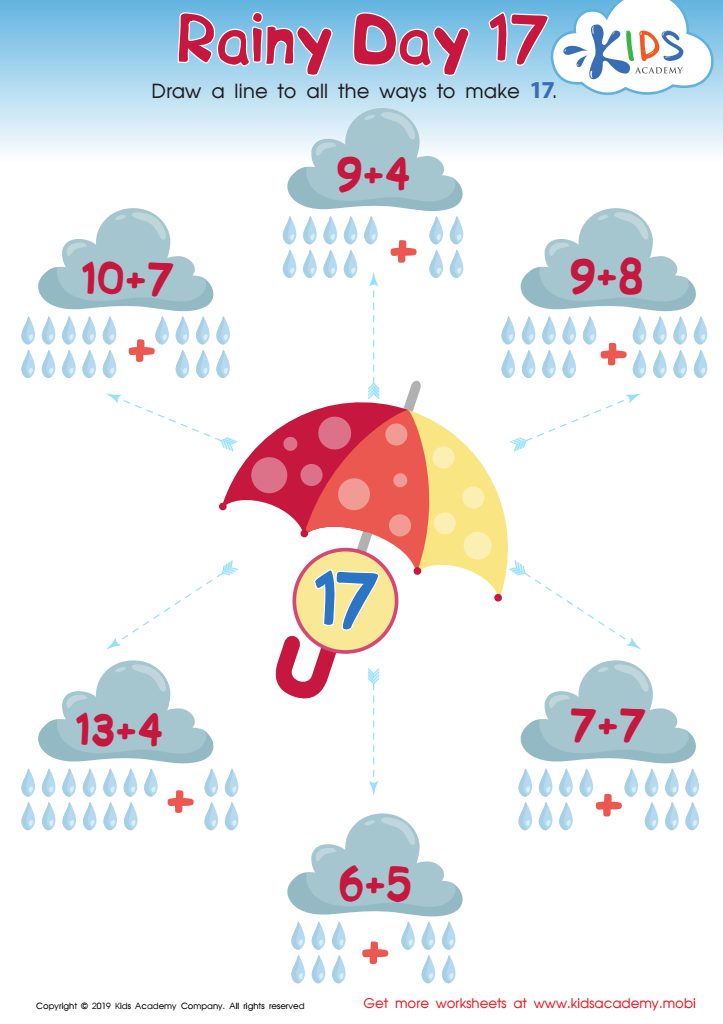
Rainy Day 17 Worksheet
Assist your kids with the 6 equations given. Each cloud displays the sum of two numbers, some of which make 17. Guide them to figure out the total of both numbers when added and draw a line to the umbrella in the center to illustrate the different ways to make 17. This activity will sharpen their addition skills.
 Assign to My Students
Rainy Day 17 Worksheet
Worksheet
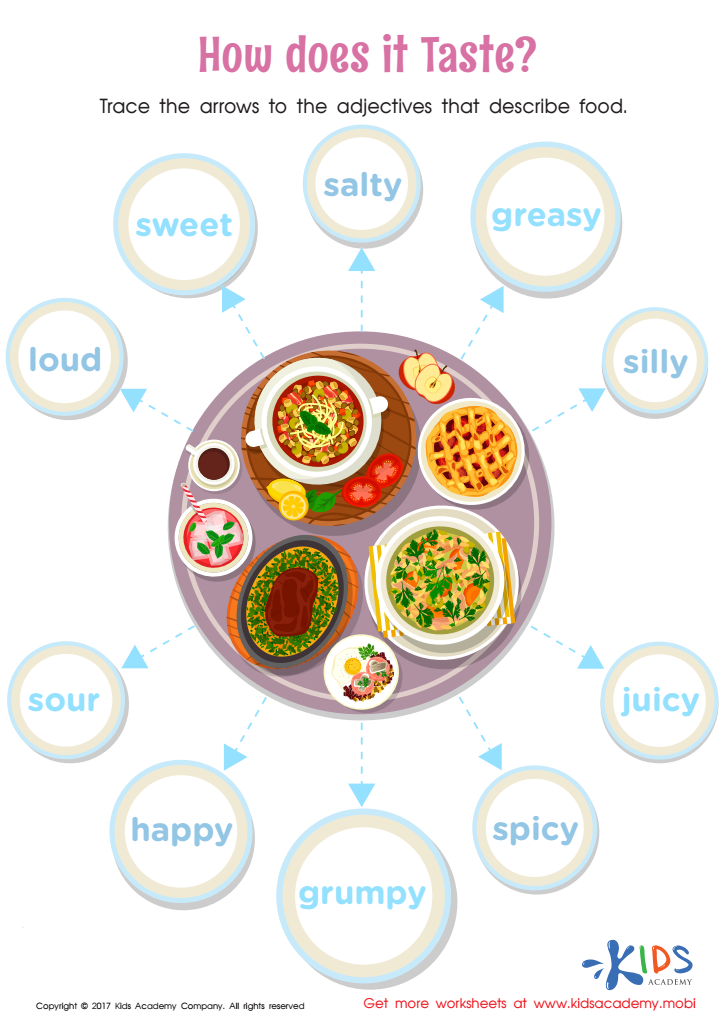
Food Adjectives Worksheet
Here’s a fun PDF worksheet to get your child’s taste buds tingling and help build descriptive language skills!
Food Adjectives Worksheet
Worksheet
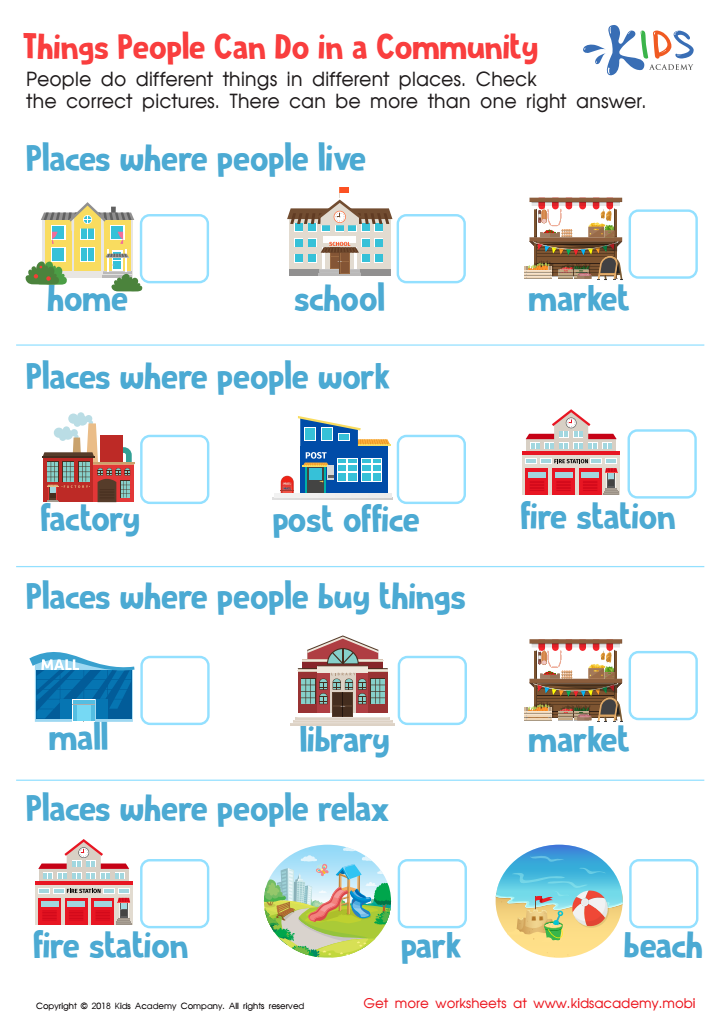
Things People Can Do in a Community Worksheet
Review the worksheet with your students/children, checking the boxes corresponding to the question. There may be multiple answers. Test their understanding of different communities by having them identify what happens in each place. Use this to measure and refine their knowledge.
Things People Can Do in a Community Worksheet
Worksheet
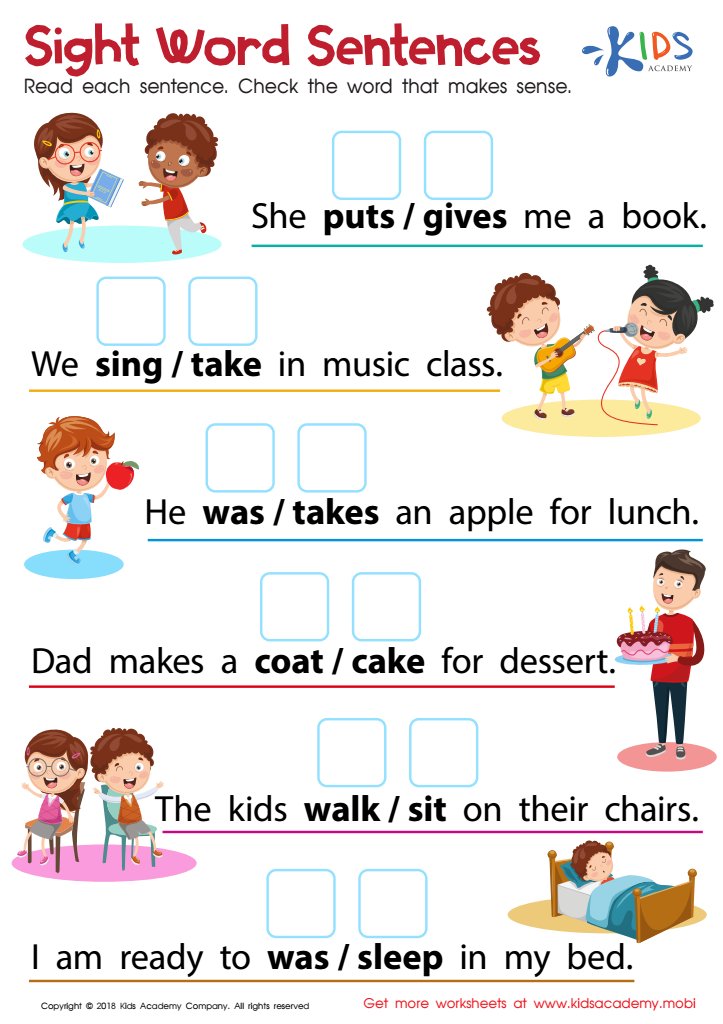
Sight Words Sentences Worksheet
It's important for kids to practice recognizing sight words in print. This PDF provides fun practice with sentences and engaging picture clues. As they work with sight words, they'll become more familiar and automatic. Help your kids build literacy skills!
Sight Words Sentences Worksheet
Worksheet
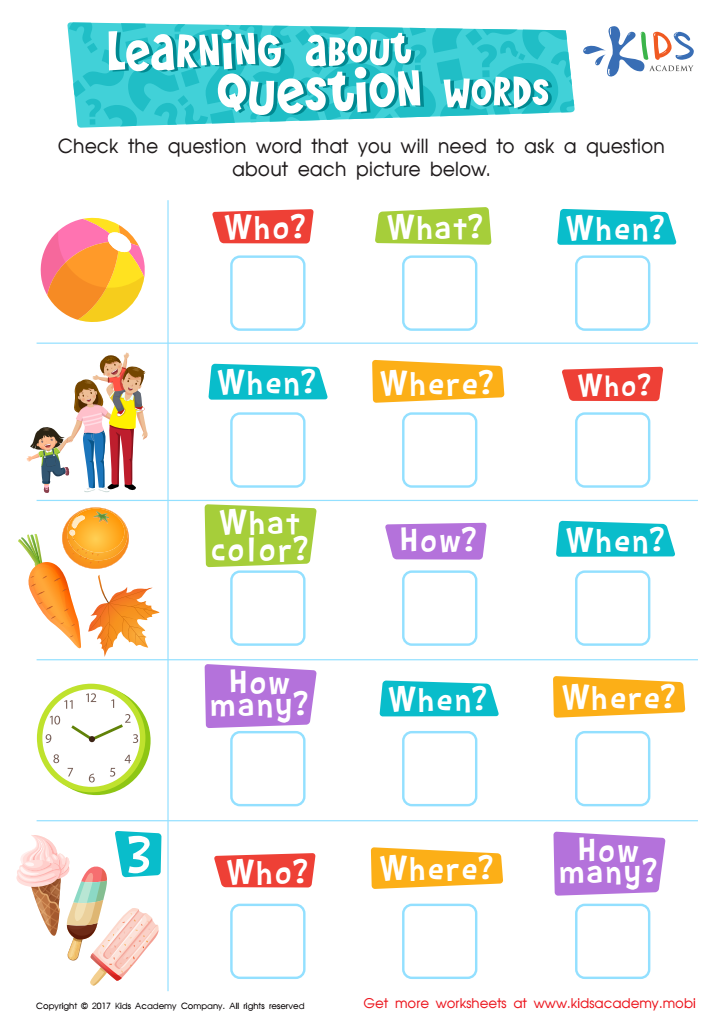
Learning about Question Words Worksheet
Learning language can be difficult, but this free printable worksheet will help! Have your child look at the picture and name it. Then help them choose the right question word to ask something about it. For example, when looking at a beach ball, you can't ask "Who?" Instead, look through the list to select the right word. It's a great way to learn language basics!
Learning about Question Words Worksheet
Worksheet
Join Kids Academy for Free
Who is primarily going to use this learning content?








Sentence construction extra challenges can be highly beneficial for children aged 6-7, making it an imperative for parents and teachers to show interest. At this early developmental stage, kids are absorbing language skills rapidly. These challenges foster critical thinking and creativity by pushing them to go beyond basic sentence frames ("I see a cat") toward more detailed, descriptive, and complex sentences ("I see a fluffy white cat playing with a blue ball").
By working on sentence construction, children learn the structure and rules of language, boosting their grammar and vocabulary. This not only enhances their oral and written communication skills but also aids in improving their reading comprehension. When children are tasked with constructing varied sentences, they engage with the text at a deeper level, making connections between words and meaning that bolster their overall literacy.
Furthermore, these challenges nurture a sense of accomplishment and confidence. As children successfully construct more complex sentences, they build self-esteem and develop a love for language and reading. Adults who encourage sentence construction exercises provide children with tools that are essential for academic success and lifelong learning, making it a crucial aspect of early education.








