Basic counting skills Extra Challenge Math Worksheets for Ages 6-7
4 filtered results
Difficulty Level
Grade
Age
-
From - To
Subject
Activity
Standards
Boost your child's math abilities with our Basic Counting Skills Extra Challenge Math Worksheets for ages 6-7. These engaging and educational worksheets are designed to challenge young learners and enhance their counting proficiency. Through a variety of fun activities, children will practice counting, number recognition, and pattern identification. Ideal for honing essential arithmetic skills in a more advanced environment, our worksheets serve as a valuable resource for both classroom and home use. Help your kids grow confident in their math abilities and encourage a love for numbers through extra practice. Enjoy a brighter math journey today!
Favorites
With answer key
Interactive
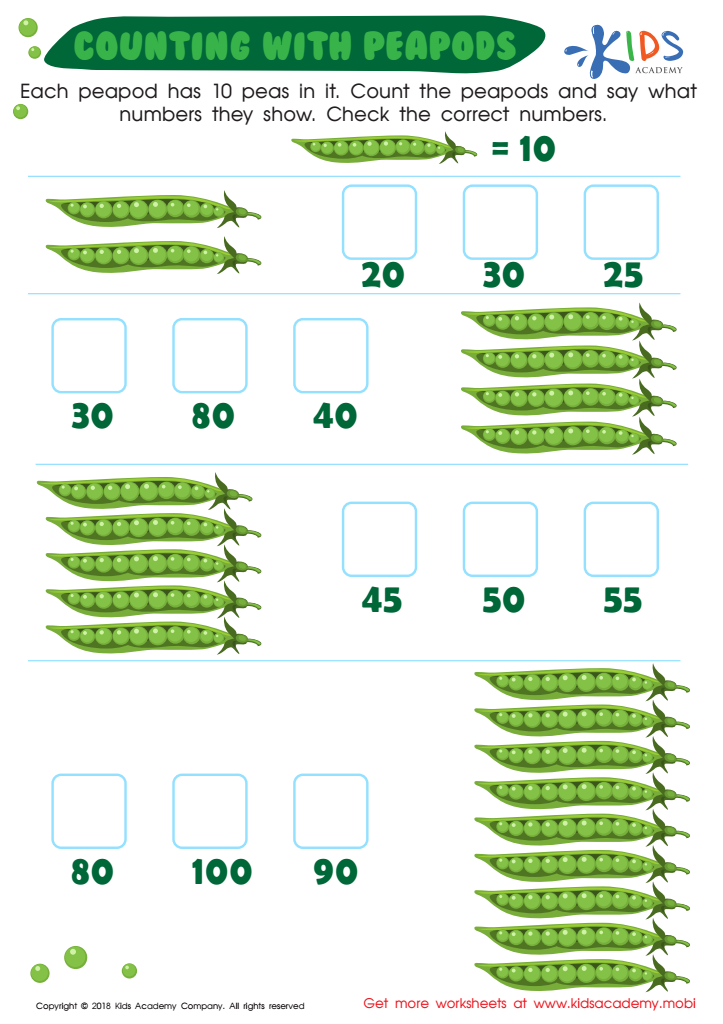
Number Worksheet: Counting With Peapods
Help your child learn multiplication and develop their place value skills in a fun way with this number worksheet: Counting with Peapods! Each pod has 10 peas, and kids can simply count each one and add a zero to the ones place to get the answer. It's a great, colorful way to learn!
 Assign to My Students
Number Worksheet: Counting With Peapods
Worksheet
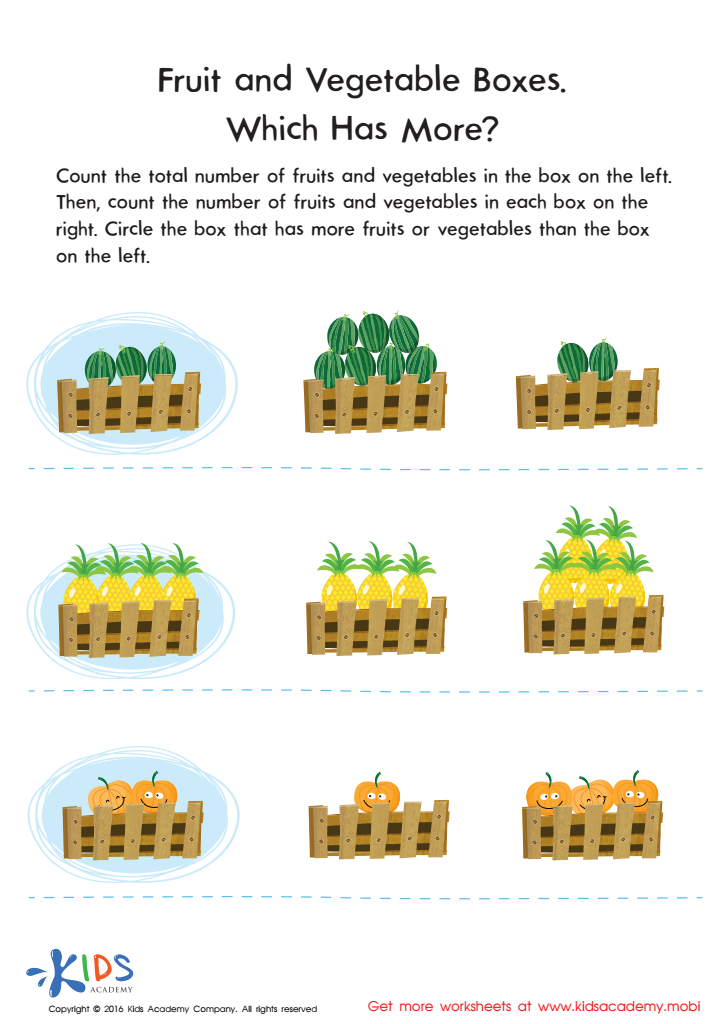
Which Has More? Size Worksheet
This worksheet is perfect for your child to practice critical thinking and logical reasoning. Your child will count and compare the fruits and veggies in the crates to decide which one has more. They will use complex cognitive skills and practice following precise rules. Guide them through the directions and help keep their focus, while enjoying the images.
Which Has More? Size Worksheet
Worksheet
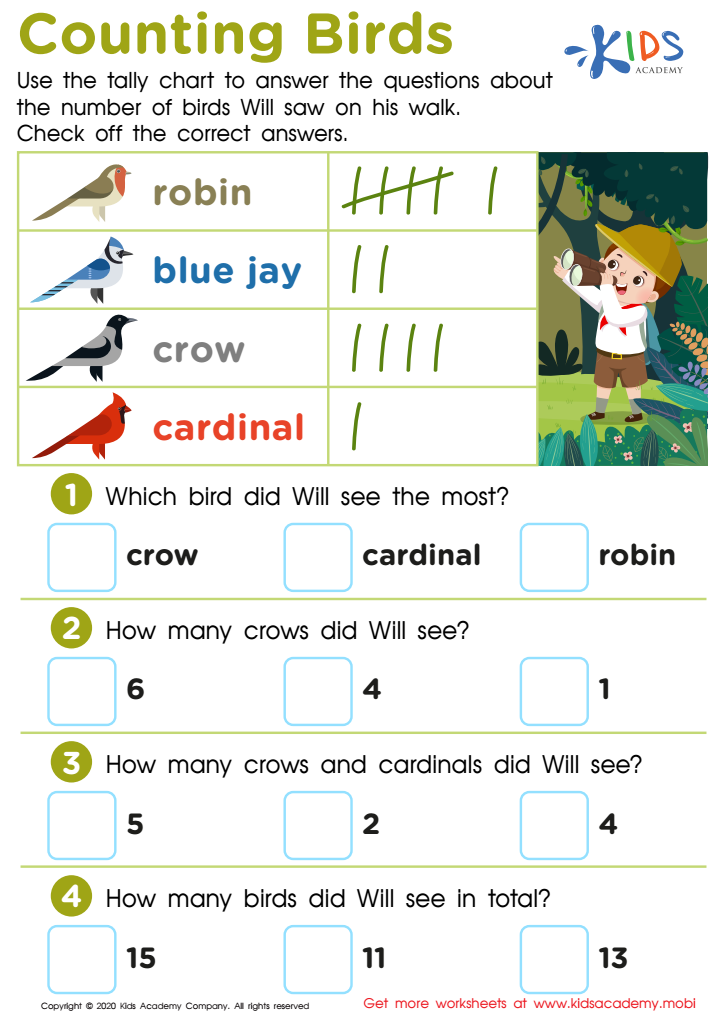
Counting Birds Worksheet
Introduce your child to the exciting activity of bird watching! This PDF worksheet features a tally chart of the different types of birds Will saw on his walk. Have your kid use the tally chart to organize information and use it to answer the questions that follow, thus boosting early science and math skills.
Counting Birds Worksheet
Worksheet
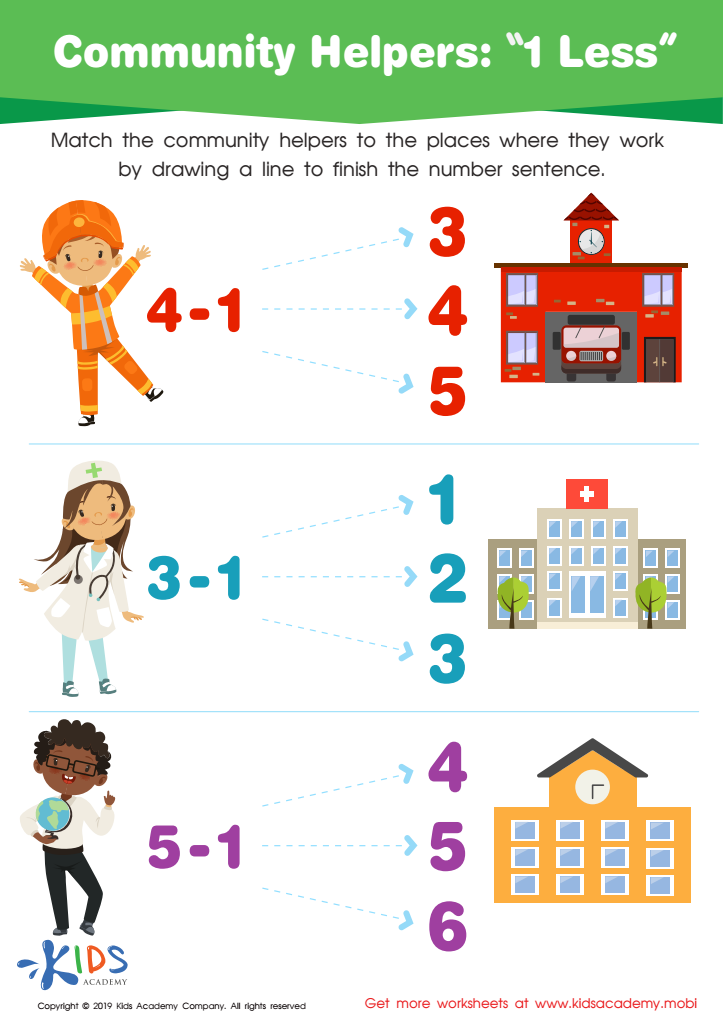
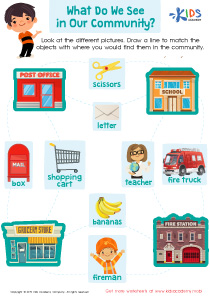
Community Helpers: 1 less Worksheet
Look at this worksheet with your child and ask them to identify the different community helpers. Match them to the places where they work by drawing a line to finish the number sentence. This helps them identify the people that help keep the community organized and running smoothly. Examples of community helpers include doctors, police officers, firefighters, teachers, etc.
Community Helpers: 1 less Worksheet
Worksheet
Join Kids Academy for Free
Who is primarily going to use this learning content?



.jpg)


Parents and teachers should prioritize Basic Counting Skills Extra Challenge Math for children aged 6-7 as it lays a crucial foundation for their future academic success and cognitive development. At this pivotal age, children transition from simple rote counting to comprehending the principles of numbers and their relationships. Strengthening these foundational skills enhances their ability to perform more complex mathematical operations, such as addition, subtraction, and understanding place value. Early engagement with challenging math problems cultivates critical thinking, problem-solving skills, and persistence.
Moreover, nurturing early math skills positively influences other areas of learning. Research indicates that early numeracy skills are a significant predictor of later academic achievement, possibly even outweighing early reading skills in forecasting future success. As children face stimulating math challenges, they develop a growth mindset, learning to view difficult problems as opportunities for growth rather than insurmountable obstacles.
Additionally, such practice boosts confidence. When children conquer challenging counting tasks, their self-esteem regarding their math abilities grows, reducing anxiety and fostering a positive attitude towards the subject. For teachers and parents, emphasizing complex math challenges not only ensures that children keep pace with academic expectations but also sets the stage for a lifelong appreciation and competence in math.