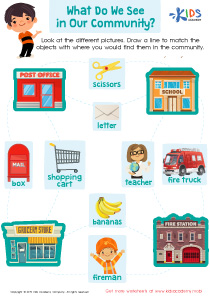
Comparing objects Extra Challenge Math Worksheets for Ages 6-7
3 filtered results
-
From - To
Introducing our "Comparing Objects Extra Challenge Math Worksheets" designed for children aged 6-7! These engaging worksheets aim to deepen young learners' understanding of comparison concepts, enhancing their critical thinking and problem-solving skills. With fun activities that involve comparing sizes, quantities, and attributes of various objects, students will be able to sharpen their math abilities while enjoying the process. Our thoughtfully crafted challenges encourage kids to think critically and independently as they tackle exciting tasks. Perfect for reinforcing skills at home or in the classroom, these worksheets make learning about comparisons a fun and interactive experience. Explore our collection today!
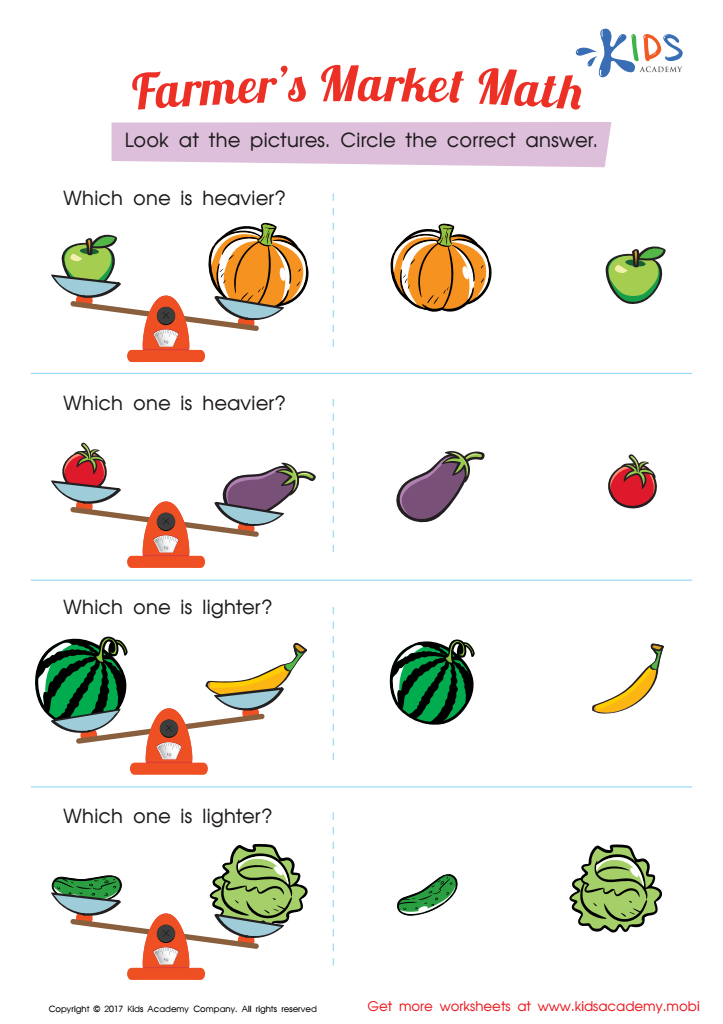
Which One Is Heavier Worksheet
 Assign to My Students
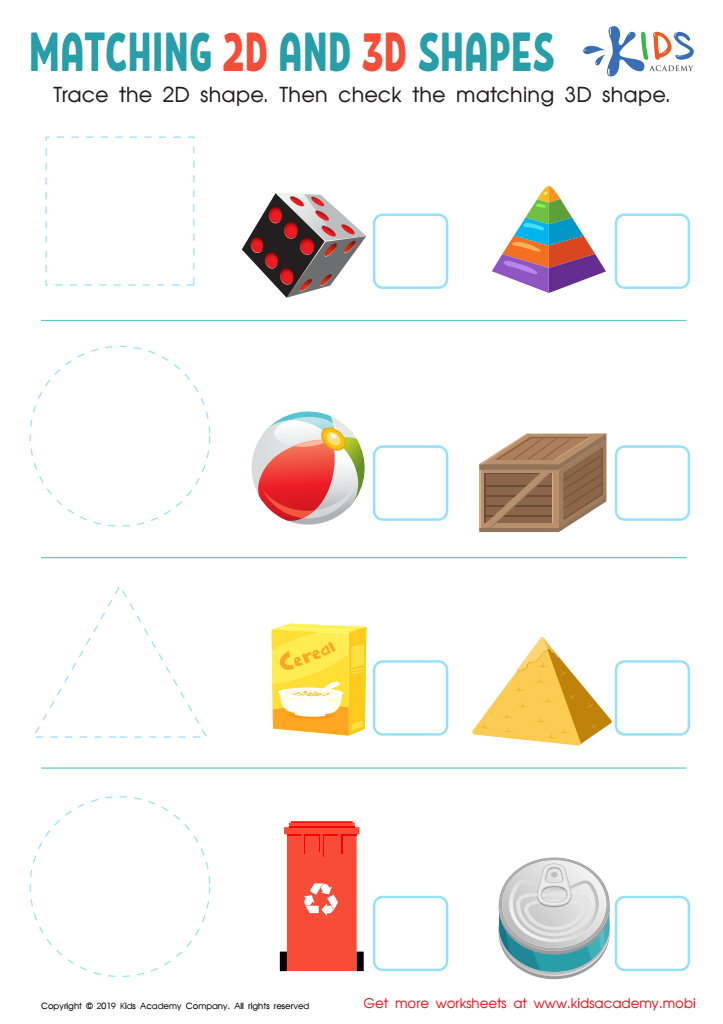
Matching 2D and 3D Shapes Worksheet
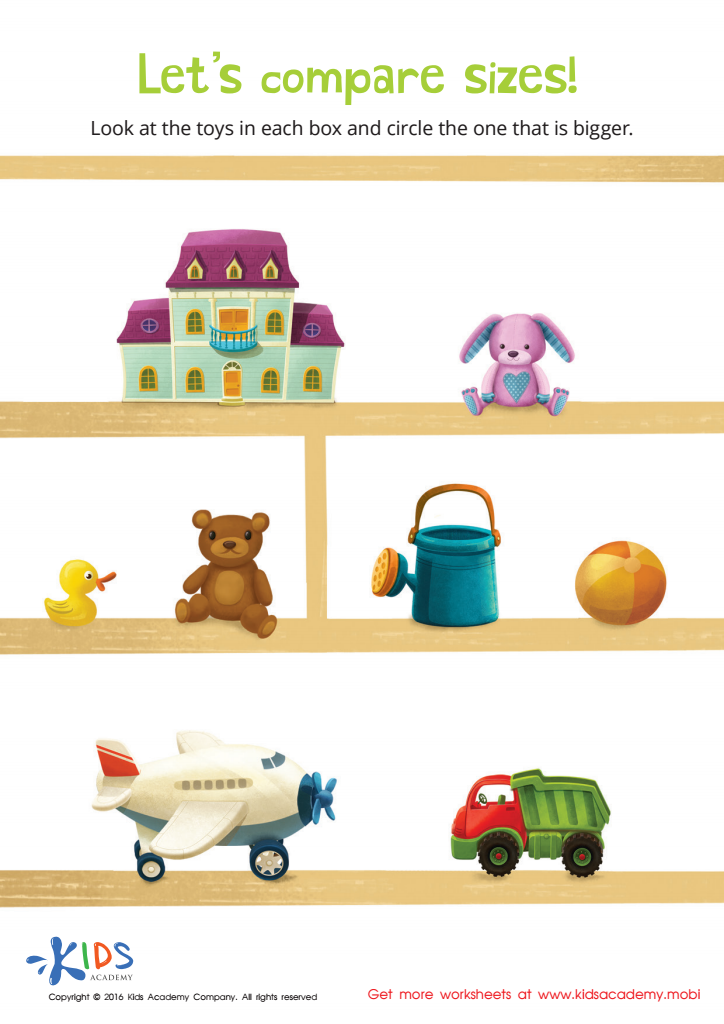
Classifying by Size Sorting Worksheet







Parents and teachers should care about the concept of comparing objects in math for children aged 6-7 because it lays the foundation for critical mathematical skills. During this developmental stage, children are naturally curious and eager to understand their world. Comparing objects—whether by size, weight, length, or volume—helps children develop their observational and analytical skills.
Engaging in these activities promotes cognitive development by encouraging children to think critically and logically. It helps them practice important concepts such as measurement, classification, and data interpretation, which are vital for more advanced math in later years. Furthermore, comparing objects reinforces the understanding of basic mathematical terminology and enhances their vocabulary.
This skill also fosters creativity and problem-solving. Children learn to verbalize their reasoning, which boosts communication skills and enables them to articulate their thought processes. Engaging in these comparisons in a fun, interactive manner helps keep their interest alive in math, turning a potentially challenging subject into an enjoyable experience.
By prioritizing "Comparing Objects" activities, parents and teachers can prepare children for lifelong learning in mathematics while also helping them develop confidence in their abilities. Ultimately, this foundational skill set prepares them for future academic success.