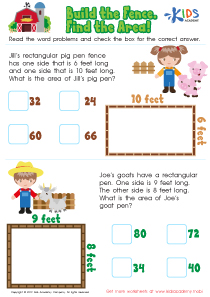
Visual perception Extra Challenge Matching Worksheets for Ages 6-7
3 filtered results
-
From - To
Enhance your child's visual perceptual skills with our specially designed Visual Perception Extra Challenge Matching Worksheets for Ages 6-7. These engaging, educational worksheets are crafted to challenge and develop young minds by focusing on similarities and differences, patterns, and precise observation. Perfect for kids who are ready to take their abilities to the next level, each worksheet offers a fun and stimulating way to improve cognitive development and critical thinking. Download now to provide your child with a vital learning tool that supports academic growth and visual discrimination proficiency.
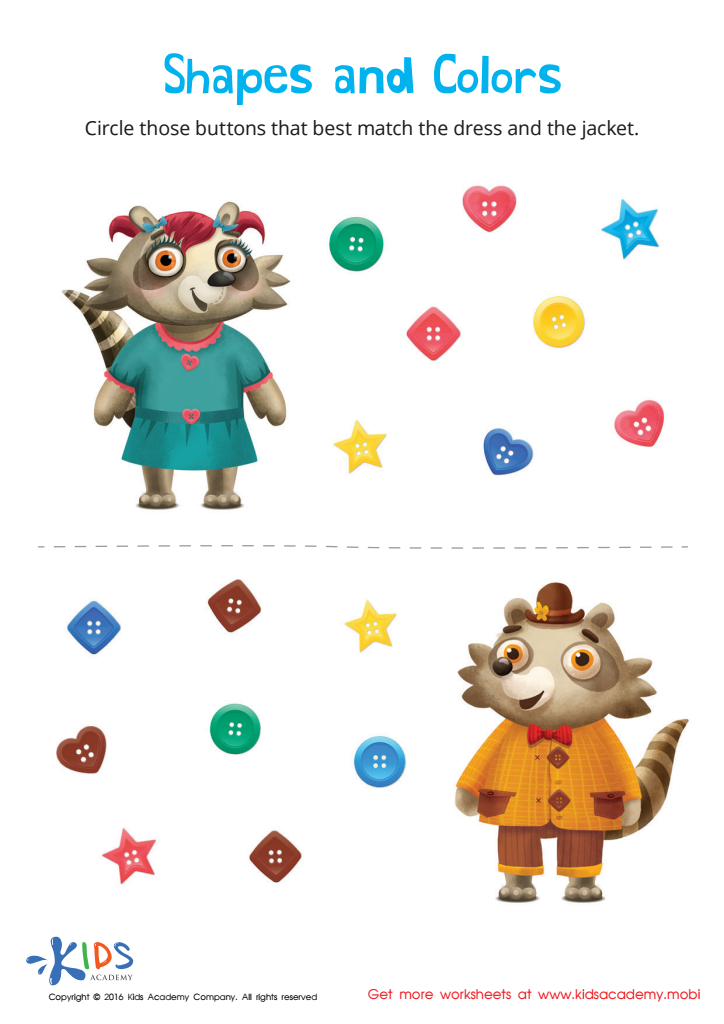
Matching: Shapes and Colors Worksheet
 Assign to My Students
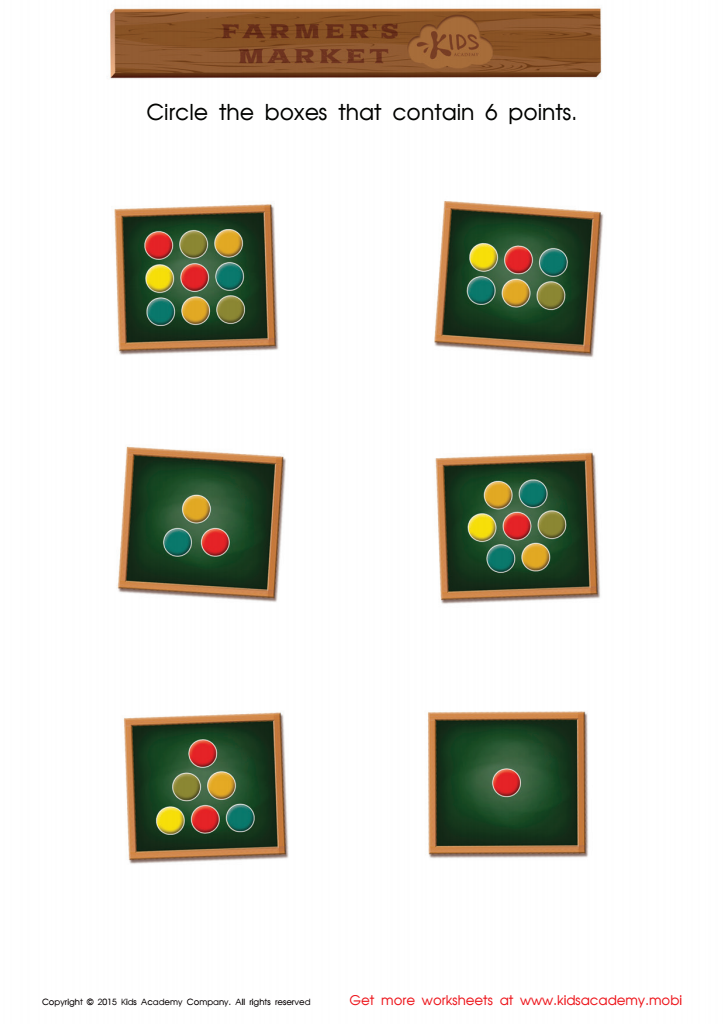
Count and Match Points 6 Math Worksheet
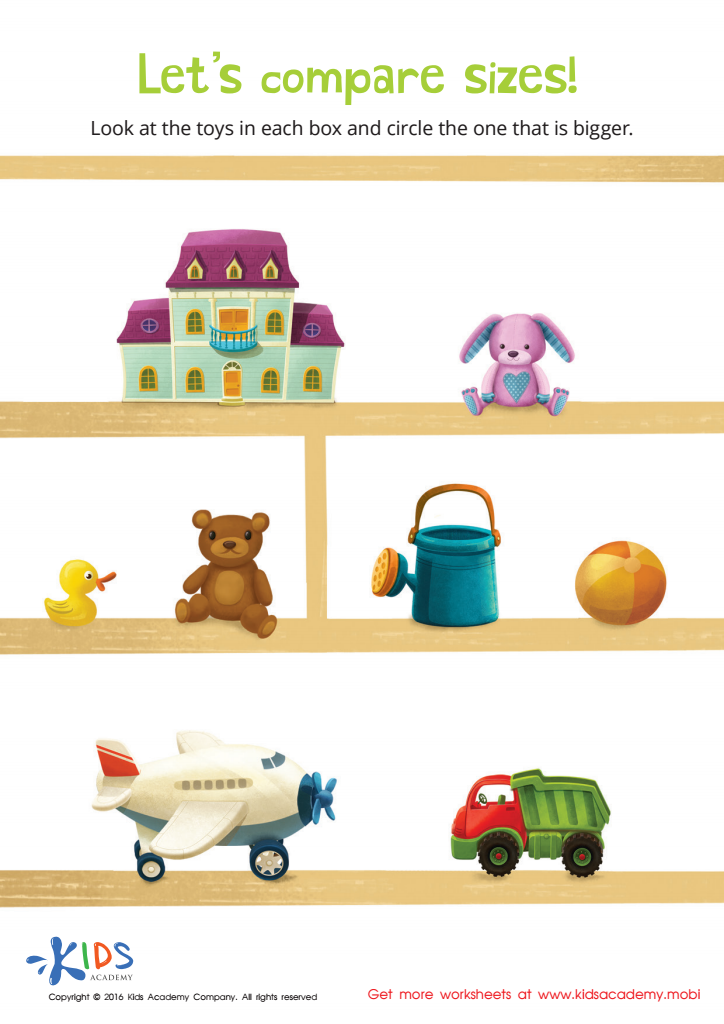
Classifying by Size Sorting Worksheet








Visual perception is crucial for young learners, and engaging them in activities like the Visual Perception Extra Challenge Matching is beneficial for several reasons. At ages 6-7, children are developing their ability to interpret and understand visual information, which directly impacts their reading, writing, and overall academic skills.
Firstly, visual perception activities help in honing children's attention to detail and improving their ability to distinguish similarities and differences. This skill is foundational for reading comprehension, as it enables children to recognize letters and words more effectively, thus facilitating smoother transitions from recognizing individual letters to reading fluently.
Secondly, it aids in spatial awareness and eye-hand coordination, essential for writing skills. When children practice matching exercises, they sharpen their ability to control eye movements and alignment, resulting in clearer handwriting and more accurate drawing or graphical tasks.
Additionally, these activities bolster cognitive development, particularly in areas of memory and problem-solving. Engaging in structured challenges demand focus, patience, and persistence, fostering a growth mindset by encouraging children to overcome hurdles and achieve mastery through effort and practice.
Combining these skills not only advances academic ability but also boosts confidence and independence in learning. Thus, parents and teachers should prioritize visual perception activities to lay a robust groundwork for lifelong educational success.